
Brief Summary
- Parcel delays have multiple causes.Capacity issues, weather conditions, and documentation are common causes of delays.
- The impact on businesses is significant.Financial loss and reputational damage can result from parcel delays for businesses.
- Communication is crucial during delays.Direct contact with the sender and maintaining documentation are essential steps.
- Technology can both help and hinder.Technical failures can cause delays, but advanced systems can also help prevent them.
- Understand the logistics chain.Insight into the different stages of the shipping process helps prevent delays.
What Is Parcel Delay and Why Does It Happen?
Parcel delay is a common issue in the logistics industry where shipments take longer than originally planned. It can occur with various types of shipments, both domestic and international, and often has significant consequences for both senders and recipients.
The Core of Parcel Delay
Parcel delay arises from a combination of complex factors that disrupt the normal flow of packages. Whether it involves a small shipment or a large transport process, delays can occur at different points in the logistics journey.
Below is an overview table with typical causes of parcel delay and their brief explanations to quickly understand the most relevant factors.
Cause of Delay | Explanation |
|---|---|
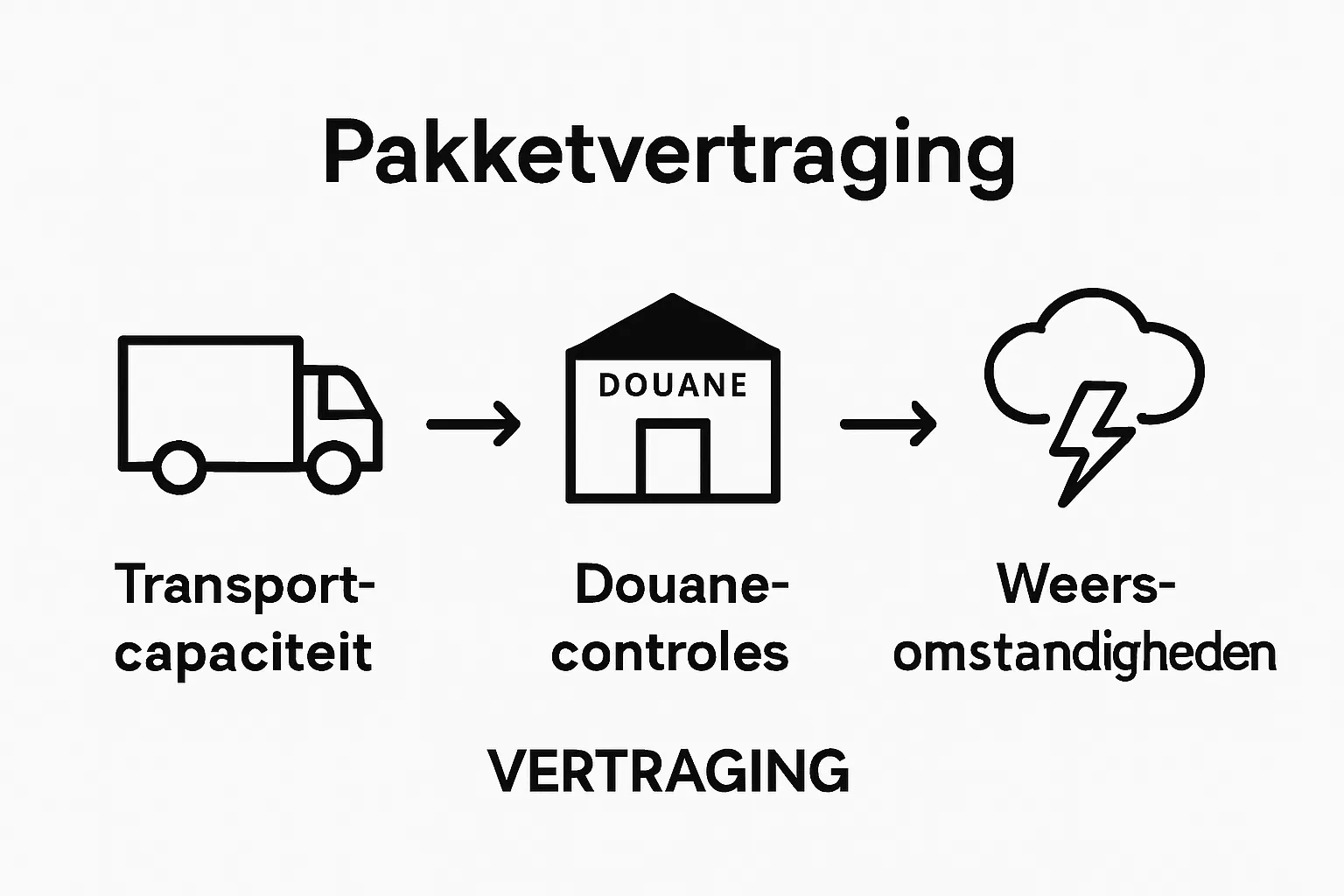
Capacity Issues | Transport companies may sometimes fail to meet demand |
Unexpected Weather Conditions | Severe weather or natural disasters can disrupt transport |
Documentation or Customs Issues | Incomplete paperwork or stricter border controls |
Technical Failures | Issues with sorting centers and track-and-trace systems |
Incorrect Shipping Information | Errors in address or package details lead to delays |
Key reasons for parcel delays include:
- Capacity issues at transport companies
- Unexpected weather conditions
- Documentation or customs issues
- Technical failures in sorting centers
- Incomplete or incorrect shipping information
Impact of Parcel Delay
The consequences of parcel delays can be far-reaching. For consumers, this often means frustration and disappointment. Businesses may face reputational damage, complaints, and potential financial losses. Every delay can have significant consequences for both the sender and the recipient.
For international shipments, delays become even more complex. Different countries have varying customs regulations, logistical infrastructures, and processing procedures, making the process more complicated and increasing the likelihood of delays.
Understanding parcel delays is crucial for both individual shippers and businesses. By gaining insight into the potential causes, they can take proactive measures to minimize delays and improve the efficiency of their shipping processes.
The Impact of Parcel Delay on Shipping
Parcel delays have a profound impact on various aspects of the shipping chain. From small packages to large commercial shipments, delays can have far-reaching consequences for all parties involved.
Economic Consequences
Financial Losses are one of the most direct consequences of parcel delays. Businesses may face significant costs due to claims, compensations, and lost customer trust. Delays not only cause financial damage but can also significantly impair operational efficiency.
Key economic consequences of parcel delays include:
- Direct costs for reshipping packages
- Loss of labor productivity
- Additional administrative burdens for customer support
- Potential penalties for late delivery
Customer Experience and Reputational Damage
Parcel delays directly impact customer experience. Modern consumers expect fast and reliable delivery.Any delay can lead to frustration, negative reviews, and potential loss of future customers. A delayed package can seriously harm a company’s reputation, especially in today’s digital age where customer feedback can be shared quickly.
For e-commerce businesses and logistics service providers, timely delivery is crucial. A single delay can significantly undermine customer trust and lead to a decline in repeat purchases and brand loyalty.

How Parcel Delay Works in the Logistics Chain
The logistics chain is a complex system where each component affects the overall efficiency of the shipping process. Parcel delays can arise at multiple points in this chain, making it a multifaceted and layered issue.
Critical Shipping Points
Logistics chains are only as strong as their weakest link..
Different stages in the shipping process can cause potential delays. Delays often stem from complex interactions between various logistics components.
Key shipping points where delays can occur include:
To provide insight into the specific shipping points where parcel delays can occur, below is a table outlining the different logistics links within the shipping process and their potential role in delays.
Shipping Point | Description |
|---|---|
Pickup from Sender | Start of the process, where logistics can stall |
Sorting in Distribution Centers | Package is processed; errors or congestion cause delays |
International Transport | Transitions between countries and carriers are sensitive |
Customs Inspections | Delays due to complex procedures or additional checks |
Local Delivery | Final link, influenced by traffic and scheduling |
- pickup-from-sender
- sorting-in-distribution-centers
- international-transport
- customs-inspections
- local-delivery
Technological and Infrastructural Influences
Modern logistics processes are heavily dependent on technology and infrastructure. Technical failures or inadequate infrastructure can cause significant delays. A faulty scanner, a malfunction in the track-and-trace system, or an unexpected roadblock can disrupt the entire shipping chain.
Additionally, external factors such as weather conditions, traffic congestion, and seasonal peaks play a crucial role. During busy periods like holidays or major sales events, the likelihood of delays increases significantly due to the overloading of logistics systems.
Communication and Coordination
Poor communication between different links in the logistics chain is a major cause of parcel delays. When information is not exchanged promptly or accurately between senders, carriers, sorting centers, and delivery personnel, delays can quickly escalate.
Effective coordination requires precise data exchange, real-time tracking, and proactive communication. Modern logistics companies are increasingly investing in advanced systems that enhance the transparency and efficiency of the shipping process, thereby reducing the risk of unexpected delays.
Key Factors Influencing Parcel Delays
Parcel delay is a complex phenomenon influenced by numerous interconnected factors. Understanding these factors is essential for both logistics companies and shippers to develop effective strategies to minimize delays.
External Environmental Factors
External conditions play a crucial role in the occurrence of parcel delays. Environmental factors can have a significant impact on the efficiency of logistics processes.
Key external factors influencing parcel delays:
- Extreme Weather Conditions
- Natural Disasters
- Political Instability
- Seasonal Peaks
- Regional Infrastructure Issues
Operational and Logistics Challenges
Within the logistics chain, numerous operational factors can cause delays. Technical failures and capacity issues often represent the main bottlenecks. These include not only mechanical problems but also complex administrative and coordination challenges.
Critical operational factors include:
- Insufficient Processing Capacity in Sorting Centers
- Complex Customs Procedures
- Communication Failures Between Logistics Partners
- Incorrect or Incomplete Shipping Documentation
- Capacity Constraints for Carriers
Technological and Informational Challenges
Technology plays a dual role in either preventing or causing parcel delays. On one hand, advanced tracking and monitoring systems can help prevent delays; on the other hand, technical failures can lead to significant delays.
Modern logistics companies are increasingly investing in smart technological solutions to provide real-time information and proactively anticipate potential delays. This includes advanced track-and-trace systems, automated sorting technologies, and intelligent route planning.
Understanding and proactively managing these factors is essential for minimizing parcel delays and optimizing overall logistics efficiency.
What to Do in Case of a Parcel Delay?
Parcel delays can be frustrating, but with the right approach, you can effectively manage the situation and minimize potential adverse effects. It is important to act proactively and take the appropriate steps as soon as you notice a delay.
Contact the Sender Directly
Communication is key to resolving shipping issues. The government advises consumers to stay alert and use the correct communication channels when irregularities occur.
Steps you can take immediately:
- Gather all shipping details and tracking information
- Contact the original sender
- Ask for the exact reason for the delay
- Request a detailed update
- Discuss possible compensation or alternative solutions
Tracking and Documentation
Accurate documentation is crucial when handling parcel delays. Keeping records of all communication and tracking information can be vital if you want to file an official complaint or request compensation.
Key documentation tips:
- Save all email correspondence
- Take screenshots of tracking statuses
- Note the date and time of communication
- Collect all relevant shipping receipts
- Maintain a detailed log of the delay
Legal and Insurance Steps
In some cases, a parcel delay may be so severe that further steps are necessary. Depending on the circumstances, you may consider taking legal action or filing an insurance claim for the shipment.
Possible follow-up actions:
- Review the shipping terms and conditions
- Request an official delay statement
- Explore options for compensation
- Consider mediation by an independent body
- Seek legal support if necessary
By acting proactively and following a structured approach, you can significantly reduce the impact of a parcel delay and increase the likelihood of a satisfactory resolution.
Prevent Parcel Delays with Smart Shipping Solutions
Tired of unexpected delays when shipping your parcels? In this article, you’ve read about how parcel delays occur and the consequences they can have for your customers and your business. Uncertainty about your parcel’s location, unclear tracking, and disappointing handling create additional stress and potential reputational damage. If you choose certainty, you choose a partner that provides insight and control at every step of the process.
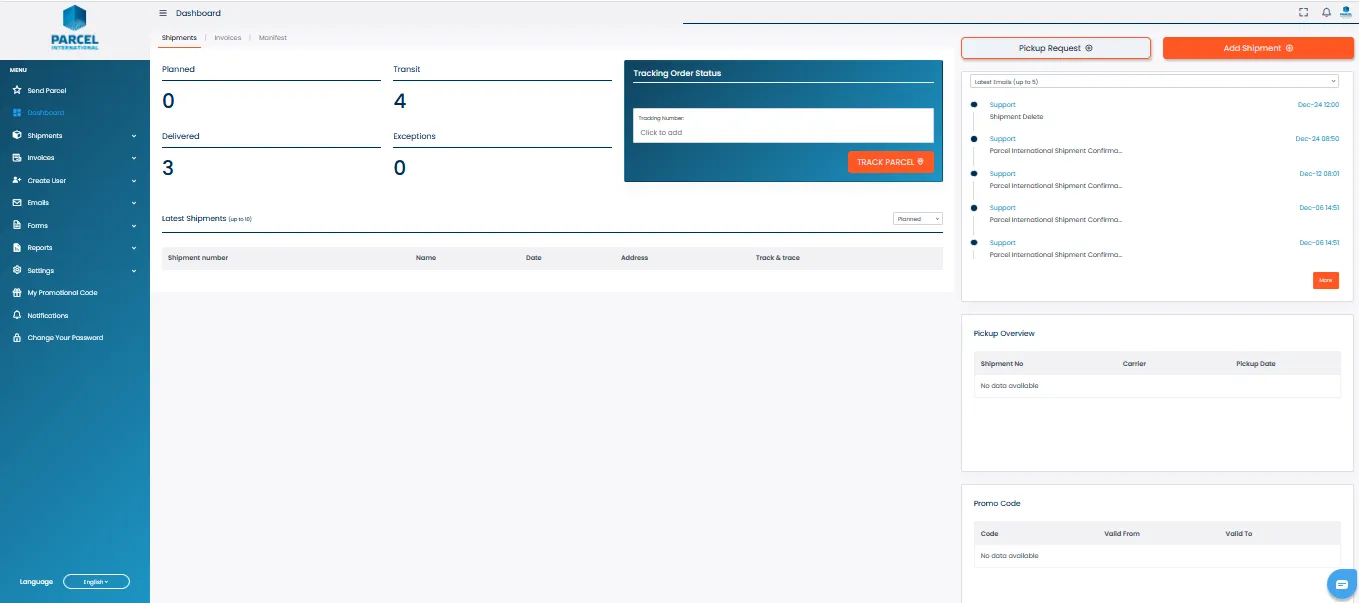
Don’t let shipping delays hold you back. Experience the difference with Parcel International. Effortlessly compare the fastest and most reliable shipping options for over 220 countries, choose the best carrier, track your shipments in real-time, and enjoy personalized support. Start today and ship your packages worldwide with confidence using our user-friendly shipping solutions.
Shipping Delays
Can't find your question? Our support team is here for you 24/7 via the help centre.
How long does it take on average to deliver an international package?
Delivery times for international parcels vary depending on the selected shipping method. Express shipments typically take 1-3 days, while sea freight can take up to 30 days.
What are the main causes of parcel delays?
Parcel delays can be caused by capacity problems at transport companies, unexpected weather conditions, documentation or customs issues, technical failures at sorting centres, and incomplete or incorrect shipping information.
What should I do if my parcel is delayed?
If your parcel is delayed, gather all your shipping details and tracking information, contact the sender for updates, and keep a log of all communication and documentation relating to the delay.
How can I minimise the impact of parcel delays?
To minimise the impact of a parcel delay, it's important to contact the sender straight away, keep accurate records and consider legal steps if necessary. Proactive communication helps resolve problems.
How can an online store prevent shipping delays?
An e-commerce store can prevent delays by implementing accurate tracking, reliable logistics partners, and clear communication about delivery times.
How do I plan shipments around international holidays?
Review local holidays and plan your shipments one to two weeks in advance. This helps minimize potential delays during peak periods and ensures customers are informed in a timely manner.
How can I communicate delivery times clearly to my customers?
Communicate realistic delivery times by accounting for potential delays and being transparent about shipping processes. Always include a buffer and keep customers regularly informed about the status of their shipment.
Why is timely shipping important for customer satisfaction?
Timely shipping enhances customer satisfaction by meeting expectations for fast and reliable delivery. Delays can result in reduced loyalty and negative reviews.
What are the consequences of parcel delays for businesses?
The impact on businesses includes financial losses from claims and compensations, reputational damage due to negative customer experiences, and operational challenges caused by the need to resolve delays.
My shipment is delayed. Can Parcel International ask the carrier to search for it?
Yes. Submit a tracer request in the portal under Tracer Package, preferably within 10 days of the expected delivery date. The carrier will then start an investigation.
What does a delivery time window mean for my customer?
A delivery time window gives customers a realistic timeframe for when their package will be delivered, such as “morning” or “end of the day,” instead of an exact date, which is rarely guaranteed due to logistical variables.
How do I determine which delivery time window best fits my online store?
Analyze your processing time, cut-off hours, and carrier SLAs, then align your timeframes accordingly for maximum delivery reliability. Start with broader windows and only narrow them if your data shows you can consistently meet them.
Does a delivery time window make planning more expensive or complicated?
It offers greater flexibility for the customer but makes route planning more complex and may require additional costs or vehicles, particularly with strict or narrow time windows combined with high volumes.
What is OTIF, and why is it important for delivery time windows?
OTIF stands for On Time In Full and measures the percentage of orders delivered within the agreed time window in full. It is the most reliable metric to assess whether your delivery time windows are being met in practice.
What does transit time mean exactly?
Transit time is the duration a shipment spends in the transport network, from the first scan or pickup to delivery at the recipient’s address or a pickup point. Order processing and waiting time after failed delivery attempts are not included.
How does transit time differ from delivery time?
Delivery time covers the entire period from order placement to receipt, including order processing and packaging. Transit time refers only to the transportation portion and is always shorter than the total delivery time.
Are weekends included in transit time?
Transit time is almost always expressed in business days, excluding weekends and public holidays. A package picked up on Friday will only start counting toward transit time from Monday.
Why do transit times vary by carrier?
Carriers use different definitions for start and end points and sometimes include or exclude customs processing. Always compare the definitions used before evaluating quotes side by side.
How can I reduce the transit time of my shipments?
Choose routes with fewer transfer points, ensure correct customs documentation, and build in buffer time for complex international routes. Reducing delivery times starts with identifying which segment of the journey takes the most time.
How much does it cost to send a package abroad with PostNL?
Costs depend on weight, size, and destination; a small package to a neighboring country often starts at a few euros, while intercontinental or larger shipments are more expensive. Check the official rate guide for the exact cost for your shipment.
Which package size should I choose for clothing or documents?
Thin items like clothing without a box or documents typically fit in a letterbox parcel, with maximum dimensions of approximately 38 x 26.5 x 3.2 centimeters and a weight of up to 2 kilograms.
Do I always need a customs form for international shipments?
Only for shipments outside the European Union, where you use a CN22 for lower-value items and a CN23 with a commercial invoice for higher-value or commercial shipments.
What should I do if my shipment is delayed or arrives damaged?
First, track the status via track & trace or the PostNL app, and in case of damage, collect photos and the shipping receipt before filing a claim.
When is Parcel International a better alternative than PostNL?
For frequent, large, or customs-complex shipments, it may be useful to compare multiple carriers and receive support with documentation, which is typically unnecessary for individual packages sent via PostNL.
What are DPD’s delivery times in the Netherlands?
DPD typically delivers until around 6:00 PM, though this may extend slightly during busy periods. The exact time for your package will be shown in the one-hour Predict window you receive that day.
Does “out for delivery” mean I will receive the package today?
Usually, yes, but not necessarily at any time of the day. This status means the package is on the delivery vehicle; the exact time will follow from the Predict window you receive separately via SMS, email, or app.
Can I still change the DPD delivery on the same day?
Yes, via myDPD or the link in your notification, you can often still choose to deliver to a neighbor, a Parcelshop, or select a new day. Do this as soon as possible after receiving the notification, as changes are often no longer possible once the route is finalized.
Get a grip on your parcel shipping
Compare carriers, choose the best price and keep track of your international shipments. You can calculate and book without an account.
