
Getting goods from point A to point B as quickly and safely as possible may seem simple. But did you know that companies using smart shipping management systems can significantly boost their operational efficiency? Surprisingly, most gains don’t come from the route or mode of transport. The real power lies in innovative technology and real-time data that make supply chains smarter and more flexible.

Brief Summary
- Effective planning is crucial.Proper planning of transport routes reduces costs and damage.
- Technology optimizes processes.Using advanced technologies significantly increases shipment efficiency.
- Risk management prevents disruptions.Anticipating logistical challenges ensures continuity in the supply chain.
- Real-time tracking improves customer satisfaction.Customers can track shipments, which builds trust and satisfaction.
- Automation saves time and costs.Automated systems eliminate manual processes, leading to faster responses.
What is Shipping Management and Why is it Important?
Shipping management is a critical process that coordinates and oversees all logistical activities to transport goods efficiently and safely from one location to another. It involves much more than simply moving packages or freight.
Core Principles of Shipping Management
The process includes multiple strategic components that work together to ensure a smooth flow of goods:
- Planning: Detailed determination of transport routes
- Tracking: Accurate real-time shipment monitoring
- Risk Management: Preparing for potential transport challenges
According to ResearchGate research shipping management is essential for maintaining supply chain continuity and optimizing operational efficiency.
Importance for Businesses and Trade
For modern businesses, effective shipping management is more than an operational task—it’s a strategic function. It helps organizations:
- Minimize transport costs
- Shorten delivery times
- Increase customer satisfaction
By leveraging advanced technologies and detailed analysis, businesses can optimize their shipping processes and gain competitive advantages.
Shipping management requires continuous attention to detail, technological innovation, and adaptability in an ever-changing logistics landscape.
To clarify the distinction between the core principles in shipping management, here’s an overview table of these principles and their objectives.
Core Principle | Objective |
|---|---|
Planning | Detailed determination of transport routes |
Tracking | Accurate real-time shipment monitoring |
Risk Management | Preparing for potential transport challenges |
Coordination | Aligning different transport modalities |
Efficiency | Minimizing unnecessary costs and delays |
Risk Control | Anticipating potential logistical challenges |
The Role of Shipping Management in the Logistics Chain
Shipping management forms the backbone of modern logistics processes, deploying a refined set of strategies and techniques to guide goods seamlessly through the entire supply chain. It goes far beyond simply moving shipments.
Strategic Position in Business Operations
Within the logistics chain, shipping management serves as a crucial link between producers, distributors, and end customers. It ensures an optimized flow of goods with three core functions at its center:
- Coordination: Aligning different transport modalities
- Efficiency: Minimizing unnecessary costs and delays
- Risk Control: Anticipating potential logistical challenges
According to ResearchGate research, shipping management acts as an essential link between production and distribution, ensuring goods are transported as planned and in the most cost-effective manner.
Technological Innovation and Integration
Modern shipping management systems use advanced technologies to optimize the logistics chain. Businesses can now enhance their processes using real-time tracking, data analytics, and automated planning tools.
Through continuous technological innovation, shipping management evolves from a traditional support function into a strategic business unit that directly contributes to competitive advantage and operational excellence.
Key Concepts in Shipping Management
Shipping management encompasses a range of specialized concepts that together ensure an efficient and streamlined logistics operation. Understanding these core concepts is essential for effectively managing international shipping processes.
Fundamental Operational Concepts
The foundation of shipping management is built on several crucial operational principles that form the backbone of any successful logistics system:
- Route Planning: Optimizing transport routes
- Cargo Management: Efficiently organizing and distributing goods
- Documentation Management: Accurately tracking shipping data
According to logistics system research, these concepts are crucial for reducing operational costs and improving overall supply chain performance.
Technological Integration and Tracking
Modern shipping management is about more than traditional logistics processes. Advanced technological concepts play an increasingly important role. Businesses can enhance their processes using integrated tracking and management systems.
These technological tools enable real-time monitoring, predictive analytics, and automated decision-making, transforming shipping management from a reactive to a proactive discipline.
Risk Management and Compliance Strategies
Another critical concept in shipping management is identifying, evaluating, and mitigating potential risks. This includes:
- Navigating Complex International Regulations
- Anticipating Potential Disruption Scenarios
- Developing Robust Backup Strategies to Ensure Logistics Chain Continuity
How Shipping Management Processes Optimize Operations
Shipping management transforms logistics processes by applying advanced strategies and technological innovations that drastically improve the efficiency, accuracy, and cost-effectiveness of goods transportation.
Automated Process Streamlining
Modern shipping management systems implement advanced automation technologies to reduce manual tasks and accelerate processes:
- Digital Document Processing: Eliminating Paperwork
- Automated Route Planning: Selecting Optimal Transport Routes
- Real-Time Tracking: Continuous Shipment Monitoring
Research on Process Optimization confirms that integrated data flows and automation can lead to faster decision-making and significantly lower operational costs.
Technological Integration and Data-Driven Decision Making
By implementing advanced technologies, businesses can enhance e-commerce shipping workflows using:
- Artificial Intelligence for Predictive Analytics
- Machine Learning Algorithms for Route Optimization
- Blockchain Technology for Enhanced Transparency
Risk Minimization and Strategic Planning
Shipping management optimizes processes by proactively identifying risks and developing strategic planning models. This includes creating flexible logistics strategies that can quickly adapt to disruptions, global changes, and unexpected challenges in the transport chain.
The Impact of Technology on Shipping Management
Technological innovations are fundamentally transforming shipping management, redefining traditional logistics processes and setting a new standard for efficiency and precision.
Digital Transformation of Logistics Systems
Modern technologies are revolutionizing shipping management by introducing advanced solutions that enhance the entire supply chain.
This overview highlights the most influential technologies used in shipping management, along with their key benefits.
Technology | Key Benefit |
|---|---|
Internet of Things | Real-Time Goods Tracking |
Artificial Intelligence | Predictive Analytics and Decision Making |
Blockchain | Enhanced Transparency and Security |
Machine Learning | Route Optimization and Process Automation |
Digital Document Processing | Eliminating Paperwork |
- Internet of Things (IoT): Real-Time Goods Tracking
- Artificial Intelligence: Predictive Analytics and Decision Making
- Blockchain: Enhanced Transparency and Security
Scientific research on logistics technologies confirms that these innovations can significantly increase operational efficiency.

Automated Intelligent Decision Making
With advanced technological systems, businesses can now optimize complex shipping workflows by:
- Automated Route Optimization
- Predictive Maintenance Scheduling
- Dynamic Pricing Calculation
Future-Oriented Technological Integration
The continuous evolution of technology will further transform shipping management.
Emerging technologies such as quantum computing, advanced machine learning, and automated drone deliveries will create new opportunities for more efficient, faster, and sustainable global goods transportation.
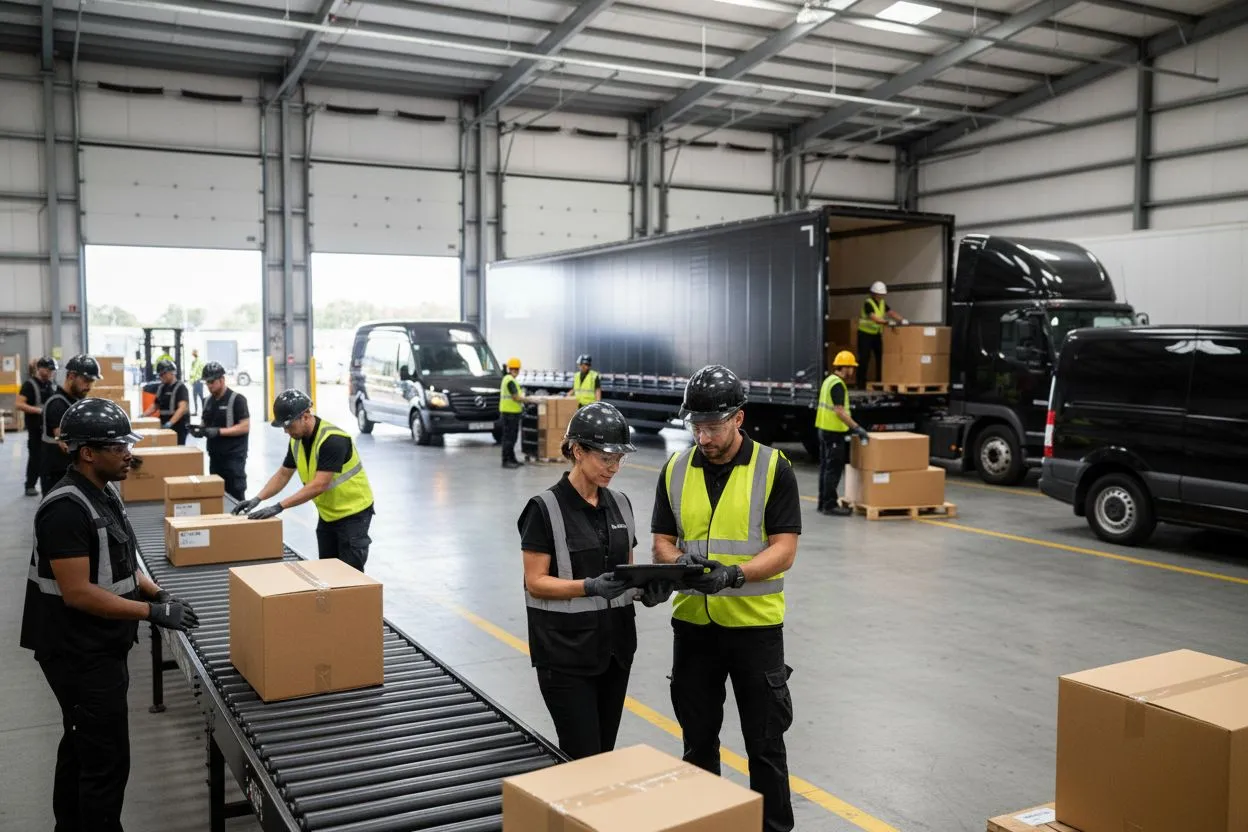
Ready to Simplify Your Shipping Management?
In this article, you’ve read about the many challenges involved in shipping management. Inefficient processes, limited shipment visibility, and unexpected costs can make the difference between satisfied and disappointed customers. Choosing the right routes, automating tracking, and preventing errors are essential for growth and reliability.
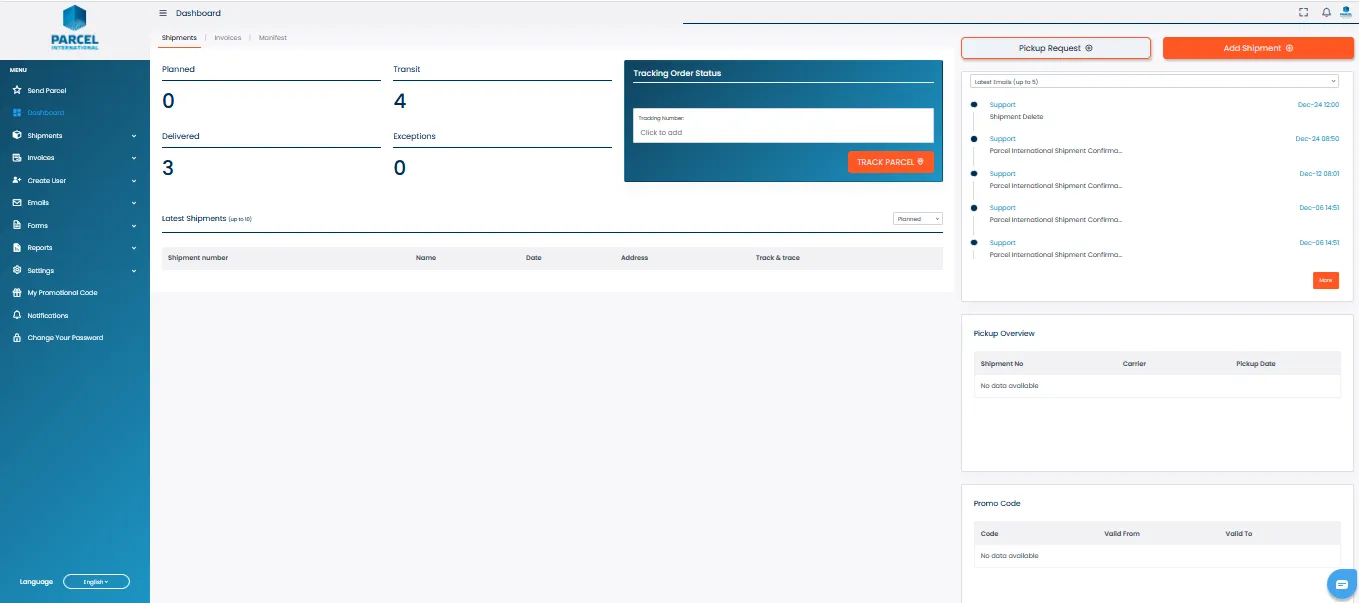
Do you need more visibility, more control, and fewer worries about international shipping? Through Parcel International you gain access to smart tools that allow you to easily compare shipping options, apply real-time tracking, and manage costs. Whether you’re sending parcels or pallets on demand, you benefit from personalized support and clear pricing. Discover more about optimizing your shipping process or explore global shipping options to ensure your growth isn’t hindered by logistical barriers.
Want to experience how clear and affordable shipping management can be today? Go directly to Parcel International and get acquainted with hassle-free, smart international logistics in just a few minutes. Don’t wait for delays or unexpected costs. Choose effectiveness and certainty, now.
shipping-management
Can't find your question? Our support team is here for you 24/7 via the help centre.
What is cross-docking?
Cross-docking is a logistics method where goods are directly transferred from inbound to outbound vehicles without long-term storage. This accelerates shipping and reduces costs.
What is groupage shipping?
A groupage shipment is a logistics solution in which loads from different senders are combined into one transport, resulting in more efficient and cost-saving transport.
What is Just In Time Delivery?
Just-in-Time (JIT) delivery is a logistics approach where products are delivered exactly when needed, minimizing inventory costs and storage space.
What is first mile delivery?
First mile delivery is the initial phase of the logistics chain where products are collected from the supplier or manufacturer and prepared for further shipment.
What is package consolidation?
Parcel consolidation is a logistics strategy where multiple smaller packages are combined into a single larger shipment. This helps reduce shipping costs and improve transport efficiency.
What is parcel routing?
Parcel routing is a logistics process that determines how packages take their most efficient journey through transportation networks, considering variables such as distance, transport modes, and real-time conditions.
What is Shipping Management?
Shipping management is the process of coordinating and managing all logistics activities to transport goods efficiently and securely from one location to another. It includes planning, tracking, and risk management.
What is package forwarding?
Parcel forwarding is a logistics service where a company acts as an intermediary for shipping packages to hard-to-reach destinations.
What is Parcel Throughput?
Cross-docking is a logistics process where packages are shipped through a central distribution center instead of directly from sender to recipient.
What are split shipments?
Split shipments are shipping methods where a single order is divided and sent in multiple packages, often because products come from different warehouses.
What is international last mile?
International last mile refers to the final segment of the shipping process where a parcel reaches its ultimate destination. It involves significant logistical challenges and is crucial for customer satisfaction.
What is a freight audit?
A freight audit is the process where e-commerce companies review and analyze their shipping invoices to ensure they are not overpaying for transportation costs.
What is a secure shipment?
A secure shipment involves a process that ensures the safety and integrity of goods during transport through load securing, pre-shipment inspection, and compliance with transportation regulations.
What is pre-shipment inspection?
Pre-shipment inspection is a quality control process conducted by independent third parties to verify that products meet technical specifications and packaging standards before shipment.
What is international distribution?
International distribution is the process of shipping products from the supplier to the end user, involving various logistics steps and customs procedures.
What is order picking and why is it important?
Order picking is the process of collecting and assembling products for specific customer orders. It is essential for customer satisfaction and operational efficiency in e-commerce logistics.
What are the different order picking methods?
There are several order picking methods, including manual picking, automated picking, batch picking, and zone picking. Each method has its own advantages and disadvantages depending on a company's specific needs.
How does order picking impact a company's costs?
Order picking has a significant impact on operational costs, including labor, time, error, and infrastructure expenses. A well-optimized system can substantially reduce these costs.
What are the key technologies that optimize order picking?
Technological innovations such as robotics, augmented reality, artificial intelligence, and the Internet of Things improve the efficiency and accuracy of order picking by streamlining processes and providing real-time insights.
What exactly is indirect shipping?
Indirect shipping includes dropshipping, marketplaces, and engaging freight forwarders or distributors. In all these models, a third party handles part of the transportation or storage.
When is direct shipping better for my online store?
Direct shipping is more advantageous when you want maximum control over inventory, packaging, and customer experience. Shipping directly from your own stock without intermediaries yields higher margins and better customer satisfaction at sufficient volume.
Is hybrid shipping possible and worthwhile?
Yes, many online stores start with indirect shipping and transition to a hybrid model as they grow. Begin with indirect shipping at low volumes and switch to direct or hybrid once control and economies of scale become more important.
What is more important for international shipments: direct or indirect shipping?
For international shipments, customs procedures and risk distribution are often more decisive than the shipping model alone. Customs representation in non-EU trade is crucial to avoid delays and additional costs, regardless of the model you choose.
What are the key benefits of fulfillment logistics?
Fulfillment logistics ensures faster and more reliable order processing and improved customer satisfaction, thanks to high order accuracy and quick returns handling.
How long does returns processing take in fulfillment logistics?
According to industry benchmarks, returns processing is completed within 48 to 72 hours by professional fulfillment providers.
What fulfillment models are available for e-commerce businesses?
You can handle fulfillment in-house for full control, outsource to a 3PL partner for scalability, or choose a hybrid combination of both models.
Why is fulfillment logistics important for international e-commerce?
It optimizes the entire order chain from picking to returns, which is essential for growth in a rapidly expanding cross-border market.
What is last-mile delivery and why is it such a challenge?
Last-mile delivery is the final leg of the delivery journey: from the depot or distribution center directly to the customer's home. It is challenging because this segment is the least predictable, with fluctuating traffic conditions, absent customers, and high costs per stop. Last-mile delivery is therefore the largest cost factor in e-commerce logistics and is the first area requiring optimization.
What are the benefits of reducing returns with smart technologies?
Fewer returns mean lower processing costs, faster inventory availability, and higher customer satisfaction. In the fashion industry, where return rates can be high, AI-driven size recommendations and 360-degree product images make the difference between profit and loss per order.
How important is sustainable logistics for conversion?
Sustainable shipping options have become a proven conversion tool. Online stores that offer green delivery choices during checkout often see an increase in conversion rates and a reduction in delivery trips, which also lowers operational costs.
Is outsourcing logistics better for every online store?
Not for every online store or at every stage of growth. For online stores with high volume and international expansion, outsourcing to a 3PL partner is almost always more efficient. For small online stores with highly personalized products, in-house management has advantages. Outsourcing fulfillment to 3PL partners works best when you also maintain internal control over quality and communication.
Get a grip on your parcel shipping
Compare carriers, choose the best price and keep track of your international shipments. You can calculate and book without an account.

recommendation
- understanding-split-shipments-what-it-is-and-why-it-matters-send-with-parcel-international
- understanding-eu-shipping-workflow-and-its-impact-send-with-parcel-international
- advice-for-reliable-shipping-understand-how-it-works-send-with-parcel-international
- what-are-global-shipping-options-understand-the-possibilities-send-with-parcel-international