
International last mile delivery determines whether your package arrives at all. It may sound like the final stretch of a long journey, but don’t be alarmed. This final segment can account for a large portion of shipping costs. That’s precisely why smart technologies, local expertise, and green innovations are becoming increasingly important to make this leg cheaper and faster than you might expect.

Brief Summary
- International Last Mile Is CrucialThe final part of the shipping route is decisive for customer satisfaction and costs.
- Optimization Reduces Shipping CostsEfficient last mile logistics can significantly cut total shipping expenses.
- Satisfied Customers Expect TransparencyConsumers demand real-time tracking and flexible delivery options for a positive experience.
- Technology Transforms Last MileInnovations like drones and AI improve the efficiency of international shipments.
- Sustainability Is the FutureCompanies are embracing green solutions and electric vehicles for eco-friendly delivery.
What Is International Last Mile? A Basic Explanation
The international last mile is the final and most critical segment of an international shipping route, where a package reaches its final destination. It’s the phase where logistical challenges are greatest and costs can escalate. Once a shipment leaves the last transit hub and is en route to the end customer, this crucial leg begins.
The Core of International Last Mile
The international last mile process is more than just transporting a package. It involves complex logistical challenges tied to cross-border shipping. Key aspects include:
- Transit through different countries with unique customs regulations
- Navigating local transportation infrastructure
- Overcoming language and cultural barriers
- Ensuring efficient and timely delivery
According to research by TNO there are various strategies to make the international last mile more efficient, such as using electric vehicles and smart logistics concepts.
Why International Last Mile Matters
The international last mile is the final and most visible part of the shipping experience. It determines end-customer satisfaction and directly impacts the reputation of shipping companies. The costs for this segment can account for a large portion of total shipping expenses, which underscores the importance of optimization.
The complexity lies in the details: every border, every new mode of transport, and every local context introduces new challenges. From customs procedures to local delivery protocols, each element requires precise attention and planning.
The success of international last mile logistics depends on coordinated efforts, technological support, and in-depth knowledge of local markets and infrastructures.
Why Is the International Last Mile Important?
The international last mile is far more than a simple transport leg. It’s a critical component of the global logistics chain that directly impacts business profitability, customer experience, and global trade efficiency. Its strategic importance goes beyond the mere movement of goods.
Economic Impact
The international last mile has a massive economic dimension. Companies invest billions in optimizing this final leg because it directly correlates with cost efficiency and profitability. Key economic aspects include:
- Direct impact on total transportation costs
- Determination of profit margins for shipping companies
- Competitive advantage through fast and reliable delivery
Efficient last mile logistics can significantly reduce total shipping costs.
Customer Experience and Brand Perception
The final miles of an international shipment are decisive for overall customer satisfaction.A delayed or damaged delivery can undo years of brand building. Modern consumers expect:
- Real-time tracking
- Accurate delivery times
- Transparent communication
- Flexible delivery options
The ability to meet these expectations distinguishes successful international shippers from average players.
This table highlights the key economic and customer-focused aspects of the international last mile to clarify its strategic importance.
Aspect | Economic Importance | Impact on Customer |
|---|---|---|
Transportation Costs | Can account for a large portion of shipping costs | Not directly visible |
Competitive Advantage | Fast delivery increases market share and profitability | Expected fast delivery |
Real-Time Tracking | Investment in technology reduces failure costs | Provides transparency |
Flexible Delivery Options | Can improve operational efficiency | Enhances customer satisfaction |
Transparent Communication | Reduces risk of returns and complaints | Builds trust |
Brand Perception | Influences customer loyalty and repeat sales | Has a positive or negative effect |
The international last mile bridges global logistics systems and local delivery contexts. It requires a sophisticated combination of technology, local expertise, and operational excellence to succeed.

How Does the International Last Mile Work in Practice?
The international last mile is the leg from customs clearance or the last depot in the destination country to the recipient. It goes far beyond simply moving goods from point A to point B.
Logistics Preparation
Before an international shipment can depart, extensive preparations are necessary.Shipping companies must consider several critical aspects:
- Accurate documentation for customs processes
- Proper packaging for international standards
- Correct classification of goods
- Calculation of potential import duties and taxes
According to research by the World Customs Organization accurate documentation and goods classification are essential for smooth international shipments.
Transport Route and Tracking
The international last mile journey follows a complex route with multiple handover points. Modern technology plays a crucial role in monitoring this process. Carriers use advanced tracking systems that provide real-time information on the location and status of a shipment.
Typical steps in this journey include:
- Customs clearance
- Local distribution to final destination
Each handover point presents a potential risk for delays or damage, making precise coordination and monitoring essential.
The success of international last mile logistics depends on seamless collaboration between various logistics partners, local expertise, and advanced technological support.
Key concepts and terms in the last mile
The world of international logistics is complex and filled with industry-specific terminology. To fully understand the last mile, it is essential to know the key concepts and terms that define and characterize this critical phase of shipping.
Core Concepts in Last Mile Logistics
Last mile logistics is a specialized field with specific terms that precisely describe how goods reach their final destination. Some fundamental concepts include:
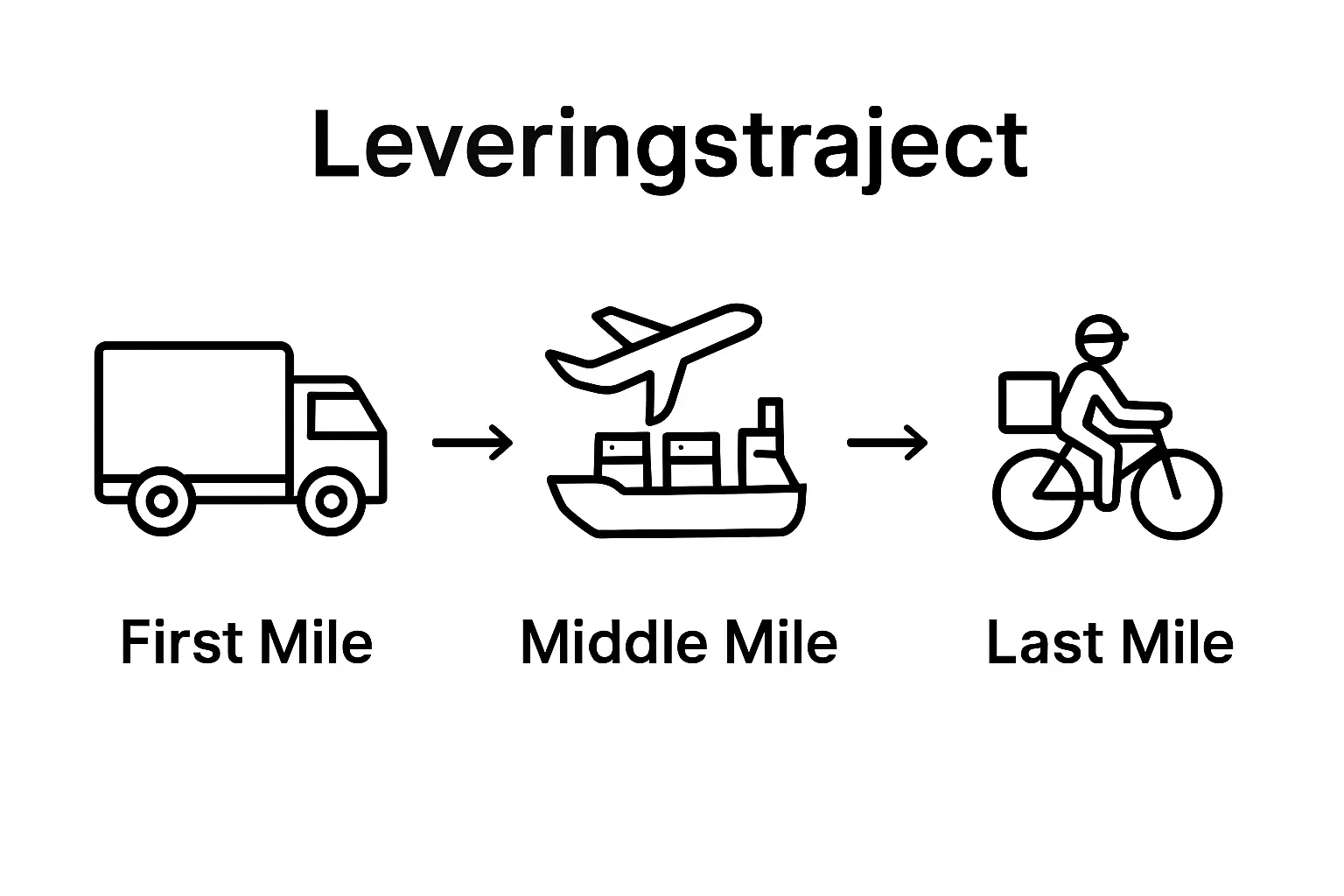
- First Mile: The initial segment of a shipment, often from the shipping location to the first distribution center
- Middle Mile: The transport between different distribution centers
- Last Mile: The final segment from the distribution center to the end customer
- Multimodal Transport: The use of multiple modes of transport in a single shipping route
Research by logistics expert Dr. Walther Ploos van Amstel highlights the importance of these concepts for efficient urban distribution processes.
Technical Terms and Definitions
The international last mile has its own technical vocabulary that helps understand the complexity of the process. Some key terms include:
- Consolidation: Combining multiple shipments to increase transport efficiency
- Cross-Docking: Direct transfer of goods without intermediate storage
- Hub-and-Spoke Model: A central distribution hub with branches to different regions
- Reverse Logistics: The process of returning and handling returned goods
These terms form the technical foundation for understanding the complex world of international last mile logistics. They help professionals categorize, analyze, and optimize the various aspects of shipping.
The importance of these concepts cannot be overstated: they form the common language through which logistics professionals worldwide communicate and collaborate.
Below is an overview summarizing the key concepts from the article, with a brief explanation for each term.
Concept | Explanation |
|---|---|
First Mile | The initial segment of a shipment, often from the shipping location to the distribution center. |
Middle Mile | Transport between different distribution centers, often international or interregional. |
Last Mile | The final part of the route from the distribution center to the end customer, often the most complex. |
Multimodal Transport | The use of multiple modes of transport (such as road, rail, air) within a single shipping route. |
Consolidation | Combining multiple shipments to create transport efficiency and cost advantages. |
Cross-Docking | Direct transfer of goods from inbound to outbound transport without intermediate storage. |
Hub-and-Spoke Model | A distribution model with a central hub and outgoing routes (spokes) to different regions. |
Reverse Logistics | Logistics processes related to the return and handling of returned goods. |
Future trends in international last mile solutions
International logistics is on the brink of a technological and sustainable revolution. Last mile solutions are evolving rapidly, driven by technological innovations, environmental awareness, and changing customer expectations.
Technological Innovations
Advanced technologies are transforming how international last mile logistics are executed. Some notable innovations include:
- Autonomous delivery vehicles
- Drone delivery for hard-to-reach locations
- Artificial intelligence for route optimization
- Blockchain for enhanced tracking and transparency
Research from the University of Antwerp highlights the potential of technological solutions for more efficient urban distribution.
Sustainability and Green Logistics
Environmental friendliness is becoming a crucial component of future last mile strategies. Companies are increasingly focusing on sustainable delivery solutions such as:
- Electric and hydrogen-powered vehicles
- Consolidated urban distribution centers
- Smart loading infrastructure
- Emission-free delivery zones in city centers
This shift is not only about environmental protection but also about cost efficiency and social responsibility.
The future of international last mile logistics is dynamic and promising. Technology, sustainability, and customer-focused innovations will set the standard for efficient, fast, and environmentally conscious international shipments in the coming years.
Struggling with international last mile? Experience the smart solution from Parcel International
The international last mile presents many challenges, such as high costs, complex customs regulations, and the risk of delays in the final stretch. As you’ve read, this phase determines customer satisfaction and the success of your shipment. You want reliable tracking, clear communication, and door-to-door delivery without unexpected issues.
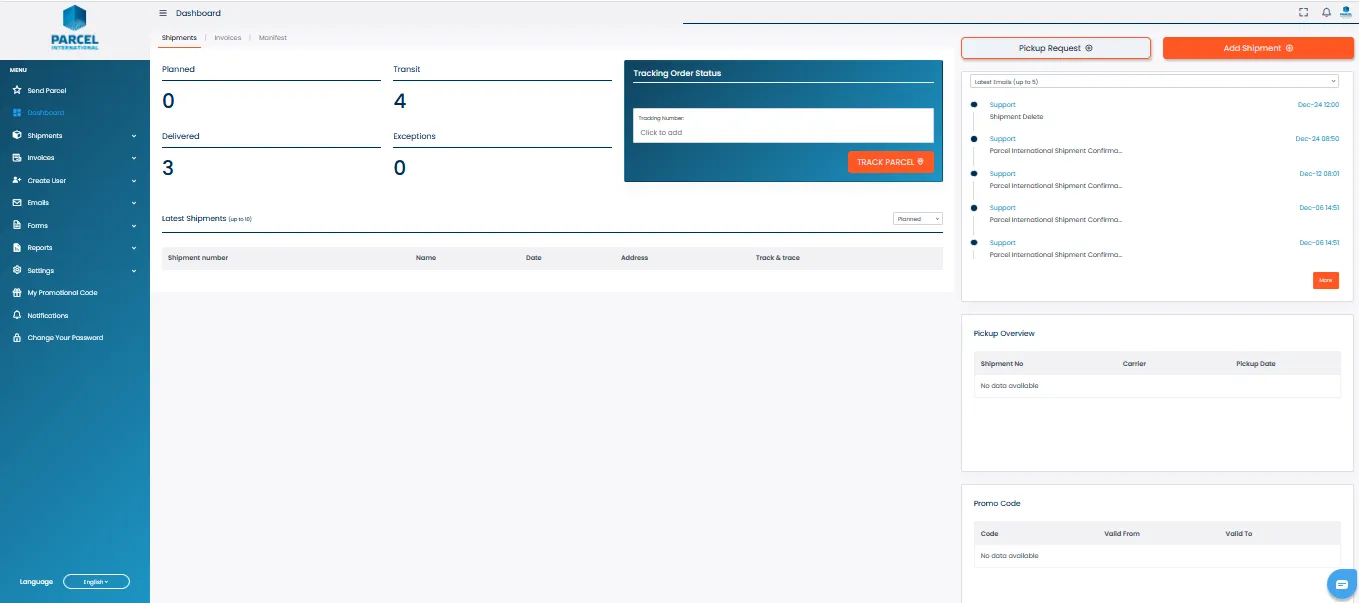
Simplify international logistics with our all-in-one shipping solution. Compare shipping options for over 220 countries instantly and choose the service that fits your shipment and budget. Thanks to years of experience and smart technology, Parcel International not only delivers packages faster to your customers but also keeps the process transparent for you, from tracking to delivery.
Want to never worry about the last mile again? Arrange your international shipment today and discover how easy reliable international shipping can be. With the push of a button, select your carrier and get started right away. This makes the final mile to satisfied customers effortless. Start now at Parcel International and experience the difference for yourself.
The International Last Mile
Can't find your question? Our support team is here for you 24/7 via the help centre.
What is cross-docking?
Cross-docking is a logistics method where goods are directly transferred from inbound to outbound vehicles without long-term storage. This accelerates shipping and reduces costs.
What is groupage shipping?
A groupage shipment is a logistics solution in which loads from different senders are combined into one transport, resulting in more efficient and cost-saving transport.
What is Just In Time Delivery?
Just-in-Time (JIT) delivery is a logistics approach where products are delivered exactly when needed, minimizing inventory costs and storage space.
What is first mile delivery?
First mile delivery is the initial phase of the logistics chain where products are collected from the supplier or manufacturer and prepared for further shipment.
What is package consolidation?
Parcel consolidation is a logistics strategy where multiple smaller packages are combined into a single larger shipment. This helps reduce shipping costs and improve transport efficiency.
What is parcel routing?
Parcel routing is a logistics process that determines how packages take their most efficient journey through transportation networks, considering variables such as distance, transport modes, and real-time conditions.
What is Shipping Management?
Shipping management is the process of coordinating and managing all logistics activities to transport goods efficiently and securely from one location to another. It includes planning, tracking, and risk management.
What is package forwarding?
Parcel forwarding is a logistics service where a company acts as an intermediary for shipping packages to hard-to-reach destinations.
What is Parcel Throughput?
Cross-docking is a logistics process where packages are shipped through a central distribution center instead of directly from sender to recipient.
What are split shipments?
Split shipments are shipping methods where a single order is divided and sent in multiple packages, often because products come from different warehouses.
What is international last mile?
International last mile refers to the final segment of the shipping process where a parcel reaches its ultimate destination. It involves significant logistical challenges and is crucial for customer satisfaction.
What is a freight audit?
A freight audit is the process where e-commerce companies review and analyze their shipping invoices to ensure they are not overpaying for transportation costs.
What is a secure shipment?
A secure shipment involves a process that ensures the safety and integrity of goods during transport through load securing, pre-shipment inspection, and compliance with transportation regulations.
What is pre-shipment inspection?
Pre-shipment inspection is a quality control process conducted by independent third parties to verify that products meet technical specifications and packaging standards before shipment.
What is international distribution?
International distribution is the process of shipping products from the supplier to the end user, involving various logistics steps and customs procedures.
What is order picking and why is it important?
Order picking is the process of collecting and assembling products for specific customer orders. It is essential for customer satisfaction and operational efficiency in e-commerce logistics.
What are the different order picking methods?
There are several order picking methods, including manual picking, automated picking, batch picking, and zone picking. Each method has its own advantages and disadvantages depending on a company's specific needs.
How does order picking impact a company's costs?
Order picking has a significant impact on operational costs, including labor, time, error, and infrastructure expenses. A well-optimized system can substantially reduce these costs.
What are the key technologies that optimize order picking?
Technological innovations such as robotics, augmented reality, artificial intelligence, and the Internet of Things improve the efficiency and accuracy of order picking by streamlining processes and providing real-time insights.
What exactly is indirect shipping?
Indirect shipping includes dropshipping, marketplaces, and engaging freight forwarders or distributors. In all these models, a third party handles part of the transportation or storage.
When is direct shipping better for my online store?
Direct shipping is more advantageous when you want maximum control over inventory, packaging, and customer experience. Shipping directly from your own stock without intermediaries yields higher margins and better customer satisfaction at sufficient volume.
Is hybrid shipping possible and worthwhile?
Yes, many online stores start with indirect shipping and transition to a hybrid model as they grow. Begin with indirect shipping at low volumes and switch to direct or hybrid once control and economies of scale become more important.
What is more important for international shipments: direct or indirect shipping?
For international shipments, customs procedures and risk distribution are often more decisive than the shipping model alone. Customs representation in non-EU trade is crucial to avoid delays and additional costs, regardless of the model you choose.
What are the key benefits of fulfillment logistics?
Fulfillment logistics ensures faster and more reliable order processing and improved customer satisfaction, thanks to high order accuracy and quick returns handling.
How long does returns processing take in fulfillment logistics?
According to industry benchmarks, returns processing is completed within 48 to 72 hours by professional fulfillment providers.
What fulfillment models are available for e-commerce businesses?
You can handle fulfillment in-house for full control, outsource to a 3PL partner for scalability, or choose a hybrid combination of both models.
Why is fulfillment logistics important for international e-commerce?
It optimizes the entire order chain from picking to returns, which is essential for growth in a rapidly expanding cross-border market.
What is last-mile delivery and why is it such a challenge?
Last-mile delivery is the final leg of the delivery journey: from the depot or distribution center directly to the customer's home. It is challenging because this segment is the least predictable, with fluctuating traffic conditions, absent customers, and high costs per stop. Last-mile delivery is therefore the largest cost factor in e-commerce logistics and is the first area requiring optimization.
What are the benefits of reducing returns with smart technologies?
Fewer returns mean lower processing costs, faster inventory availability, and higher customer satisfaction. In the fashion industry, where return rates can be high, AI-driven size recommendations and 360-degree product images make the difference between profit and loss per order.
How important is sustainable logistics for conversion?
Sustainable shipping options have become a proven conversion tool. Online stores that offer green delivery choices during checkout often see an increase in conversion rates and a reduction in delivery trips, which also lowers operational costs.
Is outsourcing logistics better for every online store?
Not for every online store or at every stage of growth. For online stores with high volume and international expansion, outsourcing to a 3PL partner is almost always more efficient. For small online stores with highly personalized products, in-house management has advantages. Outsourcing fulfillment to 3PL partners works best when you also maintain internal control over quality and communication.
Get a grip on your parcel shipping
Compare carriers, choose the best price and keep track of your international shipments. You can calculate and book without an account.
