
Dropshipping is an e-commerce model where you sell products without holding inventory: the supplier ships directly to the customer. You manage the online store, marketing, and customer service, while the supplier handles the rest. It sounds simple, and it is—to a certain extent.
Suitable for:
- Beginners with limited startup capital who want to quickly test product demand
- Entrepreneurs looking to explore multiple product categories without storage costs
Less suitable for:
- Those expecting high margins or full control over packaging and delivery times
- Those selling products in categories with strict safety requirements (medical devices, toys for young children)
One point many beginners underestimate: as a dropshipper, you remain legally liable for delivery and product safety, even if you never handled the product. This is not a minor detail—it’s the core of the model.
Key Insights
Dropshipping is an accessible startup model, but those who underestimate legal and logistical obligations quickly face fines, complaints, and narrow margins that make the model unprofitable.
Point | Details |
|---|---|
Legal Liability | As a dropshipper, you remain liable for delivery and product safety, even without holding inventory. |
GPSR and Importer Status | Since December 2024, the GPSR applies; dropshippers sourcing outside the EU are considered importers and must provide CE documentation. |
DDP Over DDU | Choose suppliers that offer DDP; DDU leads to customs surprises for the customer and increases return rates. |
EU Return Address | A return address outside the EU, such as in China, is legally problematic and a dealbreaker for Dutch consumers. |
Parcelinternational | Parcelinternational supports dropshippers with customs clearance, DDP options, and international shipping via mySendle and PIFreight. |
What Exactly is Dropshipping, and What Roles Are Involved?
Dropshipping is a form of e-commerce where the online retailer acts as an intermediary. You list products in your store but only purchase them once a customer places an order. The supplier, a wholesaler or manufacturer, then ships the package directly to the customer.
Four parties play a role:
- Online Retailer (you): manages the store, sets prices, handles marketing and customer service
- Supplier or Wholesaler: maintains inventory, packages, and ships orders
- Carrier: transports the package from the supplier to the end customer
- End Customer: orders through your store and expects service from you, not the supplier
There are multiple variations within dropshipping. In standard dropshipping you sell products from an external supplier under their brand or as a generic product. In retail arbitrage you buy products cheaply on one platform and sell them at a higher price on another, which carries legal and margin risks. Branded dropshipping (also known as white-label dropshipping) takes it a step further: you have products customized with your own branding or packaging. This increases brand value but requires closer collaboration with the supplier and higher minimum order quantities.
The difference in margins is immediately noticeable. With branded dropshipping, you can charge higher prices, but procurement costs are also higher. Inventory management disappears as a cost factor, but the supplier passes on their logistical costs in the purchase price.
How Does Dropshipping Work? From Order to Delivery
The process seems simple, but each step has its own costs and risk factors.
- Customer Places an Order in your online store and pays the selling price. You receive the payment via your payment provider, which deducts a transaction fee (typically 1.5%–3% per transaction).
- You Forward the Order to the supplier, manually or via an automated integration. You pay the purchase price plus any shipping costs from the supplier. The difference between the selling price and purchase price is your gross margin, from which platform costs, marketing expenses, and return costs are deducted.
- Supplier Packages and Ships the package, sometimes with your branding, sometimes in neutral packaging. Here, you lose control: the quality of the packaging, the accuracy of the contents, and the shipping speed are entirely in the supplier’s hands.
- Package is Delivered to the Customer. For suppliers outside the EU, customs formalities can cause delays. Packages from China or other third countries must clear EU customs; import duties and VAT apply.
- After-Sales and Returns are your responsibility. The customer knows you as the seller, not the supplier. You handle complaints, return requests, and warranty issues, even if the supplier is uncooperative.
Average lead times vary significantly. European suppliers typically deliver within 3–7 business days. Suppliers from Asia often take 14–30 days, sometimes longer due to customs delays or peak periods. These delivery times are a dealbreaker for many Dutch consumers, directly impacting your return rate and customer satisfaction.
What Are the Benefits of Dropshipping for Beginners?
Dropshipping has a low barrier to entry, and that’s not just marketing hype. The benefits are real, as long as you don’t overestimate them.
- Low Startup Costs: you don’t need to purchase inventory upfront. A website, domain name, and business registration are the main fixed costs at launch.
- No Inventory Risk: unsold stock doesn’t exist. You test a product, it doesn’t sell, you remove it from your assortment. No loss on purchased stock.
- Quickly Expand Assortment: you can offer dozens of products without additional investment, making it easy to test which categories perform well.
- Scalability Without Logistical Bottlenecks: more orders don’t automatically mean more work on your end. The supplier scales with you, in theory.
- Reduced Operational Complexity: no packaging line, no warehouse, no procurement planning.
Pro Tip: Always test a new product with a trial order to yourself before going live. This way, you can see the actual delivery time, packaging quality, and whether the product matches the supplier's description. It costs you a few euros and saves you a flood of complaints.
These advantages have a downside that you cannot ignore. Low margins are structural in dropshipping: if you sell a product for €25 and the supplier charges €18 including shipping, little remains after payment provider and advertising costs. Additionally, you have no control over fulfillment: if the supplier makes a mistake, you pay the price with the customer.
Disadvantages and risks: what can go wrong?
Being honest about the risks is more useful than downplaying them. Most dropshipping problems are predictable.
- Quality risks: you have never seen the product. Suppliers, especially outside the EU, sometimes deliver products that do not match the description or photos. The NVWA warns that very low prices and long delivery times are often signs of dropshipping from third countries with increased product risks.
- Liability for unsafe products: if a customer suffers damage due to an unsafe product, you are liable as the seller, not the supplier in China. Thuiswinkel warns that selling unsafe or counterfeit goods can lead to fines and liability.
- Logistical risks: longer delivery times, lost packages, tracking that does not work. With suppliers outside the EU, you have limited influence over the carrier.
- Financial risks: margins are slim. Refunds, chargebacks, and return costs directly eat into your profit. Hidden costs such as platform subscriptions, app fees, and advertising budgets add up quickly.
- Regulatory risks: information obligations, return rights, product safety. Failure to comply with these obligations risks enforcement by the ACM or NVWA.
One specific risk deserves extra attention: counterfeit products. If you unknowingly sell counterfeit goods, you are liable as the seller, even if you never purchased or saw the products. Always check whether suppliers are authorized to sell branded products.
Which industries work well (and which do not) for dropshipping?
Not every product is suitable for dropshipping. The category largely determines whether the model is feasible.
Well-suited:
- Fashion accessories (jewelry, bags, belts): low value, unbreakable, few safety regulations
- Home decor and living accessories: broad market, few technical requirements
- Gadgets without electrical risks (phone cases, organizers, sports accessories)
- Seasonal items and gift products
Less or not suited:
- Medical devices and health products: strict CE requirements, high liability
- Toys for children under 14: mandatory CE marking, extensive documentation
- Electrical chargers and power banks: fire risk, strict safety standards
- Food and cosmetics: shelf-life requirements, ingredient declarations, NVWA supervision
- Branded products without an official distribution agreement: risk of counterfeiting and trademark infringement
Pro tip: For your first dropshipping webshop, choose a niche with unbreakable, non-electrical products without strict safety certification. This limits your liability risk and significantly simplifies supplier selection.
Starting with dropshipping: a practical step-by-step guide
Ondernemersplein emphasizes that the seller remains responsible for products and delivery, even with dropshipping. Start by getting the legal basics in order, not with the webshop.
- Register with the KvK and apply for a VAT number. Without registration, you are not allowed to sell commercially. Costs: one-time registration fees at the KvK.
- Prepare your legal documents: general terms and conditions, privacy policy, and a clear return policy. Ensure your return address is in the Netherlands or the EU. A return address in China is unacceptable for Dutch consumers and legally problematic.
- Choose a webshop platform with built-in dropshipping integrations. Common options are Shopify, WooCommerce, or Lightspeed. Pay attention to the monthly subscription costs (typically €30–€100 per month) and the availability of supplier synchronization.
- Select suppliers and test products. Place at least one trial order per product before offering it. Check delivery time, packaging, and product quality.
- Set up payment processing. Connect a payment provider such as Mollie, Stripe, or PayPal. Ensure refunds can be processed automatically.
- Set up customer service before your first advertising campaign. An email address, a clear FAQ page, and a maximum response time of 24 hours are the minimum requirements.
- Start marketing with a small budget. First test organically (SEO, social media) or with a limited advertising budget (€5–€10 per day) before scaling up. Analyze which products actually convert.
- Evaluate after the first 30 orders. Look at the return rate, customer satisfaction, and gross margin per product. Only scale up what works.
How to choose reliable dropshipping suppliers?
The supplier is the weakest link in your dropshipping chain. A poor choice here will cost you customers, money, and reputation.
- Delivery times and shipping options: explicitly ask about average delivery times to the Netherlands and the rest of the EU. Do not accept vague answers like '7–30 days.' Ask about tracking per shipment.
- Inventory synchronization: ensure the supplier offers live inventory integration via an API or a platform like DSers or Spocket. Without synchronization, you will regularly sell products that are out of stock.
- CE marking and safety documentation: request the declaration of conformity and CE documentation for each product. Suppliers who cannot provide this are a risk. The NVWA states that dropshippers, as market participants, are responsible for this documentation.
- Return address and return procedure: does the supplier have a return option in the EU? If not, arrange your own return address in the Netherlands or work with a fulfillment partner.
- Communication and response time: Supplier test before collaboration. Send a question and measure how quickly and thoroughly they respond. A supplier that is slow to respond to questions will also be slow to respond to complaints.
- Payment and contract terms: Pay attention to minimum order quantities, invoice frequency, and Incoterms. For suppliers outside the EU, the difference between DDP (Delivered Duty Paid) and DDU (Delivered Duty Unpaid) is crucial for determining who pays the import duties.
Pro tip: Always request suppliers to provide their CE declarations and technical files in writing before going live with products. Keep these documents organized: in the event of an NVWA inspection, you must be able to present them immediately.
What legal obligations apply to dropshippers?
Dropshipping is not a legal gray area. The rules are clear, and enforcement is increasing.
The ACM requires that your webshop clearly displays the following information:
- Chamber of Commerce (KvK) number and business address
- Contact details (email address, phone number)
- Clear return instructions and an accessible return address
- Product origin information where relevant
Transparency is not just a legal requirement; it also increases conversion and reduces chargebacks, according to the ACM. Consumers who know who they are dealing with are more likely to place orders and less likely to complain.
Product safety under the GPSR
Since December 2024, the European General Product Safety Regulation (GPSR) applies. For dropshippers importing products from third countries, this means they are considered the importer. This entails:
- Technical file and declaration of conformity per product
- CE marking where applicable
- Full traceability of the supply chain
- Reporting of dangerous products to the NVWA
Consumer rights
Customers have the right to a 14-day cooling-off period (right of withdrawal) after receiving the product. Refunds must be processed within 14 days of receiving the return. Exceptions apply to custom-made products and hygiene items, but these are rarely relevant in standard dropshipping.
Note: The absence of a KvK number or an inaccessible return address is not just a legal violation; it is also a direct signal to consumers that something is wrong. The ACM actively enforces these points.
Logistics, shipping, and customs: what do you need to know?
Logistics is where dropshipping plans most often fail—not due to poor products, but because of underestimated complexity in import and shipping.
DDP versus DDU
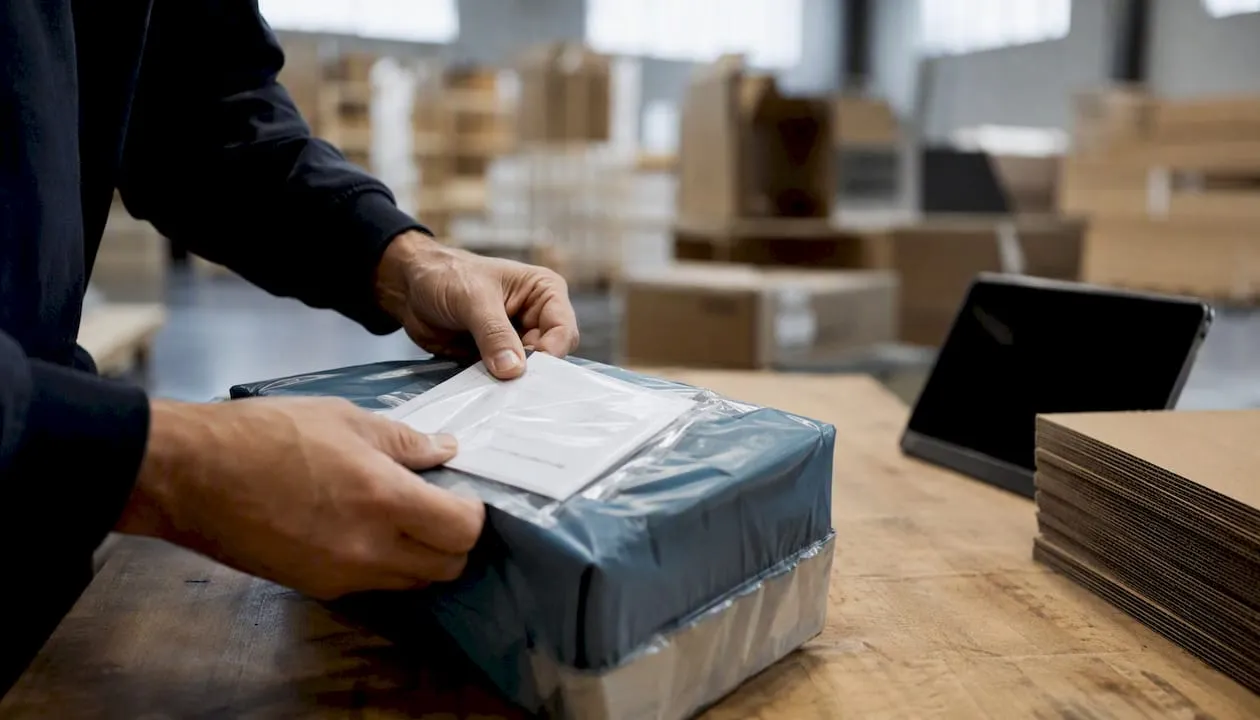
With DDP (Delivered Duty Paid), the supplier pays all import duties and VAT upfront. The customer receives the package without additional costs. With DDU (Delivered Duty Unpaid), the customer receives a surcharge from customs or the carrier. This leads to refused packages, negative reviews, and chargebacks. For B2C dropshipping, DDP is the only customer-friendly option.
Customs documentation
When importing from third countries, the following documents are typically required:
- Commercial invoice with accurate product description and value
- HS code (customs classification code) per product
- Certificate of origin (country of origin)
- Packing list
Errors in these documents lead to delays at customs, sometimes even confiscation. Ensure your supplier provides these documents correctly and keep copies.
Practical shipping tips
- Always use a shipment with tracking. Without tracking, you have no proof of delivery in case of a dispute.
- Insure shipments over €100 by default.
- Place test orders to different addresses in your target market to measure actual delivery times.
- Check packaging requirements per carrier: weight, dimensions, and fragile contents have specific rules.
A logistics partner like Parcelinternational can assist with customs clearance, consolidation of shipments, and DDP options for dropshippers shipping internationally. This is especially relevant if you use suppliers outside the EU and want to avoid import issues.
Pro tip: Never ask your supplier to artificially understate the commercial invoice value to avoid import duties. This is customs fraud, and you, as the importer, are liable—not the supplier.
Conclusion: when is dropshipping a good choice?
Dropshipping works when used for its intended purpose: a low-threshold way to test a market without significant upfront investment. It does not work if you want to build a scalable, profitable business without having the legal and logistical foundation in place.
Three concrete next steps, depending on your situation:
- You want to test: register with the KvK, choose one product category with low safety risks, place test orders, and measure delivery times and margins before advertising.
- You want to start small-scale: first ensure your legal foundation is in place (KvK registration, general terms and conditions, return policy, CE documentation), choose suppliers with EU return options, and work with a payment provider that automates refunds.
- You are considering your own inventory or logistics: if you find that delivery times and quality control are structural issues, a hybrid model (small own inventory for bestsellers, dropshipping for the rest) is often more effective than full dropshipping.
For practical help with international shipping and customs, Parcelinternational offers a step-by-step-guide-for-international-shipping that aligns with the needs of starting e-commerce entrepreneurs.
Dropshipping: what most beginner guides don’t tell you
Most articles about dropshipping start with the benefits and end with a vague warning about 'risks.' That’s the wrong order.
The real problem with dropshipping isn’t that it’s hard to start. It’s that the barrier to entry is so low that people start without understanding the legal and logistical foundation. Setting up a webshop takes an afternoon. Figuring out what the GPSR requires of you as an importer, arranging a reliable return address, and finding suppliers who can provide CE documentation—that takes weeks.
Conventional wisdom says: “Start small, learn as you go.” That holds true for marketing and product selection. It does not hold true for compliance. The ACM and NVWA actively enforce regulations, and “I didn’t know” is not a valid defense when fined for selling an unsafe product.
What I would advise startups: treat the legal checklist as the first step, not the last. Request CE documentation before launching a product. Set up a return address in the Netherlands or the EU before your first advertisement. And choose suppliers who can deliver DDP, so your customers don’t face surprises at customs.
Dropshipping is a legitimate business model. But it is not passive income, nor a quick path to profit. Those who understand this before starting have a realistic chance. Those who discover it only after the first complaints face an expensive learning curve.
Parcel International helps you with logistics and customs for dropshipping
Dropshipping logistics quickly become complex once you use suppliers outside the EU. Import duties, customs documentation, DDP agreements, and return handling are precisely the areas where many startups get stuck.
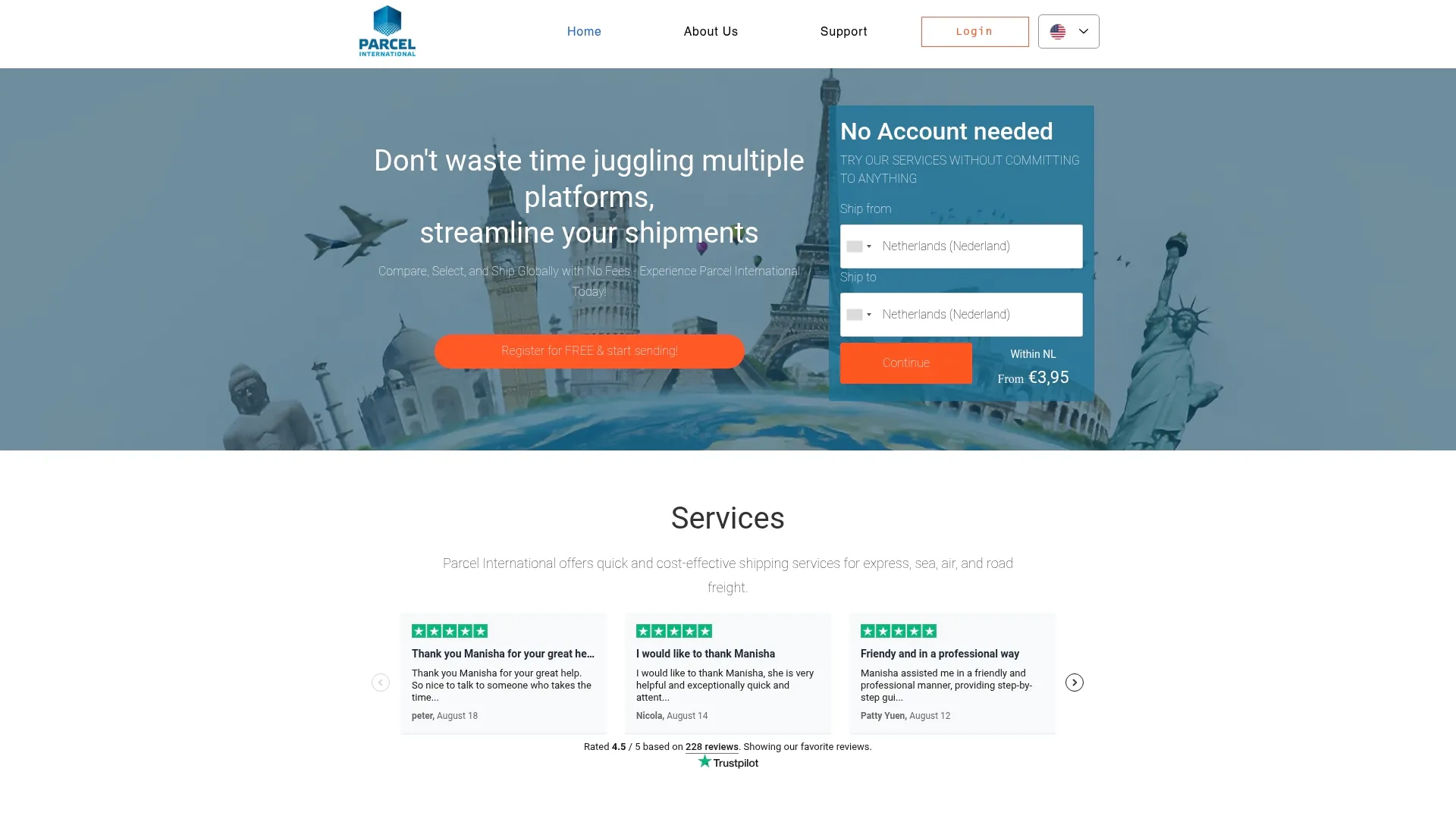
Parcel International supports dropshippers by comparing and booking international shipments to over 220 countries and regions. Via mySendle you can manage orders and tracking from a single platform, enabling direct integration with your webshop. For larger volumes, PIFreight provides custom quotes for pallets and air or sea freight, allowing you to scale from the test phase.
Want to know if your current shipping setup is suitable for dropshipping, or would you like to arrange a trial shipment? Contact Parcel International for a tailored logistics check.
Sources
Save the following sources and consult them if you have doubts about legal obligations or logistical choices. Also, keep your product documentation (declarations of conformity, CE documents) organized so you can present them immediately during an inspection.
- Dutch Government
- GPSR – Product Safety Regulation | NVWA
- Risks of Online Shopping | NVWA
- Dropshipping Checklist | Netherlands Authority for Consumers and Markets (ACM)
- All About Dropshipping Products – Ondernemersplein
- Thuiswinkel
This article provides general information and does not replace the advice of a qualified lawyer. Consult a qualified legal professional about your specific situation before acting on this content.
Get a grip on your parcel shipping
Compare carriers, choose the best price and keep track of your international shipments. You can calculate and book without an account.
