
Sending packages from A to B at lightning speed may sound like something out of a sci-fi movie. However, with express shipments, delivering a package within 24 to 72 hours worldwide is a daily reality. Yet, express shipping isn’t just about speed. The real advantage lies in the combination of reliability, real-time tracking, and eliminating distance and uncertainty in one go.
Below, you’ll find a comparison table outlining the key features of express shipments to quickly understand the benefits and characteristics of this shipping method.
Feature | Description |
|---|---|
Accelerated Delivery Time | Delivery often within 24 to 72 hours, depending on distance and destination |
Guaranteed Arrival Time | Promise of delivery on or before a specific time |
Real-Time Tracking | Package status and location can be continuously tracked by both sender and recipient |
Higher Reliability | Lower risk of loss, delay, or damage |
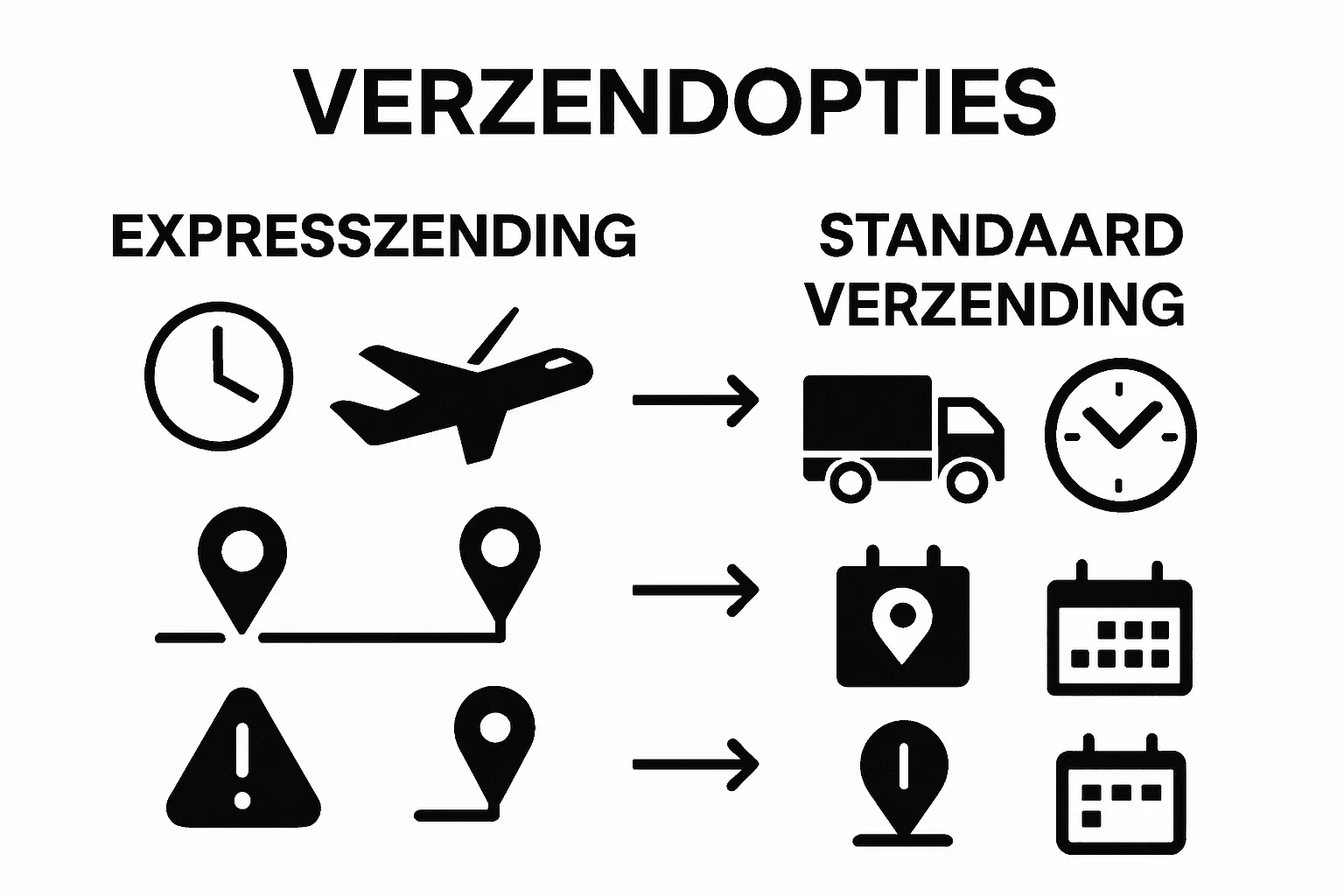
Optimized Routes | Use of dedicated networks, direct flights, and courier services for faster delivery |
Suitable for Business and Personal Use | Ideal for both businesses and individual users |
Transparency and Certainty | Clear information on delivery status and insurance throughout the journey |

Quick Summary
- Express shipments are fast and efficientThey offer delivery within 24 to 72 hours, depending on the distance.
- Real-time tracking provides certaintyRecipients can always track the location and status of their shipment.
- Essential for time-sensitive deliveriesThey are crucial for businesses in sectors such as healthcare and technology.
- Difference Between Business and Personal UseBoth businesses and individuals benefit from express shipments for important deliveries.
- Costs depend on various factorsPrices are influenced by weight, distance, and urgency of the shipment.
What Is an Express Shipment?
An express shipment is a specialized shipping method focused on transporting packages between locations as quickly as possible. Unlike standard shipping methods, an express shipment promises a significantly accelerated delivery time, often within 24 to 72 hours, depending on the distance and destination.
Definition and Key Features
An express shipment is an optimized shipping service that prioritizes speed and efficiency. Express is defined as a shipping method where packages receive priority in the transportation process. The key features of an express shipment include:
- Accelerated Delivery Time
- Guaranteed Arrival Time
- Real-Time Package Tracking
- Higher Reliability
How Does an Express Shipment Work?
The express shipment process is meticulously organized to achieve maximum speed. As soon as a package is submitted, it is immediately prioritized and follows an optimized route. Dedicated logistics networks and transport methods, such as direct flights or specialized courier services, are used to minimize delivery time.
Technology plays a crucial role in express shipments.
Modern tracking systems allow senders and recipients to monitor the exact location and expected delivery time of their package. This provides transparency and certainty throughout the entire shipping process.
This shipping method is particularly valuable for businesses and individuals who need to send time-sensitive documents or goods , such as:
- contracts
- medical samples
- urgent parts
- valuable products that require fast delivery.
Why Choose Express Shipping?
Express shipments are not just a standard shipping method but a strategic solution for situations where time is critical. Logistics experts emphasize that choosing an express shipment is about more than just speed.
Business Efficiency
For businesses, an express shipment is often an essential business strategy. Companies that rely on time-sensitive deliveries, such as manufacturing, healthcare, and the technology sector, depend on express shipments to:
- minimize disruptions in the production chain
- enhance customer satisfaction
- maintain a competitive edge
- strengthen international business relationships
Personal Benefits
Express shipments also offer significant advantages for individuals. Whether sending important documents, surprise gifts, or urgent packages, express shipments provide certainty and peace of mind. Consumers increasingly value reliable and fast shipping options.
The emotional value of timely delivery should not be underestimated. A document arriving on time can mean a career opportunity. A birthday gift delivered exactly on the right day can create an unforgettable memory.
Moreover, modern express shipments offer advanced tracking and insurance, providing both senders and recipients with full transparency and peace of mind. Real-time tracking is not only reassuring but also increases the efficiency of the shipping process.
Choosing an express shipment is therefore a strategic decision that goes beyond speed alone. It’s about reliability, certainty, and the ability to bridge time and distance in a way that aligns with the dynamic needs of modern businesses and individuals.
This table summarizes the various business and personal benefits of express shipments to clearly outline the specific advantages for each target group.
Target Group | Key Benefits |
|---|---|
Businesses | Minimize production downtime, enhance customer satisfaction, maintain competitive advantage, strengthen international relationships |
Individuals | Peace of mind, certainty, timely delivery of urgent documents or gifts, easy global shipping |
how-does-express-shipping-work
The process of an express shipment is a streamlined system designed to transport packages as quickly and efficiently as possible. Logistics experts emphasize that this is more than just fast shipping.
Shipping Preparation
The journey of an express shipment begins with meticulous preparation. When a package is submitted for express shipping, strict protocols are followed:
- Accurate Documentation
- Special Packaging Guidelines
- Pre-determining the Most Efficient Route
- Prioritizing the Package in the Logistics System
The shipping-preparation is crucial for successful transport. Every detail is checked to prevent delays and ensure the fastest possible route.
Transport Network and Tracking
The technological infrastructure, in particular, enables express shipments. International logistics networks use advanced systems to track and move packages. Special transport routes are created using direct connections, often via:
- Dedicated Air Transport
- Special Courier Services
- Optimized Ground Shipments
- Centralized Transshipment Hubs
Modern GPS and Tracking Technologies allow senders and recipients to monitor the exact location and expected delivery time of their package in real-time. This provides transparency and peace of mind throughout the entire shipping process.
The core of an express shipment lies in its ability to overcome traditional logistics limitations.
By leveraging specialized networks, advanced technology, and a focus on speed and precision, express shipments transform the way we move goods internationally.

Key Aspects of Express Shipping
Express shipments are more than just a fast shipping method. They form a complex ecosystem with multiple critical components that together ensure seamless and reliable service. Logistics researchers highlight the multidimensional nature of modern express shipments.
Costs and Pricing Structure
The financial side of express shipments is nuanced and depends on several factors. Pricing is determined not only by distance, but also by:
- Package Weight
- Dimensions and Volume
- Urgency Level
- Destination and Transport Method
- Special Handling Requirements
International logistics experts point out that transparency in pricing is essential for customer trust.
Legal and Insurance Frameworks
Express shipments operate within a complex legal and insurance framework. International Regulations play a crucial role in defining standards and responsibilities. Insurance protects both senders and recipients against potential risks during transport.
Key legal aspects include:
- Customs Regulations
- International Transport Treaties
- Liability Issues
- Insurance Coverage for Various Scenarios
These aspects ensure that express shipments are not only fast but also safe and reliable. Insurance lawyers emphasize the importance of clear contractual agreements.
Ultimately, an express shipment is about more than just moving a package. It’s about creating an optimized, secure, and transparent shipping experience that meets the ever-changing needs of modern senders and recipients.
Applications and Context of Express Shipping
Express shipments are no longer a luxury but an essential part of our modern, globally connected society. Logistics researchers point out that this shipping method plays a crucial role in various sectors and everyday situations.
Industrial and Commercial Applications
Numerous business sectors rely entirely on express shipments for their operational efficiency. Technology and Medical Industries are prominent examples:
- Delivery of Critical Spare Parts
- Transport of Medical Equipment and Samples
- Distribution of High-Value Electronic Components
- Rapid International Parts Exchange for Production Lines
In healthcare, an express shipment can literally save lives by quickly transporting medical equipment or samples. Medical logistics experts emphasize the importance of timely shipping.
Personal and Private Context
Beyond the business world, express shipping also has significant personal applications. Emotional and Time-Sensitive Shipments are receiving increasing attention:
- Surprise Gifts for Special Occasions
- Urgent Documents Such as Passports or Contracts
- Rare or Fragile Items
- International Family Packages
Modern consumers increasingly expect flexibility and speed in their shipping options. Consumer research shows that reliability and speed are decisive factors when choosing a shipping method.
The context of express shipments extends beyond pure logistics. It represents our globalized world, where distance matters less and speed, reliability, and connectivity take center stage.
Choose Real Certainty for Your Express Shipments
Are you looking for speed and reliability when sending time-sensitive documents or valuable packages? In this article, you’ve read how important express shipments are for businesses and individuals who cannot afford to wait. You want guaranteed delivery times, real-time tracking, and maximum reliability—areas where standard shipping methods fall short. However, finding the right shipping solution is often complex or time-consuming. Packages get lost, or their status isn’t clearly visible. Your business or personal plans face delays.
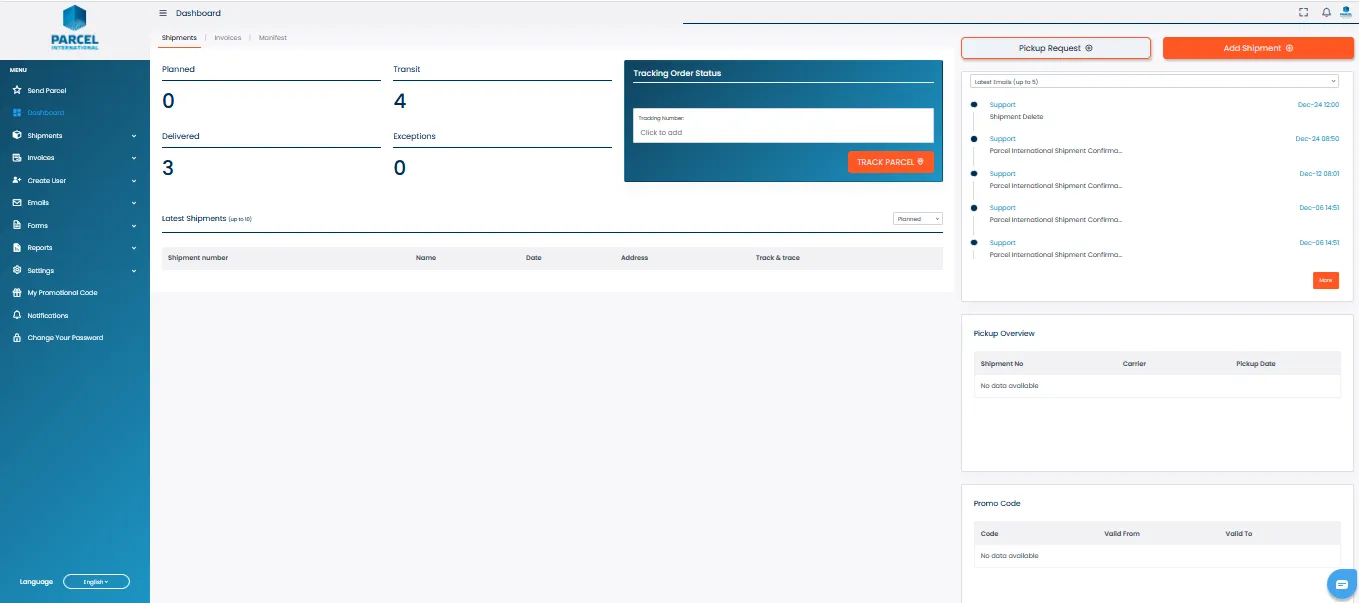
Make it easy for yourself and avoid stress around fast delivery. With Parcel International Arrange an express shipment in just a few clicks, compare providers directly, and choose the best option. Track your parcel worldwide and benefit from competitive rates in over 220 countries. Don’t wait to optimize your logistics—explore our user-friendly solution for cost-effective and reliable express shipments today.
Express Shipments
Can't find your question? Our support team is here for you 24/7 via the help centre.
What are the main shipping methods for global shipments?
The primary shipping methods include sea freight, air freight, road transport, and rail transport, each offering unique advantages for different types of shipments.
What are the key factors to consider when choosing a shipping method?
When selecting a shipping method, weight, dimensions, fragility, and destination are crucial. These factors influence the choice of the most suitable and cost-effective shipping option.
What is standard parcel post and when should I use it?
Standard parcel post is a cost-effective shipping option for international shipments. It is ideal when speed is not the top priority, and your shipment needs to arrive within 3 to 5 business days. Choose this option for simple and budget-friendly shipping.
What is an express shipment?
An express shipment is a shipping method focused on the fastest possible delivery of parcels, often within 24 to 72 hours.
When should I choose express shipments?
Choose express shipments when time is of the essence, such as for urgent documents or time-sensitive deliveries. These shipments offer ultra-fast delivery times of 24 to 48 hours, giving you maximum control over receipt.
How fast is express shipping typically?
Express shipping can often deliver your shipment within 24 to 48 hours. Use this option when sending urgent documents or products, and schedule your shipment in advance to ensure maximum speed.
What is the best way to prepare an express shipment?
Ensure accurate documentation, follow special packaging guidelines, and determine the most efficient route before submitting the parcel for shipment.
What is a letterbox parcel?
A mailbox parcel is a compact shipping option for small and lightweight shipments that fit through a standard mailbox, with maximum dimensions of 38 x 26.5 x 3.2 centimeters and a weight limit of 2 kilograms.
How does shipping a mailbox parcel work?
Shipping a mailbox parcel is simple: after proper packaging and addressing, the package is sent via a postal service. It is delivered through the mailbox without requiring the recipient to be at home.
Which items cannot be shipped as a letterbox parcel?
Items such as fragile goods, liquids, sharp objects, and electronic devices without additional protection are excluded from shipment as letterbox parcels.
What is the key difference between a pallet and a parcel?
A pallet is a larger, horizontal platform designed for moving and storing heavy goods, while a package is a smaller, individually wrapped shipment for small items.
When should I choose a pallet instead of a parcel?
Choose a pallet if you need to ship heavy or large quantities of goods, as pallets are more efficient for bulk transport. Parcels are better suited for individual or small shipments.
How are pallets and packages shipped?
Pallets are typically shipped via freight transport or large trucks, while packages are often delivered by courier services. The choice depends on the size and weight of the shipment.
What are the differences between sea freight and air freight?
Sea freight is more cost-effective for large volumes or heavy shipments, with longer delivery times of 20 to 45 days. Air freight, on the other hand, offers faster deliveries of 1 to 5 days, but at higher rates.
When Is Air Freight the Best Option?
Choose air freight for shipments where speed and freshness are critical, such as perishable goods. This method ensures delivery within 1 to 5 days and prevents spoilage with temperature-controlled handling.
How long does air freight typically take?
Air freight ensures fast international delivery, often within 2 to 5 days. Use this option for time-sensitive goods, but be aware of the higher associated costs.
What are the key considerations when choosing ocean freight?
Sea freight is the most cost-effective option for large volumes of goods. Keep in mind that delivery times are longer, often several weeks, and ensure you select the right container option based on your shipping volume.
How can I efficiently use road transport for regional deliveries?
Road transport offers flexibility and control over deliveries. Negotiate fixed weekly routes with carriers to save costs and ensure reliable delivery times.
How can I use multimodal freight services for my logistics strategy?
Multimodal freight services combine different transportation methods to reduce costs and increase efficiency. Get started here for your regular import routes and collaborate with a logistics partner capable of managing the entire supply chain.
What are the benefits of same-day delivery?
Same-day delivery ensures your package is delivered on the same day, which is essential in urgent situations. Submit your shipment before a specified cutoff time to take advantage of this fast service.
Which goods are suitable for bike and city couriers?
Bike and city couriers are ideal for documents, small parcels, and local deliveries. Use this service for shipments within urban areas where speed and environmental impact are important.
How does shipping temperature-sensitive goods work?
For temperature-sensitive shipments, it is important to use specialized packaging and transport solutions. Ensure you have appropriate insulation materials and cooling elements for safe delivery.
What are the weight and size limits for standard parcel services?
Standard parcel services typically have a weight limit of 31.5 kilograms. Check the specific guidelines of the chosen postal service to ensure your shipment meets the requirements.
How can I offer flexible shipping options to my customers?
Offer a variety of shipping methods and delivery locations based on your customers' needs. Analyze their preferences and adjust your shipping options to enhance customer satisfaction.
How do I choose the right express shipping option for my shipment?
Select the appropriate express shipping option by determining your shipping requirements and deadline. Compare the speeds and costs of different shipping methods such as Overnight Express or Economy Express.
What information do I need to provide when shipping a package?
Enter all exact details of the sender and recipient, including name, address, and contact information. Verify the spelling of international addresses to avoid delays.
How do I schedule the pickup or drop-off of my package?
Schedule the pickup by selecting a suitable time slot that aligns with your availability and the operating hours of shipping locations. Ensure your package is ready on the agreed date with all necessary documents.
How do I track my international shipment?
Monitor the status of your shipment using the tracking features provided by your shipping partner. Check the progress regularly and watch for key updates such as pickup and delivery.
What should I do if my shipment arrives damaged or incorrect?
Document any discrepancies immediately and contact your shipping partner for support. Keep all shipping documentation as evidence for potential claims.
What are the required documents for shipping a sea container?
The four essential documents are the Bill of Lading, Commercial Invoice, Packing List, and Certificate of Origin. These documents form the basis for export and import customs. Some shipments may require additional permits depending on the destination and type of goods, such as phytosanitary certificates for plants or conformity certificates for electronics.
What is the difference between FCL and LCL when shipping a sea container?
FCL (Full Container Load) means you have exclusive use of an entire container, which is faster and more secure. LCL (Less than Container Load) means you share container space with other shippers, which is more cost-effective for small volumes under 15 cubic meters. However, LCL has longer transit times and a higher risk of damage due to additional handling during consolidation and deconsolidation.
How long does it typically take to ship a sea container internationally?
Transit time generally ranges from 2 to 6 weeks, depending on the route, season, and container choice. Shorter routes within Europe may take 14 to 21 days, while intercontinental routes such as Asia to Europe can take 28 to 42 days. Always account for additional time for customs inspections and domestic transport to the final destination, which can add 3 to 7 days.
What are the average costs for shipping a sea container?
A 20ft container typically costs between €2,000 and €4,850, while a 40ft container may cost €3,500 to €7,200, depending on the route and season. These prices exclude additional costs such as insurance, port charges, storage, and domestic transport. Always request a detailed quote with all inclusive costs to avoid surprises, and compare multiple providers for the best deal.
How can I prevent damage to my goods during sea container transport?
Use sturdy packaging materials such as pallets, stretch wrap, and corner protectors to stabilize goods. Distribute weight evenly across the container floor, with heavier items at the bottom. Fill empty spaces with dunnage to minimize movement, and apply clear handling instructions. Consider insurance for valuable goods and opt for FCL over LCL for extra protection against damage from multiple handling.
What is the main difference between economy and standard shipments?
Economy shipments have lower costs and longer delivery times, while standard shipments are faster and offer better tracking and reliability. The service level differs significantly, especially for international shipments.
When is an economy shipment a smart choice for my online store?
Choose economy for non-urgent, lower-value international shipments to save costs. Economy is particularly useful for shipments where the customer is aware of the longer delivery time upfront.
Is a standard shipment always faster than economy?
Generally, yes: within the Netherlands, standard packages are typically delivered the next business day, while economy shipments may take longer, especially for international destinations.
What are the risks associated with economy shipments?
Economy shipments have limited tracking and a higher chance of delays during peak periods or customs inspections, which adds risk for valuable or time-sensitive products.
What is the difference between road transport and other modes of transport?
Road transport is highly suitable for short to medium distances and offers door-to-door flexibility, while air or sea transport is more practical for very large volumes or distant destinations. Road transport includes vehicles such as trucks, vans, and buses that deliver goods directly.
Which vehicles are classified under road transport?
Typical vehicles include trucks, vans, buses, and sometimes motorcycles for lightweight shipments. Each vehicle type is suited for a specific type of cargo and distance, from urban courier services to international freight routes.
What do I need to arrange for international road transport?
You often need customs documentation and must comply with border regulations. A NIWO license may be required for professional transport, and a CMR consignment note is mandatory for European road transport.
What should I consider regarding the costs of road transport?
Pay attention to costs per kilometer, surcharges for border crossings, and the chosen service level. The price for shipping a pallet to the EU varies per shipment, and FTL (Full Truck Load) and LTL (Less than Truck Load) offer different pricing structures depending on your volume.
What are the key cost differences between air and sea freight?
Air freight is on average 4 to 6 times more expensive than sea freight per unit of weight, which can quickly add up to thousands of euros for large volumes. Sea freight offers significantly lower costs per kilogram but requires a longer lead time.
What are the biggest bottlenecks in sea freight?
Sea freight can be delayed by weather conditions, port congestion, and strict customs procedures, making the lead time unpredictable. Additionally, sea freight requires more paperwork and a longer preparation time than air freight.
Can I combine air and sea freight for a single shipment?
Yes, combining air and sea freight is possible through multimodal logistics, where you link different transport modes for optimal speed and cost savings. This is particularly useful for long routes with multiple stops or varying urgency per segment of the shipment.
What is the biggest advantage of air freight?
Speed combined with reliability. Air freight achieves an average speed of 800 km/h and has minimal delays due to fixed flight schedules, making it the most predictable mode of transport for international shipments.
How can you prevent delays in air freight shipments?
Accurately record the weight, dimensions, and ready time before making a booking. Incomplete documents or a late ready time are the most common causes of delays and additional costs in air freight.
How large is the CO₂ emission of air freight?
The average CO₂ emission of air freight is approximately 602 g/ton-km. This is significantly higher than sea freight (8–16 g/ton-km) or road transport (62 g/ton-km).
Which goods are most suitable for air freight?
Perishable products such as fresh flowers and pharmaceuticals, high-value goods like electronics and jewelry, and urgent spare parts are most suitable. For these categories, the high value per kilogram or time-critical nature justifies the higher freight costs.
Can I send a parcel to any country with bpost?
Bpost ships to a large number of countries worldwide, though each destination has different rates, limits, and customs regulations. Always check the specific conditions for your destination country before shipping.
What documents do I need to ship internationally?
You typically need a CN22 or CN23 form, and for business shipments, a commercial invoice with an HS code. These documents determine how quickly customs processes your parcel.
Who pays the import duties for an international shipment?
Import duties and VAT are usually collected from the recipient unless you choose an option to prepay these costs as the sender. The amount depends on the destination country and product category.
Is shipping via Parcel International smarter than shipping directly with bpost?
For simple, local shipments, bpost is sufficient. For complex customs, frequent business shipments, or challenging destinations, comparing options via Parcel International often saves time and money.
What does it cost to ship a parcel internationally?
Costs are based on weight or volumetric weight, fuel surcharges, and—outside the EU—customs fees and potential import duties. From July 1, 2026, a fixed EU customs duty of €3 will apply to small shipments under €150. The exact price depends on the destination, weight, and chosen transport mode.
Am I allowed to ship lithium batteries internationally?
Lithium batteries can be shipped but require specific packaging and labeling for air transport. Loose batteries and power banks are often restricted or allowed only under certain conditions for airmail. Always check with the carrier, as incorrect declaration can result in blocked or delayed shipments.
What does the term 'via air mail' mean exactly?
'Via air mail' indicates that at least part of the shipment's journey is by air, which usually involves priority processing. The term often appears alongside labels such as 'Par avion' or 'Priority' on the packaging.
Is airmail always faster than regular mail?
Airmail is generally faster than ground mail for long international distances because the air segment saves significant time. However, the final speed depends on correct marking and submission, as outlined in UPU circulars on priority processing.
What are CARDIT and RESDIT in the airmail chain?
CARDIT and RESDIT are electronic messages exchanged by operators and airlines to coordinate the transfer of shipments. Under the UPU and IATA collaboration framework, CARDIT ideally precedes handover, while RESDIT typically follows within hours of arrival.
Which goods are prohibited for shipping via airmail?
Hazardous materials and improperly packaged batteries are usually refused for air transport or require special declaration. Always consult your carrier's rules and the destination country's regulations before declaring questionable contents.
Does Parcel International offer air freight options in addition to regular airmail?
Yes, Parcel International provides air freight with economy and express options for both private and business shippers. The exact price of a shipment is available upon request via the air-freight-product-page.
What is volumetric weight, and why do I pay for it?
Volumetric weight calculates the rate based on the space your parcel occupies, not just its physical weight. It is used because lightweight but bulky shipments take up as much cargo space as heavy ones. Carriers always charge based on the higher of the two values: gross weight or volumetric weight.
When should I engage a customs broker?
A customs broker is recommended for complex goods, unclear HS codes, or if you have limited experience with international export, as this demonstrably reduces the risk of border delays. For simple, lightweight shipments with a clear packing list, this is often unnecessary.
How long does it take to ship a large package internationally?
Delivery time depends heavily on the chosen mode of transport: express air freight is the fastest, road transport within Europe is usually in between, and sea freight is the slowest but often the most cost-effective for large volumes. Always request a specific transit time when booking, as this can vary significantly by destination and carrier.
Get a grip on your parcel shipping
Compare carriers, choose the best price and keep track of your international shipments. You can calculate and book without an account.
