
Brief Summary
- Parcel Pickup Points Offer ConvenienceRecipients can collect parcels at their convenience, without relying on home delivery.
- Enhanced Parcel SecurityParcels are better protected against theft as they are securely stored at pickup points.
- Efficient Delivery LinkParcel pickup points reduce failed delivery attempts and lower transport costs for businesses.
- Flexibility for ConsumersCustomers can choose their pickup location, giving them more control over receipt.
- Future Technological InnovationsAutomated lockers and smart routing are expected, further improving logistics.
What Is a Parcel Pickup Point and Why Does It Exist?
A parcel pickup point is a central location where parcels can be delivered and collected, outside of traditional postal delivery. It functions as a collection hub where delivered parcels are securely stored until the recipient can pick them up.
Why Did Parcel Pickup Points Emerge?
Parcel pickup points are a response to the challenges of modern delivery. They were developed to address various issues faced by consumers and delivery services in traditional parcel delivery. The main reasons for their emergence are:
- Convenience: People are not always home to personally receive parcels
- Flexibility: Ability to pick up parcels at a suitable time
- Security: Protection against theft and damage
How Do Parcel Pickup Points Work?
The system works quite simply. When a parcel is shipped, the recipient can choose delivery to a nearby parcel pickup point. After delivery, the customer receives a unique code or QR code to collect the parcel. This method generally increases the success rate of first delivery attempts.
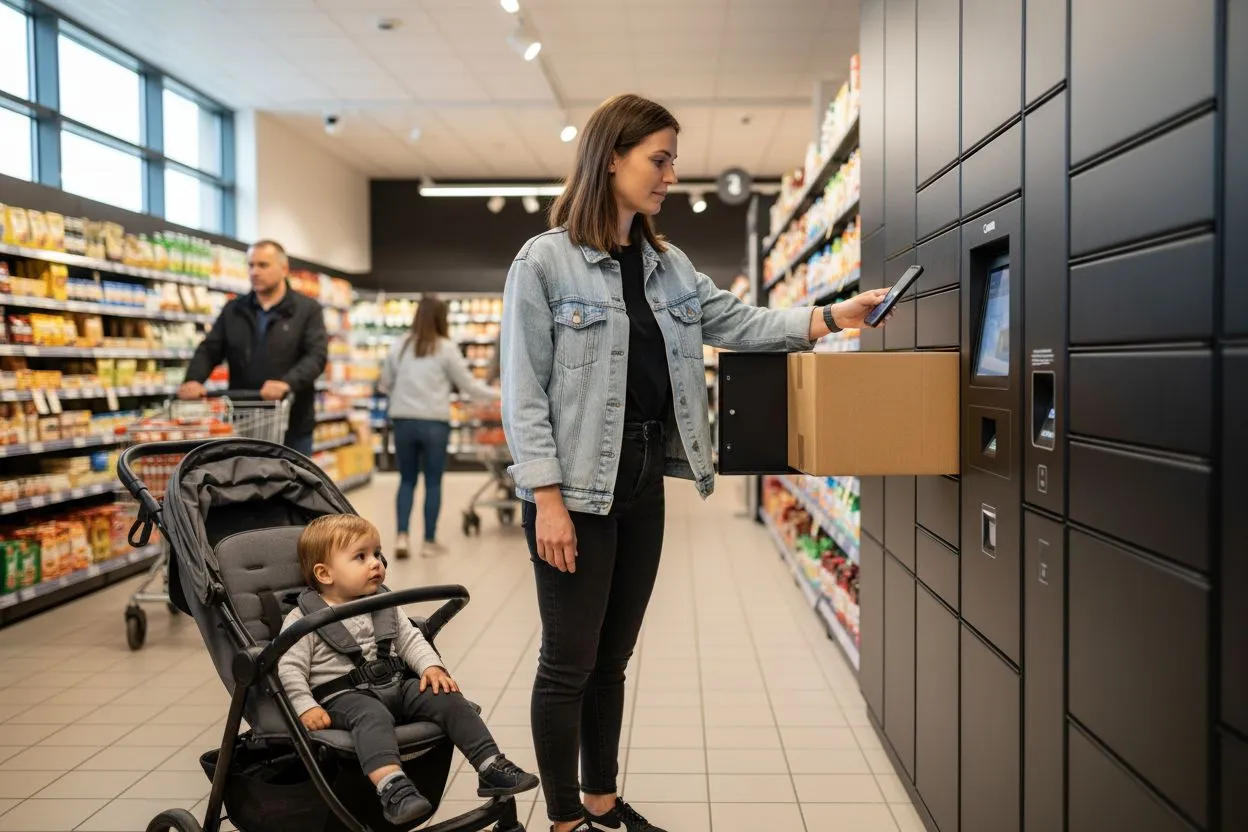
Parcel pickup points can be located in supermarkets, gas stations, dedicated pickup locations, or even nearby stores. They provide a central, secure location where parcels can be stored and later collected by the recipient, without relying on home delivery.
The Role of Parcel Pickup Points in the Delivery Chain
Parcel pickup points play a crucial role in the modern logistics system. They form an essential link between senders, carriers, and recipients, making the delivery process more efficient and flexible.
The Logistical Challenges That Parcel Pickup Points Solve
In the traditional delivery chain, numerous challenges hindered efficiency. Parcel pickup points offer solutions to these problems by:
- Minimizing Failed Delivery Attempts: Parcels are no longer delivered to homes where recipients may be absent
- Cost Savings: Fewer individual delivery trips mean lower transport costs
- Increasing Delivery Reliability: Guaranteed secure storage of parcels
How Parcel Pickup Points Optimize the Delivery Chain
By acting as an intermediary, parcel pickup points transform traditional delivery logistics. These points significantly improve efficiency in the last mile of delivery.
The role of parcel pickup points extends far beyond a simple storage location. They serve as a strategic hub that optimizes the entire delivery chain by offering flexibility to both senders and recipients. Additionally, they contribute to more sustainable logistics by reducing the number of transport movements and enabling more consolidated deliveries.
Benefits of Parcel Pickup Points for Consumers and Businesses
Parcel pickup points offer numerous benefits for both consumers and businesses in the modern logistics world. They transform the way we send and receive parcels.
Benefits for Consumers
Consumers benefit from parcel pickup points in several ways:
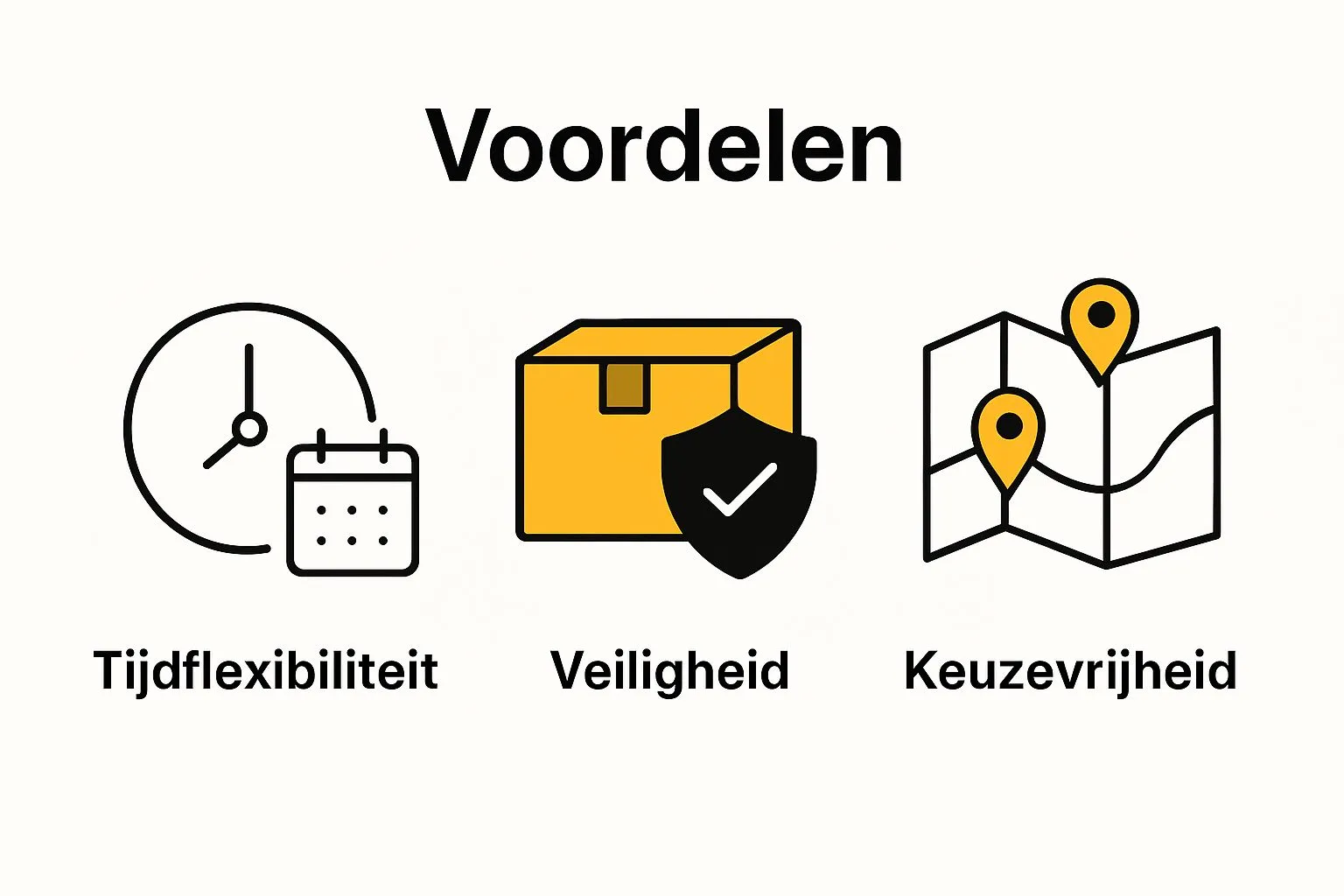
- Time Flexibility: Pick up at a convenient time, without relying on strict delivery hours
- Security: No concerns about parcels being left unattended at the door
- Freedom of Choice: Ability to select from various pickup points
Benefits for Businesses
For businesses, parcel pickup points offer strategic operational advantages. These points can significantly improve delivery efficiency. Businesses can benefit by:
- Cost Reduction: Fewer failed delivery attempts and more efficient routes
- Improved Customer Experience: More flexible and reliable delivery options
- Sustainability: Fewer individual transport movements through consolidated delivery
Parcel pickup points create a win-win situation where both consumers and shipping businesses benefit from a smarter, more flexible logistics infrastructure.
Below is a clear table comparing the key benefits of parcel pickup points for both consumers and businesses. This helps you quickly understand the impact for both groups.
Benefit | Consumers | Businesses |
|---|---|---|
Convenience and Flexibility | Pick up at a convenient time | More efficient delivery routes |
Security | Protection against theft and damage | Reduced risk of complaints/fraud |
Freedom of Choice | Choice of various pickup points | More delivery options for customers |
Cost Savings | Not directly applicable | Lower transport and delivery costs |
Sustainability | Indirect (less traffic) | Reduced ecological footprint through consolidation |
Improved Experience | Less stress and uncertainty upon receipt | Higher customer satisfaction and loyalty |
How Parcel Pickup Points Work: From Shipping to Pickup
The process from shipping to pickup at parcel pickup points is a streamlined system that reflects the efficiency of modern logistics.
The Shipping Journey
When a parcel is shipped, a detailed logistical journey begins. The sender selects a parcel pickup point as the destination during shipping. Several key steps are followed:
- Registration: The parcel is registered in the logistics system
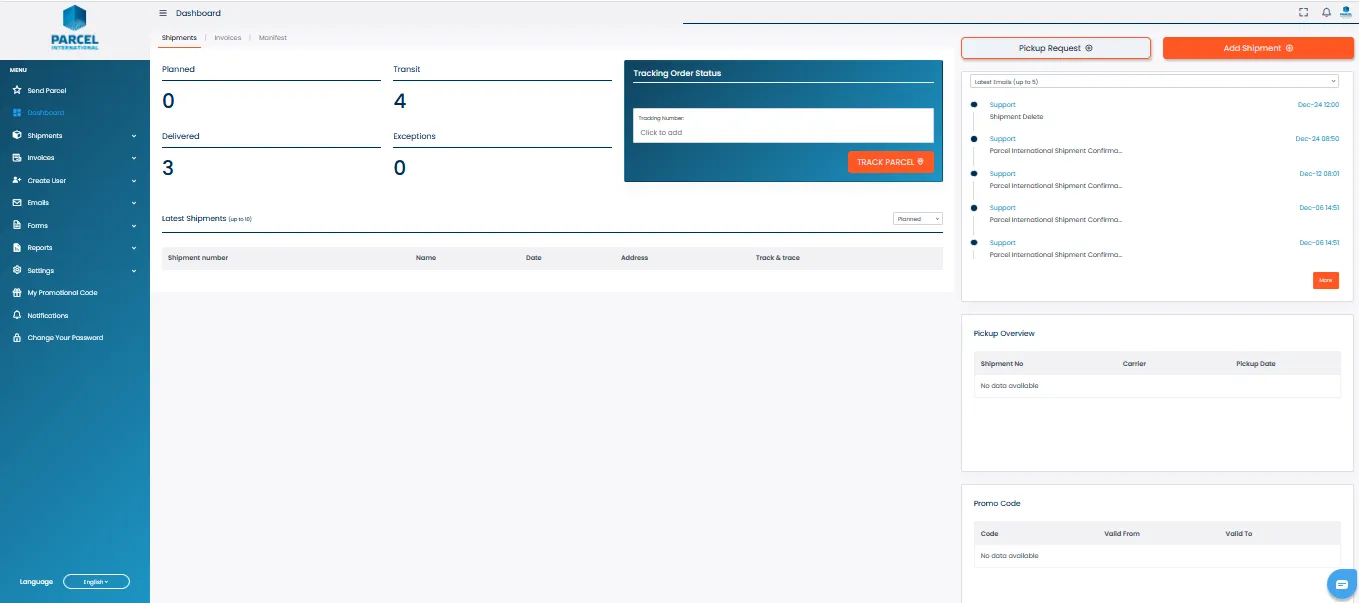
- Tracking: A unique tracking number is generated for real-time tracking
- Routing: The parcel is sent to the selected pickup point
The Pickup Process
The pickup process is designed to be user-friendly. Once the parcel arrives, the recipient receives a unique pickup code via SMS or email. At the pickup point, the recipient can:
- Enter the special code on a terminal or display it on their smartphone
- Present a valid ID
- Receive the parcel after verification
This automated system ensures a secure, efficient, and transparent parcel handling process, giving both sender and recipient control and convenience.
The following table shows step-by-step how the process works from shipment to pickup at a parcel delivery point. This overview clarifies the route of the parcel and shipping documents:
Step | Description |
|---|---|
1. Registration | The parcel is entered into the logistics system |
2. Tracking | A unique tracking number is assigned for real-time tracking |
3. Routing | The parcel is sent to the selected pickup point |
4. Arrival Notification | The recipient receives a pickup code via email or SMS |
5. Verification | The code is entered and an ID is presented at the pickup point |
6. Parcel Pickup | After verification, the recipient receives the parcel |
The Future of Parcel Pickup Points in International Shipping
Parcel pickup points are evolving rapidly and will play a crucial role in the future of international logistics.
Technological Innovations
Technological advancements will fundamentally transform parcel pickup points. Expected innovations include:
- Automated Lockers: Fully robotic pickup stations
- Artificial Intelligence: Smart routing and predictive logistics
- Blockchain Technology: Enhanced tracking and transparency
Sustainability Challenges
Research by Europa Nu confirms that international parcel distribution will increasingly focus on sustainability. Future parcel pickup points will likely:
- Become energy-neutral locations
- Use electric transportation
- Implement waste reduction strategies
This evolution will not only increase efficiency but also make a significant contribution to reducing the ecological footprint of international shipping. Parcel pickup points are transforming from simple collection points into advanced, sustainable logistics hubs that perfectly combine technology and environmental awareness.
Never Miss a Parcel Again with Parcel International
Do you find home deliveries uncertain regarding receipt and security? In this article, you’ve read how parcel pickup points provide a solution to this problem. Many people miss deliveries because they are not home or worry about parcels being left unsecured. As an international shipping partner, Parcel International understands these challenges like no other and offers smart solutions that give you full control over your shipments. Discover how our platform simplifies your logistics and makes your shipments secure and flexible through modern delivery methods.
Tired of stressing over missed deliveries or unsafe drop-offs? Start shipping your parcels efficiently today and experience the convenience of transparent tracking and easy selection of globally available pickup points. Go directly to our website to plan your first shipment or learn more about our shipping options and discover how easy international shipping can be with Parcel International. Don’t wait—make a difference with every shipment.
Parcel Pickup Points
Can't find your question? Our support team is here for you 24/7 via the help centre.
What are the different delivery options for international shipments?
International shipments typically have three main options: express delivery, standard delivery, and scheduled delivery. Choose the option that best fits the speed and cost you need for your shipment.
How do I choose the best delivery option for my international shipment?
When selecting a delivery option, consider factors such as the urgency of the shipment, the weight of the package, and your budget. Carefully evaluate these elements to determine the most suitable option.
How can I change my delivery option after placing an international shipment?
In many cases, you may be able to modify your delivery option through the carrier's customer service, depending on their policy. Contact them as soon as possible to discuss your options.
What are the costs associated with international delivery options?
Total shipping costs may vary depending on the delivery option, any additional services, and insurance. Review the cost structure of each option to avoid unexpected expenses.
What are the benefits of door-to-door delivery?
Door-to-door delivery offers benefits such as time savings, less logistical complexity, full shipment tracking and a better customer experience for both senders and recipients.
How does the door-to-door delivery process work?
The process starts with collecting the shipment from the sender, followed by transport via optimised routes to the final destination. Throughout the process, both sender and recipient can track the shipment continuously.
What is a Parcel Pickup Point?
A parcel pickup point is a location where packages can be securely delivered and collected, outside of traditional postal delivery. When sending a package, select a nearby pickup point to experience the convenience of collecting it at a time that suits you.
How can I deliver a package to a parcel pickup point?
When shipping a package, you can select a pickup location during the shipping process. Ensure the details are entered correctly and use the tracking features for a seamless experience from shipment to collection.
Are parcel pickup points secure for my shipments?
Yes, parcel pickup points provide secure storage for your packages until you collect them. To make the most of this service, ensure you have your unique pickup code and ID with you when collecting your package.
What are the benefits of parcel pickup points for consumers?
Consumers benefit from parcel pickup points through flexible pickup times, enhanced package security, and the freedom to choose their preferred location. Consider having your parcels delivered to a nearby pickup point for added convenience and peace of mind.
How does a pick-up service work in practice?
A pick-up service begins with scheduling a collection appointment, after which the courier collects the parcel and processes it for delivery. This includes verifying the shipment and transporting it to the shipping location.
What types of pick-up services are available?
There are various types of pick-up services available, including standard pick-up services, express pick-up for urgent shipments, and specialized services for specific goods such as pallets or fragile items.
How do I schedule the collection or drop-off of my parcel?
Schedule the collection by choosing a time slot that suits your availability and the opening hours of drop-off locations. Make sure your parcel is ready on the agreed date with all the required documents.
What are the key components of an effective returns process?
A good returns process has clear conditions, an easy-to-use returns portal and fast crediting. Put these in place to increase customer satisfaction and encourage repeat purchases.
What are the key differences between pickup and delivery?
Pickup means customers collect their orders themselves at a specific location, while delivery involves products being shipped directly to the customer's home or another location.
How do pickup and delivery impact customer satisfaction?
Pickup offers customers more control and flexibility, while delivery provides convenience. Both methods influence satisfaction, with pickup points enabling direct return options and delivery services meeting the demand for home delivery.
What are the logistical costs of pickup compared to delivery?
Pickup typically incurs lower initial costs as shipments can be consolidated, whereas delivery involves higher transportation costs due to individual shipments and the required infrastructure.
What risks are associated with pickup and delivery?
For delivery, the main risks include package loss, damage, and delays. With pickup, liability shifts to the customer upon receipt, but inefficient processes can lead to long wait times and customer dissatisfaction.
What does cash on delivery (COD) mean exactly?
Cash on delivery (COD) means you only pay when the courier delivers the package to you. You pay the invoice amount directly to the courier, after which you receive the package.
What are the costs of cash on delivery?
COD fees typically range between €12.50 and €50, depending on the weight and order amount. These fees are in addition to standard shipping costs.
Can I refuse a package with cash on delivery?
Yes. If you refuse the delivery or do not pay upon receipt, the package will be returned to the sender. Check the package for visible damage before deciding to pay.
Is cash on delivery available for international shipments?
Most carriers only offer COD for deliveries within the Netherlands. For international shipments, other payment methods are usually the only option.
When is cash on delivery a good choice?
COD is useful if you are ordering from an unfamiliar online store and want security, or if you prefer not to use digital payment methods. For small orders, the extra costs are often not worth it.
What is the average cost of a return per order?
A return incurs costs for transportation, inspection, repackaging, and disposition. With a high return volume, this can quickly add up to a significant expense.
How long is the legal cooling-off period for customers?
Consumers in the Netherlands and the EU have a 14-day cooling-off period after receiving the product. Refunds, including standard shipping costs, must be processed within 14 days of the return notification.
What happens if I don’t have a cancellation button?
The absence of a proper cancellation button or clear return information extends the legal return period to a maximum of 12 months. This significantly increases your financial risk.
How can I reduce my return rate?
Analyze return reasons via your return portal and improve product information based on the most common complaints. Sizing issues, damage upon arrival, and inaccurate product descriptions are the most common and avoidable causes.
What is a good KPI for return logistics?
The recovery rate per product category and the average processing time per quality grade are the most direct metrics. Tracking these two KPIs provides sufficient insight to improve the return process effectively.
Does PostNL also pick up packages at home?
Many carriers offer the option to schedule a package pickup at your home via their app or website, for example, for a return shipment. The exact conditions and costs vary by carrier and service, so always check your account or the delivery notification for details.
Can someone else pick up my package for me?
Yes, this is usually possible with a written or digital authorization containing your name, address, and order number, along with a valid ID of the authorized person. The pickup location will verify both the authorization and the identity before releasing the package.
Can I have my package picked up abroad?
For international shipments, this depends on the carrier and the destination country, and customs formalities may affect the release of the package.
How long does a package stay at a pickup point before it is returned?
Most pickup points have a limited storage period for packages, while parcel lockers often have shorter timeframes. If the package is not picked up in time, it is usually returned to the sender, as also described by Verbraucherzentrale.
Get a grip on your parcel shipping
Compare carriers, choose the best price and keep track of your international shipments. You can calculate and book without an account.
