
A delay of just one day in international shipping can significantly impact customer satisfaction. For small and medium-sized Dutch e-commerce stores, every link in the delivery chain is crucial. To successfully sell across borders, you need to know exactly what a carrier does, what options are available, and where costs arise. This article helps you make smart choices and apply current insights directly to boost profits and customer satisfaction.
Key Takeaways
Point | Details |
|---|---|
Role of Carriers | Carriers are essential for e-commerce logistics and transportation, managing complex processes and customs documentation. |
Carrier Selection | Choose a carrier with a proven track record in your e-commerce segment and pay attention to their international coverage. |
Legal Liability | Understand the legal responsibilities of carriers and ensure clear agreements on liability and insurance. |
Cost Structure | Manage costs by making detailed contractual agreements and understanding all potential surcharges. |
What Is a Carrier in E-Commerce?
A carrier forms the crucial link between online sellers and their customers by handling the physical transport of digitally ordered products. In the complex landscape of electronic commerce, a carrier acts as an essential logistics partner that effectively manages international goods movement.
The role of a carrier extends beyond simple transport. They coordinate complex logistical processes, consolidating shipments, negotiating rates, providing tracking, and handling all necessary customs documentation. Their expertise is particularly valuable in cross-border deliveries where complex international regulations apply.
In e-commerce, carriers are responsible for multiple critical aspects of the supply chain. They not only ensure physical transport via various modes such as shipping, air freight, and road transport but also monitor the quality and speed of delivery. The trust of online customers is directly linked to the reliability and timeliness of these delivery processes.
Pro Tip: Always select a carrier with a proven track record in your specific e-commerce market segment and verify their international coverage before making a final decision.
Key Types of Carriers and Their Differences
Within the logistics industry, carriers distinguish themselves through their specific services and areas of expertise. Globally, we can identify four primary categories: freight forwarders, parcel carriers, multimodal carriers, and specialized international transport services.
Freight forwarders primarily focus on coordinating goods transport for businesses. They negotiate with various transport companies, optimize routes, and handle all administrative processes related to shipping. Parcel carriers, on the other hand, specialize in delivering packages directly to consumers, making them particularly suitable for e-commerce businesses.
Multimodal carriers offer the most flexible solutions by combining different transport methods. They can move the same shipment via shipping, air freight, and road transport, depending on the most efficient route. Specialized transport services focus on specific market segments such as fragile goods, pharmaceutical products, or high-value technological equipment.
Below is an overview of the key differences between carrier types in e-commerce:
Carrier Type | Service Focus | Suitable For | Unique Value |
|---|---|---|---|
Freight Forwarder | Route optimization & administration | Large e-commerce stores, B2B | Handles complex international shipments |
Parcel Carrier | Speed and customer service | E-commerce, B2C | Direct delivery to consumers |
Multimodal Carrier | Flexibility in transport mode | International, bulk shipments | Combines transport methods |
Specialized Service | Specific types of goods | Medical, technology | Expertise in fragile products |
Pro Tip: Carefully analyze the specific needs of your e-commerce business before selecting a carrier to find the most suitable partner for your unique logistical challenges.
How a Carrier Collaborates with E-Commerce Stores
The collaboration between e-commerce stores and carriers is a complex process centered around seamless logistical integration and effective data exchange. Modern carriers no longer act as mere transporters but as strategic partners essential to the success of online businesses.

The collaboration process begins with order processing. Once a customer places an order, the carrier receives detailed information about the package. Agreements are then made regarding tracking, shipping method, and expected delivery time. Transparent communication is crucial here: e-commerce stores expect real-time updates on shipment status and any potential delays.
A successful partnership requires more than just technical integration. Strategic Network Collaboration is central, with e-commerce stores and carriers working together on process optimization. This involves sharing operational insights, jointly developing more efficient routes, and continuously evaluating performance indicators.
Pro Tip: Invest in a carrier that not only provides logistical services but is also willing to innovate and collaborate with your specific business model.
Legal Requirements and Carrier Liability
Carriers operate within a complex legal framework that precisely defines their responsibilities and liabilities. CMR Convention for International Goods Transport forms the foundation for legal obligations in the transport industry, with specific provisions for risks related to loss, damage, and delays.
A carrier's liability is determined by the level of care exercised in handling goods. They are responsible for any damage to goods from the moment of receipt until final delivery. However, there are key exceptions, such as force majeure, where the carrier cannot be held liable for unforeseen circumstances beyond their direct control.
Within the Netherlands, carriers often apply the General Transport Conditions 2002, which provide detailed guidelines for limiting liability. The maximum compensation is typically linked to the weight of the goods or the total freight price. E-commerce businesses should therefore be aware of these legal frameworks to adequately assess financial risks.
Pro tip: Always have your transport agreement legally reviewed and ensure clear agreements regarding liability and insurance for your shipments.
Cost Structure, Risks, and Smart Choices
The cost structure of carriers is complex and influenced by numerous variables that directly impact the profitability of e-commerce businesses. International delivery terms play a crucial role in clarifying the division of costs and risks between parties.
Key cost components include transport rates, transshipment costs, insurance, and potential surcharges for special services. E-commerce businesses must consider variables such as weight, volume, distance, transport mode, and any special handling requirements. Some carriers use differentiated rates based on volumetric weight, meaning large but lightweight parcels can be relatively expensive.
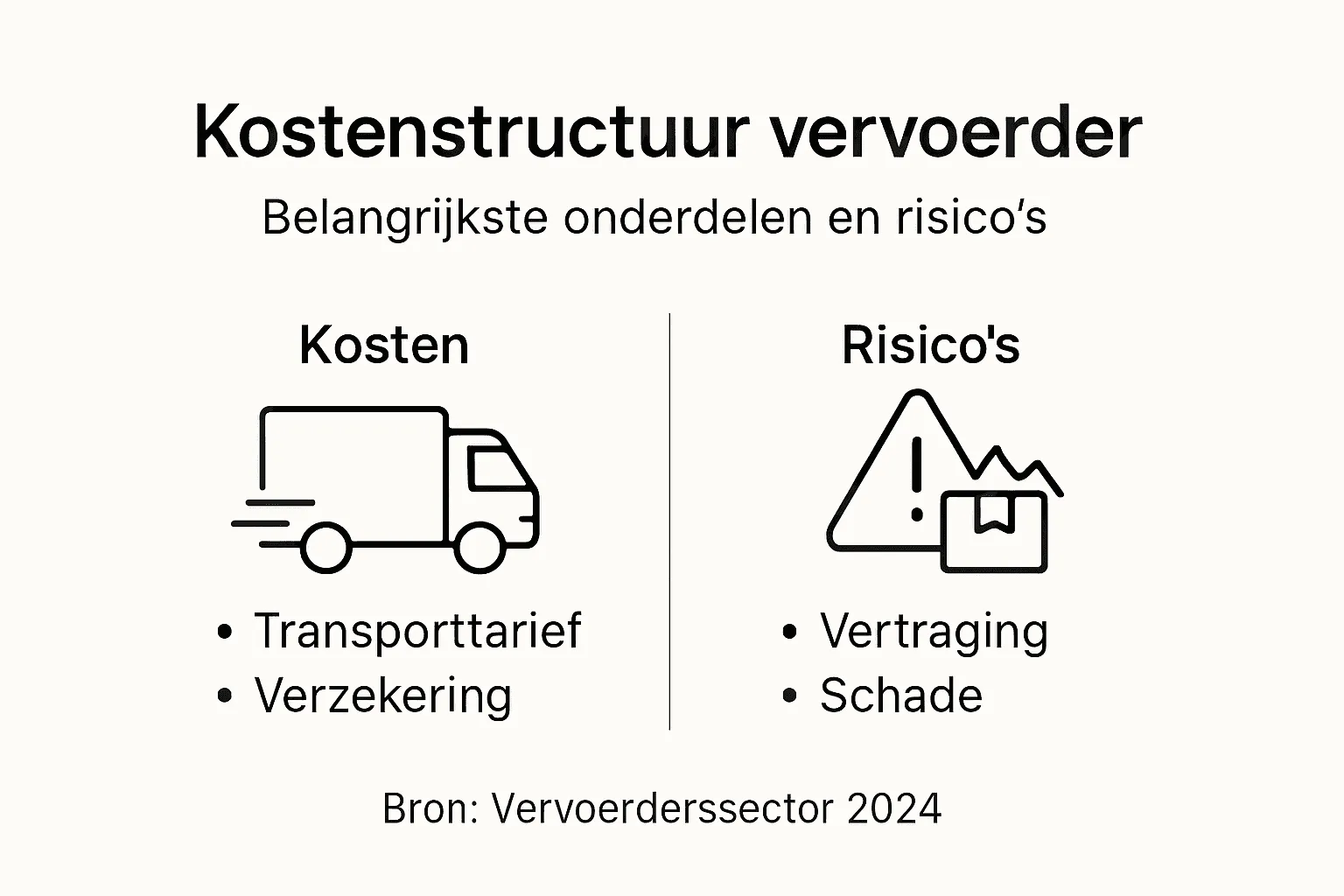
Risk management is an essential part of making smart carrier choices. In addition to financial aspects, e-commerce businesses should consider reliability, tracking capabilities, delivery times, and the extent to which a carrier can anticipate unexpected logistical challenges. A diversified risk profile can be achieved by selecting multiple carriers or entering into flexible contract arrangements.
Below is a concise overview of carrier risks and possible mitigation measures:
Risk | Cause | Possible Approach |
|---|---|---|
Delay | Border control, adverse weather | Use multiple carriers |
Damage to goods | Careless handling | Additional packaging, insurance |
Unexpected costs | Surcharges, fluctuating rates | Clear contractual agreements |
Legal liability | Unclear terms and conditions | Legal review of the agreement |
Pro tip: Always negotiate customized agreements and request detailed cost estimates with a clear specification of all possible surcharges.
Simplify Your International Shipments with Parcel International
This article explains how crucial the right carrier is for the success of your e-commerce business. The complexity of international regulations, reliable tracking, and cost structures can present significant challenges. It’s understandable that you’re looking for a partner to alleviate this burden and collaborate on smart, efficient solutions tailored to your specific e-commerce needs.

With Parcel International , you gain access to a user-friendly platform where you can compare different carriers and immediately make the best choice for your shipments. Since 2007, we have connected e-commerce businesses with reliable transport services across more than 220 countries and regions. This means transparency, clarity in costs, and optimal control over your delivery process. Ready to elevate your e-commerce business’s international logistics? Start exploring our practical solutions today and experience the convenience of hassle-free shipping with Parcel International.
Want to learn more about our comprehensive services? Visit our landing page and discover how we can become your logistics partner.
Can't find your question? Our support team is here for you 24/7 via the help centre.
What types of carriers are there in e-commerce?
There are four main types of carriers: freight forwarders, postal carriers, multimodal carriers and specialised transport services. Each has its own characteristics and suits different kinds of shipments.
What is the role of a carrier in e-commerce?
A carrier is responsible for physically transporting products from online sellers to their customers. Carriers coordinate logistics processes such as shipment consolidation, rate negotiations and customs documentation.
What are the legal requirements and liabilities of carriers?
Carriers have legal obligations under the CMR Convention and the Dutch General Transport Conditions 2002. They are liable for damage to goods, but exceptions such as force majeure can limit their liability.
How does the collaboration between webshops and carriers work?
Collaboration begins with order processing, where the carrier receives detailed shipment information. Transparent communication and strategic partnership are essential for successful logistics integration.
Get a grip on your parcel shipping
Compare carriers, choose the best price and keep track of your international shipments. You can calculate and book without an account.
