Parcel shipping is the silent force behind nearly every order placed online. Online stores rely on millions of parcels in transit daily, and in 2024, over 4.6 billion low-value parcels entered the EU. Surprisingly, the real challenge isn’t sending so many parcels, but ensuring each one reaches the customer seamlessly, quickly, and accurately. Smart shipping makes the difference between a satisfied customer and a lost sale.

Brief Summary
- Efficient Shipping Enhances Customer SatisfactionFast and reliable delivery times increase customer satisfaction and encourage repeat purchases.
- Clear Communication is CrucialTransparent and real-time shipping information helps manage customer expectations.
- Quality of Packaging and Shipping is EssentialProper packaging protects products and prevents complaints, leading to higher customer satisfaction.
- Strategic Logistics Chain Planning is ImportantUnderstanding every process within the logistics chain ensures efficient shipping from online store to customer.
- International Shipping Processes Require Attention to DetailOnline stores must understand customs, taxes, and regulations for successful international shipping.
What is Parcel Shipping and Why is it Important for Online Stores?
Parcel shipping forms the backbone of modern e-commerce, enabling online stores to deliver products efficiently and reliably to customers worldwide. It’s more than just moving a product from point A to point B—it’s a complex logistics process that directly impacts customer experience and the success of online businesses.
The Definition of Parcel Shipping
Parcel shipping is a structured delivery process where goods are transported from a shipping point (usually the online store) to the final destination (the customer). This process includes multiple critical steps such as packaging, labeling, tracking, and delivery. Research from the University of Antwerp shows that the shipping process is crucial for customer trust and overall business performance.
Importance for Online Stores
For online stores, a well-organized parcel shipping process is essential for several reasons:
- Customer Experience: Fast and reliable delivery enhances customer satisfaction
- Competitive Advantage: Efficient shipping sets you apart from other online retailers
- Operational Efficiency: Optimized shipping processes reduce costs and increase profit margins
By investing in professional parcel shipping processes, online stores can improve their service and provide customers with a seamless purchasing experience. .
The Impact of Efficient Parcel Shipping on Customer Satisfaction
Efficient parcel shipping is more than a logistical task—it’s a critical factor that directly influences customer satisfaction and loyalty in the digital commerce economy. Online stores that optimize their shipping processes create a positive brand experience that encourages customers to return and recommend the business.
Expectation Management and Communication
Modern consumers expect transparency and real-time information about their shipments. A well-organized shipping process provides clear tracking, accurate delivery times, and proactive communication. Effective communication and organization are crucial for customer satisfaction.
Quality Aspects of Parcel Shipping
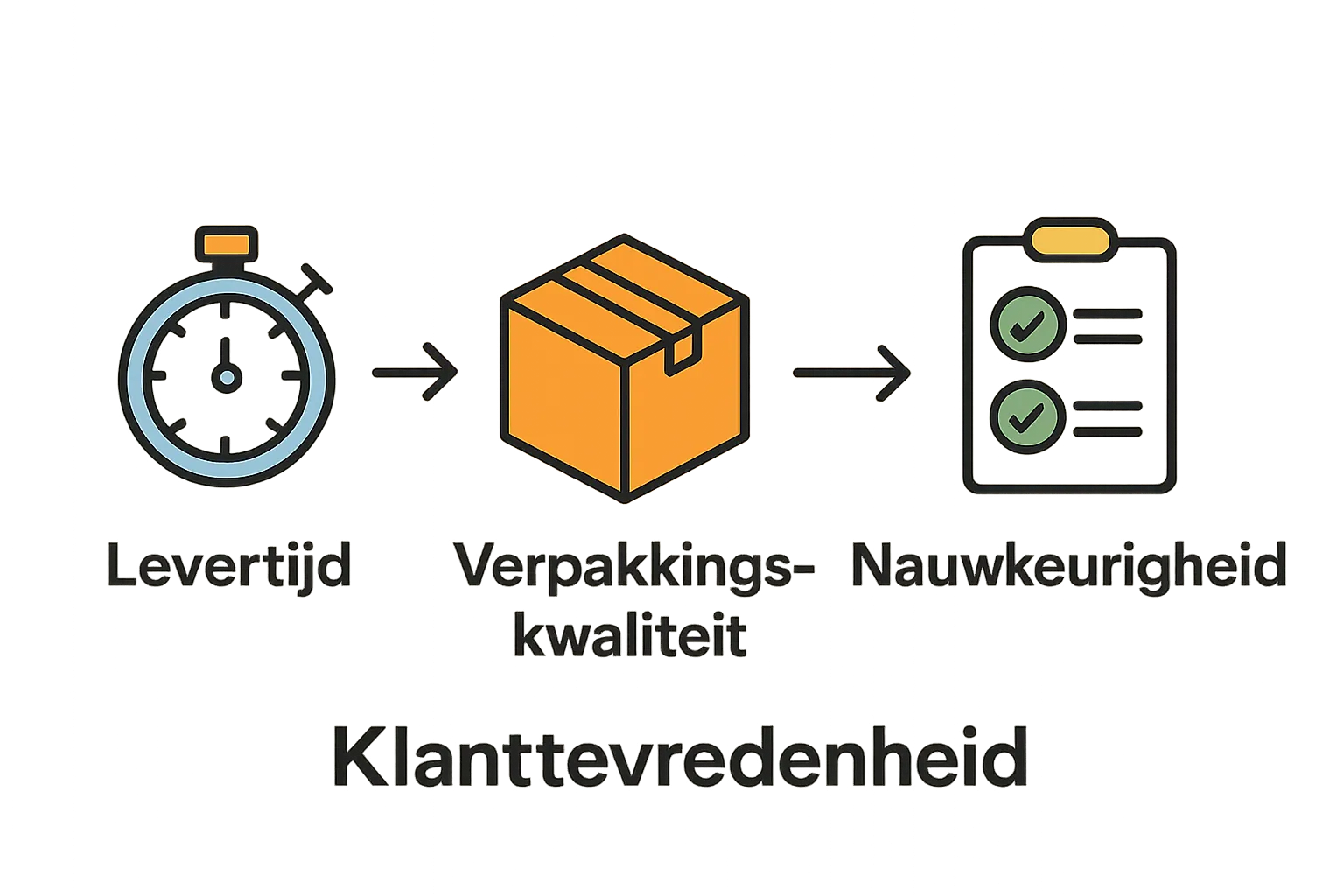
The quality of parcel shipping is determined by several factors:
- Delivery Speed: Fast delivery increases customer satisfaction
- Packaging Quality: Protects products and conveys a professional impression
- Accuracy: Correct and undamaged delivery prevents complaints
Online stores that optimize these aspects receive fewer complaints and more repeat purchases.
A successful parcel shipment isn’t just a transaction—it’s an opportunity to build trust and strengthen brand perception.
How Does the Parcel Shipping Logistics Chain Work for Online Stores?
The parcel shipping logistics chain is a complex system where various components work seamlessly together to transport products from the online store to the end user. This sophisticated process requires strategic planning, technological integration, and operational precision.
Components of the Logistics Chain
The logistics chain includes several critical steps that follow one another and are interdependent. From order processing to final delivery, these steps form an integrated network that ensures efficiency and customer satisfaction. Research from TIAS Business School emphasizes how businesses can strategically redesign their supply chain for maximum competitive advantage.
Key Process Steps
The logistics chain for parcel shipping includes the following essential steps:
- Order Processing: Receiving and validating online orders
- Inventory Management: Checking product availability and warehouse logistics
- Packaging: Carefully preparing products for shipment
- Shipping: Selecting the optimal transport route and method
- Tracking: Real-time monitoring of the parcel
Discover our advanced shipping processes to see how modern online stores optimize this complex chain. A well-structured logistics chain not only forms the backbone of e-commerce but also determines the overall customer experience.
For a better overview of the critical steps in the parcel shipping logistics chain for online stores, below is a table with the key process steps and their objectives.
Process Step | Objective |
|---|---|
Order Processing | Registering and verifying customer orders |
Inventory Management | Checking and managing product availability in the warehouse |
Packaging | Safely and efficiently preparing products for shipment |
Shipping | Choosing the best shipping method and transport route |
Tracking | Real-time monitoring of the parcel for both the online store and the customer |
Key Concepts in International Parcel Shipping for E-commerce Stores
International parcel shipping is a complex ecosystem that requires more than simply transporting a product from point A to point B. It demands a deep understanding of international logistics regulations, customs procedures, and customer expectations that vary by region and market.
Legal and Regulatory Considerations
E-commerce stores shipping internationally must account for a variety of legal requirements. Research from the European Parliament indicates that in 2024, over 4.6 billion low-value items will enter the European Union, making strict compliance processes essential.
Critical International Shipping Concepts
Several fundamental concepts are crucial for successful international parcel shipping:
- Customs Declaration: Accurate documentation for cross-border shipments
- Taxes and Import Duties: Transparent calculation of additional costs
- International Shipping Terms: Understanding Incoterms and transport responsibilities
- Local Laws and Regulations: Compliance with specific regional trade requirements
Discover how to easily compare international shipping services to simplify the complexity of international parcel shipping. Understanding these concepts is essential for e-commerce stores aiming to grow and excel in the global e-commerce market.
The following table compares key aspects and challenges between domestic and international parcel shipping for e-commerce stores based on the discussed concepts.
Aspect | Domestic | International |
|---|---|---|
Laws and Regulations | Relatively straightforward | Complex, varying rules per country |
Customs Procedures | Not applicable | Requires detailed documentation |
Taxes and Import Duties | Included in price | Additional costs may apply for the customer |
Shipping Time | Fast, usually within 1-2 days | Longer, depending on distance and customs |
Tracking | Full and real-time | May be limited with some carriers |

The Future of Parcel Shipping: Trends and Developments for E-commerce Stores
The parcel shipping industry is evolving rapidly, driven by technological innovations, changing consumer needs, and sustainability demands.
E-commerce stores must adapt to this dynamic environment to remain competitive and meet the expectations of modern customers.
Technological Transformation
Technology is reshaping how parcel shipments are managed and executed. Artificial intelligence, machine learning, and automated systems enable increasingly accurate predictions about shipping routes, delivery times, and customer preferences. Research from the Thuiswinkel Future Monitor shows that consumers expect 40% of their spending to occur online by 2030.
Key Future Trends
The parcel shipping sector is evolving around several critical trends:
- Sustainable Shipping: Eco-friendly packaging and carbon-neutral transport solutions
- Hyper-Personalization: Delivery options tailored to individual customer preferences
- Smart Inventory Management: Real-time tracking and automated inventory optimization
- Green Logistics: Reduction of packaging materials and minimizing shipping air
Follow these trends and prepare for the future of e-commerce. E-commerce stores that quickly adapt to these trends will stay ahead of the competition.
Take Control of Your Parcel Shipping and Exceed Customer Expectations
Are you struggling with delays, unexpected costs, or confusion in international parcel shipping? As highlighted in the article, a reliable and efficient logistics chain makes the difference for satisfied customers and stronger growth. Errors in order processing, confusing customs documents, or lack of real-time tracking can quickly lead to complaints and missed opportunities.
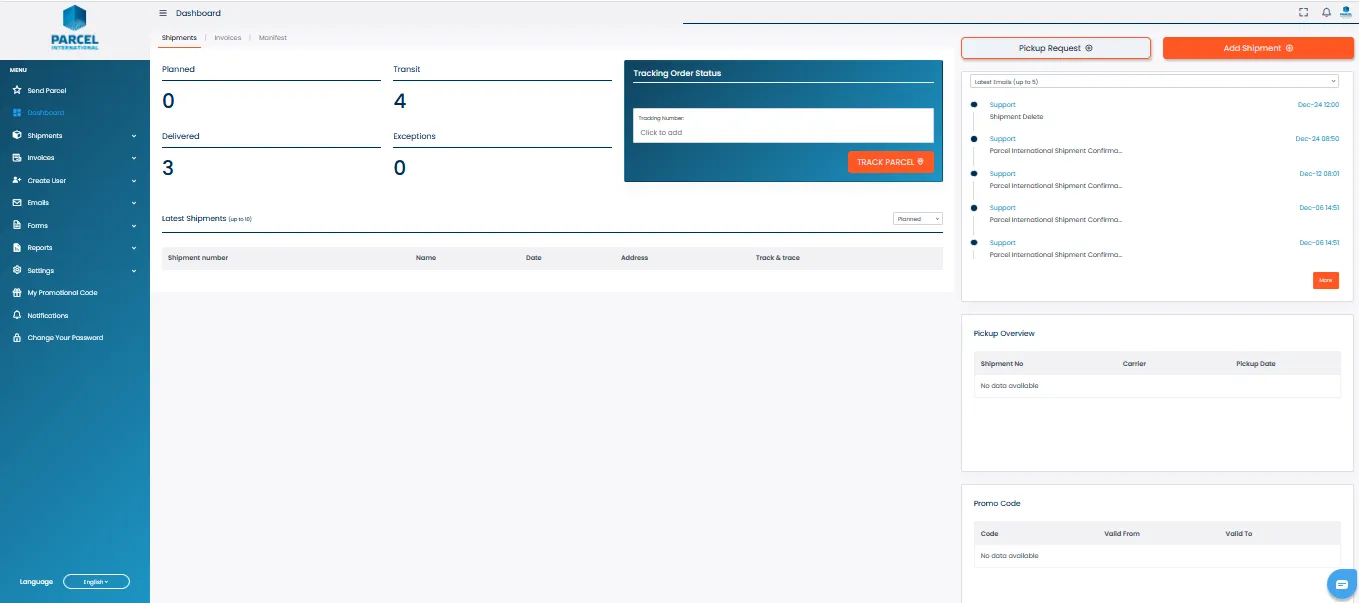
Want to turn this around and truly future-proof your e-commerce store? With Parcel International you manage your parcel shipping from A to Z. Easily compare carriers, choose the best price, and always maintain oversight of your international shipments. Our unique tool assists with customs declarations, real-time updates, and clear communication so you can focus on your customers.
Don’t let delays and uncertainty derail your e-commerce store’s success. Discover today how easy it is to ship internationally without hidden costs or read more about optimizing your shipping process. Visit Parcel International now and turn every parcel into an opportunity to delight your customer.
Parcel Shipping for E-commerce Stores
Can't find your question? Our support team is here for you 24/7 via the help centre.
What is international shipping?
International shipping is the process of transporting goods across national borders. This involves various steps such as documentation, customs regulations, and transportation modes.
What is the package shipping process?
The package shipping process is the series of logistical steps taken to transport a package from the sender to the recipient. This includes preparation, packaging, labeling, and transportation of the package.
What is the first step in shipping an international package?
Your first step is to accurately collect all address details for both the sender and the recipient. Ensure you gather full names, addresses, and contact information to avoid delays.
What checks should I perform before shipping my package?
Ensure the address on the label is legible and complete, the parcel is properly packaged, and all necessary documents are included. This quick check helps prevent delays and potential returns.
How do I enter shipping details for my international shipment?
Make sure you enter a detailed description of your goods, including the exact quantity and value. Check all information carefully to avoid delays, and gather the required documents such as invoices or certificates of origin.
What should I do to determine the contents and value of my package?
To determine the contents and value of your shipment, provide a detailed description of all goods, including material, dimensions, and weight. Ensure the commercial or shipping value is accurately specified.
How do I rate products for shipping?
Start with a thorough inspection of each product. Pay attention to dimensions, fragility, weight, and material composition. Also check for any prohibited or regulated materials.
How do I determine my shipping needs for international shipping?
To determine your shipping needs, consider the nature of your goods, weight, dimensions, and fragility. Also, analyze the destination location and required customs regulations.
How do I properly prepare special shipments?
For special shipments, such as hazardous goods, accurate classification and special packaging are required. Ensure you have all necessary documentation and permits on hand to avoid delays.
What does it mean to register a shipment?
Filing a shipment is the formal process of submitting customs documentation for goods being shipped internationally. This ensures compliance with all regulations before your goods cross the border.
What are the consequences of an incorrect shipment registration?
Incorrect declarations can lead to border delays, additional inspection fees and fines, and even seizure of your shipment, which can harm your business reputation.
What should I consider regarding address formats by country?
For each destination country, verify the specific order of address elements, such as where the house number is positioned and whether special characters are permitted. Maintain a checklist to confirm these details before applying labels.
How do I ensure the accuracy of my shipping addresses?
Ensure all required address details are provided and implement automated validation tools for real-time address verification. This helps prevent shipping errors.
How can I regularly update my shipping addresses?
Create a maintenance plan to review and update your address database every quarter. Use automated validation tools and involve customers in updating their information.
How do I find the postal code for an address in a foreign country?
Visit the official postal website of the destination country and use their postal code lookup tool with the street name, house number, and city name. Alternatively, you can use international postal code databases that aggregate information from multiple countries. Always verify through a second source for accuracy.
What if I can’t find the postal code?
Contact the recipient and request verification of the complete address, including the postal code. Some addresses in rural areas may not have a specific postal code; in such cases, the city name and street are often sufficient. Consult the local postal organization for alternative solutions.
Why is a correct postal code so important for international shipping?
A correct postal code ensures your package is efficiently routed through automated sorting systems to the right destination. Without the correct postal code, your shipment may be delayed, end up in the wrong sorting center, or even be returned, resulting in additional costs.
Which websites are reliable for postal code lookup?
The most reliable sources are official national postal websites such as Deutsche Post for Germany, Royal Mail for the United Kingdom, and USPS for the United States. International platforms that aggregate data from official sources are also trustworthy, but always verify the information is up to date.
How can I check if a postal code is still current?
Verify the postal code through the most recent official postal website of the country and cross-check it with at least one other reliable source. Some countries publish updates on postal code changes on their websites. If in doubt, contact the local postal organization to confirm the current postal code.
What are the most popular countries for international shipping from the Netherlands?
Germany, Belgium, France, the United Kingdom, the United States, and Italy are the most popular countries for export and e-commerce shipments from the Netherlands, with Germany being the largest trading partner, accounting for over 20 percent of total exports.
What determines whether a destination is efficient for shipping?
Factors include shipping costs, delivery time, customs regulations, reliability of logistics, and customer demand. Customs and administrative processes can make up a significant portion of total shipping costs and are often an underestimated factor.
How can you minimize risks when shipping to unfamiliar countries?
Start with small shipments, thoroughly check local regulations, and choose carriers with proven experience in the destination country. Only after consistent results over several months is it advisable to develop that destination structurally.
What is the fastest shipping method within Europe?
Air freight is technically the fastest, with delivery in 1 to 3 days, but road transport within Europe offers the best balance between speed and cost for most EU destinations, typically taking 3 to 7 days. For neighboring countries like Germany and Belgium, it is often just as fast.
What is the most common mistake in international shipping?
Incorrect or incomplete documentation is the most common mistake. Missing invoice values and vague product descriptions directly lead to customs delays.
How do I find the correct HS code for my product?
Use the official search tool of the Dutch Customs or the World Customs Organization. Enter a specific product description and select the most appropriate code.
What happens if my package has the wrong address?
A package with an incorrect address will not be delivered and will end up in the carrier’s depot. Without a return address, the package is lost. Always double-check each address field before shipping.
Do I always need to include a packing list?
For shipments outside the EU, an invoice is mandatory; a packing list is strongly recommended, especially for multiple packages. Inconsistencies between the invoice and packing list can lead to delays, even if the error is minor.
How do I choose the right shipping option for my package?
Compare options based on weight, dimensions, delivery time, and destination. Consider volumetric weight, as carriers charge based on the higher of the two (actual or volumetric weight).
How should I write the postal code on an address label?
Write the Dutch postal code as four digits, followed by two letters, then two spaces before the city name in uppercase, such as “1234 AB AMSTERDAM”. Do not use hyphens, as sorting machines do not recognize them.
Is the country name required on an international address label?
Yes, the country name is mandatory for international shipments. Write the country name in uppercase as the last line on the label, preferably in English, such as “GERMANY” or “UNITED KINGDOM”.
Where should I place the address label on the package?
Place the label on the largest and most visible side of the package. Ensure the label does not cover any folds or tape to remain scannable during sorting.
What should I do if I make a mistake on the address label?
Remove the incorrect label completely and print a new one. Never place a corrected label over an old one, as scanners may read the wrong address.
What does an address in England look like?
An English address consists of the recipient’s name, house number and street name, the post town in uppercase, and the postal code on a separate line, also in uppercase. For shipments from abroad, add “UNITED KINGDOM” as the last line.
How do I write my address in English?
Use the same format as a British address: house number and street, city name, postal code, and country. Include your own address as the return address on a package to the UK so that an undeliverable shipment can be returned without additional costs.
What does a postal code in England look like?
A UK postcode consists of 5 to 7 alphanumeric characters, divided into an outward code and an inward code, separated by a space, such as “M1 1AE” or “EC1A 1BB”. The UPU outlines the six valid notation formats used in the country.
Is a county required in a British address?
No, a county is not required as long as the post town and postcode are correctly provided. The PAF Code of Practice confirms that these two elements are decisive for postal sorting, not the county.
Get a grip on your parcel shipping
Compare carriers, choose the best price and keep track of your international shipments. You can calculate and book without an account.