Streamline global shipping effortlessly. In fact, the average business can reduce its shipping costs by up to 30%. Sounds like magic, right? But that’s not all. The real advantage lies in advanced tracking and new opportunities for small businesses, making international shipping suddenly accessible to everyone.

Quick Overview
Key Benefits | Overview |
|---|---|
Parcel consolidation significantly reduces shipping costs. | This process can lower shipping expenses by an average of 30% to 40% through shipment bundling. |
Reliable shipment tracking. | Advanced systems enable real-time tracking, providing transparency and assurance for shippers and recipients. |
Centralized distribution hubs optimize shipping. | Strategically located centers sort and redistribute parcels, leading to more efficient shipping routes. |
Flexibility in shipping options is crucial. | Businesses must compare various shipping options to find the best, cost-effective solutions. |
Technology plays an essential role. | Modern innovations such as AI and real-time monitoring enhance the efficiency and reliability of parcel consolidation. |
What Is Parcel Forwarding and How Does It Work?
Parcel consolidation is a smart logistics process where packages pass through an intermediate hub before reaching their final destination. This system enables international shippers to send their shipments more efficiently and often at a lower cost.
The Core Principle of Parcel Forwarding
In package transit, a parcel is not transported directly from sender to recipient but instead passes through a central distribution hub. This hub acts as a transshipment point where packages are sorted, inspected, and redistributed. The process functions like a logistics relay, enhancing the efficiency of international shipments.
The mechanics of package transit are best understood through a practical example. Imagine sending a parcel from the Netherlands to Brazil. Instead of being shipped directly, the parcel first travels to a central transit hub in Europe. There, it is consolidated with other international shipments, optimizing transportation costs.
Benefits of Parcel Forwarding
Parcel consolidation offers several key benefits for both shippers and recipients:
- Cost Reduction: By consolidating parcels, the total shipping cost can be lowered
- Enhanced Tracking: Centralized consolidation points enable accurate shipment tracking
- Flexibility: More options for international shipments with various routing choices
According to research by LogisticsTrends, parcel consolidation can reduce shipping costs by an average of 30%, making it an attractive option for many businesses.
To choose the right parcel consolidation service, it is important to compare different shipping options and consider specific shipment requirements such as weight, dimensions, and final destination.
Why Is Parcel Forwarding Important for Your Shipments?
Parcel handling plays a crucial role in modern international logistics by optimizing shipping processes and increasing efficiency. It goes far beyond simply moving packages from point A to point B.
Cost Efficiency in International Shipping
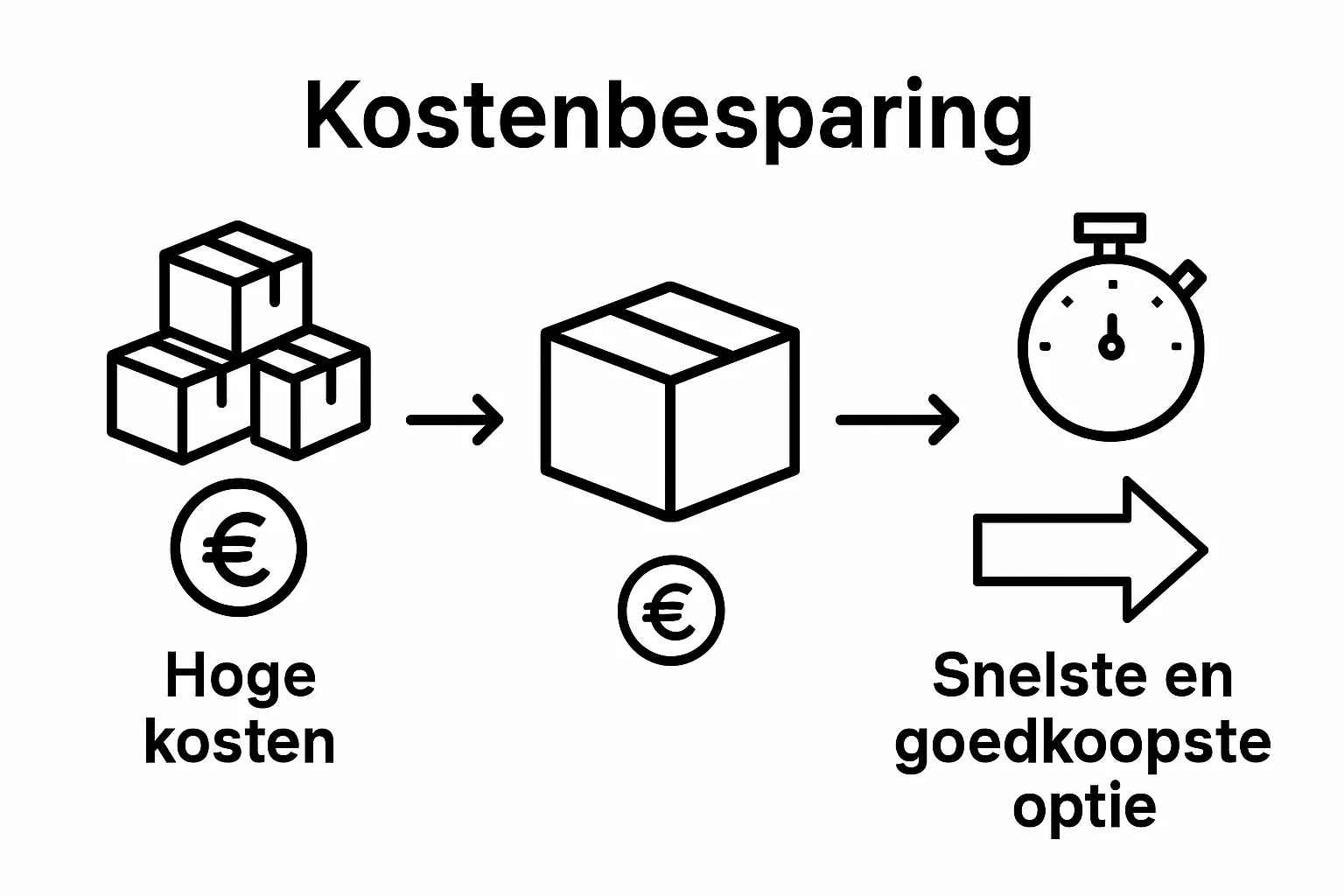
By consolidating packages and routing them intelligently, businesses and private shippers can significantly reduce transportation costs. The central transit hub acts as a smart junction where shipments are consolidated, lowering overall logistics expenses.Large volumes enable more efficient routes, directly leading to cost savings.
A practical example: a small online store shipping internationally can achieve the same shipping rates as large enterprises with high shipment volumes by leveraging parcel transit. This leveling effect makes international trade more accessible for smaller businesses.
Reliability and Tracking
Modern parcel forwarding systems provide advanced tracking that makes shipments more transparent and predictable. Every stage of the journey is meticulously recorded, from departure to arrival. This gives shippers and recipients confidence and visibility into the shipping process.
Key benefits of parcel forwarding for shipments:
- Lower transportation costs through shipment consolidation
- Improved route optimization
- Accurate international tracking
- Flexibility in shipping options
For businesses that regularly ship internationally, it is essential to #why-is-parcel-forwarding-important-for-your-shipments to find the most suitable and cost-effective solution.
According to research by the European Logistics Association, a well-organized parcel forwarding system can reduce shipping costs by up to 40% while significantly improving the reliability of international shipments.
Key Concepts of Parcel Forwarding Explained
Parcel flow is a complex logistics system with multiple interconnected components that together form an efficient international shipping strategy. Understanding these core concepts is essential for anyone looking to optimize international shipments.
Central Distribution Hubs
Central distribution hubs form the backbone of parcel throughput.These strategically located sites serve as logistical junctions where parcels are collected, sorted, and redistributed. They function like a traffic roundabout for goods, where shipments are regrouped and optimized for their next transport phase.
For example, a distribution hub collects parcels from various regions, consolidates them for efficient international routes, and then dispatches them to their final destinations.
This process reduces transportation costs and enhances overall logistical efficiency.
Routing Mechanisms
Routing is a critical concept in parcel logistics.Advanced algorithms determine the most efficient and cost-effective route for each shipment. These mechanisms take into account numerous variables such as:
- Package weight and dimensions
- Final destination and intermediate routes
- Available transportation modes
- Current shipping costs
- Expected transit times
These complex calculations ensure that parcels are delivered not only quickly but also at the lowest possible cost.View our how-to guide for more detailed insights into routing processes.
Tracking and Traceability
Modern parcel handling systems provide advanced tracking that can monitor every step of the shipment in real time. According to research by the European Logistics Association, modern handling systems feature technologies that improve shipment tracking accuracy by over 95%.
This transparency allows shippers and recipients to know exactly where their parcel is, building trust and confidence in the international shipping process.
How Parcel Forwarding Impacts E-Commerce and Trade
Parcel delivery has fundamentally transformed international trade, particularly in the fast-growing world of e-commerce. The system has dramatically changed how businesses and consumers conduct global transactions.
Lowering Barriers to International Trade
Small and Medium-Sized Enterprises can now easily access international markets thanks to parcel transit. Previously, international shipping costs and logistical complexity were major barriers for small businesses. Modern transit systems have lowered these thresholds by offering efficient and affordable shipping solutions.
For example, a local artisan business can now sell products to customers on the other side of the world without significant investments. Optimized routing and shipment consolidation make this possible at competitive rates.
Accelerating Global E-Commerce
Parcel logistics has directly fueled e-commerce growth by simplifying shipping processes.Faster and more affordable international shipping has encouraged consumers to make online purchases worldwide.
Key impacts on e-commerce:
- Reduction in shipping costs
- Shortening of delivery times
- Enhancement of tracking capabilities
- Expansion of available product markets
According to research by the Dutch E-Commerce Association, there are an average of 12 million international parcels shipped daily in Europe, demonstrating the massive scale of this logistical revolution.
Technological Innovation in Trade
Parcel throughput also drives technological innovations in the trade and logistics sector. Advanced tracking systems, AI-powered routing algorithms, and real-time monitoring are transforming how businesses manage international shipments.
View our how-to guide for more insights into how modern logistics technologies are shaping international trade. These technological advancements enable businesses to operate faster, more efficiently, and more transparently than ever before.
Common Challenges and Solutions in Parcel Forwarding
Parcel handling is a complex logistics process that, despite its efficiency, presents several challenges. Understanding these obstacles and their potential solutions is crucial for businesses and shippers looking to optimize international shipments.
Customs and Compliance Challenges
International Regulations are one of the biggest challenges in parcel transit. Every international shipment must comply with specific import rules, tax requirements, and product standards of the destination country. These complex bureaucratic procedures can cause delays and additional costs.
Businesses must have detailed product information, accurate documentation, and a thorough understanding of local laws and regulations. Incorrect or incomplete documentation can result in held shipments, fines, or even returns.
Technological and Tracking Challenges
Modern parcel logistics require advanced technological infrastructure.Real-time tracking and data exchangeare essential but can be hindered by:
- Incompatible IT systems among different logistics partners
- Lack of standardized tracking protocols
- Cybersecurity risks during data transfer
- Reliability issues with tracking technology
For businesses, it is crucial to invest in modern tracking systems and compatible technological solutions.
Cost Management and Route Optimization
Optimizing shipping routes and cost management remains a constant challenge.International logistics costs are dynamic and influenced by numerous factors such as fuel prices, transport capacity, and geopolitical conditions.
According to research by the European Commission, billions of small shipments enter the EU annually, underscoring the need for efficient transit processes.
for more insights into how seasonal influences can impact parcel transit. Flexibility and continuous adaptation are key strategies to successfully navigate these challenges.
Below, you will find a table summarizing the key challenges in parcel transit and corresponding solutions as discussed in this article.
Challenge | Explanation | Possible Solutions |
|---|---|---|
Customs and compliance issues | International regulations and varying import requirements per country | Accurate documentation, knowledge of local legislation |
Technological and tracking challenges | Incompatible IT systems, standardized tracking, and cyber risks | Invest in compatible tracking systems, security measures |
Cost management and route optimization | Dynamic transport costs, fuel prices, capacity, and geopolitical factors | Flexible cost management, continuous route optimization |
Seasonal influences | Peak periods and fluctuating volumes impact efficiency | Forward planning, leveraging seasonal opportunities |
Discover How Parcel Forwarding Simplifies Your International Shipping
Unsure about the best way to effectively utilize package logistics? In the article, you’ve read that challenges like customs procedures, unpredictable costs, and lack of transparency in international shipping often lead to concerns and frustration. You’re looking for control over shipping costs, clear tracking, and reliable handling—precisely where Parcel International provides the solution.
Why wait for problems when you can gain certainty and clarity right away? With Parcel International, you can easily compare different shipping options worldwide, track every parcel in real time, and benefit from our years of experience in over 220 countries. Ready to improve your logistics immediately? Read more about how our how-to guide provides insights into smart shipping, or compare your shipping options directly on our homepage. Take control of your international shipments today and experience the difference.