
Many Dutch online stores face higher costs and delays with international shipments. For entrepreneurs looking to improve their logistics and reduce expenses, smart shipping software has become indispensable. In this article, you’ll discover how modern technology makes your shipping processes faster and more cost-effective, helping you compete better in the European e-commerce market.
Key Takeaways
Point | Details |
|---|---|
Shipping software reduces administrative burdens | By integrating automated features, businesses can manage their logistics processes more efficiently. |
Choose the right software for scalability | It’s crucial to select shipping software that grows with your business needs and optimizes processes. |
Focus on user experience and integration | Ensure seamless integration with existing systems to enhance customer experience and minimize errors. |
Avoid common implementation mistakes | A thorough needs analysis and involvement of all stakeholders are essential for successful software selection. |
What does shipping software do and why is it important
Shipping software is an advanced technological solution that helps e-commerce businesses streamline international shipping processes. These smart software tools simplify complex logistical challenges by offering automated features that reduce manual tasks and increase efficiency.
The core functionalities of modern shipping software include:
- Automated shipping label generation
- Real-time shipment tracking
- International shipping cost calculation
- Integration with multiple carriers
- Inventory and order management systems
Software like shipping software is crucial for reducing administrative burdens and improving data exchange. By implementing advanced technological solutions, small e-commerce businesses can significantly optimize their logistics processes.
Here’s an overview of the impact of shipping software features for small e-commerce businesses:
Feature | Direct business impact | Additional growth opportunities |
|---|---|---|
Automated label generation | Fewer manual errors | Faster order processing |
Real-time tracking | Improved customer experience | Greater transparency |
Carrier integration | Flexible shipping options | Scalability potential |
International cost calculation | Prevents cost overestimation | Helps with price optimization |
Inventory and order management | Fewer inventory issues | More stable delivery performance |
International shipping challenges are effectively addressed by this software. European digitalization projects highlight how transaction automation prevents errors and increases shipment traceability. This means less administrative hassle and more time to focus on your core business activities.
Pro tip Shipping Software: Always choose a shipping software solution that integrates seamlessly with your existing e-commerce platform to achieve maximum efficiency.
Types of shipping software for e-commerce businesses
For small e-commerce businesses, there are various shipping software solutions available, designed to meet specific logistical needs. These range from simple to advanced systems that can optimize and streamline shipping processes.
The main categories of shipping software are:
- Basic shipping solutions
- Single shipping label generation
- Limited tracking functionalities
- Suitable for start-up e-commerce businesses
- Mid-sized shipping platforms
- Support for multiple carriers
- Advanced cost calculations
- Automated order processing
- Advanced enterprise solutions
- Full logistics integration
- International shipping support
- Complex inventory and returns management systems
When selecting shipping software, consider factors such as scalability, integration capabilities with your existing systems, and support for your specific sales channels. Each business has unique shipping challenges, so the ideal software varies by situation.
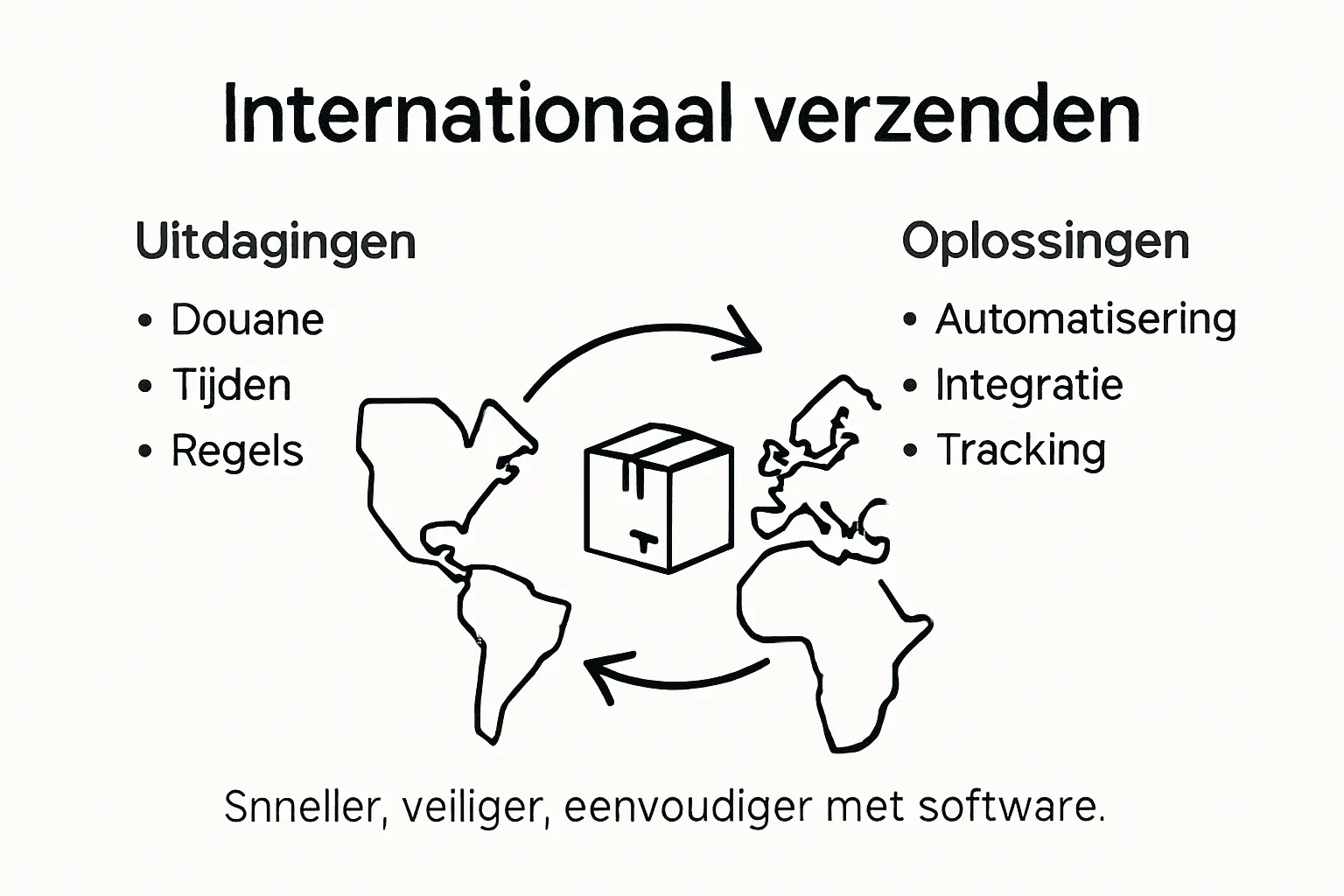
Below is a comparison of shipping software types and their applications:
Solution type | Ideal for | Unique advantage |
|---|---|---|
Basic software | Start-up online stores | Low entry costs |
Mid-sized platform | Growing businesses | Extensive carrier options |
Enterprise solution | Expanding organizations | Full process integration |
Pro tip Shipping Choice: Always choose shipping software that is flexible and scales with your business growth, not just supports your current needs.
Key features and integration capabilities
Modern shipping software is much more than just a system for generating shipping labels. It’s an advanced technological solution that can fundamentally transform business processes through seamless integrations and smart functionalities.
The most essential core features include:
- Automated shipping label generation
- Support for multiple carriers
- Dynamic rate calculation
- International shipping standards
- Real-time tracking and reporting
- Detailed shipment status
- Automated customer notifications
- Historical shipping analytics
- Data integration
- Connection with e-commerce systems
- Synchronization with inventory management
- Automated order processing
Digital government documentation emphasizes the importance of secure data exchange and seamless system integrations. For small e-commerce businesses, this means working more efficiently, reducing manual input, and increasing the reliability of logistics processes.

The European Commission encourages the use of open standards that allow different software solutions to communicate with each other. This ensures a flexible and scalable infrastructure where businesses are not locked into a single vendor or system.
Pro tip System Integration: Choose shipping software that supports open APIs for maximum future adaptability and system compatibility.
Automating Logistics Processes and Savings
In the fast-evolving world of e-commerce, logistics automation is no longer a luxury but a necessity for small businesses aiming to survive and grow. Shipping software forms the backbone of this automation revolution by transforming manual, time-consuming processes into efficient, streamlined operations.
Key areas of logistics process automation include:
- Order Processing
- Automated Data Entry
- Direct Integration with Inventory Management
- Minimal Manual Intervention
- Shipping Optimization
- Dynamic Routing
- Cost-Effective Carrier Selection
- Real-Time Rate Comparison
- Returns Management
- Automated Return Labels
- Rapid Inventory Restocking
- Streamlined Customer Process
The Dutch Government Logistics Category Plan highlights that automation is crucial for cost reduction and process reliability. By implementing smart software, small e-commerce businesses can significantly save on personnel and operational costs.
Logistics technology experts emphasize that automated systems not only reduce costs but also enhance the customer experience through faster processing times and more accurate tracking. Multi-carrier support enables businesses to remain flexible and select the most cost-effective shipping options.
Pro Tip for Automation Efficiency: Start by identifying the most labor-intensive processes in your business and seek shipping software that directly addresses these specific challenges.
Common Mistakes and How to Avoid Them
When implementing shipping software small e-commerce businesses often make strategic mistakes that can undermine their logistics efficiency. Recognizing and proactively addressing these challenges is crucial for a successful digital transformation.
The most critical mistakes businesses should avoid include:
- Insufficient Needs Analysis
- Lack of Detailed Logistics Process Inventory
- Inadequate Understanding of Specific Business Requirements
- Choosing Generic Over Customized Solutions
- Incomplete Implementation Strategy
- Insufficient Employee Engagement
- Poor Training and Support
- No Phased Rollout Approach
- Prioritizing Cost Over Functionality
- Selecting the Cheapest Solution
- Ignoring Long-Term Scalability
- Limited Integration Capabilities
Logistiek Digitaal outlines the risks of a superficial approach to software selection. The key recommendation is a multidisciplinary approach involving all departments and focusing on the specific needs of the business.
Industry experts from Evofenedex stress the importance of thorough preparation. A successful implementation requires not only the right technology but also a culture of continuous learning and adaptation.
Pro Tip for Implementation Strategy: Organize structured workshops in advance with all stakeholders to map out in detail which specific functionalities your business process truly needs.
Efficient and Reliable International Shipping with Parcel International
The challenges of international shipping require smart solutions that simplify your logistics without compromising efficiency. The article highlights that shipping software is essential for minimizing manual errors and gaining real-time visibility into shipments. Struggling with carrier comparisons or controlling shipping costs? These are common pain points that small e-commerce businesses face when expanding into international markets.

At Parcel International we understand these challenges firsthand. With our user-friendly digital platform, you can easily compare shipping options, select the best carrier without hidden costs, and maintain control over your parcels in over 220 countries. This aligns seamlessly with the need for automated processes and real-time tracking emphasized in the article. Discover how our solutions help you optimize your international shipping and save costs immediately. Start simplifying your global logistics today with Parcel International and experience firsthand how efficiency and reliability go hand in hand.
Ready to improve your shipping process right away? Learn more about our services and request a tailored proposal at Parcel International.
Can't find your question? Our support team is here for you 24/7 via the help centre.
What types of shipping software are there for small businesses?
There are several types, including basic solutions for start-ups, mid-range platforms with advanced features and enterprise solutions for larger organisations that need full logistics integration.
What does shipping software do?
Shipping software automates and optimizes the international shipping process by offering features such as automatic label generation, real-time tracking, and integration with various carriers.
Why is shipping software important for e-commerce businesses?
Shipping software is essential for e-commerce businesses because it reduces administrative burdens, increases efficiency, and helps meet international shipping requirements.
How can logistics automation lead to cost savings?
Logistics automation lowers operational costs by reducing manual processes, enabling faster order processing, and increasing efficiency, resulting in a better customer experience.
Get a grip on your parcel shipping
Compare carriers, choose the best price and keep track of your international shipments. You can calculate and book without an account.
