
TL;DR:
- Effective customer communication in logistics goes beyond tracking links and includes proactive updates, personalized delivery options, and integrated systems. Systems like WMS, ERP, and customer portals must exchange real-time data to prevent errors and delays, while AI and self-service portals enhance customer satisfaction. A strong strategy combines automated communication with human empathy, especially in exceptions and complex situations.
Customer communication in logistics extends far beyond sending a tracking link once a package leaves the warehouse. The role of customer communication in logistics includes everything from proactive status updates to personalized delivery options and integrated customer portals. For logistics managers and e-commerce entrepreneurs shipping internationally, the quality of this communication determines not only customer satisfaction but also operational efficiency. In this article, you’ll learn how effective customer communication strengthens logistics processes, which systems are required, and which strategies make a difference in an international shipping operation.
Key Insights
Point | Details |
|---|---|
Communication Is More Than Tracking | Proactive, personalized updates improve loyalty and structurally reduce support inquiries. |
Systems Determine Communication Quality | Integration of WMS, ERP, and customer portals forms the foundation for real-time and reliable customer information. |
Personalization Increases Customer Satisfaction | Customers who are treated as individuals rather than packages show greater loyalty and fewer complaints. |
Data Makes Communication Strategic | Feedback loops and customer data help continuously improve logistics processes and prevent delays. |
Automation Requires Human Balance | Technology accelerates communication, but empathy in exceptions remains irreplaceable. |
Digital Systems as the Foundation for Customer Communication
The technical infrastructure behind customer communication in logistics is often underestimated. Many entrepreneurs believe a good shipping platform is sufficient, but the reality is that the quality of customer communication depends on how well systems interact.
A WMS (Warehouse Management System), ERP, and e-commerce platform must exchange real-time data. Only then is it possible to automatically inform a customer about a stock change, a customs delay, or an adjusted delivery time. Without this integration, employees are forced to intervene manually, leading to errors and delays. Integrated Data Flows form the core of effective communication and operational flexibility.
EDI and Portals as Communication Channels
Electronic Data Interchange (EDI) enables systems from shippers, carriers, and recipients to automatically exchange data, such as order status, package weight, or customs documents. This eliminates manual input and significantly reduces the risk of miscommunication. Combined with a customer portal, it provides the recipient with real-time insight into their shipment, including the ability to independently adjust delivery times or addresses without needing to contact support.
Customer Portals Offer Self-Service that greatly reduces manual customer interaction. This is not only convenient for the customer but also lowers the workload on your customer service team.
The Role of AI in Status Updates
Artificial intelligence adds a new layer to customer communication. AI-driven systems analyze historical data and external factors, such as weather conditions or customs routes, and automatically send proactive updates if a shipment is likely to be delayed. The result: a customer who knows what’s happening before they start worrying.
- Automatic Notifications for Status Changes in the Shipping Chain
- Predictive Updates Based on Carrier or Customs Delays
- Smart Routing of Customer Messages to the Right Channel (Email, SMS, App)
- Integration of Chatbots with Live Order Status for Quick Self-Service
Pro Tip: Connect your WMS directly to your e-commerce platform so order statuses are automatically updated. This ensures customers receive updates without manual intervention and measurably reduces your support tickets.
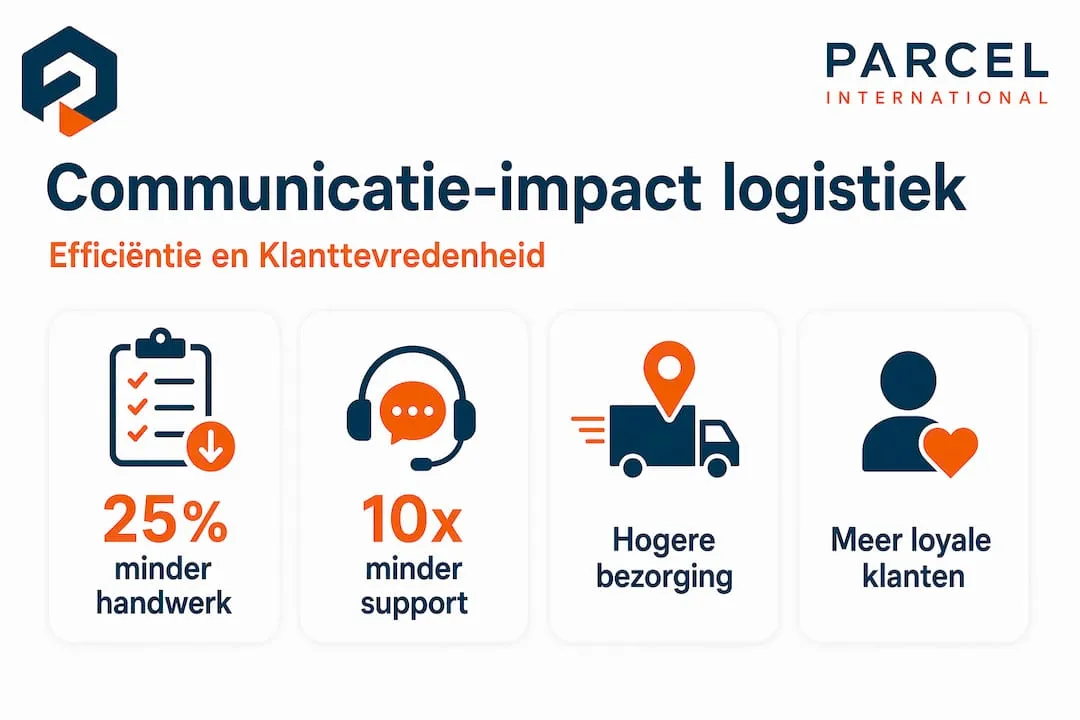
Practical proof of this approach was demonstrated by President Safety, which, after integrating SAP, found that 25% of orders were automatically processed via the connection between the webshop and ERP. These percentages directly translate into fewer errors and faster throughput times.
Personalization and Proactive Communication
A fundamental shift is underway in logistics: from thinking in packages to thinking in people. This shift is not just philosophical—it has direct implications for how you communicate, what information you share, and when you do so.

From Package to Person is the driving force behind better customer experience in logistics. Customers today expect information to be relevant to them, not generic. A standard message like 'your package is on its way' is no longer sufficient when the customer lives abroad and deals with multiple carriers and customs procedures.
How Personalized Communication Increases Loyalty
When a customer notices that you understand their situation—for example, by informing them that their shipment is going through a specific hub and that they should account for additional customs processing time—they experience it as engagement. That feeling translates into trust and repeat purchases.
- Segment customers based on shipment type, destination, and order history
- Send relevant updates for each phase of the shipping process, from pickup to delivery
- Proactively offer flexible delivery options if a shipment may be delayed
- Use customer data to time messaging for maximum impact
- Measure customer satisfaction per shipment and use that feedback to adjust communication flows
Pro Tip: Always provide customers with an overview of the expected transit time per country for international shipments, including an explanation of possible customs steps. This sets expectations at the right time and prevents unnecessary support inquiries.
Customer portals play a central role in this. Instead of waiting for an email, customers can log in themselves to see where their shipment is. They can change delivery addresses or choose a service point that works better for them. That autonomy gives control, and control builds trust. Read more about the benefits of service points as a delivery option separately.
AI-driven interactions add another dimension. A chatbot that immediately answers “Where is my package?” is useful. But a system that proactively notifies, “Your shipment is delayed due to customs in Germany; the expected delivery is now Thursday,” is valuable. That difference is what sets strategic logistics customer communication apart from simple message management.
Communication Strategies for International Logistics
A strong logistics communication strategy starts with recognizing that different customers need different information at different times. There is no one-size-fits-all approach. What works for a B2C customer in the Netherlands may not work for a business recipient in Japan.
The foundation of any strategy is transparency. Customers who know what to expect—even if it’s bad news—are less frustrated than those who hear nothing. Most recipients appreciate an honest delay notification if they receive it in time. This is a lesson many logistics organizations only learn after repeated complaints.
Automation vs. Human Contact
There’s a persistent misconception that automation replaces human contact. In reality, automation makes human contact more valuable. By automating routine notifications, your team gains time to focus on exceptions: a damaged shipment, an unhappy customer, or a complex customs issue.
Human Empathy in Exceptions remains indispensable, even in a highly automated logistics environment. Employees must be given the flexibility to deviate from scripts in such cases and truly listen to the customer.
Communication Channels Tailored to the Audience
Channel | Suitable for | Consideration |
|---|---|---|
Detailed updates and documents | Less suitable for time-sensitive messages | |
SMS | Short, urgent status updates | Limited message length and no attachments |
Customer Portal | Self-service and real-time tracking insights | Requires customer registration and technical integration |
Chatbot | Quick FAQ handling and basic information | Not a replacement for complex customer inquiries |
Personal Contact | Complex exceptions and complaints | Costly but crucial for customer retention |
- Set up communication channels based on customer segment and urgency level.
- Use tracking systems that provide real-time data to customer contact points. Learn more about how tracking works in the Parcel International explanation.
- Combine automated workflows with a clear escalation path to human agents.
- Systematically collect feedback after each delivery and use that data to improve communication flows.
- Test communication timing: too early, and the customer forgets; too late, and they’re already worried.
For international shipments, the first mile and last mile are the most critical moments. Customer expectations are highest at pickup and actual delivery, and disruptions are most visible then. Ensure proactive communication is active precisely at those times.
Impact on Efficiency and Customer Satisfaction
The effect of effective customer communication on business results is measurable. This is not a soft marketing claim but a recurring finding in practice.
Organizations that fully integrate WMS, ERP, and customer platforms see a structural decrease in support traffic. Automating customer communication can significantly reduce support message volume while speeding up order processing.
Direct Operational Gains
Improvement | Effect | Source |
|---|---|---|
Automated Order Processing | 25% fewer manual actions | SAP Integration President Safety |
AI-Powered Route Optimization | 15% fuel savings | |
Self-Service Customer Portal | Significantly fewer support tickets | Logistics Portal Research |
Proactive Status Updates | Higher first-time delivery ratio | Real-Time Data Exchange |
A higher first-time delivery ratio is a concrete example of how communication reduces operational costs. If a customer is promptly informed that their package is out for delivery and they need to be home, the chance of a missed delivery is lower. This saves costs for redelivery, which can be substantial for international shipments.
Feedback loops close the circle. Customer data from satisfaction surveys and behavioral analysis reveal where communication processes are inefficient. Those insights drive direct improvements in routing, timing, and message tone. This turns customer communication into a continuous improvement process rather than a one-time implementation. Learn more about track-and-trace-benefits for e-commerce shipments for additional insights into this dynamic.
My Perspective After Years in International Logistics
I’ve seen firsthand how logistics managers treat communication as an afterthought—a task that’s fine as long as no one complains. But when something goes wrong, that’s precisely when communication makes the difference between a customer who leaves and one who stays.
What stands out to me is that most problems don’t arise from technical failures but from communication gaps. A shipment sits at customs for three days, but no one informs the customer. A carrier changes the route, but the customer sees an outdated delivery time. These aren’t logistics errors. They’re communication errors with logistics consequences.
My position is that communication strategy in logistics should be taken as seriously as route optimization or inventory management. Not as a soft element, but as a measurable operational factor. Organizations that understand this invest in system integrations, train employees on customer-centricity during exceptions, and measure customer satisfaction per shipment.
What I’ve also learned: automation only works if the human touch isn’t lost. A chatbot answering “where is my package?” is fine. But if a customer calls because their wedding dress hasn’t arrived in time for the wedding date, there needs to be a person on the line who understands and acts. That distinction seems obvious, but in practice, systems are built without escalation paths for precisely these kinds of situations.
Finally: don’t start with the technology. Start with the customer journey. Map all the moments when a customer needs or expects information, and build communication flows around those moments. The systems will follow naturally.
— Pascal
Parcel International supports your customer-centric shipping
If you ship internationally and want your customers to always know where their shipment is, it starts with the right partner.
Parcel International has been working with shippers in over 220 countries and territories since 2007. The platform is built on transparency and direct communication: customers can compare shipments, select carriers, and track their packages without extra costs or hidden steps. For e-commerce entrepreneurs and logistics managers who take proactive communication seriously, Parcel International provides the infrastructure to put it into practice.
Do you want to understand which factors can delay international shipments and how to proactively inform customers about them? The explanation of the most common causes of delays provides immediately actionable insights. Parcel International collaborates with you, from the first shipment to a structural solution.
Can't find your question? Our support team is here for you 24/7 via the help centre.
What is the role of customer communication in logistics?
Customer communication in logistics includes all touchpoints between the sender and recipient during the shipping process. Effective communication reduces support inquiries, increases customer satisfaction, and improves operational efficiency by minimizing missed deliveries.
How can you improve customer interaction in international logistics?
By integrating WMS, ERP, and customer portals, and automating proactive status updates. Combine this with a clear escalation path for exceptions where human agents personally address customer concerns.
Which technologies support customer communication in logistics?
EDI integrations, real-time customer portals, AI-driven chatbots, and integrated tracking systems form the technical foundation. Logistics portals are more effective than chatbots alone because they allow customers to take independent action.
How much impact does communication have on logistical efficiency?
Significantly. Integrated systems can greatly reduce support message traffic and speed up order processing.
When is human contact indispensable in logistics communication?
For exceptions such as damaged shipments, severe delays, or complex customs issues. Automation handles routine communication, but in emotionally or financially sensitive situations, an agent must be available to truly understand the customer.
Get a grip on your parcel shipping
Compare carriers, choose the best price and keep track of your international shipments. You can calculate and book without an account.
