
Shipping often makes the difference between a one-time customer and a loyal, returning buyer. While many SME entrepreneurs focus on product quality and marketing, shipping remains an underestimated success factor. This article reveals how shipping strategies directly impact customer satisfaction, profitability, and growth. You’ll discover concrete insights into costs, international opportunities, and practical tactics to elevate your e-commerce business. By the end, you’ll understand precisely how shipping functions as a strategic tool for sustainable success.
Key Insights on the Role of Shipping for SMEs
Point | Details |
|---|---|
Customer Satisfaction Rises | Effective shipping boosts customer satisfaction and directly encourages repeat purchases. |
Free Shipping Works | Free shipping options significantly reduce cart abandonment. |
Costs Impact Profitability | Shipping costs directly affect profitability and require smart pricing strategies. |
International Opportunities | Strategic international shipping opens new markets for growth. |
Why Shipping Is Essential for SME E-Commerce
Customer expectations around shipping have skyrocketed in recent years. Consumers now demand fast, reliable, and affordable delivery as standard. For SME e-commerce, this means shipping can no longer be an afterthought—it must be a core part of your business strategy.
Research shows that 80% of consumers make repeat purchases more frequently from retailers with excellent shipping options. This statistic illustrates the direct link between shipping quality and customer loyalty. When you manage shipping effectively, you build trust. Customers know their orders will arrive safely and on time, encouraging them to return.
A strong shipping strategy strengthens brand loyalty in multiple ways. First, it creates predictability. Customers appreciate clear communication about delivery times and tracking options. Second, it demonstrates professionalism by choosing reliable partners and proactively resolving issues. Third, it sets you apart in a competitive market where products are often similar.
Poor shipping experiences have the opposite effect. Unexpected high costs, long wait times, or damaged packages lead to negative reviews and lost customers. Studies show that consumers are willing to pay more for faster delivery, but transparency is crucial. Hidden costs at checkout cause frustration and cart abandonment.
Free shipping remains a powerful tool to increase conversion. Online stores offering free shipping see cart abandonment drop by up to 30%. This doesn’t mean you must absorb all shipping costs, but you can find creative solutions:
- Set a minimum order amount for free shipping to increase average order value
- Incorporate shipping costs (partially) into your product pricing
- Offer free shipping as a seasonal promotion or loyalty benefit
- Communicate clearly about expected delivery times to avoid disappointment
Pro tip: Test different shipping options with A/B testing to discover what your specific audience values most. Some customers are willing to pay extra for express delivery, while others prefer patience if the price remains low.
Shipping isn’t just logistics—it’s a critical part of the customer experience that directly impacts your revenue and reputation.
By implementing efficient e-commerce shipping you position your SME as a reliable player in a market where expectations continue to rise.
How Shipping Costs and Profitability Go Hand in Hand
Shipping costs represent a substantial portion of your operational expenses. Many SME entrepreneurs underestimate these costs, leading to unrealistic pricing or unexpectedly low margins. A transparent and strategic approach to shipping costs is essential for sustainable profitability.

Calculating true shipping costs requires more than just the carrier’s rate. You must account for packaging materials, labor for packing, storage space, return handling, and potential customs fees for international shipments. Shipping costs are often underestimated and directly impact profitability if not calculated correctly.
To realistically integrate shipping costs into your pricing strategy, follow these steps:
- Calculate the full cost per shipment, including all direct and indirect expenses
- Analyze your average order value and determine how much shipping cost you can absorb without harming profitability
- Compare different carriers and rate structures to find the best balance between price and service
- Test different pricing models, such as free shipping above a threshold or flat-rate shipping
- Continuously monitor your margins and adjust based on seasonal influences and volume changes
Transparency in shipping costs builds customer trust. Consumers accept reasonable shipping costs if they are clearly communicated before checkout. Hidden costs, however, lead to abandoned carts and negative reviews. Display shipping costs as early as possible in the purchase process, ideally on product pages.
Pro tip: Use dynamic shipping rates that are automatically calculated based on weight, destination, and chosen carrier. This prevents losing money on heavy or international shipments while remaining competitive for lighter packages.
Here’s a practical overview of how shipping costs impact your profitability:
Scenario | Impact on Margin | Customer Perception | Recommendation |
|---|---|---|---|
Free shipping without threshold | Negative 5-15% | Very positive | Only for high-margin products or promotions |
Free shipping above €50 | Neutral to positive | Positive | Ideal for increasing order value |
Flat-rate shipping €4.95 | Neutral | Acceptable | Suitable for similar products |
Dynamic shipping costs | Optimal | Neutral to positive | Best practice for diverse product ranges |
The impact of shipping costs extends to your entire business model. Underestimating shipping costs can quickly erode your margins, while overcharging may lead to losing customers to competitors. Finding the right balance requires continuous monitoring and adjustment.
Also consider the effect of returns on your profitability. Free returns are popular with customers but can be costly. Establish clear return policies and consider charging a small fee for returns unless the product is defective. This discourages impulsive returns without harming customer goodwill.
Strategies for effective and international shipping in SMEs
International shipping opens up vast growth opportunities for SME e-commerce businesses. The European market alone provides access to hundreds of millions of potential customers. With the right strategy, you can reach these markets without excessive costs or complexity.
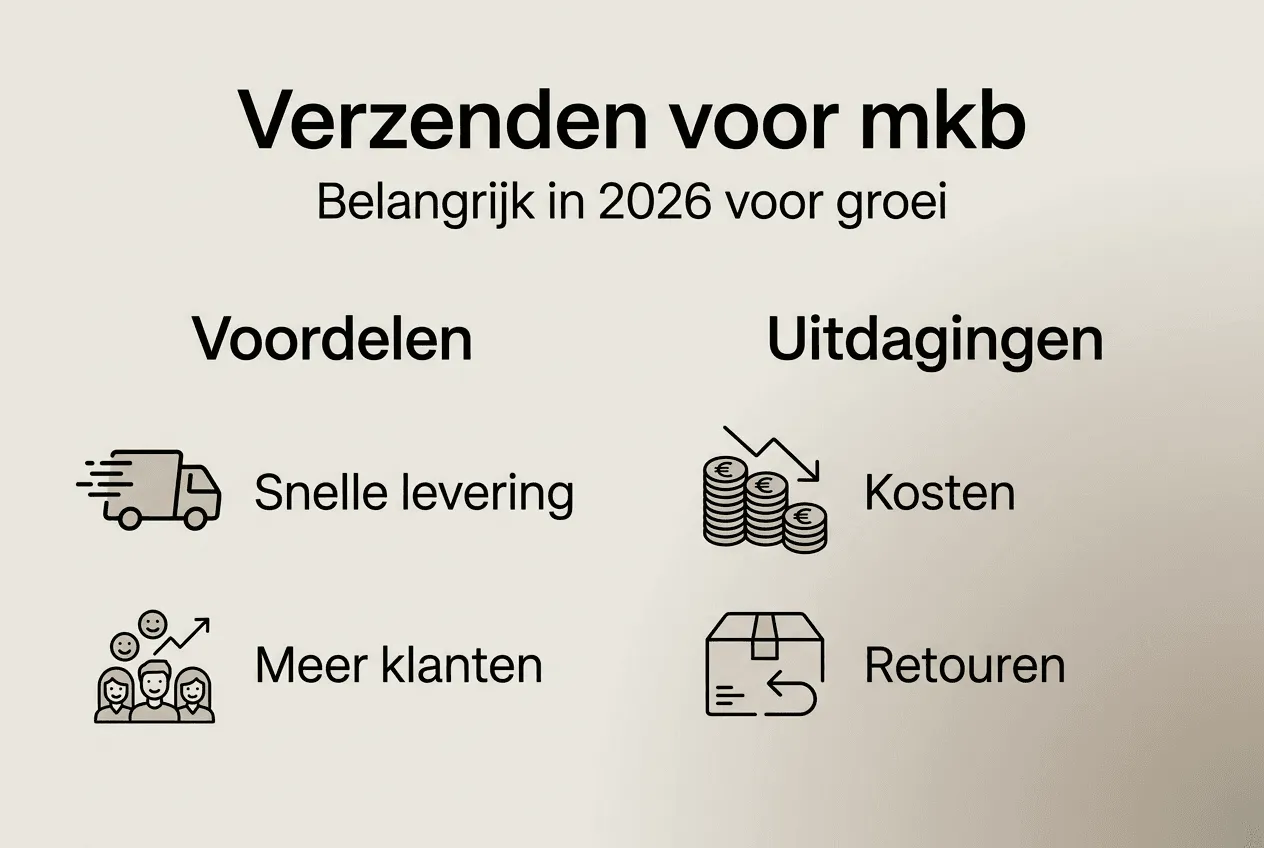
A robust shipping strategy begins with comparing different options. Here’s an overview of the key shipping methods for international e-commerce:
Shipping method | Delivery time | Cost | Best for |
|---|---|---|---|
Express delivery | 1-3 days | High | Urgent orders, premium customers |
Standard air freight | 5-10 days | Average | Regular international orders |
Economy shipping | 10-20 days | Low | Price-sensitive customers, non-urgent items |
Freight consolidation | Variable | Very low per unit | Large volumes, regular shipments |
Forwarding and freight consolidation become appealing when you regularly ship to the same destinations. By bundling multiple orders into a single larger shipment, you significantly reduce the cost per unit. This requires planning and may involve longer delivery times, but the cost savings can be substantial for SMEs with growing international sales.
When shipping internationally, there are specific considerations you should not overlook:
- Customs documentation must be accurate and complete to prevent delays
- Incoterms determine who is responsible for costs and risks during transport
- Local regulations on product certification and labeling vary by country
- Taxes and import duties can increase the total cost for customers
- Tracking capabilities are essential for international shipments to maintain trust
- Insurance protects against loss or damage during longer transport routes
To shorten delivery times and manage customer expectations, implement these tactics. Communicate realistic delivery times based on historical data, not optimistic estimates. Offer tracking as soon as the package is shipped and send proactive updates in case of delays. Consider local distribution centers or dropshipping partners in key markets to reduce shipping distances.
Pro tip: Choose shipping partners not only based on price but also on reliability and customer service. A partner that resolves issues quickly and communicates clearly saves you time and protects your reputation. Test new partners with small volumes before making large commitments.
Starting international shipping may seem intimidating, but with the right preparation and partners, it becomes a powerful growth strategy. Begin with neighboring countries where regulations are similar, and expand gradually as you gain experience.
A robust shipping strategy significantly improves business performance and customer retention. By offering different shipping options, you give customers the choice between speed and cost. Some orders are urgent and justify higher costs, while other customers prefer to wait for a lower price.
For practical shipping tips that are immediately applicable, focus on automation where possible. Use software that automatically selects the best carrier and service based on destination, weight, and urgency. This saves time and prevents errors that can lead to dissatisfied customers or unexpected costs.
How Parcel International helps SMEs with international shipping
After exploring shipping strategies, it’s time to consider concrete tools and support. Parcel International offers SME e-commerce businesses practical solutions that simplify and make international shipping more cost-effective.
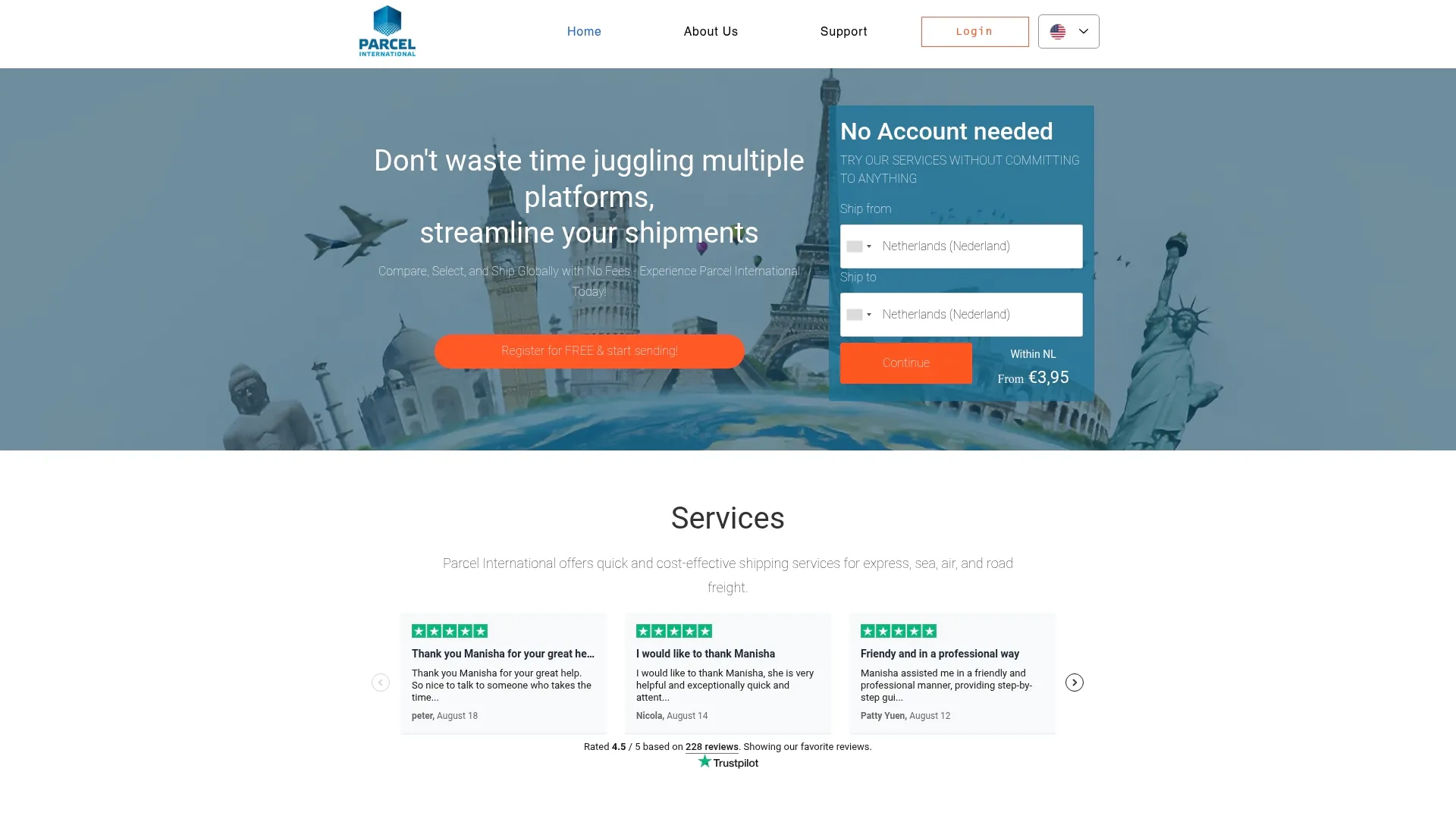
The services include comparison tools that allow you to quickly select the best carrier for each shipment. Instead of manually comparing rates, you get immediate insight into options for over 220 countries and regions. This saves time and ensures you always make the most cost-effective choice without compromising reliability.
For businesses looking to automate their shipping process, the shipping API integrates with your existing systems. This eliminates manual work and reduces errors in order processing. You can compare parcel services without an account, lowering the barrier to getting started.
Whether you’re just starting with international shipping or looking to optimize your existing operations, the combination of experience since 2007 and modern technology effectively supports SME growth.
Can't find your question? Our support team is here for you 24/7 via the help centre.
How can I reduce shipping costs for my e-commerce business?
There are several ways to reduce shipping costs, including comparing shipping rates, leveraging volume discounts, and optimizing shipping methods based on product weight and dimensions.
How can I avoid customs issues with international shipments?
Ensure complete and accurate documentation upfront, including commercial invoices, certificates, and product descriptions. Work with experienced partners who understand customs clearance and local regulations.
What are realistic delivery times for international shipping?
Within Europe, expect 3 to 7 business days for standard shipping. To other continents, it typically takes 7 to 14 business days, depending on customs processes. Express options can reduce this to 1 to 3 days, but at a higher cost.
Do I need to offer free shipping to stay competitive?
Not necessarily. Transparency is more important than free shipping. Many customers accept reasonable shipping costs if they are clearly communicated. Consider offering free shipping above a minimum order value to increase order size without hurting margins.
When is it beneficial to use local distribution centers?
If you regularly ship substantial volumes to a specific region, local distribution centers can shorten delivery times and reduce costs. This becomes cost-effective with consistent, substantial monthly volumes per region. Start by analyzing your shipping data to identify potential locations.
How do I measure the success of my shipping strategy?
Monitor key metrics such as average delivery time, percentage of damaged shipments, customer reviews about shipping, and shipping costs as a percentage of revenue. Also track delivery-times-for-international-shipments specifically to identify improvement opportunities. Set goals for each metric and evaluate monthly to ensure you are on track.
All questions about shipping costs and volumetric weight (45)
Get a grip on your parcel shipping
Compare carriers, choose the best price and keep track of your international shipments. You can calculate and book without an account.
