
If you're shipping internationally via Marktplaats, engaging a shipping platform or carrier is usually the fastest and safest route. Within the EU, this process typically runs smoothly without customs forms. Outside the EU, you’ll encounter CN22/CN23 forms, HS codes, and import duties. Parcel International handles this documentation and transport in one go, ensuring your package doesn’t get held up at a border office.
In short:
- A freight forwarder is almost indispensable for international shipments outside the EU due to customs formalities and border documentation.
- For shipments valued above approximately €1,000, additional customs declarations, such as a Single Administrative Document (SAD), are always required.
- Correct use of HS codes and complete, accurate invoices speed up customs clearance and prevent delays or extra costs.
- Under DDP (Delivered Duty Paid) arrangements, the sender pays all import duties and VAT, while the buyer handles this themselves for DAP shipments.
- Proper packaging, clear labels, and a realistic value declaration reduce damage and customs delays.
When Do You Need a Freight Forwarder for Your Marktplaats Shipment?
If you sell a second-hand bike to a buyer in Germany, you can take it to the post office yourself and leave the rest to the carrier. However, selling the same bike to someone in Switzerland or the United Kingdom changes the situation entirely: you’ll need to handle customs declarations, provide an accurate value, and ensure the correct HS code is used.
Three factors determine whether you can ship independently or should engage a freight forwarder:
- Destination country: within the EU, it’s straightforward; outside the EU, customs paperwork is required.
- Value of the package: higher values increase the risk of inspections and additional documentation.
- Type of product: electronics, batteries, or food items often have separate rules and restrictions.
A small webshop that regularly ships internationally saves time and gains certainty by outsourcing the entire process. Freight forwarders handle transport, documents, and customs declarations and take on a significant portion of the administrative burden, especially for those who don’t do this daily.
Customs Essentials: CN22, CN23, HS Codes, and Who Handles the Declaration
Within the European Union, the free movement of goods applies. If you ship from the Netherlands to France or Spain, typically no customs forms are required, unless the goods haven’t yet been placed in free circulation, such as with customs transport using a T1 document.
As soon as you ship outside the EU, the situation changes completely. These documents then apply:
- CN22: for smaller, lower-value shipments.
- CN23: for larger or more expensive packages, with a more detailed goods description.
- Commercial invoice: mandatory for business sales, and often recommended for private individuals as well.
- Single Administrative Document (SAD): often required for values above approximately €1,000.
A correct HS code is not a minor detail. This international product code determines the applicable import duties and how quickly customs releases a package. An incorrect or overly vague HS code leads to delays, additional charges, or, in the worst case, a returned shipment.
Key figure to remember: for values above approximately €1,000, customs almost always require additional documents such as a SAD, alongside the standard CN23 and invoice.
Who handles the declaration depends on the agreement you make. With a freight forwarder using DDP (Delivered Duty Paid), the sender arranges the declaration and pays the duties upfront. Without this agreement, the buyer, as the importer, is responsible for customs clearance in their country.
How to Ship Your Marktplaats Sale Abroad Step by Step
In practice, an international shipment follows a set pattern, whether you’re an individual selling something once a year or a webshop doing this weekly.
- Package the product securely and provide an exact, recognizable goods description. Avoid vague terms like “gift” or “part”; instead, specify the product name, material, and value.
- Choose the shipping method and service level. Express air freight is more expensive but fast, road transport within Europe is often cheaper, and sea freight suits large or heavy shipments without urgency.
- Create the shipment via your shipping platform or carrier. Upload the invoice, packing list, and any certificates, and confirm the chosen Incoterm to clarify who bears which costs.
- Let the shipping platform or carrier handle customs declarations, labels, and tracking. This is precisely the work where a specialized party saves time and reduces errors compared to figuring it out yourself.
- Verify the delivery details before handing over the package: address, phone number, and any instructions for the courier.
Pro tip: Always declare the product’s value realistically. Understating the value to avoid import duties is fraud and often leads to longer delays upon inspection than the duty itself would have cost.
Packaging and Labels: How to Prevent Damage and Customs Delays
A package stuck at customs often takes longer than the entire shipping process. Most delays aren’t caused by transport but by unclear or incomplete labels.
- Use sturdy, double-walled packaging for fragile items and fill the box completely to prevent shifting.
- State the exact weight and contents on both the label and customs forms; discrepancies lead to additional inspections.
- Include complete address details and a phone number on the package, as delivery often stalls at the last mile without a contact number.
- For business shipments, add an external packing list alongside the invoice, especially when multiple items are in one box.
A common mistake is a product description that does not match the contents of the package. “Electronics” instead of “used smartphone, brand X, model Y” is exactly the kind of vagueness that will raise red flags for a customs officer.
Pro tip: Take a photo of the contents just before sealing the package. In case of a damage claim or customs inquiry, you’ll immediately have proof of what was actually inside.
Who pays what: costs, taxes, and Incoterms explained
The total cost of an international shipment consists of more than just the shipping rate. Consider three components:
- Transport costs: dependent on weight, size, and chosen service.
- Import duties and VAT: levied in the destination country, usually paid by the importer, unless otherwise agreed.
- Insurance: recommended for valuable or fragile items, and often available separately through the shipping platform or carrier.
This is where Incoterms come into play. With DDP (Delivered Duty Paid), the seller pays everything upfront, including import duties, so the buyer faces no surprises at delivery. With DAP (Delivered At Place), the buyer pays the import duties and VAT upon arrival. For small online stores, DDP can improve customer satisfaction, but it also increases the administrative burden for the seller.
Always specify in the listing and agreement with the buyer who covers which costs. Uncertainty about this is one of the most common sources of complaints in international marketplace sales.

Checklist: what to verify before the package leaves your hands
Review these points before handing the package over to the carrier or logistics provider:
- Does the HS code match the actual product?
- Is the invoice complete, with value, currency, and description?
- Is a packing list included, especially for multiple items?
- Are the buyer’s address and phone number correctly stated?
- Is the Incoterm (DDP or DAP) clearly agreed upon?
- Is insurance coverage appropriate for the item’s value?
Checkpoint | Why it matters |
|---|---|
HS code | Determines import duties and clearance speed |
Invoice and packing list | Prevents delays during customs inspection |
Contact details | Required for smooth delivery |
Incoterm | Determines who pays import duties and VAT |
Insurance | Covers damage or loss in transit |
What we at Parcel International see time and again
Since 2007, Parcel International has processed shipments to over 220 countries and territories, from private marketplace sales to structured e-commerce volumes. What stands out: the shipments that get held up almost always share the same issues—a vague product description, a missing invoice, or an incorrect HS code. Getting these basics right prevents most delays before a package even reaches the border. For those who want to learn more about the role of a freight forwarder in more complex shipments, the customs-clearance-guide is a good starting point.
— Pascal
Hassle-free shipping: how Parcel International handles your marketplace package
While many sellers struggle with customs forms and unclear rates, Parcel International compares multiple carriers and shipping methods in one overview—without extra costs or mandatory accounts.
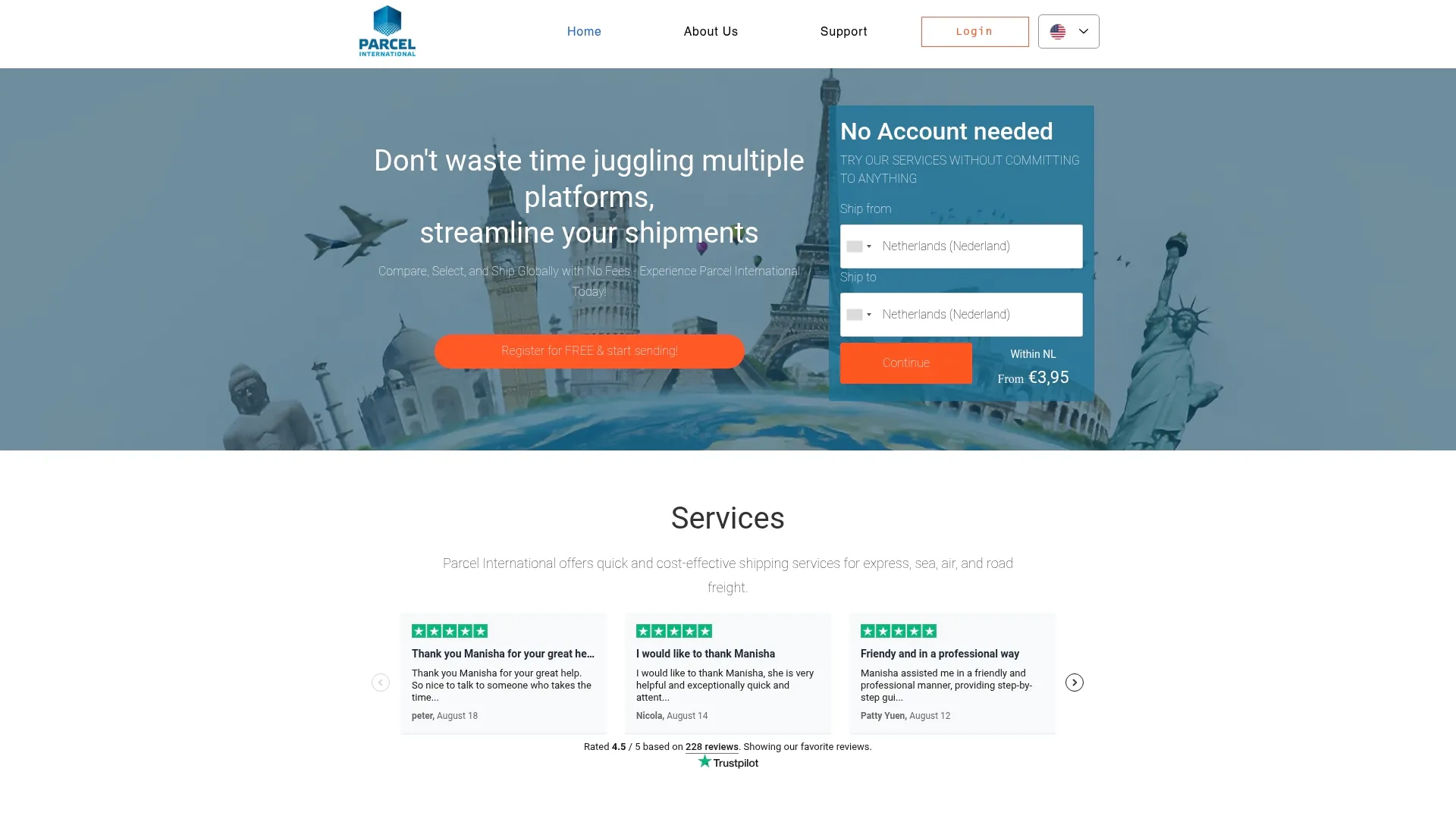
For international marketplace shipments, Parcel International arranges rate comparisons, required customs documentation, tracking, and optional insurance against damage or loss. If you’re shipping by road within Europe, read the explanation on road-transport to see which options suit your shipment. Unsure which documents you need in case of a transport dispute? Consult the guide on the transport-agreement. Want to know the cost of your shipment right away? Create a shipment and request a quote directly via the Parcel International platform.
Sources
For the exact rules on CN22/CN23 and the Single Administrative Document, refer to the explanation by MKB Servicedesk. To look up the correct HS code, use the practical-guide-to-hs-codes from Parcel International, supplemented by the official KVK guidelines mentioned earlier in this article.
This article provides general information. Always check the current customs regulations at customs.gov.
Get a grip on your parcel shipping
Compare carriers, choose the best price and keep track of your international shipments. You can calculate and book without an account.
