Sending parcels may seem simple, and almost everyone does it at some point. However, problems often arise because people overlook important steps. Did you know that an incorrectly filled out shipping label can delay your parcel by up to a week? Most delays aren’t caused by the transport itself, but by surprisingly small mistakes that you can easily avoid.
Table of Contents
Quick Overview
Belangrijk Punt | Uitleg |
|---|---|
1. Bepaal inhoud en waarde | Documenteer nauwkeurig de inhoud en waarde van je pakket om vertragingen te voorkomen. |
2. Kies geschikte verpakkingsmaterialen | Gebruik stevige dozen en opvulmaterialen om schade tijdens transport te vermijden. |
3. Selecteer juiste verzendmethode | Vergelijk verzendopties op basis van kosten, snelheid en speciale vereisten. |
4. Vul verzenddocumenten nauwkeurig in | Zorg voor volledige en correcte documentatie om douaneproblemen te voorkomen. |
5. Controleer zending vóór verzending | Voer een laatste inspectie uit om fouten en beschadigingen te voorkomen. |
Step 1: Determine the Contents and Value of Your Package
The first crucial step in your shipping plan is to accurately determine the contents and value of your package. This preparatory stage is essential for smooth shipping and helps prevent potential delays or issues during customs inspections. When sending a package, you must map out in detail what it contains and its actual economic value.
When inventorying your package contents, it is important to document each item carefully. Provide a detailed description of the goods, including material, dimensions, and weight. For commercial shipments, it is particularly important to record the exact nature of the products. Electronic devices, fragile items, or regulated goods require extra attention and precise information.
Valuation is not just an administrative step; it directly impacts shipping costs and potential customs duties. Accurately measure the actual commercial value of your goods. Pay attention to whether the items are new or used, as this can make a difference in international shipments. Learn more about shipping options that consider the specific contents and value of your package.
If you are unsure about the classification or value of specific goods, it is advisable to request information in advance from the carrier or customs authorities. Some products may require special handling or additional documentation. Gather the following essential information in advance:
- Complete description of the contents
- Exact dimensions and weight
- Commercial or shipping value
- Country of origin
By carefully executing this step, you create a solid foundation for hassle-free shipping.
Accurate preparation prevents surprises, additional costs, and potential delays in the shipping process.
Step 2: Choose the Right Packaging Materials
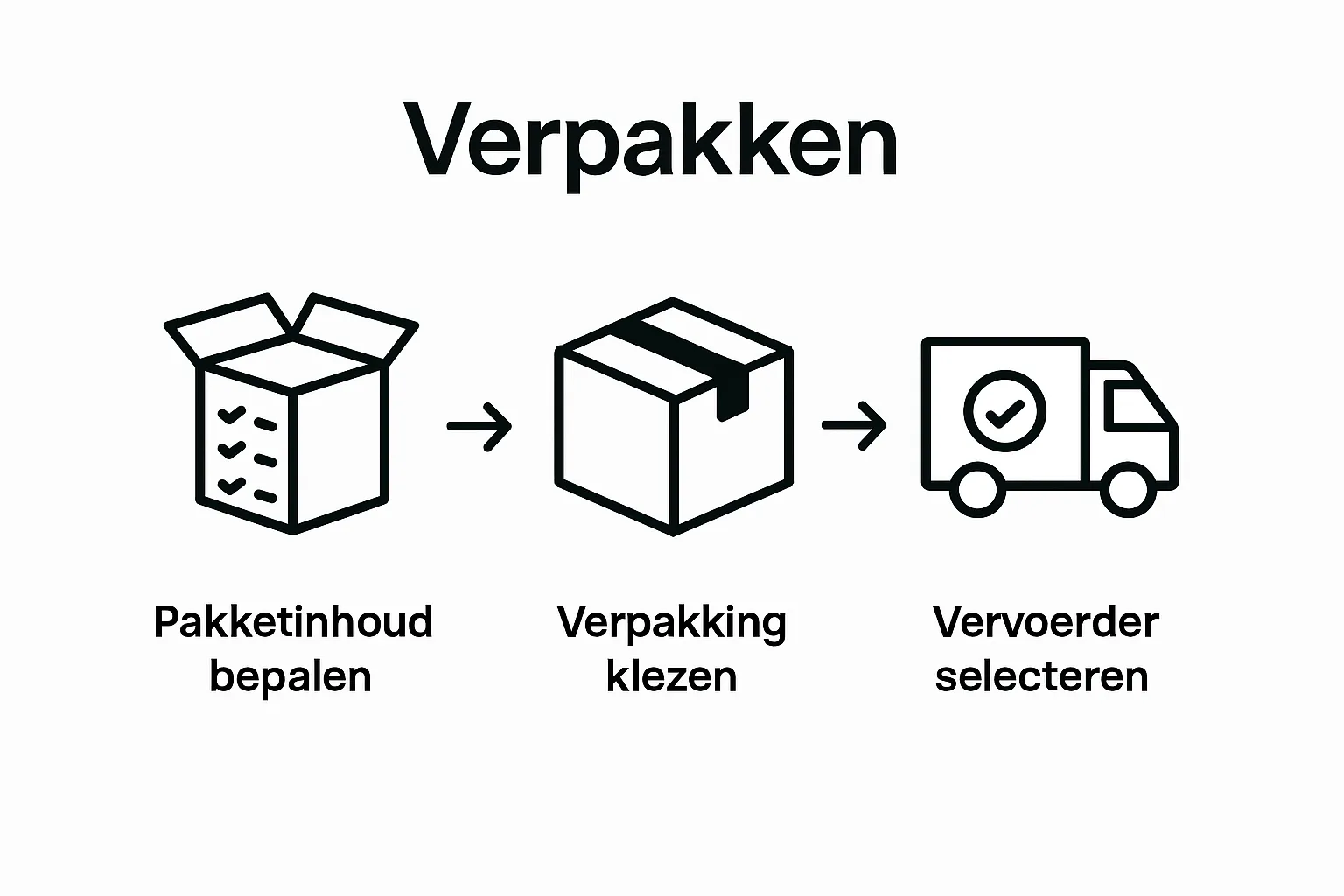
After determining the contents and value of your package, the next crucial step is selecting suitable packaging materials. The right packaging not only protects your goods during transit but also prevents damage and potential delays. A well-considered choice of packaging materials is essential for safe and efficient shipping.
Start by choosing a sturdy box or packaging that perfectly fits the dimensions and weight of your goods. Boxes that are too large create unnecessary space, allowing items to shift, while boxes that are too small increase the risk of damage. Preferably use new, undamaged boxes that show no signs of previous shipments. Cardboard boxes are popular due to their versatility and protective properties. that can help you find the ideal packaging.
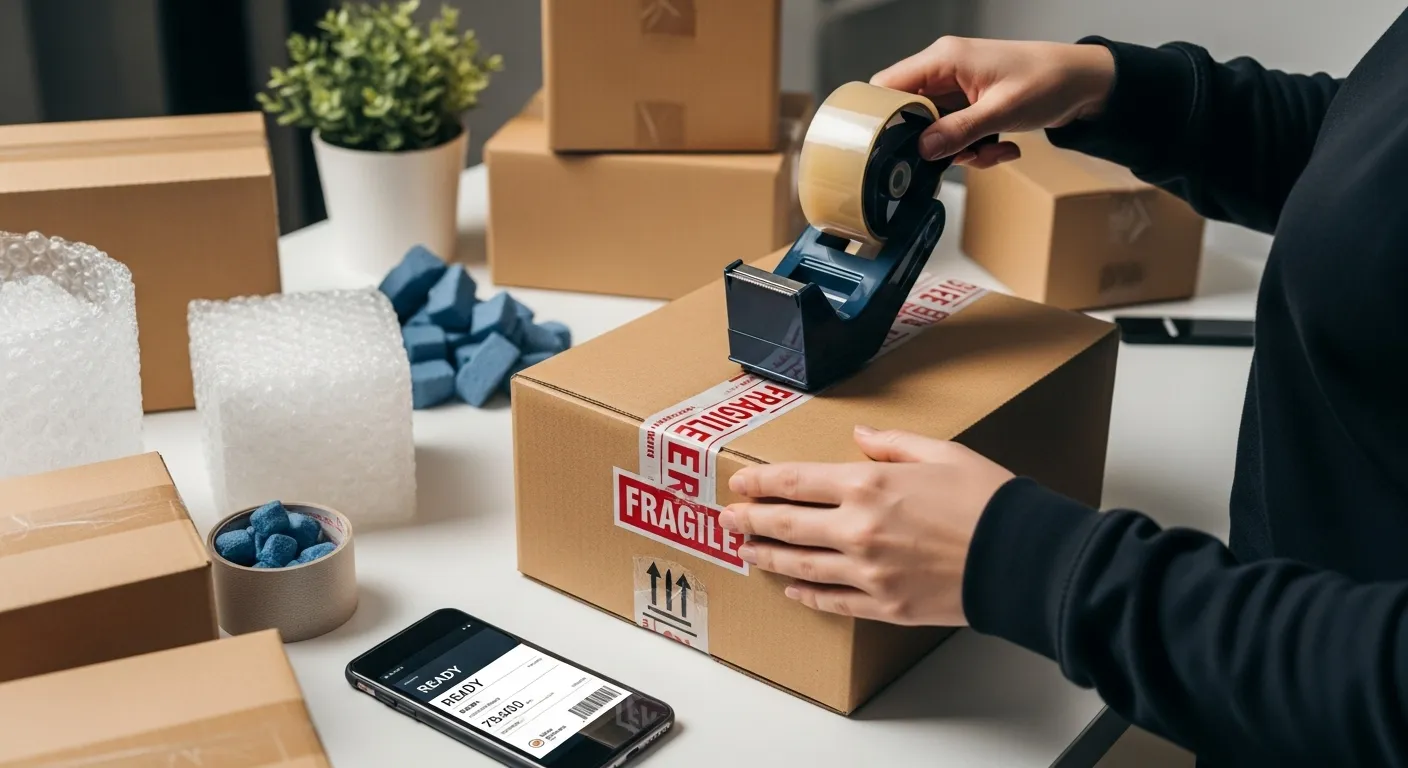
Inside the box, cushioning material is crucial for protecting your goods. Use materials such as bubble wrap, foam peanuts, or packing paper to prevent movement and absorb shocks. Pay extra attention to fragile items like electronic devices, glassware, or breakable objects. Wrap these items individually in protective material before placing them in the box. Ensure there is no room for shifting and that all items are securely in place.
Here, you’ll find a helpful overview of commonly used packaging materials, their properties, and applications for safe shipping.
Packaging Material | Properties | Recommended Use |
|---|---|---|
Sturdy Cardboard Box | Durable, protective | General use, heavy/fragile items |
Bubble Wrap | Shock-absorbing, lightweight | Fragile and breakable goods |
Foam Peanuts/Packing Paper | Prevents movement, lightweight | Filling empty spaces |
Strong Packing Tape | Long-lasting adhesion | Sealing boxes securely |
Additional Protective Material | Extra protection, flexible | Electronics, glass, liquids |
Leak-Proof Container | Prevents leakage | Liquids |
Different types of products require specific packaging guidelines. Liquids must be sealed in leak-proof containers, while electronics should be protected against static electricity. Also, pay attention to the weight of your packaging. Overly heavy boxes may incur additional shipping costs or even be rejected by certain carriers.
Here are some essential materials for safe shipping:
- Sturdy cardboard boxes
- Bubble wrap
- Cushioning material (foam peanuts or paper)
- Strong packing tape
- Additional protective material for fragile items, if needed
Tip: Always test your packaging by gently shaking the box. If you hear noises or feel movement, add more cushioning material. A well-packaged item should feel firm and stable.
Step 3: Select a Shipping Method and Carrier
After carefully preparing your package, the next critical step is selecting the right shipping method and carrier. This choice not only determines the speed and reliability of your shipment but also directly impacts the cost and safety of your package. A well-considered decision can make the difference between a smooth delivery and potential delays or issues.
Start by accurately assessing your specific shipping needs.Are you shipping your package internationally or within the Netherlands?The distance, urgency, and nature of your goods play a crucial role in choosing the right shipping option. Standard postal services are cheaper but slower, while express services are faster but more expensive. Also, pay attention to special shipping requirements for fragile or regulated products.Discover more about the best shipping optionsthat match your specific needs.
Next, compare different carriers based on multiple criteria. Price is important, but not the only consideration. Also, look at tracking capabilities, insurance, maximum dimensions, and weight limits. Some carriers offer better service for specific types of goods, such as electronic devices or fragile items. Major international carriers like PostNL, DHL, and UPS each have their own strengths. Smaller local courier services can sometimes be more flexible and personalized.
Consider additional shipping requirements. International shipments require extra documentation, such as invoices and certificates of origin. Some countries have specific import restrictions or higher customs duties. Always ensure your package meets all conditions to avoid surprises.
Here are some crucial considerations when selecting a shipping method:
- Delivery speed
- Price
- Tracking capabilities
- Insurance coverage
- Maximum package dimensions
- Special handling for fragile goods
Tip: Always request a detailed quote and read the fine print. A cheap option may turn out to be more expensive due to hidden fees or insufficient insurance. Take the time to make the best choice that fits your specific shipping needs.
Step 4: Complete the Required Shipping Documents
After selecting the shipping method and carrier, the next critical step is accurately completing all required shipping documents. This step prevents delays, additional costs, and potential issues during customs inspections. A flawlessly completed document is essential for the smooth shipment of your package.
First, gather all relevant information before you start filling out the forms. This means having exact details such as sender and recipient information, full address details, precise package contents, and value. Pay extra attention to international shipments, where more detailed information is required. to avoid errors.
For international shipments, several specific documents are crucial. A commercial invoice is almost always mandatory, including a detailed description of the shipped goods, their value, and origin. For commercial shipments, you often need a CN22 or CN23 form, depending on the value and nature of your shipment. Electronic pre-declaration is becoming increasingly important and can significantly speed up the physical process.
Pay attention to the specific requirements per country and carrier. Some shipping methods require additional documentation for specific products such as electronics, food, or medical equipment. Always verify that you have all mandatory documents on hand. Incomplete or incorrect documentation can result in your package being returned or even seized.
Here are the most common documents you need to prepare:
- Shipping label with complete sender and recipient details
- Commercial invoice with detailed goods description
- Certificate of origin
- Any special import permits
- Customs declaration forms
Tip: Create digital copies of all documents before submitting them. This helps you respond quickly if questions or issues arise during the shipping process. Take the time to carefully review each document before final submission. A small error can lead to unnecessary delays or additional costs.
Step 5: Verify the Shipment for Completeness and Accuracy
Na het zorgvuldig voorbereiden van je pakket en het invullen van de documenten, is de vijfde stap een kritische finale inspectie. Het grondig controleren van je zending voorkomt mogelijke problemen, vertragingen en extra kosten. Een nauwkeurige eindinspectie is de laatste verdedigingslinie voordat je pakket de deur uitgaat.
Begin met een complete visuele inspectie van je pakket. Controleer of de verpakking geen beschadigingen vertoont, stevig is afgesloten en geen zwakke plekken heeft. Let extra op de hoeken en naden van de doos, want deze zijn het meest kwetsbaar tijdens transport. De verpakking moet stevig aanvoelen zonder uitstekende randen of losse plakbandjes. Ontdek meer tips voor een perfecte pakket voorbereiding om zeker te zijn van een veilige verzending.
Vervolgens ga je de inhoudelijke documentatie grondig na. Controleer of alle verzenddocumenten volledig, leesbaar en actueel zijn. Vergelijk de informatie op het verzendlabel met de gegevens op je facturen en douaneformulieren. Let op kleine details zoals postcodes, landcodes en volledige adresgegevens. Een enkele typfout kan je zending vertragen of zelfs terugsturen. Zorg dat de beschreven inhoud van het pakket exact overeenkomt met wat daadwerkelijk is ingepakt.
Bij internationale zendingen zijn er extra aandachtspunten. Sommige landen hebben specifieke invoerrestricties voor bepaalde goederen. Controleer of je alle benodigde vergunningen en certificaten bij de hand hebt. Let ook op de waardeverklaring en of deze overeenkomt met de werkelijke commerciële waarde van de goederen.
Hier zijn cruciale controlepunten voordat je je pakket verstuurt:
- Verpakking intact en stevig
- Alle documenten volledig en correct ingevuld
- Adresgegevens kloppen
- Inhoud komt overeen met documentatie
- Alle benodigde vergunningen aanwezig
Tip: Maak een foto van je volledig voorbereide pakket en de bijbehorende documenten. Dit geeft je een extra bewijs en referentiepunt mocht er onderweg iets misgaan. Neem de tijd voor deze laatste controle. Een paar minuten extra aandacht kan kostbare tijd en frustratie besparen.
Gebruik deze checklist om alle essentiële controlepunten af te vinken voordat je jouw pakket daadwerkelijk verzendt.
Controlepunt | Waarom Belangrijk | Afgevinkt (ja/nee) |
|---|---|---|
Verpakking intact en stevig | Voorkomt schade tijdens transport | |
Documenten volledig en correct | Voorkomt vertragingen/douaneproblemen | |
Adresgegevens helemaal kloppen | Zorgt voor correcte aflevering | |
Inhoud komt overeen met documentatie | Voorkomt verwarring en problemen | |
Benodigde vergunningen aanwezig | Noodzakelijk voor bepaalde goederen | |
Foto van pakket en documenten gemaakt | Bewijs voor mogelijke claims |
Step 6: Track Your Package to Its Destination
Na het zorgvuldig voorbereiden en verzenden van je pakket begint een spannende fase: het volgen van je zending tot aan de eindbestemming. Deze stap geeft je rust en controle, terwijl je kunt zien hoe je pakket zijn reis aflegt. Moderne tracking technologie maakt het mogelijk om vrijwel elke beweging van je zending nauwlettend in de gaten te houden.
Bewaar je tracking nummer als goud, want dit is je sleutel tot alle informatie over je verzending. Meestal ontvang je dit nummer direct na het afgeven van je pakket bij de vervoerder. Noteer het nummer op een veilige plek en bewaar de bevestigingsmail of bon. Ontdek de beste manieren om je pakket real-time te volgen voor maximale zekerheid en gemoedsrust.
De meeste vervoerders bieden tegenwoordig geavanceerde tracking systemen. Via hun website of mobiele app kun je exact zien waar je pakket zich bevindt. Let op de verschillende statussen zoals ‘verzameld’, ‘onderweg’, ‘douanecontrole’ of ‘out for delivery’. Bij internationale zendingen zijn deze updates extra waardevol omdat er meer tussenstops kunnen zijn. Sommige diensten bieden zelfs realtime GPS tracking, waardoor je vrijwel exact kunt zien waar je pakket zich bevindt.
Bij internationale zendingen is het belangrijk extra alert te zijn. Douanecontroles kunnen vertragingen veroorzaken. Als je tracking nummer aangeeft dat je pakket langer stilstaat, neem dan proactief contact op met de vervoerder. Soms is aanvullende documentatie nodig of moet er iets worden verduidelijkt. Wees voorbereid om snel te kunnen reageren op eventuele vragen of verzoeken.
Hier zijn enkele cruciale tips voor het effectief volgen van je zending:
- Bewaar altijd je tracking nummer
- Controleer de status minimaal om de 24 uur
- Let op mogelijke vertragingen bij internationale routes
- Houd je contactgegevens actueel voor updates
- Bewaar alle verzendbewijzen
Tip: Sommige vervoerders bieden sms of email alerts. Meld je hiervoor aan zodat je direct op de hoogte bent van belangrijke status wijzigingen. Een kleine moeite die je veel stress kan besparen. Wees geduldig maar waakzaam tijdens het trackingproces.
Ship Your Package with Ease Using Parcel International
Stuck in a loop during the shipping process because you're unsure if everything is properly packed, the right shipping documents are filled out, or if your shipment will actually arrive? Many people experience the frustrating feeling of uncertainty when sending packages internationally. Thanks to the detailed step-by-step guide in the article, you now know exactly how to determine the contents and value, choose the packaging, fill out the documents, and check your package before shipping. But it can still be nerve-wracking to take that final step and maintain full control.
With Parcel International, every shipment becomes a clear and reassuring process.Benefit from over 15 years of logistics experience, real-time tracking, and the ability to quickly compare dozens of carriers in more than 220 countries. Easily ship documents, packages, or pallets with no hidden costs. Compare the best shipping options for your situation right away or use our tracking service to transparently monitor your shipment.
Want to ship packages today without stress or delays? Go directly to Parcel International and discover how simple and affordable international shipping can be. Take advantage of our support at every step of the process and experience the difference for yourself.