
TL;DR:
- High shipping costs lead to abandoned purchases – structured comparison saves costs and increases satisfaction
- Shipping comparison helps you choose the best carriers based on price, speed, and reliability
- Consistently comparing shipping options takes little time and improves margins and customer loyalty
High shipping costs are the number one reason why customers abandon their shopping carts. 59% of shoppers abandon their purchase as soon as shipping costs become too high. Yet, many businesses treat shipping comparison as an afterthought, something for later or for bigger players. This is a costly mistake. Whether you ship ten packages a month or a thousand, structured comparison delivers immediate results: lower costs, satisfied customers, and better margins. This guide provides all the facts, practical tips, and concrete steps to get started today.
Key Insights
Point | Details |
|---|---|
Direct Cost Savings | Regularly comparing shipping options directly lowers your shipping bill. |
Higher Conversion | Transparent and competitive shipping rates reduce cart abandonment during checkout. |
Improved Customer Satisfaction | Faster and more reliable delivery leads to more returning customers. |
Easy to Start | Tools make comparing shipping options quick and accessible, with no technical knowledge required. |
The Impact of Shipping Costs on Conversion and Customer Satisfaction
Shipping costs are not a minor detail in the purchasing process. They are often the moment when a customer makes the final decision: to buy or to abandon. This may sound exaggerated, but the numbers don’t lie.
Shipping costs may seem small, but for a customer ordering a €15 product, a €4.95 shipping fee feels like a significant surcharge. And if your competitor offers free or cheaper shipping, the choice is quickly made.
“Transparent shipping costs are not a nice-to-have. They are a basic expectation of the modern online shopper.”
What makes the difference between a customer who checks out and one who leaves? Usually, it comes down to four factors:
- Shipping Cost Amount: Costs that are too high relative to the product price lead to immediate abandonment.
- Lack of Transparency: Costs that only become visible late in the checkout process create distrust.
- Limited Choice: Offering only one carrier without alternatives makes customers feel they lack control.
- Unclear Return Policy: Customers want to know what happens if a product doesn’t meet their expectations before they order.
Customer satisfaction is closely tied to the feeling of being treated fairly. Those who understand why shipping costs fluctuate and communicate this transparently build trust. Those who don’t lose customers to competitors who do.
The solution isn’t always offering free shipping, as that directly eats into your margins. The solution is to adopt a smarter shipping strategy. By optimizing shipping based on current rates and customer needs, you can remain competitive without undercutting your prices.
A practical example: an online store offering three carriers with different delivery times and prices gives the customer control. This increases conversion and customer satisfaction without requiring you to be the cheapest option.
What Is Shipping Comparison and How Does It Work?
Shipping comparison is exactly what the name suggests: you compare multiple carriers or shipping options before making a choice. This sounds simple, but in practice, many businesses don’t do this systematically. They choose one carrier and stick with it, even when cheaper or faster alternatives are available.
There are three ways to compare shipping options:
- Manual: You request quotes from multiple carriers and compare them yourself. Time-consuming, but gives you full insight.
- Via Comparison Platforms: Platforms display the rates of multiple carriers in one overview. Fast and clear.
- Via Integrated Tools: Some e-commerce platforms have built-in comparison features that automatically select the best option per shipment.
The benefits of shipping comparisons become truly apparent when you know which factors to compare. Price alone isn’t enough. Also consider:
Factor | Why It Matters |
|---|---|
Price per Package | Directly impacts your margin |
Delivery Time | Customer experience and expectations |
Reliability | Fewer complaints and returns |
Insurance | Protection in case of loss or damage |
Customer Service | Handling issues effectively |
For example, if you’re shipping a 2 kg package to Germany, Carrier A charges €8.50 with delivery in 3 days. Carrier B charges €6.20 with delivery in 2 days. Carrier C charges €5.80 but without track-and-trace. Which do you choose? It depends on what your customer expects and what you’re willing to pay for service.

The explanation of shipping platforms shows how technology simplifies this comparison process. Modern platforms display not only the price but also reviews, delivery times, and additional services. This allows you to make an informed choice in minutes, a task that used to take hours.
Optimizing a solid shipping strategy is essential for maintaining margins, especially if you operate internationally and deal with fluctuating rates and currencies.
The Benefits of Shipping Comparison for E-Commerce and Individuals
Shipping comparison offers advantages for anyone who ships packages, from large online stores to individuals sending a single package abroad.
For e-commerce businesses, the benefits are the most tangible:
- Lower Shipping Costs: By comparing regularly, you never pay more than necessary. Small savings per package add up quickly at higher volumes.
- Faster Delivery: A faster carrier for the same price is always a win. Customers highly value quick delivery.
- Better Customer Reviews: Consistently delivering on time with clear communication leads to higher ratings, which attract new customers.
- Simpler Return Policy: Some carriers offer integrated return solutions. Comparing helps you find the best combination.
- Margin Retention: For small players, saving on shipping costs can be the difference between profit and loss on an order.
For individuals, the benefit is simpler: you pay less for the same package. If you send a package to family abroad just once, a quick comparison can save you dozens of euros.
An underestimated advantage is efficiency in the logistics chain. Those with fixed processes for comparing spend less time on ad-hoc decisions. That time is better spent on your core business. Also, check out the tips for efficient shipping to further streamline your process.
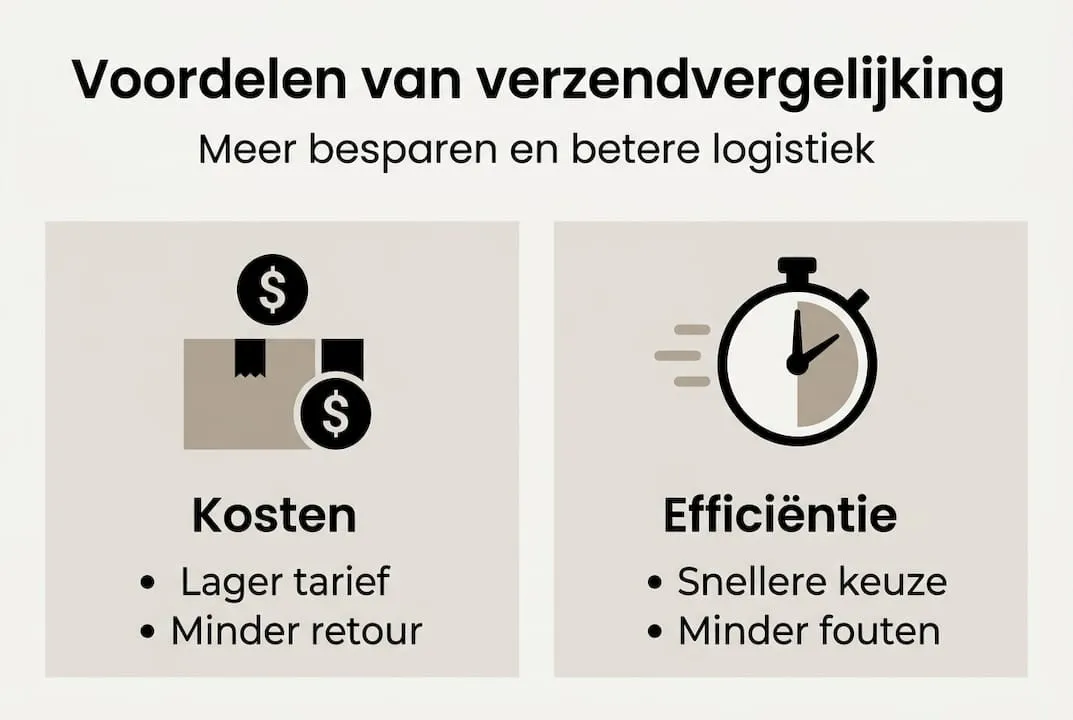
The cost-saving shipping tips for international e-commerce show that even small adjustments in your shipping strategy can have a major impact annually.
Pro tip: Compare your shipping options at least once per quarter, even if you're satisfied with your current carrier. Rates change regularly, and your current contract may no longer be the best option on the market.
How to implement shipping comparison in practice?
Knowing that shipping comparison pays off is one thing. Actually doing it is another. Here’s a step-by-step approach you can apply immediately.
- Map your shipments: What weight, what volume, which destinations? These are the basic data points for any comparison.
- Set your priorities: Is price the most important factor, or delivery time? Do you need track-and-trace? Is insurance necessary?
- Use a comparison platform: Enter your details and view the options side by side. This takes just five minutes.
- Evaluate the total price: Don’t just look at the base price, but also consider surcharges for fuel, remote areas, or large packages.
- Make a choice and evaluate: After a few shipments, assess whether the carrier meets your expectations.
The examples of shipping methods for e-commerce give you a clear picture of the available options and what they mean in practice.
A common mistake is focusing solely on the price per package. However, when you factor in return costs, customer service costs for issues, and the impact on customer reviews, the picture changes. Cheap can ultimately turn out to be expensive.
Key Consideration | Question to Ask |
|---|---|
Weight and Volume | What are the exact dimensions and weight? |
Destination | Domestic or international? Which country? |
Delivery Time | When does the package need to arrive? |
Insurance | What is the value of the contents? |
Returns | Does the carrier offer a return solution? |
The practical examples of logistics services show how other e-commerce businesses have structured this process and what it delivers for them.
A solid shipping strategy is essential for margin retention, especially if you work with multiple carriers and volumes are growing.
Pro tip: Use platforms that send automatic notifications for rate changes. This way, you don’t have to track when a carrier adjusts their prices, and you’ll never miss an opportunity to save.
Why shipping comparison is often underestimated: our perspective
After years in international logistics, we keep seeing one recurring pattern: entrepreneurs who know they should compare but still don’t. The reason? They think it takes too much time or is too complex for their situation.
This doesn’t align with reality. Once you set up a good comparison process, it only takes minutes per shipment. The time investment is upfront, not with every shipment.
What stands out to us: generic advice on shipping costs is of little help. Every business has a different mix of destinations, volumes, and customer needs. Customization pays off. Those who optimize shipping based on their own data retain margins and customer loyalty better than those who follow a standard approach.
Entrepreneurs who compare systematically save thousands of euros annually. Not through spectacular deals, but by consistently choosing the best option for each shipment. That’s not luck. That’s process.
Start smart shipping comparison today
If you want to take the step toward systematic comparison, you don’t have to look far. At Parcel International, you can compare shipping options directly without creating an account. You’ll see an overview of which carriers are available for your package, destination, and budget.

Since 2007, we’ve helped entrepreneurs and individuals in over 220 countries and regions make the best shipping choice. Whether you’re sending one package or hundreds per month, the approach is the same: compare, choose, and ship. Want to learn more about how comparison works and what it delivers? Read on about the benefits of shipping comparisons for e-commerce. Link periodic comparison to your business process, and you’ll notice the difference quickly.
Can't find your question? Our support team is here for you 24/7 via the help centre.
Why are shipping costs so important for conversion?
Many shoppers abandon their cart due to high shipping costs, so competitive rates directly contribute to higher conversion and reduced lost revenue.
How often should I compare shipping options?
At least once per quarter, as carrier rates and terms change frequently, and you don’t want to unknowingly overpay.
Can you really save money with shipping comparison as a small business?
Yes, even with small volumes, it can save you tens of euros per month and prevent margin loss by optimizing your shipping strategy.
What mistakes are often made when comparing shipping options?
The most common mistakes are: sticking with a single carrier, ignoring volume discounts, and not including return costs in the total calculation.
Is shipping comparison only relevant for international shipments?
No, there are also significant differences in price and service levels for domestic shipments, which can lead to consistent savings.
All questions about shipping costs and volumetric weight (45)
Get a grip on your parcel shipping
Compare carriers, choose the best price and keep track of your international shipments. You can calculate and book without an account.
