
Shipping a sea container internationally can be overwhelming for small e-commerce businesses and private shippers. Incorrect steps quickly lead to delays, higher costs, and damage to goods. This guide provides a clear step-by-step plan to streamline the process, prevent errors, and ensure your international shipments run successfully.
Key Insights
Point | Details |
|---|---|
Preparation is Essential | Proper documentation and packaging prevent delays and damage |
FCL vs. LCL Determines Costs | The choice between full or shared container usage directly impacts price and transit time |
Safety Reduces Risks | Proper cargo securing and compliance ensure hassle-free shipping |
Budgeting Prevents Surprises | Understanding all costs helps with realistic planning and saves money |
Checklists Minimize Errors | A systematic approach with tools significantly reduces the chance of mistakes |
Requirements and Preparations
A successful sea container shipment starts with thorough preparation. Standard container sizes are 20ft (approximately 33 cubic meters) and 40ft (approximately 67 cubic meters). The 20ft container is perfect for small to medium-sized shipments, while the 40ft is ideal for large volumes or multiple pallets.
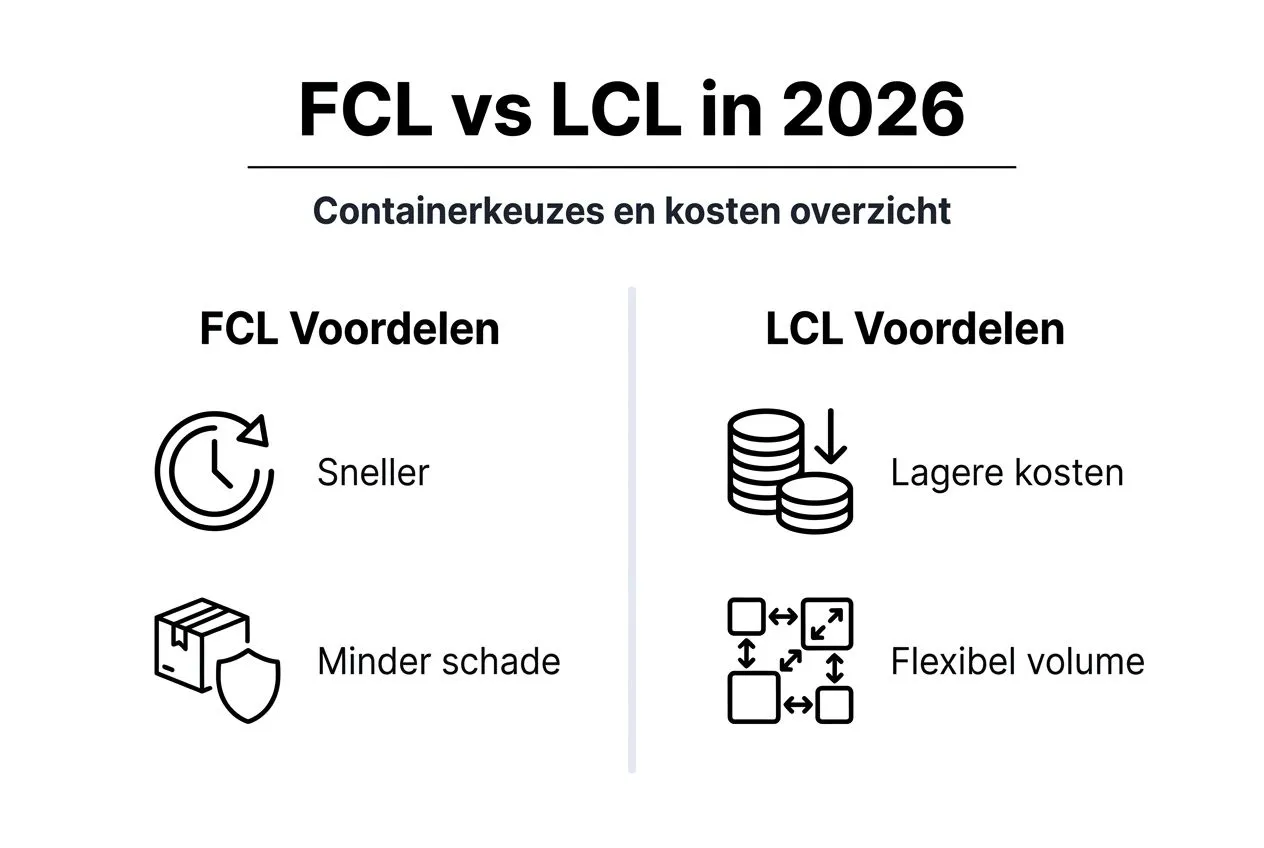
The choice between Full Container Load (FCL) and Less than Container Load (LCL) depends on your volume and budget. FCL means exclusive use of an entire container, which is faster and safer but incurs higher costs for small volumes. LCL shares container space with other shippers, making it cost-effective for shipments under 15 cubic meters but with longer transit times.
For every international container shipment, at least 4 core documents are required: the Bill of Lading, Commercial Invoice, Packing List, and Certificate of Origin. These documents form the basis for customs clearance and transport. Consult a customs-forms-guide to avoid errors.
Required preparations include:
- Proper packaging materials such as pallets, stretch wrap, and corner protectors
- Clear labeling with destination address, handling instructions, and warnings
- A reliable logistics partner with experience in international sea container shipping
- A complete international shipping checklist for systematic preparation
- Safe packaging according to international standards to minimize damage
Follow the safe-packaging-guide to optimally protect goods during transport. Invest time in preparation, as this prevents future problems and costs. A reliable partner helps navigate complex procedures and ensures timely delivery.
Container Choice: Full Container Load (FCL) vs. Less than Container Load (LCL)
The choice between FCL and LCL directly impacts costs, transit time, and safety. FCL offers exclusive container use, meaning your goods travel alone without contact with other cargo. This results in faster transit times, less handling, and a lower risk of damage. FCL is ideal for shipments of 15 cubic meters or more or valuable goods requiring extra protection.

LCL, on the other hand, is cost-saving for smaller volumes under 15 cubic meters. You only pay for the space your goods occupy, not the entire container. The downside is that LCL has longer transit times due to additional handling during consolidation and deconsolidation. There is also a higher risk of damage due to multiple handlings and contact with other cargo.
Aspect | FCL | LCL |
|---|---|---|
Costs | Fixed rate regardless of volume | Price per cubic meter |
Transit Time | 14 to 28 days on average | 21 to 42 days on average |
Handling | Minimal, direct loading | Multiple loading/unloading cycles |
Safety | Highest, no contact with other goods | Lower due to shared space |
Suitable For | Volumes over 15m³, valuable goods | Small shipments under 15m³ |
Transit times typically range from 2 to 6 weeks depending on container choice, route, and season. When starting with international-shipping it is crucial to consider these factors. Combine your container choice with the right ecommerce-packaging-tips for optimal protection.
Pro Tip: For large shipments or valuable goods such as electronics or medical equipment, always choose FCL to prevent damage and delays. The higher initial costs do not outweigh the risk of damaged goods with LCL. Check international shipping checklist tips for further optimization.
Step-by-Step Shipping Process
The sea container shipping process follows a logical sequence that starts with planning and ends with delivery. Follow these steps carefully to avoid delays:
- Determine container choice and volume: Measure your goods accurately and choose between FCL or LCL based on total volume. Account for packaging materials that take up additional space.
- Gather and verify documents: Prepare the Bill of Lading, Commercial Invoice, Packing List, and Certificate of Origin. Double-check for errors in addresses, value amounts, and product descriptions. Use the customs forms guide for correct completion.
- Pack and label goods: Use sturdy packaging materials and secure goods on pallets with stretch wrap. Apply clear labels with destination information and handling instructions. Follow guidelines for preparing goods for transport to prevent damage.
- Book shipment with carrier: Select a reliable shipping line or freight forwarder with experience on your route. Discuss transit times, costs, and insurance. Ask about tracking options for real-time updates.
- Load container: For FCL, organize the loading yourself or hire a loading service. For LCL, deliver goods to the carrier’s consolidation point. Ensure proper weight distribution to prevent shifting during transport.
- Customs export clearance: Your freight forwarder handles export customs formalities in the shipping country. The average transit time ranges from 2 to 6 weeks, depending on the route and customs efficiency. Ensure all documents are available on time.
- Track and communicate: Use digital tracking tools for real-time updates on container status. Maintain contact with your freight forwarder for proactive issue resolution. Inform the recipient about the expected arrival time.
- Customs import and delivery: Upon arrival, the local freight forwarder handles import customs and final delivery to the destination address. Ensure the recipient is available and can pay any import duties.
Pro tip: Using digital tracking tools for real-time updates on container status reduces stress and enables proactive responses to delays. Many modern freight forwarders offer apps and portals with detailed information on location, expected arrival, and potential issues. Read more about customs clearance tips for smooth procedures.
Costs and budgeting
The cost of shipping a sea container varies significantly depending on size, route, season, and additional services. Shipping a 20ft container averages €2,000 to €4,850, while a 40ft container can cost between €3,500 and €7,200. These prices are indicative and fluctuate with supply and demand.
Seasons have a considerable impact on rates and availability. From August to October, just before Western holidays, prices rise due to higher demand. In January and February, rates often drop due to lower trade volumes. Plan your shipment outside peak periods for cost savings.
Additional costs often overlooked:
- Insurance: 0.3% to 1.5% of the total goods value, depending on risk
- Port fees: €150 to €400 per container for handling at ports
- Storage fees: €25 to €75 per day if the container remains beyond free periods
- Customs inspection: €200 to €600 if a random inspection occurs
- Domestic transport: €150 to €500 for pickup or delivery to the final destination
- Document processing: €50 to €150 for administrative handling
Route | 20ft Container | 40ft Container | Average transit time |
|---|---|---|---|
Europe to US | €2,200 – €4,200 | €3,800 – €6,500 | 18 – 25 days |
Asia to Europe | €1,800 – €3,500 | €3,200 – €5,800 | 21 – 35 days |
US to Asia | €2,500 – €4,850 | €4,200 – €7,200 | 20 – 30 days |
Budgeting strategies include requesting multiple quotes, flexibility in departure times, and consolidating small shipments into FCL volumes with other shippers. Avoiding hidden costs starts with asking detailed questions about what is and isn’t included in the base price. Discover more about the benefits of international logistics for strategic planning.
Safety measures and compliance
Proper cargo stabilization significantly reduces the risk of damage during transport. Use pallets, lashing straps, and anti-slip mats to keep goods in place. Distribute weight evenly across the container floor to prevent tipping. Always place the heaviest items at the bottom and stack lighter ones on top.
Correct labels and markings according to international requirements are mandatory for all sea containers. This includes:
- Full destination address visible on at least two sides
- Handling instructions such as 'Fragile' or 'This Side Up' in English
- Hazardous goods labels in compliance with the IMDG Code, if applicable
- UN numbers and safety symbols for regulated materials
Compliance with customs and transport regulations prevents costly delays. Each country has specific import requirements for certain products. Check in advance whether your goods require special permits or certificates. Food, plants, and animal products often have strict quarantine laws.
Safety guidelines for fragile goods such as electronics or glass require extra protective layers. Use bubble wrap, foam, or cardboard dividers. For hazardous goods like batteries, chemicals, or flammable materials, IMDG guidelines apply, requiring training and special packaging.
Invest in quality packaging and follow the safest packaging methods for maximum protection. The cost of extra packaging materials is negligible compared to damage to your goods. Compliance with all regulations ensures smooth transit and protects against fines and legal issues.
Common mistakes and solutions
Insufficient packaging is the most common mistake in sea container shipments and causes significant delays and damage. Goods shift during the long journey, especially with LCL where multiple loading and unloading occur. Invest in sturdy packaging materials and fill empty spaces with dunnage to minimize movement.
Incorrect container choice leads to unnecessary costs and increased risks. Many shippers opt for LCL to save money without considering the longer transit times and higher risk of damage. Always calculate the total costs, including time value and potential damage. For valuable or time-sensitive goods, FCL is often the better choice despite higher base costs.
Completeness of documents is crucial for smooth customs clearance. Missing or incorrect information on bills of lading and commercial invoices leads to inspections, delays, and extra costs. Common mistakes include:
- Unclear product descriptions that customs cannot categorize
- Incorrect HS codes for tariff classification
- Wrong value amounts or currency on commercial invoices
- Missing signatures or company stamps
Poor communication with carriers increases uncertainty and misses opportunities for proactive problem-solving. Maintain regular contact, ask for updates, and inform them of any changes on your end. Miscommunication about pickup or delivery times leads to missed deadlines and extra storage costs.
Pro tip: Use digital checklists and tools upfront to minimize errors. Modern platforms allow you to upload documents for automatic completeness and accuracy checks. This saves time and reduces the risk of rejection. Consult the international shipments checklist for systematic preparation and review customs clearance tips for smooth procedures.
Expected outcomes and KPIs of successful shipments
A lead time of 2 to 6 weeks is a realistic standard for most international sea container routes. This period includes loading, sea transit, customs clearance, and domestic transport to the final destination. Shorter lead times are possible with express services but cost significantly more.
Cost efficiency through the right choice between FCL and LCL directly impacts your profit margin. For volumes over 15 cubic meters, FCL is usually more cost-effective per cubic meter than LCL. Calculate total costs including time and risk, not just the base transport price.
Minimizing damage and delays through proper preparation is measurable in your damage claims and on-time delivery percentages. Aim for less than 2% damage and at least 90% on-time delivery. This requires consistent application of packaging standards and document checks.
The importance of satisfaction with your logistics partner for process optimization cannot be overstated. A reliable partner with transparent communication, competitive rates, and proactive problem-solving significantly enhances your efficiency. Evaluate partners annually based on:
- On-time performance percentage
- Response time to inquiries and issues
- Accuracy of cost estimates
- Quality of tracking and reporting
- Flexibility for changing needs
Using KPIs to measure and improve performance aids in continuous optimization. Track average lead times per route, cost per shipment, damage percentages, and customer satisfaction. Analyze trends and identify areas for improvement in future shipments.
Explore our international shipping solutions
Successfully shipping sea containers requires expertise, planning, and reliable partners. Parcel International has supported small to medium-sized e-commerce businesses and private shippers in navigating complex international logistics since 2007. With access to over 220 countries and territories, we offer solutions for both FCL and LCL shipments.
Our experience helps you make the right choices between different transport methods and ensures timely delivery at competitive rates. Whether you ship containers regularly or plan a one-time shipment, we simplify the process with clear communication and personalized service. Discover the benefits of international shipping and explore the international-shipping-methods that best suit your needs. Visit Parcel International for a no-obligation quote and personalized advice.
Can't find your question? Our support team is here for you 24/7 via the help centre.
What are the required documents for shipping a sea container?
The four essential documents are the Bill of Lading, Commercial Invoice, Packing List, and Certificate of Origin. These documents form the basis for export and import customs. Some shipments may require additional permits depending on the destination and type of goods, such as phytosanitary certificates for plants or conformity certificates for electronics.
What is the difference between FCL and LCL when shipping a sea container?
FCL (Full Container Load) means you have exclusive use of an entire container, which is faster and more secure. LCL (Less than Container Load) means you share container space with other shippers, which is more cost-effective for small volumes under 15 cubic meters. However, LCL has longer transit times and a higher risk of damage due to additional handling during consolidation and deconsolidation.
How long does it typically take to ship a sea container internationally?
Transit time generally ranges from 2 to 6 weeks, depending on the route, season, and container choice. Shorter routes within Europe may take 14 to 21 days, while intercontinental routes such as Asia to Europe can take 28 to 42 days. Always account for additional time for customs inspections and domestic transport to the final destination, which can add 3 to 7 days.
What are the average costs for shipping a sea container?
A 20ft container typically costs between €2,000 and €4,850, while a 40ft container may cost €3,500 to €7,200, depending on the route and season. These prices exclude additional costs such as insurance, port charges, storage, and domestic transport. Always request a detailed quote with all inclusive costs to avoid surprises, and compare multiple providers for the best deal.
How can I prevent damage to my goods during sea container transport?
Use sturdy packaging materials such as pallets, stretch wrap, and corner protectors to stabilize goods. Distribute weight evenly across the container floor, with heavier items at the bottom. Fill empty spaces with dunnage to minimize movement, and apply clear handling instructions. Consider insurance for valuable goods and opt for FCL over LCL for extra protection against damage from multiple handling.
Get a grip on your parcel shipping
Compare carriers, choose the best price and keep track of your international shipments. You can calculate and book without an account.
