
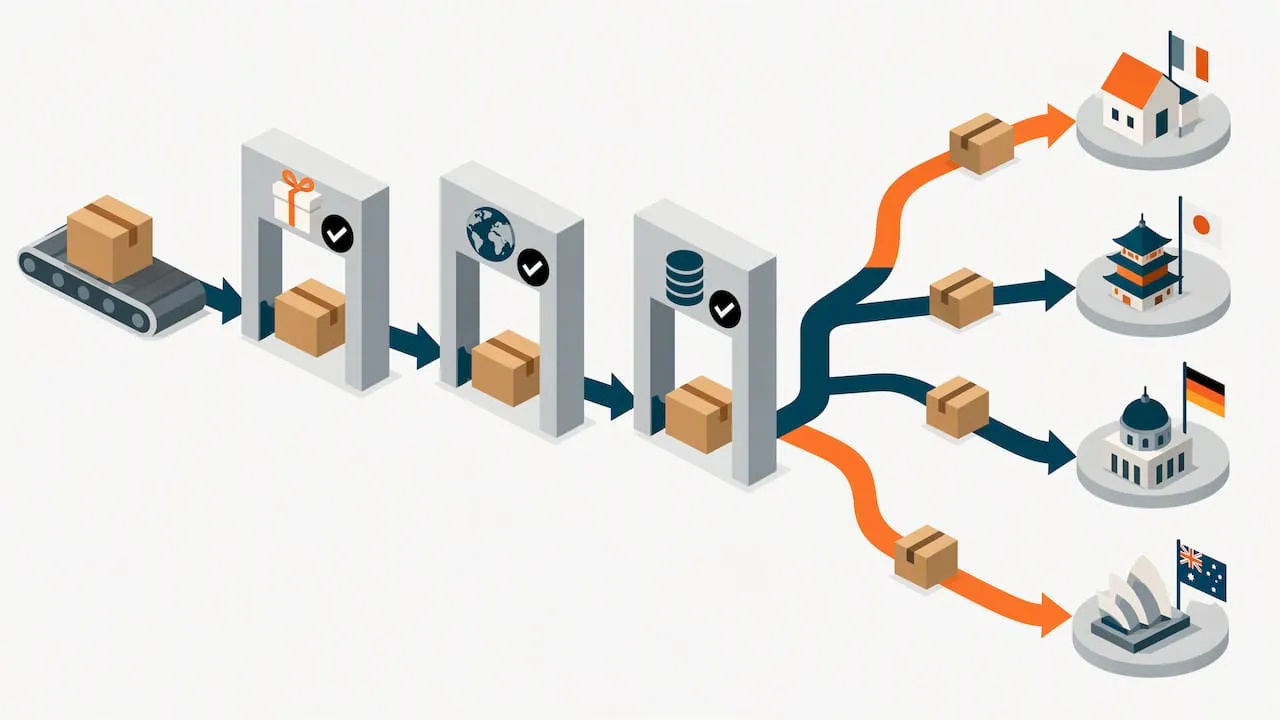
First, check customs regulations, then securely pack your item, and finally choose the shipping option that matches its value and urgency—this prevents most issues with private parcels. Via Your Europe you can verify the rules for the country of departure and destination, and with a platform like Parcel International, you can compare carriers and track your shipment.
In summary:
- It is essential to check customs regulations in advance, especially the correct goods description, value, and HS code, to prevent clearance issues.
- Proper packaging, using sturdy materials and clear labels, helps avoid damage and delays in international shipments.
- For shipments with higher value or special goods, additional documentation or certificates may be required, depending on the type of item and destination.
- For lower values under €45, exemptions may apply for private gifts, but this depends on strict conditions and national regulations.
- Using a platform like Parcel International simplifies comparing carriers, automatically generating customs documents, and tracking shipments.
Check Customs, HS Code, and Required Documents Before Shipping
Before booking an international shipment, verify whether the item may be exported from the country of departure and imported into the destination country. A vague or incomplete goods description is one of the most common reasons parcels get held up during clearance, as highlighted by Your Europe.
For smooth clearance, customs authorities require at least the following details:
- a specific description of the goods, not a general term like “gift” or “parts”;
- the value of the shipment and the country of origin;
- the correct HS code and the quantity per item;
- a commercial or pro-forma invoice that stays with the parcel.
For business shipments, an EORI number is often required to identify the exporter or importer; individuals sending occasional parcels typically do not need one. If you regularly ship for a small business, that is a clear sign to apply for an EORI number.
In the EU, shipments from outside the EU are exempt for private gifts up to a value of €45, under strict conditions, as stated by the Belgian Customs (FOD Finances): this threshold only applies under strict conditions, such as the absence of a commercial nature. Austrian regulations confirm that such exemptions are set nationally and may vary by country, with their own maximum quantities and criteria, as explained by the Federal Ministry of Finance. If in doubt, consult the TARIC database or the national Tarbel system for the correct goods code, and contact national customs for complex shipments. Keep all documents digitally for quick retrieval if customs raises questions. Learn more about this step in our guide on the role-of-customs-in-shipping.
Packing, Measuring, and Labeling: Prevent Damage and Clearance Delays
A well-packaged private parcel saves you money and avoids disputes in case of damage. Follow these steps:
- Choose a sturdy outer box that leaves at least five centimeters of space around the item for cushioning material.
- Wrap fragile items individually in bubble wrap and fill empty spaces with padding to prevent shifting.
- Pack textiles and clothing in a dust-proof bag before placing them in the box to protect against moisture and dirt.
- Protect electronics with anti-static material and the original packaging where possible.
- Measure the length, width, and height, and weigh the parcel: carriers often calculate based on the chargeable weight, the higher of the actual weight and the volumetric weight, which can significantly impact the final price.
- Securely attach the label with the sender, recipient, and a clear description matching the invoice.
- Take a photo of the ready-to-ship parcel before it leaves, as proof in case of damage or customs inquiries.
Pro tip: Store the photo of your packaging along with the invoice in the same folder: this saves a lot of back-and-forth emails in case of a claim or customs inquiry.
Keep in mind that certain categories often face restrictions or bans in international shipping: foodstuffs, animal products, hazardous materials like batteries and aerosols, and cultural goods such as antiques. For such items, an additional certificate may be required, such as a veterinary document for animal products, as noted by Your Europe. An overview of country-specific rules can be found in our article on international-shipping-rules.
Choose the Right Shipping Option: Speed, Cost, and Insurance
The right shipping method depends on what you are sending, how quickly it needs to arrive, and its value. A small, lightweight parcel typically goes via a courier or express service, while larger shipments are better suited for LCL, FCL, or road transport.
- Express is the best choice for time-sensitive or high-value shipments, as the speed justifies the higher cost.
- An economy option via air, sea, or road makes more sense when there is no rush and you want to save on shipping costs.
- Always insure a shipment if the value is high or the item is fragile: in case of damage, keep the packaging photo, invoice, and tracking proof for a smooth claim.
- Shipping costs are typically based on weight, dimensions, the chosen service, and sometimes the selected incoterm, which defines responsibility for transport, insurance, and customs clearance.
- Avoid unexpected customs costs by declaring the correct value and HS code upfront: undervaluation more often leads to delays than savings.
A clear cost calculation for import duties and VAT, including examples, can be found in our guide on calculating import duties.
Booking, tracking, and what to do during customs clearance or delays
When booking your shipment, keep all documents, contact details, and the exact value of the contents ready to avoid delays due to missing information.
- When booking, enter the description, value, and HS code exactly as stated on the invoice.
- Note the tracking number and check the status regularly, for example, via a DPD tracking integration that shows the package's location.
- Keep photos of the packaging and all shipping documents until the recipient confirms the package has arrived in good condition.
- Sign for receipt with reservation if there are doubts about the package's condition, take photos immediately, and file a claim if necessary.
During customs clearance, import duties, VAT, or administrative fees may apply; the recipient is usually responsible unless a different incoterm was agreed upon in advance. For frequent or complex shipments, engaging a customs broker is often the fastest way to ensure correct handling.
- Keep all documents and photos at least until delivery is confirmed.
- If in doubt about tariffs or documentation, engage a freight forwarder in a timely manner.
Parcel International’s perspective: when to handle it yourself and when to seek assistance
You can easily prepare a simple personal package yourself with the right documents and proper packaging. However, if the value increases, customs regulations become complex, or you frequently export as a small business, it pays to engage a forwarder who works with these procedures daily. We offer a platform that allows users to compare carriers and integrate tracking, removing that layer of complexity. In any case, always keep digital copies of your documents and take photos of each shipment.
— Pascal
In short: how Parcel International can help with your personal package
We compare multiple carriers for you in one place, so you don’t have to visit ten different websites. Through our platform, you can book your shipment, have customs documents generated automatically, and track the status.

- Compare multiple shipping options directly via our shipping services comparison.
- View specific air, sea, or road freight options on our freight-page for larger personal shipments.
- Request a quote or use the rate calculator on the website for current price indications.
Unsure which service suits your package? Request a no-obligation quote via our website, and we’ll help you make the right choice.
Can't find your question? Our support team is here for you 24/7 via the help centre.
What are the key steps to avoid customs issues?
Clearly communicate with your recipient about import duties and transit dates to avoid surprises. Regularly monitor your shipment using tracking tools and ensure proper documentation to resolve customs issues quickly.
What exactly is a private package?
A private package is a physical shipment sent by an individual or small business to a recipient domestically or internationally, via a courier, express service, or freight option. It differs from commercial bulk shipments due to smaller volumes and often simpler customs handling.
Do I always have to pay VAT or import duties on a private package?
Not always: some EU member states offer an exemption for private gifts up to approximately €45, but the conditions are strict and vary by country. Consult the national customs authority of the destination country to confirm the applicable threshold.
What documents do I need to send a private package internationally?
You need at least a clear description of the goods, their value, country of origin, and the HS code on an invoice accompanying the shipment, as explained by Your Europe. For business or frequent shipments, an EORI number is usually also required.
Can I compare carriers for my private package via Parcel International?
Yes, our platform allows you to compare multiple carriers and provides tracking to monitor your shipment until delivery. You can book or request a quote for your shipment through our website.
Get a grip on your parcel shipping
Compare carriers, choose the best price and keep track of your international shipments. You can calculate and book without an account.
