
Yes, with bpost you can send packages to nearly every country in the world. The price depends on weight, size, and destination. When shipping outside the EU, you’ll need a correctly filled-out shipping label and the proper customs forms. Track your shipment via Track & Trace or the My bpost app to know exactly where your package is at all times.
In short:
- When sending internationally with bpost, consider weight, dimensions, and destination to calculate the correct rates.
- Exceeding maximum dimensions or missing the correct customs documents can result in refusal or delays at the border.
- Measuring and weighing your package correctly beforehand prevents unexpected extra costs and delays.
- For countries outside the EU, forms such as CN22 or CN23 and a commercial invoice are usually required, along with import duties for the recipient.
- Using the My bpost app or track.bpost.cloud makes tracking, printing labels, and avoiding pitfalls in international shipping easier.
Sending a Package Abroad with bpost in 4 Steps
Before packing anything, go through this checklist. It’ll save you a second trip to the post office.
- Check the contents. Verify that your item isn’t on the list of prohibited or restricted goods, such as liquids, batteries, or food.
- Pack and measure. Weigh the package and measure its length, width, and height, as these figures—along with the destination—determine the rate.
- Create a shipping label. Do this online via the bpost website or app, or purchase a label on-site at a drop-off point or post office.
- Drop off the package and track it. Submit it at your chosen location and monitor its status via Track & Trace.
Those who frequently ship abroad will quickly notice that steps one and two save the most time. A mistake in dimensions can result in an additional charge later. A second common issue: people weigh the package without packaging, only to be surprised at the counter. A simple scale with sufficient capacity prevents miscalculations at home.
What Factors Determine Shipping Costs?
The cost of an international shipment with bpost is built on four key factors: weight, size, destination country, and the chosen service. A 2-kilogram package to France costs less than the same package to Australia, simply because the distance and mode of transport differ.
For individuals, these parameters most commonly come into play:
- Actual weight versus volumetric weight: For lightweight but large packages (think of a lamp or an inflated toy), bpost often calculates based on volumetric weight, derived from the outer dimensions of the box.
- Destination zone: EU countries are generally cheaper than destinations outside Europe.
- Service type: Standard shipping is slower but more affordable, while express options are pricier but faster.
- Additional options: Insurance, signature on delivery, or a track-and-trace upgrade add to the base price.
A package that feels light in weight can still end up in a more expensive pricing tier due to its volume. This is where people often go wrong: they weigh the package, see a low number, and are then surprised by the final cost because the box was too large for its weight.
Pro tip: Measure your package before checking the rate, not after. This way, you avoid entering the wrong size into the calculator and seeing an incorrect amount.
To quickly find a specific rate, use the rate calculator on the bpost website or in the My bpost app. Enter the weight, dimensions, and destination country to instantly see the available service levels and their corresponding prices.
What Are the Maximum Dimensions and Weight Limit?
International packages with bpost have an upper limit. For many destinations, there’s a maximum weight limit, along with separate rules for length and the combined dimensions of length plus girth. Exceeding this limit may result in the package being refused or require switching to a freight solution instead of a parcel shipment.
How to measure correctly:
- Length: The longest side of the package, measured in centimeters.
- Girth: The distance around the other two sides combined, excluding the length itself.
- Volumetric weight: Length × width × height, divided by a fixed factor used by bpost for air or road transport.
- Weight: Always the gross weight, including packaging, never just the contents.
The most common mistake is a package that’s just slightly too long for standard rates, automatically placing it in a more expensive category. Another classic error: people weigh the package without packaging, only to face a surprise at the counter. A simple scale with sufficient range prevents miscalculations at home.
What Customs Documents Are Required Outside the EU?
When shipping outside the European Union, customs requires documents confirming the contents, value, and destination of your package. Without these, a shipment may be held at the border for days.
The most important documents are:
- CN22 or CN23: A customs form required for most shipments outside the EU, with CN23 needed for higher value or weight.
- Commercial invoice: Mandatory for business shipments and goods with commercial value, including a clear description and price.
- HS code: An international goods code used by customs to determine the correct import tariff.
Import duties and VAT are usually charged to the recipient, not the sender, unless you opt for a 'duties paid' service upfront. The amount depends on the destination country and product category. To estimate what a recipient might pay, consult the official tariff tool (TARIC/Access2Markets), which shows import duties by product code.
For those struggling to fill out these forms correctly, a detailed guide can be found in the customs-forms-guide.
How to Safely Pack a Package for International Shipping
A package that survives a journey of thousands of kilometers starts with a sturdy box. Opt for a new cardboard box rather than an old one that has already been crushed, and always fill empty spaces with cushioning material to prevent the contents from shifting.
A few concrete guidelines:
- Use double-walled cardboard for heavier or fragile items.
- Wrap fragile items individually and keep them away from the walls of the box.
- Apply the shipping label flat and clearly legible on the largest side, without folds over the barcode.
- For shipments outside the EU, attach a copy of the invoice to the outside of the package in a document holder.
Check in advance whether your item is not among prohibited or restricted goods, such as batteries, aerosols, or certain food products. For valuable contents, shipping insurance is worth considering, usually available as an additional option on top of the base rate. In case of loss or damage, file a claim with proof of value and the tracking number, after which the insurer will assess the case.
Where do you drop off your package: post office, Post Point, or pick-up?
In practice, you have three ways to hand over a package to bpost. At a post office , you receive personal assistance and can also visit without a pre-prepared label. A Post Point, often a local shop or gas station, is convenient outside office hours. If you prefer not to leave the house, you can have a package picked up at home, usually for an additional fee.
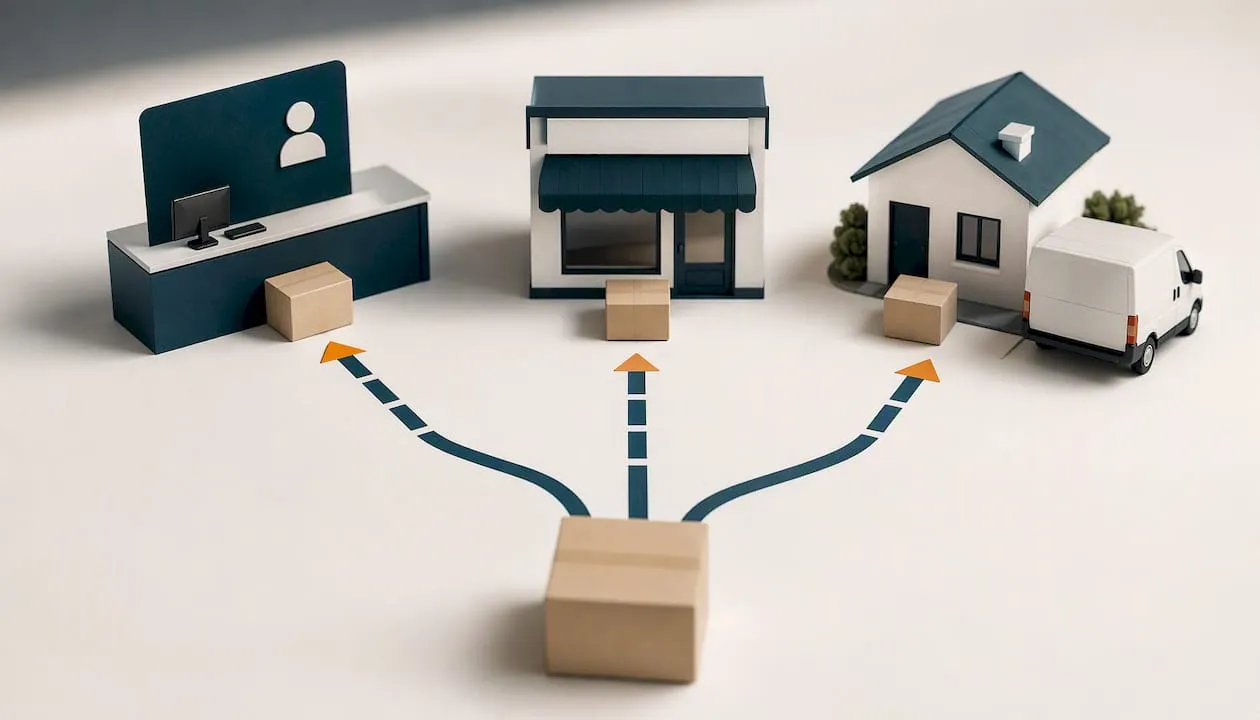
Creating a label online is the fastest route if you already know the size and weight of your package: print the label at home, attach it to the box, and drop it off without waiting in line. Check the opening hours of your chosen drop-off point in advance, especially for a Post Point in a shop with limited weekend hours.
How do you track your shipment, and what if delivery is delayed?
Every international shipment receives a tracking number, which you can use to monitor the status via Track or the My bpost app. Enter the number to immediately see the phase your package is in, from drop-off to delivery.
Delivery times vary significantly by destination and chosen service:
- Standard shipping: typically between 2 and 10 business days, depending on the country and any customs processing.
- Express shipping: usually faster, with a stricter guarantee on the delivery date.
If a package remains “in transit” longer than expected, first contact bpost customer service with your tracking number at hand. If the delay persists or the package is lost, initiate an official claims procedure, requiring proof of shipment and, if applicable, the insurance policy.
When should you use My bpost, the app, or the website?
The My bpost app, available for iOS and Android, allows you to create labels, view your shipping history, and track shipments, all from your phone. Convenient for those who ship regularly and don’t want to log in on a computer each time.
- My bpost app: create labels, view history, and track in one place.
- track.bpost.cloud: quick status check without an account, ideal for one-time tracking.
- Website: more detailed rate calculation and documentation for complex shipments.
Creating an account is especially worthwhile for repeated use, as you won’t need to re-enter addresses and package details each time.
Practical perspective: common pitfalls and cost-saving opportunities
The most common mistake I see: an incorrect HS code or a vague description on the invoice. This doesn’t cost money upfront but does result in lost time and sometimes extra costs at customs. Experience shows that correctly stating the value is as beneficial as choosing the cheapest service.
Want to save real money? Compare service types before choosing, pack smartly to stay under a rate threshold, and use a comparison tool instead of blindly opting for the first available option.
— Pascal
Complex shipment? How Parcel International handles it
Calculating a rate yourself, filling out a customs form, and then hoping the package doesn’t get stuck at border customs: that takes time you may not have as an individual or small business. Services are available to help compare shipping options, prepare customs documentation, and cover global shipping via express, air, sea, or road—without requiring an account or hidden fees.

For occasional small packages within Europe, bpost may be suitable. For regular business shipments to challenging destinations outside the EU or in regions where handling customs paperwork yourself is difficult, comparing shipping options can save time and money. Review the international-shipping-rules and start your comparison for your next shipment.
Official tools and useful links
Track your shipment via track.bpost.cloud, calculate import duties using official customs tariffs, and learn more about HS codes and customs formalities.
Can't find your question? Our support team is here for you 24/7 via the help centre.
What are the weight and size limits for standard parcel services?
Standard parcel services typically have a weight limit of 31.5 kilograms. Check the specific guidelines of the chosen postal service to ensure your shipment meets the requirements.
How do I track my international shipment?
Monitor the status of your shipment using the tracking features provided by your shipping partner. Check the progress regularly and watch for key updates such as pickup and delivery.
Can I send a parcel to any country with bpost?
Bpost ships to a large number of countries worldwide, though each destination has different rates, limits, and customs regulations. Always check the specific conditions for your destination country before shipping.
What documents do I need to ship internationally?
You typically need a CN22 or CN23 form, and for business shipments, a commercial invoice with an HS code. These documents determine how quickly customs processes your parcel.
Who pays the import duties for an international shipment?
Import duties and VAT are usually collected from the recipient unless you choose an option to prepay these costs as the sender. The amount depends on the destination country and product category.
Is shipping via Parcel International smarter than shipping directly with bpost?
For simple, local shipments, bpost is sufficient. For complex customs, frequent business shipments, or challenging destinations, comparing options via Parcel International often saves time and money.
Get a grip on your parcel shipping
Compare carriers, choose the best price and keep track of your international shipments. You can calculate and book without an account.
