
Yes, you can send a large parcel abroad without any issues, but the weight and dimensions determine whether it will be treated as a regular parcel or freight. The maximum length, volume, and volumetric weight together decide the rate you pay. If you are shipping outside the EU, additional customs obligations apply, such as an export declaration and a correct commercial invoice.
In short:
- For large parcels, the volumetric weight may result in higher shipping costs than the gross weight, depending on the carrier's division factor.
- International shipping is typically limited to 20-30 kilograms for consumers, with higher limits for business shipments up to approximately 70 kilograms.
- A customs declaration is always required for shipments outside the EU, including a commercial invoice, packing list, and, if applicable, an EORI number.
- Incorrect measurements or incomplete documents significantly increase the risk of delays at the border.
- Engaging a customs broker is recommended for complex goods or unclear HS codes to prevent delays.
How to Measure a Large Parcel Correctly
The longest side of your shipment counts as the length; measure width and height perpendicular to it. Always round up each dimension to the nearest centimeter, as carriers do the same, and incorrect information may lead to recalculations later.
For lightweight but large shipments, calculate using the volumetric weight instead of the gross weight. For air freight and many parcel services, the volume in centimeters is divided by a fixed factor, usually 5000 or 4000, depending on the carrier and mode of transport. A box measuring 60 by 50 by 40 centimeters has a volume of 120,000 cm³. Divided by 5000, this results in a volumetric weight of 24 kilograms: if your parcel physically weighs only 10 kilograms, you will still pay for 24 kilograms.
Follow these steps when measuring:
- Measure the length, width, and height at the widest points of the shipment.
- Round up each value to the nearest whole centimeter.
- Calculate the volumetric weight and compare it with the gross weight.
- Record the higher of the two as the booking weight and take a photo as proof for any future discussions.
Which Divisor Applies to Your Shipment? The volumetric divisor used varies by mode of transport and carrier, so always confirm this before booking.
What Limits Apply to International Shipping
Parcel services for consumers typically have limits around 20 to 30 kilograms per package, while business or express services often accept higher weight limits. Above this, or for shipments over 100 kilograms, you move into the freight category, with different rates and a different booking process.
- Weight: consumer parcels up to approximately 20 to 30 kilograms, business services often up to 70 kilograms.
- Length: most carriers have a maximum length of around 200 to 274 centimeters per package.
- Girth: a common rule is length plus twice the width, or length plus girth, with a combined maximum.
- Freight: above the standard weight or length limit, switching to pallet or freight transport via road, air, or sea is the logical step.
For road transport within Europe, European limits for vehicle dimensions and weights also apply under Directive 96/53/EC, which influence what a truck may transport and why extremely long or heavy shipments may sometimes only be possible via specialized transport. Member states may impose additional restrictions on top of these European limits.
What Determines the Costs and Which Surcharges Apply
The base price of a large shipment is rarely determined by the gross weight alone. If the volumetric weight exceeds the physical weight, you will be charged based on the higher figure, and this difference can be substantial for lightweight but bulky parcels such as furniture or sports equipment.
Additional surcharges often apply, such as an XL or oversize fee.
- An XL or oversize fee for shipments that exceed the carrier's standard dimensions.
- Handling fees for unwieldy or irregular shapes that cannot be sorted automatically.
- Import VAT and any customs duties in the destination country, depending on the product category and value.
- Clearance fees charged by the customs broker or carrier for handling the formalities.
Who ultimately bears these costs depends on the agreed Incoterm. With DDP, the sender pays all duties and taxes in advance, while with other agreements, the recipient may still have to pay upon delivery. The final cost of an international shipment is therefore often more strongly determined by the chosen Incoterm and customs clearance than by the base transport rate.
Pro tip: Always request a complete price quote including expected import duties and clearance costs before booking to avoid surprises upon delivery.
Customs and Documents for Shipments Outside the EU
An official customs declaration to the national customs authorities is mandatory for every shipment to a country outside the EU. This declaration includes, among other things, the HS code (commodity code), the customs value, and the weight of the shipment, and forms the basis on which import duties are calculated according to Your Europe.
In practice, you will need these documents:
- A commercial invoice with a description, value, and origin of the goods.
- A packing list with the weight, dimensions, and packaging type for each package.
- An electronic export declaration with the correct HS code.
- An EORI number, required as soon as your business imports or exports goods.
For low-value shipments, simplified procedures sometimes apply: for a value below a certain threshold, a verbal declaration may suffice in some cases, and up to a higher threshold, declaration at the customs office of exit is possible, although this varies by member state according to Access2MarketsIf you prefer to complete your formalities step by step, consult our guide to filling out customs forms.
The gross weight including packaging is decisive for both the carrier and customs, so always measure and declare including the box or crate. If you are unsure about the correct HS code or complex goods, engage a customs broker: this demonstrably reduces the risk of delays at the border.
Packaging and labeling for large shipments
The right packaging depends on the shape, weight, and fragility of your shipment. A sturdy double-walled box is sufficient for most large parcels, but for heavier or irregularly shaped items, a wooden crate or pallet is often safer. If you use wooden packaging material for international transport, ISPM15 certification is mandatory in many cases, as Access2Markets indicates for fumigation and marking of wooden packaging.
When packaging, pay attention to the following:
- Use banding or shrinkwrap to secure the load to the pallet or crate.
- Protect corners and edges with extra cardboard or foam corner pieces.
- Fill empty spaces to prevent the contents from shifting during transport.
- Label each side with dimensions, weight, shipping address, and a clearly visible barcode.
Documentation errors, such as an incomplete packing list or incorrect commodity code, are the most common cause of delays during customs clearance. A detailed packing list with packaging type and gross and net weight per package, on the other hand, shortens inspection time during a physical check.
Pro tip: Photograph your shipment from all sides, including labels, just before shipping: this evidence is indispensable for an insurance claim or a customs query.
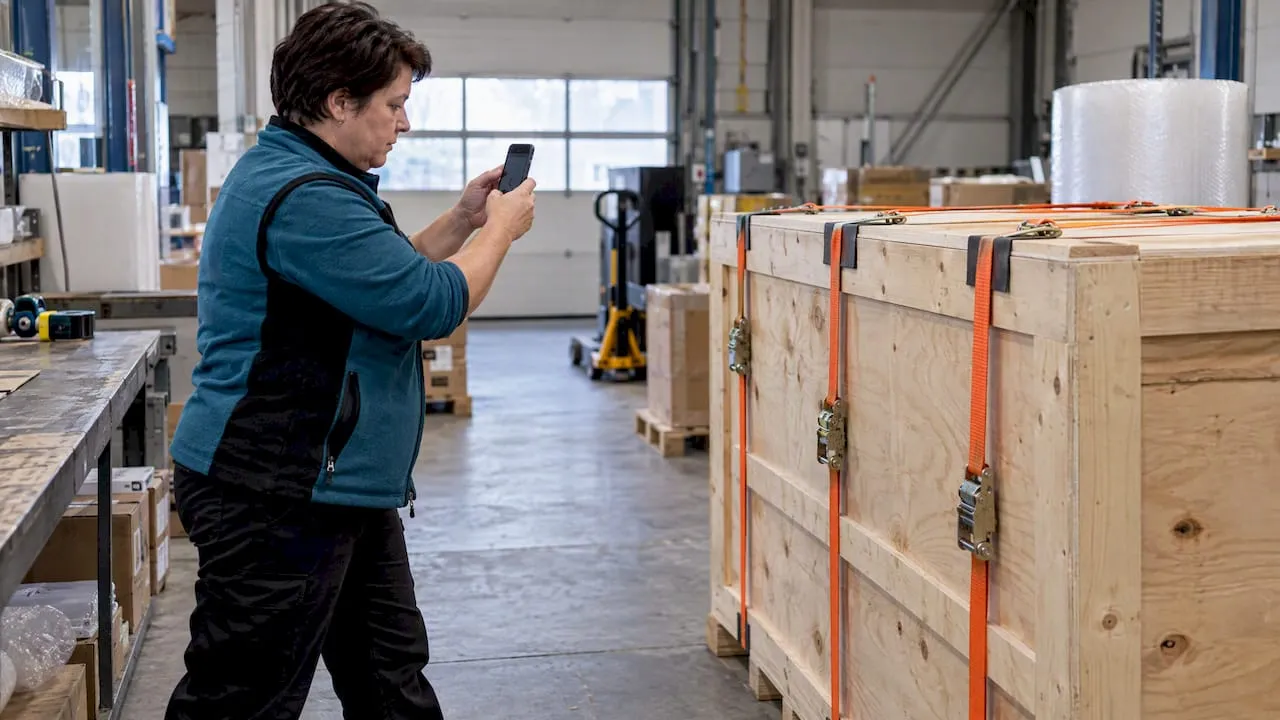
Additionally, consider a value declaration for your insurance when shipping valuable or fragile goods, so you have a clear reference value in case of damage or loss.
Our perspective on sending large international shipments
Most delays with large international shipments are not caused by the transport itself, but by inaccurate measurements and incomplete documents that only come to light at the border. Those who measure carefully in advance, look up the correct HS code, and consult a customs broker when in doubt, prevent the vast majority of delays we encounter in practice. International shipping experience shows that a well-prepared packing list makes more of a difference than the choice of carrier.
— Pascal
How we help with shipping large parcels abroad
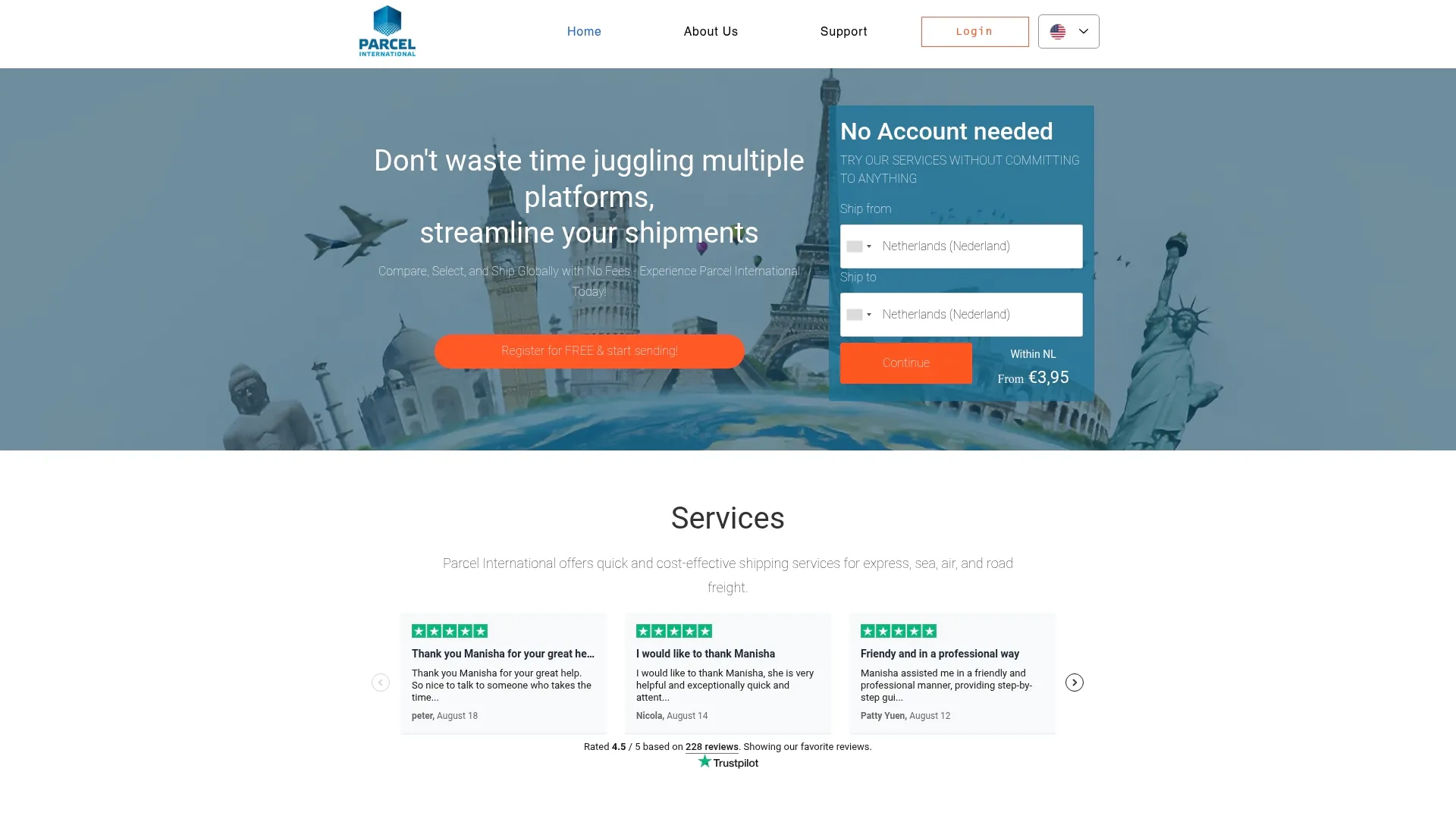
There are platforms that compare rates from multiple carriers for express, air, sea, and road transport, so you can see at a glance which option suits your size and destination. Some services work without a mandatory account and without extra costs on top of the comparison itself.
- Compare multiple carriers and modalities for specific dimensions and weight.
- Receive support in preparing customs documents such as commercial invoices and packing lists.
- Track shipments with tracking from booking to delivery.
If your shipment is too heavy or too large for a regular parcel, check out our options for air, sea, and road freight or start a comparison directly on our website to see rates and delivery times side by side.
Can't find your question? Our support team is here for you 24/7 via the help centre.
What are the weight and size limits for standard parcel services?
Standard parcel services typically have a weight limit of 31.5 kilograms. Check the specific guidelines of the chosen postal service to ensure your shipment meets the requirements.
What documents do I need to ship internationally?
You typically need a CN22 or CN23 form, and for business shipments, a commercial invoice with an HS code. These documents determine how quickly customs processes your parcel.
What is volumetric weight, and why do I pay for it?
Volumetric weight calculates the rate based on the space your parcel occupies, not just its physical weight. It is used because lightweight but bulky shipments take up as much cargo space as heavy ones. Carriers always charge based on the higher of the two values: gross weight or volumetric weight.
When should I engage a customs broker?
A customs broker is recommended for complex goods, unclear HS codes, or if you have limited experience with international export, as this demonstrably reduces the risk of border delays. For simple, lightweight shipments with a clear packing list, this is often unnecessary.
How long does it take to ship a large package internationally?
Delivery time depends heavily on the chosen mode of transport: express air freight is the fastest, road transport within Europe is usually in between, and sea freight is the slowest but often the most cost-effective for large volumes. Always request a specific transit time when booking, as this can vary significantly by destination and carrier.
Get a grip on your parcel shipping
Compare carriers, choose the best price and keep track of your international shipments. You can calculate and book without an account.
