
Processing international shipments can feel like a daily puzzle for online stores selling globally. Each parcel must swiftly and seamlessly navigate complex customs procedures, while digital systems are becoming increasingly vital for smooth processing. With the rise of digital customs and collaboration within the European Union, businesses gain more control over speed, security, and administrative burdens in cross-border trade.

Key Takeaways
- Digitalization of Customs ProcessesDigital customs enhance the efficiency and transparency of international shipments through automated systems, leading to faster processing.
- Technological InnovationsArtificial intelligence and blockchain improve accuracy and transparency, strengthening risk management in customs processes.
- Legal ComplianceE-commerce businesses must adapt to EU regulations to minimize legal risks and ensure compliance.
- Risk Management and ComplianceContinuous monitoring and training are crucial to avoid customs errors and limit financial consequences.
Digital Customs Explained: Core Concepts and Functions
Digital customs are a cornerstone of modern international trade and e-commerce. They involve automated systems that make customs processes more efficient, transparent, and secure. The European Union has embraced this digitalization with its customs union system, which has been operational since 1968 and regulates international trade flows.
The digital customs process includes several core functions critical for international shipments:
- Electronic Document Processing
- Automated Risk Assessment
- Real-Time Shipment Tracking
- Automated Tax and Duty Calculation
- Security Checks
The modernization of customs systems offers significant benefits. The Digital Dossier for example, digitizes document submission, enabling businesses to operate faster and more efficiently. This system reduces manual input, minimizes errors, and accelerates the entire customs clearance process.
The table below highlights the differences between traditional and digital customs processing:
Aspect | Traditional Customs Process | Digital Customs Process |
|---|---|---|
Documentation | Paper-based, manual | Electronic, automated |
Response Time | Days to weeks | Minutes to hours |
Inspection Methods | Manual checks | Automated risk analysis |
Error Rate | High | Lower due to automation |
Technological innovations are playing an increasingly important role. Artificial intelligence and machine learning enable predictive risk analysis, allowing customs authorities to identify suspicious shipments more quickly. Blockchain technology promises even greater transparency and traceability in international logistics chains.
Below is an overview of technological innovations and their impact on digital customs processes:
Innovation | Application in Customs | Business Impact |
|---|---|---|
Artificial Intelligence | Risk assessment and anomaly detection | Faster detection of suspicious shipments |
Machine Learning | Predictive analysis of trends | Improved efficiency and accuracy |
Blockchain | Data integrity verification | Transparency in logistics chains |
Automated Software | Electronic document processing | Reduction of manual errors |
__Pro-tip:__ Invest in automated customs software to minimize delays and administrative errors.
Systems and Processes for Digital Customs Clearance
In the modern international trade landscape, digital customs systems form the backbone of efficient goods movement. These advanced technological infrastructures enable seamless, automated processing of international shipments, streamlining and accelerating complex administrative procedures.
One of the most progressive systems is Centralised Clearance, an innovative EU-wide procedure that allows businesses with an AEO-C certification to:
- Centralize customs declarations in one member state
- Optimize electronic data exchange
- Decouple physical goods location from declaration
- Significantly reduce administrative burdens
- Achieve faster international goods movement
Digital customs processes are characterized by advanced technological components such as automated risk analysis, real-time tracking, and integrated data systems. Artificial intelligence and machine learning play an increasingly important role in predicting potential customs risks and optimizing inspection processes.
Data integration is crucial in modern customs systems. By combining various data streams, customs authorities can make faster decisions, identify potential risks, and improve the overall efficiency of international trade processes.
__Pro-tip:__ Invest in certified digital customs software compatible with international standards to streamline your international shipping processes.
Legal Requirements and EU Regulations for E-Commerce
The digital economy has fundamentally transformed international trade, and with this transformation, the legal frameworks for e-commerce have evolved significantly. The European Union has created a detailed legislative landscape that protects e-commerce businesses while safeguarding the integrity of the internal market.
The Union Customs Code forms the legal foundation for e-commerce regulations, with specific provisions critical for international shipments:
- Harmonization of import and export procedures
- Protection of the internal European market
- Management of safety and environmental standards
- Fraud prevention and risk management
- Facilitation of fast and efficient goods movement
E-commerce businesses must consider multiple legal aspects, such as taxation, product safety, consumer rights, and data protection. Compliance with these regulations is not only a legal requirement but also an essential component of professional international business operations.
The complexity of the law requires continuous monitoring and adaptation. New technological developments and evolving international trade dynamics compel legislators to constantly review and modernize regulatory frameworks. This means e-commerce businesses must be flexible and proactive in their legal compliance strategies.
__Pro-tip:__ Consult specialized customs advisors regularly to stay up-to-date with the latest EU legislative requirements for international shipments.
Practical implications for online stores and shippers
Digital customs fundamentally transform the way online stores and shippers manage international shipments. E-commerce businesses must adapt to an increasingly complex logistics ecosystem that demands technological proficiency and strategic planning.
The practical challenges for online stores include:
- Navigating diverse international tax regimes
- Accurate shipment documentation
- Real-time tracking of international parcels
- Managing expectations of international customers
- Handling potential delays and customs inspections
For shippers, this necessitates operational flexibility. Digital customs systems require advanced technological integration, compelling businesses to invest in compatible software systems and detailed goods categorization. Accurate customs data is increasingly vital to remain competitive in the international market.
The financial implications are substantial. Incorrect documentation or non-compliance can result in fines, delays, and even exclusion from certain international markets. Online stores must proactively implement risk management and continually optimize their international shipping processes.
__Pro-tip:__ Develop a detailed compliance protocol for international shipments and train your team regularly on the latest customs regulations.
Avoiding risks, costs, and common mistakes
International e-commerce is a dynamic landscape where digital customs processes continuously present new challenges. Businesses must remain vigilant about potential risks that could undermine their international shipping operations.
Research indicates that common customs errors are related to:
- Incorrect or incomplete declaration data
- Late submission of required documents
- Insufficient knowledge of country-specific import rules
- Poor goods classification
- Underestimating potential compliance costs
The financial consequences of these errors can be significant. Fines, delays, and potential exclusion from international markets can directly impact an e-commerce business’s profitability. Risk management requires a proactive and structured approach where continuous training and technological support are crucial.
Modern technological solutions, such as automated customs software and AI-driven compliance systems, can help businesses significantly reduce these risks. By investing in advanced digital tools, companies can optimize their international shipping processes and avoid financial surprises.
__Pro-tip:__ Implement a monthly compliance audit system to identify and mitigate potential customs risks early.
Make your digital customs processes effortless with Parcel International
International shipments involve complex customs regulations and risk management. The article on the role of digital customs highlights challenges such as electronic document processing, EU legislation compliance, and error prevention. These pain points can lead to delays and unforeseen costs—something no one can afford in the competitive world of e-commerce.
At Parcel International, we understand that efficiency and reliability are essential. Our advanced logistics solutions help you easily compare shipping options and choose the best carriers for your shipments. This streamlines your international shipping without hidden costs or hassle.
Choose a partner who understands the complexity of digital customs and supports you at every step. Visit our website and discover how we’ve served over 220 countries and territories since 2007 with our expertise. Start optimizing your international shipping process today with Parcel International and leverage the power of modern digital customs processes for your online store or business.
Read more about practical-shipping-strategies to avoid risks and serve your customers smoothly.
Digital customs
Can't find your question? Our support team is here for you 24/7 via the help centre.
What is customs clearance?
Customs clearance is the process by which goods are formally inspected and authorized for entry into or departure from a country. It involves not only the payment of duties but also compliance with regulations and the safeguarding of economic security.
What should I know about customs regulations for international shipping?
When shipping internationally, you must consider customs regulations such as proper documentation, HS codes, and import restrictions. Providing detailed shipment information is crucial to avoid customs issues.
How do I check the customs regulations of the destination country?
Check the customs regulations by visiting the official customs website of the destination country and look for lists of prohibited or restricted items. Take note of important rules before preparing your shipment to avoid delays or rejection.
What are the key steps to avoid customs issues?
Clearly communicate with your recipient about import duties and transit dates to avoid surprises. Regularly monitor your shipment using tracking tools and ensure proper documentation to resolve customs issues quickly.
What should I do if my shipment is held at customs?
If your shipment is delayed, contact your shipping partner or customs expert immediately to determine the cause. Respond to any customs requests within 24 hours to minimize delays.
What happens to my shipment if I provided incorrect customs information?
Incorrect customs information may result in manual inspections, extended delays of 10 to 30 days, additional costs, and even reputational damage due to dissatisfied customers.
Why is it important to use HS codes for customs declarations?
HS codes are essential for classifying goods and determining import duties. Incorrect use of HS codes can result in shipment delays and potential fines.
Why is an EORI number important for international shipping?
An EORI number is a unique identification number used by customs authorities. It is mandatory to register as a market participant and ensures that your shipments are processed faster and more efficiently.
What are import charges?
Import costs are the total expenses incurred when bringing goods into the country from abroad, including purchase price, import duties, VAT, transportation costs, and customs fees.
How are import fees calculated?
Import costs are calculated by increasing the purchase price of the goods with transportation and insurance costs, then adding import duties and VAT, depending on the shipment specifications.
What are the consequences of incorrect import duties or VAT?
Incorrect duties or VAT may result in additional assessments, customs delays, and potential financial penalties. This can have serious consequences for your business.
How can I avoid unexpected customs charges?
Always check the customs regulations for the destination country and ensure you provide all required documents and declare the correct value. Proper preparation helps prevent unexpected customs charges.
What is Digital Customs?
Digital customs refers to automated systems that make customs processes efficient, transparent, and secure. It utilizes electronic document processing and real-time shipment tracking.
How can Incoterms help e-commerce businesses?
Incoterms define the responsibilities of sellers and buyers in international transactions and help with financial and operational decisions about shipping costs and transfer of risk.
What are the legal requirements for e-commerce shipments?
E-commerce businesses must comply with consumer protection laws, data protection requirements, international regulations, and customs legislation. Failure to do so can result in fines and legal disputes.
What are international shipping standards?
International shipping standards are guidelines that ensure the efficiency and reliability of cross-border shipments, including packaging requirements, documentation, customs protocols, and quality standards.
Why are shipping standards important for e-commerce businesses?
Shipping standards help e-commerce businesses minimize risks, control costs, and ensure reliable logistics handling for international orders.
What are the main types of shipping standards?
The main types of shipping standards include packaging standards, documentation standards, and quality/safety standards, each regulating essential aspects of shipping.
What does customs do for international shipments?
Customs reviews documents, collects import duties and taxes, and assesses the safety and compliance of shipments to protect the internal market.
What documents do I need for exports outside the EU?
Key documents include the commercial invoice, certificate of origin, packing list, transport documents, and import permits.
Does export control apply to regular e-commerce products?
Yes, especially if you ship certain technology, electronics, or goods with potential military use outside the EU. Dual-use items are common in tech and e-commerce, even for products that may seem harmless at first glance.
What are the consequences of non-compliance with export control?
This can result in shipments being held, significant fines, or reputational damage for your business. Fines can be substantial, and in serious cases, the FIOD may launch an investigation.
How do I know if my product is subject to export control?
Review the dual-use lists, check Annex I, or use the NVWA Export Assistant for product classification and screening. If in doubt, contact the CDIU or NVWA for advice.
Do I always need an export license for shipments outside the EU?
No, only for controlled goods such as dual-use products or certain technologies. Regular consumer products typically require only a customs declaration, not an export license.
What is the difference between a customs broker and a carrier?
A customs broker handles customs formalities for imports and exports, while a carrier is solely responsible for the physical transport of goods. Both roles are necessary but fundamentally different.
What documents are required for customs brokerage in imports and exports?
Essential documents include the commercial invoice, packing list, and in many cases, an export declaration. A broker manages customs declarations and ensures all documentation is complete for shipping.
What are the biggest risks of incorrect customs brokerage?
The biggest risks include fines, delays, and demurrage charges ranging from €65 to €250 per day after the free period, and in severe cases, seizure of goods.
Why is customs clearance becoming more complex for e-commerce?
New EU regulations and stricter controls result in more administrative work and a higher risk of incorrect declarations, especially for cross-border shipments from non-EU countries.
What should I consider when choosing a customs broker?
Look for experience in your industry, digital capabilities, and a transparent pricing model. Some products, such as meat or cut flowers, require a specialized broker with specific knowledge of phytosanitary and veterinary regulations.
How do I determine the customs value of free products?
Even free products must be valued based on market value. The transaction value method takes priority and is decisive for customs declarations.
What changes on July 1, 2026, for small shipments?
The exemption for shipments up to €150 has been abolished. Until July 1, 2028, a temporary fixed import duty of €3 per product type applies to shipments from outside the EU to consumers. A handling fee of €2 is expected around November 2026 but is not yet finalized.
How does dropshipping work for customs and VAT?
In dropshipping, you hold no inventory but are still responsible for VAT when delivering to consumers. Ensure proper documentation and registration.
How can I save on import duties with trade agreements?
Check if your product and country of origin qualify under an EU trade agreement and use the correct origin documents to benefit from preferential tariffs.
Who pays import duties and VAT for international shipments?
The recipient pays import duties and VAT unless you, as the sender, have agreed to DDP (Delivered Duty Paid) as the Incoterm. Additional handling fees may apply.
What are the key packaging requirements for international shipping?
Your packaging must be sturdy and capable of withstanding multiple transports. For wooden packaging, ISPM15 compliance is mandatory internationally to prevent the spread of harmful organisms.
Are there customs regulations within the EU?
No customs duties apply within the EU due to the free movement of goods, but you must still comply with national product requirements, VAT rules, and excise goods regulations.
What is the advantage of the IOSS scheme?
IOSS simplifies importing from outside the EU by eliminating import VAT for shipments up to €150 to EU consumers, with a single monthly declaration in the Netherlands.
What should always be included in delivery terms?
Always specify delivery time, costs, risk transfer, return policy, and liability for damage or loss. This ensures compliance with legal requirements and prevents ambiguity in delivery agreements.
What is the difference between delivery terms and Incoterms?
Delivery terms govern all agreements related to delivery in a broad sense. Incoterms are international standard rules that specifically define the division of costs and risks between seller and buyer during transport.
What happens if there is a delay in delivery?
Inform your customer immediately and transparently. If delivery proves impossible, you are required to refund the amount within 14 days according to EU regulations.
Which Incoterms are most suitable for small online stores?
DAP or DDP give you the most control over the delivery experience. EXW carries more risk for the buyer and is almost never the right choice for online stores.
What is the difference between import from the EU and outside the EU?
For EU imports, there are no import duties or customs fees; for imports from outside the EU, obligations such as EORI, Taric, and import duties apply. The administrative burden for non-EU imports is significantly higher.
Which documents are required for import outside the EU?
You need at least an EORI number, a commercial invoice, and the correct Taric code. The Chamber of Commerce import process outlines all standard requirements, including product regulations and any necessary certificates.
How can I save costs when importing goods?
Use customs regulations such as active processing or an Article 23 permit, and consider dropshipping to reduce inventory costs. Optimization through customs regulations and engaging a freight forwarder are the most effective methods.
What are common mistakes when importing?
Incorrect product codes, missing compliance, and unrealistic delivery expectations with dropshipping are the most common pitfalls. Customs strictly enforces safety and counterfeit regulations, and dropshipping carries additional risks regarding delivery time and quality control.
When am I entitled to preferential tariffs for imports from abroad?
You are entitled to preferential tariffs if the product comes from a preference country with an EU trade agreement and you have valid proof of origin, such as a supplier’s invoice declaration.
Do I always have to pay import duties for shipments under €150?
As of July 1, 2026, yes: the exemption for shipments under €150 has been abolished, and for shipments from outside the EU to consumers, a fixed duty of €3 per product type applies temporarily.
How can I, as an entrepreneur, find out which countries offer preference?
Use the European Commission’s Access2Markets tool for an up-to-date overview of trade benefits and tariffs per country and product category.
Is it possible to claim preferential tariffs retroactively after an incorrect declaration?
Often, yes: with a retroactively issued proof of origin, you can request a refund of import duties within the legal timeframe. Preferably, provide the correct documents with the original declaration.
Do I always have to use the same Incoterm as an entrepreneur?
No, the right Incoterm depends on your customer, location, product, and logistical preferences. EXW and FCA are suitable for EU exports, while DAP and DDP are better for customers outside the EU who want a hassle-free experience.
When is DDP useful for e-commerce?
DDP is useful if you want to offer your customers maximum convenience, but it places all customs risks and potential additional costs on your side. DAP and DDP are ideal for a seamless customer experience outside the EU.
Where can I find an overview of all 11 Incoterms?
On the International Chamber of Commerce website and at the Chamber of Commerce, you will find the most up-to-date overview. The 11 rules are divided into seven universal terms and four specifically for sea freight.
Who handles the customs clearance for my parcel?
Almost always, the transport company, such as PostNL, DHL, or UPS, handles the customs declaration on your behalf. However, you are responsible for providing correct and complete information.
Do I always have to pay import duties and VAT?
For shipments under €150 as of July 1, 2026, a fixed import duty of €3 per product type temporarily applies to shipments from outside the EU to consumers; additionally, you pay VAT and sometimes handling fees from the carrier.
Is exporting outside the EU complicated for small businesses?
With the right documents and a freight forwarder, exporting is manageable, especially for small volumes where the carrier handles much of the standard work.
How do I know if I have to pay handling fees for my parcel?
If you receive a parcel from a country outside the EU, the parcel service almost always charges handling fees in addition to VAT and import duties. This applies to countries like China, the US, and the United Kingdom, where extra costs are standard when ordering.
Who determines the amount of the handling fees?
The postal or courier company sets the amount of the handling fees, not Customs. Each carrier establishes its own rate, so costs can vary significantly between parcel services, as confirmed by Customs.
What if I have paid too much in handling fees?
You can submit a request for correction or refund to the transport company, provided you act in time. Keep your order confirmation and check via customer service how to proceed with reclaiming extra costs.
Is the new handling fee of 2026 the same as handling costs?
No, the national handling fee is an additional surcharge for certain e-commerce shipments, separate from existing handling costs. It is a separate fee introduced by Customs for e-commerce parcels, as described in the Customs announcement for e-commerce, and is independent of the carrier’s service charge.
Which goods are prohibited for international shipping?
Yes, some products may not be exported or only with a permit. Check export restrictions and product bans via Access2Markets before sending a shipment across the border.
What exactly are delivery terms?
Delivery terms are the contractual agreements in your general terms and conditions regarding how, when, and under what circumstances products are delivered, including delivery timelines, risk allocation, and transport responsibility.
What are Incoterms® and why are they important?
Incoterms® determine who arranges transport and bears risk in cross-border shipments, but they do not regulate transfer of ownership or payment, for which additional agreements in your delivery terms are required.
How can I best include force majeure in my delivery terms?
Define force majeure concretely with specific cases such as strikes, pandemics, and customs issues, so it is clear to both parties when you are not liable for non-performance due to unforeseen circumstances.
What is the difference between an indicative and a firm delivery time?
An indicative delivery time is a guideline where the buyer must first issue a default notice, while a firm delivery time is binding, and the buyer is entitled to termination or damages immediately upon exceedance.
Can I use standard B2C delivery terms for my international B2B sales?
This is not recommended: B2C terms are unsuitable for international business transactions because they include consumer protection that does not apply and create legal ambiguity with foreign business partners.
How are delivery terms legally valid?
Terms are legally valid if they are provided before the contract is concluded and the customer has accepted them, either explicitly or implicitly. Simply referring to a website is legally insufficient.
Should I use different delivery terms for domestic and international shipments?
Not necessarily, but you must consider language requirements and local laws. For international contracts, the contract and delivery terms must be in the same language, and the correct Incoterms® must be specified.
What are the risks if my delivery terms are incorrect?
Invalid or poorly communicated delivery terms may result in liability for damages you intended to exclude, or a customer refusing payment without legal consequences. Clear, well-communicated terms protect you in any dispute.
What are Incoterms® 2020?
Incoterms® 2020 are international delivery terms published by the ICC that define who is responsible for transport, risk, and costs between seller and buyer. They do not regulate transfer of ownership or payment agreements.
How do you correctly specify Incoterms in a contract?
Always use the official abbreviation, an exact delivery location, and the version, for example: “FCA Industrieweg 12, Eindhoven, Netherlands, Incoterms® 2020”. An incomplete specification can lead to legal ambiguity in claims.
Which Incoterm is best for container transport?
For container transport, use “any-mode” Incoterms such as FCA, DAP, or CIP. Sea-specific terms like FOB and CIF are unsuitable for container shipments because the risk transfer moment does not align with the actual logistics reality.
What is the difference between DAP and DDP?
Under DAP, the buyer arranges customs clearance and pays import duties. Under DDP, the seller assumes all responsibility, including customs clearance and duties in the destination country. DDP requires the seller to have customs infrastructure in the destination country.
Why is the delivery location so important in Incoterms?
The delivery location precisely determines where risk and costs transfer from seller to buyer. A vague location, such as only a city name, allows for interpretation and can lead to costly claims in case of damage or delay.
What is export control exactly?
Export control is the legal obligation to assess whether goods, software, or technology may be exported freely or require a license. EU Regulation 2021/821 governs the control of dual-use goods within Europe.
What is an ICP and why do you need it?
An ICP (Internal Compliance Programme) is an organization-wide system for managing export control risks. Without an ICP, there is no structure to consistently and verifiably execute classifications, sanctions screening, and documentation.
What does code Y901 mean in a customs declaration?
Code Y901 is entered in box 44 of the customs declaration to indicate that dual-use goods are not subject to licensing under EU Regulation 2021/821. Omitting this code for relevant goods may result in delays or rejection by Customs.
How often do export control measures change?
Export control measures change frequently, especially due to geopolitical developments such as new sanctions or technology export restrictions. Companies must continuously monitor their processes and sanctions lists and conduct internal audits at least twice a year.
What is the difference between import and export control?
Import control regulates which goods may enter a country and under what conditions. Export control determines which goods may leave a country, to which destinations, and with what documentation.
When is an import license required?
An import license is required for specific product categories such as dual-use goods, protected species (CITES), certain agricultural products, and goods from sanctioned countries. The Chamber of Commerce (KVK) and Access2Markets provide details per product and country of origin.
How do I apply the 0% VAT rate for exports?
Proof consists of the export declaration and transport documents such as a waybill (CMR or airway bill). Without this evidence, you may not apply the 0% VAT rate and risk penalties during a tax audit.
What are dual-use goods and why are they complex?
Dual-use goods are products with both civilian and military applications, such as certain software, electronic components, or chemicals. They fall under the EU export control regulation and require an export license depending on the destination and end-user.
How can I avoid delays in import or export?
Ensure complete and accurate documentation that exactly matches the physical shipment, verify all licensing requirements in advance via Access2Markets or the Chamber of Commerce, and consult a customs broker if in doubt.
What are import duties exactly?
Import duties are fees imposed by customs on the import of goods from outside the EU. They are calculated as a percentage of the customs value (CIF value) of the shipment.
How do I calculate the customs value correctly?
The customs value is the product price plus all transport and insurance costs up to the EU border. This is called the CIF value and serves as the legal basis for calculation.
How do I find the correct TARIC code for my product?
Use Access2Markets, the official EU database. Search by product description and country of origin to find the exact 10-digit tariff and any additional measures.
What are Incoterms 2025?
There is no official Incoterms 2025 edition. The valid version is Incoterms® 2020, established by the ICC with 11 rules. When people refer to 'Incoterms 2025,' they mean the application of Incoterms® 2020 in current trade practices.
What is the difference between EXW and DDP?
Under EXW, the seller makes the goods available at their location, and the buyer handles everything else. Under DDP, the seller arranges and pays for everything up to the destination, including import duties. These represent the two extremes in responsibility distribution.
How does an Incoterm affect the customs value?
The chosen Incoterm determines which costs are included in the customs value. Under EXW, the customs value is lower because freight costs are calculated separately. Under DDP, all costs are included in the invoice price, resulting in a higher customs value and higher import duties.
Do I need to use special Incoterms for dropshipping?
In dropshipping, it is difficult to strictly apply Incoterms because the supplier delivers directly to the end customer. Always agree with your supplier on which Incoterm applies and specify who handles import and customs formalities in the end customer's country.
What are export regulations exactly?
Export regulations are the legal obligations a business must comply with when shipping goods abroad. They include documentation, customs procedures, product requirements, and VAT compliance.
What is an HS code, and why is it important?
An HS code is an international product classification code that determines the applicable tariffs, preferences, and certification requirements for each destination. An incorrect code leads to inaccurate customs duties and potential fines.
What are the new PEM rules effective from 2026?
The revised PEM rules replace the EUR-MED certificate for exports to Pan-Euro-Mediterranean countries. As of January 1, 2026, PEM declarations are used to prove the origin of goods, except for Algeria, Lebanon, and Syria, which have transitional rules.
What is the OSS scheme for e-commerce?
The OSS (One Stop Shop) scheme is a centralized VAT return for online stores selling more than €10,000 annually to consumers in other EU countries. You file a single return via the Dutch Tax Authority, which distributes the amount to the relevant countries.
What is landed cost, and why is it important?
Landed cost is the total price a customer pays, including product price, shipping costs, import duties, and VAT. Displaying the landed cost at checkout prevents price surprises and reduces the number of abandoned orders.
What is the cancellation button, and when is it mandatory?
The cancellation button is a clear button on your website that allows consumers to quickly cancel a purchase. This button is mandatory for all EU online stores starting June 19, 2026.
What penalties can I face for non-compliance with e-commerce regulations?
Non-compliance with GDPR, the European Accessibility Act (EAA), and the AI Regulation can result in significant fines.
What is the difference between import and export?
Import is the process of bringing goods or services into a country from abroad. Export is the process of selling and shipping goods or services to a foreign country.
What is an HS code exactly?
An HS code is an international product classification code that determines the import duty rate. An incorrect code leads to inaccurate duty calculations and may result in fines or additional customs charges.
What is an EORI number, and how do I apply for it?
An EORI number is a mandatory registration number for the European customs authority required for all export processes outside the EU. You can apply for it via Customs.nl, and it is free of charge.
How long does export preparation take?
Exporting typically requires two to three years of preparation from planning to the first invoice, due to differences in legislation, market conditions, and logistics per country. Start early with market analysis and documentation.
What does the NVWA do in export?
The NVWA inspects and certifies the export of animals, plants, and food products. Exporters are responsible for complying with the import requirements of the destination country and must request export documents from the NVWA after inspection.
What are shipping restrictions exactly?
Shipping restrictions are rules that determine what you can ship, how it must be packaged, and to which destinations a package may be sent. They are imposed by carriers, national legislation, and international customs regulations.
What happens if you ignore shipping restrictions?
Exceeding weight or size limits results in a surcharge of €5 to over €15 per package. For prohibited goods or missing documentation, customs may refuse, return, or seize the shipment.
How do I know which restrictions apply to my destination?
Check the restricted items list of the selected carrier and the import regulations of the destination country. Parcel International shows per destination which carriers are available and what restrictions apply.
Are phytosanitary certificates always required for food shipments?
Phytosanitary certificates are mandatory for plants, vegetables, fruit, and certain wood products imported from non-EU countries. The NVWA (Netherlands Food and Consumer Product Safety Authority) inspects these certificates upon arrival in the Netherlands; if the certificate is missing, the shipment will be refused.
What is the difference between an HS code and a TARIC code?
The HS code consists of six digits and is used worldwide. The TARIC code consists of ten digits and is specific to imports within the EU, including additional information on anti-dumping duties and import restrictions.
How do I find the correct HS code for my product?
Use the EU Access2Markets database or the Dutch Customs Tariff Guide. If in doubt, call the Customs Helpline free of charge at 0800 01 43 or request a Binding Tariff Information (BTI).
What are the consequences of an incorrect HS code?
An incorrect HS code leads to delays, fines, and additional assessments. Dutch Customs can reclaim import duties for up to three years in cases of proven misclassification.
How often are HS codes updated?
The WCO updates international HS codes every five years. The European CN codes are published annually in October and take effect on January 1 of the following year. Companies must update their master data each year.
Do I need an EORI number for customs clearance?
Yes, an EORI number is mandatory for all customs clearances within the EU. The Dutch Customs Authority typically issues the number within one business day.
What is the average cost of customs clearance?
The costs include import duties, VAT on import, and the fee for the customs agent. The amount of import duties depends on the HS code and the country of origin of the goods.
Can I handle customs clearance myself, or do I need a customs agent?
You can handle customs clearance yourself via the Dutch Customs system, but for occasional or complex shipments, a customs agent is advisable. An agent knows the local regulations and helps avoid costly mistakes.
Who is responsible for paying import duties in the U.S.?
The Importer of Record pays the import duties, which is typically the recipient, the e-commerce business, or an appointed customs broker. The exact responsibility depends on the agreed Incoterm, such as DAP or DDP.
Do I always need to clear customs, even for small packages?
Yes. Since the elimination of the de minimis exemption, every shipment to the U.S. must be cleared through customs and is subject to duties, regardless of value.
What is the cost of paying import duties in the U.S.?
The cost depends on the HTS code, country of origin, and any additional charges such as Section 301 tariffs, plus fixed fees like the Merchandise Processing Fee. There is no fixed rate; each shipment requires an individual calculation.
Can I reclaim incorrectly paid duties?
Yes, through a Post Summary Correction, you can reclaim overpaid duties within the legal timeframe, provided you can demonstrate the error or a valid exclusion.
Does Parcel International assist with customs payments?
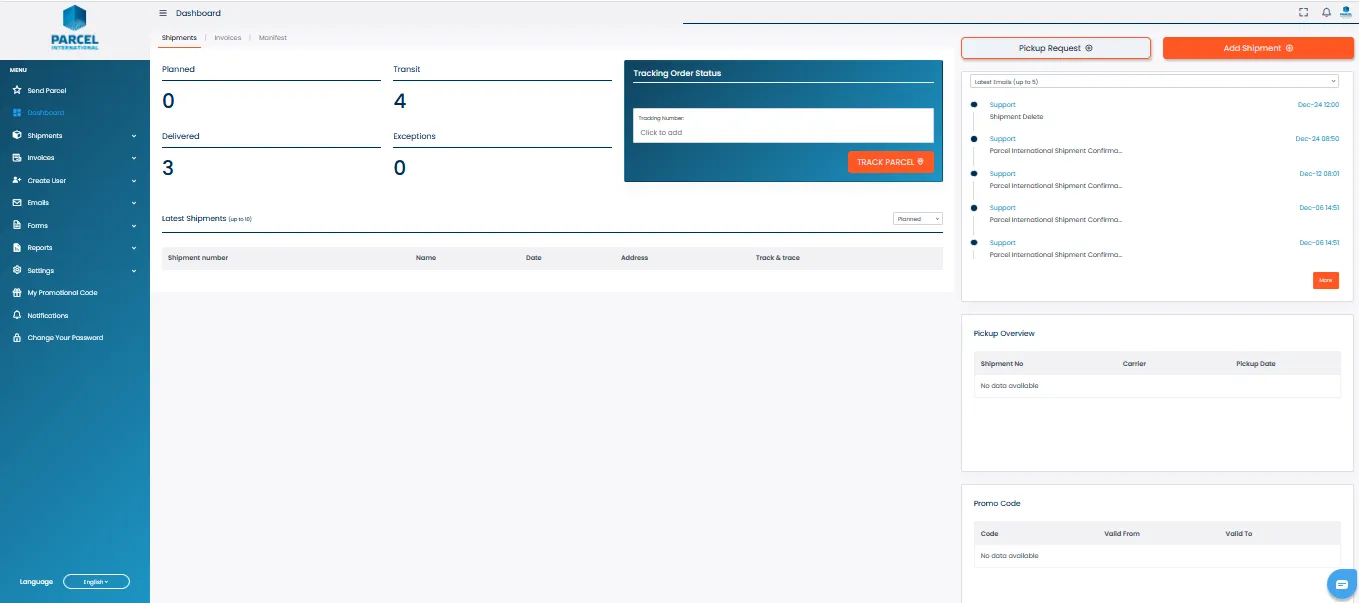
Parcel International supports digital customs declarations during booking and collaborates with U.S. customs brokers for clearance. View the current services and rates on ParcelInternational.
How long does a package take from Germany to the UK?
A package from Germany to the UK typically takes 2 to 5 business days, depending on the chosen service and destination region. Customs inspections or incomplete documentation may extend this timeframe.
Can I ship from the Netherlands to the UK using DPD?
Yes, DPD handles shipments from the Netherlands to the UK, with similar customs requirements as shipments from Germany. In both cases, you need an EORI number and the correct HS code for smooth clearance.
How do I send a package from Germany to the UK?
Choose a service, prepare the customs documents with your EORI number, HS code, and a commercial invoice, then book the shipment with a carrier or via a platform like Parcel International. This way, you generate labels and customs documents in one step and schedule a pickup immediately.
How quickly does DPD deliver in the UK after arrival?
After arrival in the UK and successful customs clearance, DPD typically delivers within a few business days, depending on the region and chosen service. Delays mainly occur when customs documents are missing or do not match the shipment contents.
Do I need an EORI number for business shipments to the UK?
For commercial shipments to the UK, an EORI number is mandatory, both on the EU side and often on the UK side. Without this number, the customs declaration cannot be processed correctly.
What exactly is a private package?
A private package is a physical shipment sent by an individual or small business to a recipient domestically or internationally, via a courier, express service, or freight option. It differs from commercial bulk shipments due to smaller volumes and often simpler customs handling.
Do I always have to pay VAT or import duties on a private package?
Not always: some EU member states offer an exemption for private gifts up to approximately €45, but the conditions are strict and vary by country. Consult the national customs authority of the destination country to confirm the applicable threshold.
What documents do I need to send a private package internationally?
You need at least a clear description of the goods, their value, country of origin, and the HS code on an invoice accompanying the shipment, as explained by Your Europe. For business or frequent shipments, an EORI number is usually also required.
Can I compare carriers for my private package via Parcel International?
Yes, our platform allows you to compare multiple carriers and provides tracking to monitor your shipment until delivery. You can book or request a quote for your shipment through our website.
What is the fastest way to reach customer service for a UK shipment?
Call for urgent issues, such as a shipment held at customs, and use email or a ticket for less urgent inquiries. Always have your shipment number and customs documents ready so the agent can act immediately.
What information does customer service typically request for a UK shipment?
Your shipment number, the commercial invoice with value and any HS codes, and for business shipments, your EORI number. Photos of the label and packaging are also helpful in case of damage or a lost parcel.
Who pays the import VAT and customs fees for a shipment from the UK?
This depends on the agreed delivery terms and whether the seller uses IOSS. Without IOSS, the courier usually collects the import VAT and any clearance fees upon delivery from the recipient.
What is the new EU levy for shipments from the UK in 2026?
From 1 July 2026, the EU will apply a fixed levy of three euros per item category for low-value imports from third countries like the United Kingdom. The levy applies per category of goods in the shipment, not per parcel.
Get a grip on your parcel shipping
Compare carriers, choose the best price and keep track of your international shipments. You can calculate and book without an account.
