
The Dutch e-commerce market is large and continues to grow, creating significant demand for international shipping solutions. Small to medium-sized e-commerce businesses often struggle with the complexity and costs of cross-border shipping. This guide provides practical insights into reliable and cost-effective solutions for business international shipping. You will learn about available shipping options, how to optimize costs, prevent delays, and establish an efficient shipping process that supports your international growth.
Key Insights
Point | Details |
|---|---|
Market Growth | The Dutch CEP market is growing from €9.55 billion in 2025 to €12.67 billion in 2031, with an annual growth rate of 4.82%. |
Shipping Options | Seven main types of delivery services range from express to economy options, each with its own advantages and disadvantages for business shipping. |
Cost Optimization | Proper documentation, smart transport choices, and consolidation can significantly reduce shipping costs. |
Preventing Delays | Customs, incomplete documentation, and incorrect transport choices are the three main causes of delays in international shipments. |
Process Automation | API integrations and automated tracking significantly increase efficiency and customer satisfaction. |
The Growth and Impact of International E-Commerce on Business Shipping
The explosive growth of online commerce is transforming how Dutch businesses operate internationally. The CEP market is expanding from €9.55 billion in 2025 to €12.67 billion in 2031, driven by the B2C segment, which represents 52.9% of the total market. This trend means that more small and medium-sized e-commerce businesses are facing the challenge of finding efficient and affordable international shipping solutions.
The impact of this growth extends beyond just volume increases. Consumers now expect the same speed and reliability for international orders as they do for domestic deliveries. This creates pressure on businesses to professionalize their logistics processes. Companies that invest in international shipping can differentiate themselves with faster delivery times and transparent tracking.
Choosing the right shipping method not only determines your cost structure but also your competitive position. Many businesses underestimate the importance of comparing different international delivery services and often opt for the first available choice. This leads to unnecessary costs and missed opportunities for customer satisfaction.
Aspect | 2025 | 2031 | Growth |
|---|---|---|---|
Total CEP Market | €9.55 billion | €12.67 billion | 32.7% |
B2C Segment Share | 52.9% | 55-58% | Increasing |
Annual Growth (CAGR) | 4.82% | 4.82% | Stable |
E-Commerce Penetration | 80% | 85%+ | Growing |
“The Dutch market for courier, express, and parcel delivery is experiencing unprecedented growth due to the digitalization of retail. Companies that invest now in smart international shipping strategies are positioning themselves for long-term success in an increasingly competitive market.”
These figures underscore the need for e-commerce businesses to professionalize their international shipping strategy. The companies that thrive are those proactively investing in reliable logistics partners and optimized processes.
Essential Shipping Options and Services for International Business Shipping
Choosing the right shipping service can make the difference between profitable international sales and loss-making orders. There are seven main types of delivery services for international shipping, each with specific characteristics that suit different business needs. Express services offer the fastest delivery within 1-3 business days, ideal for high-value products or time-sensitive shipments. Standard services deliver within 5-10 business days at lower costs, suitable for most e-commerce orders.
Economy options like sea and road freight are perfect for large volumes or non-urgent shipments, where cost is more important than speed. Consolidated shipping combines multiple small shipments into one large load, resulting in significant cost savings. Efficient selection of delivery services can shorten delivery times and reduce costs by matching service levels to customer expectations.
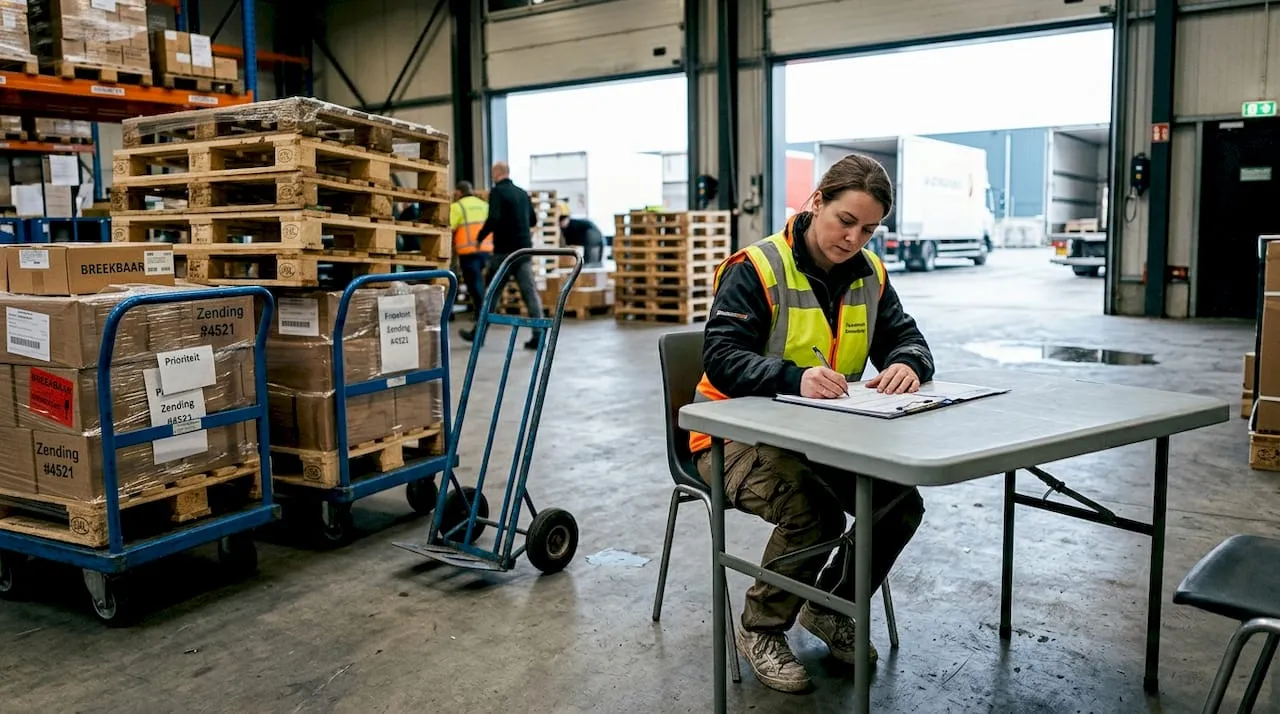
Service | Delivery Time | Cost | Reliability | Best For |
|---|---|---|---|---|
Express | 1-3 days | High | Very High | Urgent, high-value products |
Standard | 5-10 days | Medium | High | Regular e-commerce orders |
Economy | 10-20 days | Low | Medium | Large volumes, non-urgent |
Air Freight | 3-7 days | High | High | Medium to large shipments |
Sea Freight | 20-45 days | Very Low | Medium | Bulk, seasonal goods |
Road Freight | 7-14 days | Low-Medium | High | European destinations |
Consolidated | Variable | Low | Medium-High | Multiple small shipments |
Pros and Cons of Each Service:
- Express: Fastest option with premium tracking, but high costs make it viable only for valuable products or emergencies.
- Standard: Best balance between price and speed for regular orders, widely available to most destinations.
- Economy: Lowest cost per kilogram, but longer delivery times require good inventory planning and customer communication.
- Air Freight: Ideal for medium-sized volumes that are too large for courier services but too urgent for sea freight.
- Sea Freight: Unbeatable cost for large volumes, but requires long-term planning and is prone to delays.
- Road Freight: Eco-friendly alternative within Europe with predictable delivery times and lower costs than air freight.
- Consolidated: Maximizes cost efficiency through bundling but requires flexibility in planning.
Pro tip: Don’t choose a single shipping service for all your international orders. Develop a matrix that links product value, destination, and customer segment to the most cost-effective shipping option. High-value products for premium customers deserve express, while bulk orders are perfect for economy options.
Modern e-commerce businesses integrate multiple carriers via API connections into their systems. This enables automatic selection based on predefined criteria such as weight, destination, and urgency. The best options for international shipping combine flexibility with automation for optimal efficiency.
Cost optimization and preventing delays in international shipping
Delays and unexpected costs are the biggest frustrations in international shipping. The three most common causes of delay are customs issues, incomplete documentation, and incorrect transport selection. Customs inspections delay shipments by an average of 2-5 days when documents are missing or incorrect. Each country has specific import requirements that you must know before shipping.
Incomplete or incorrect commercial invoices lead to additional costs and delays because customs blocks the shipment until correct information is available. The wrong transport choice, such as opting for the cheapest option without considering reliability, often results in missed deadlines and dissatisfied customers. Investing in reliable services prevents costly returns and negative reviews.
Practical tips for cost savings in international shipping:
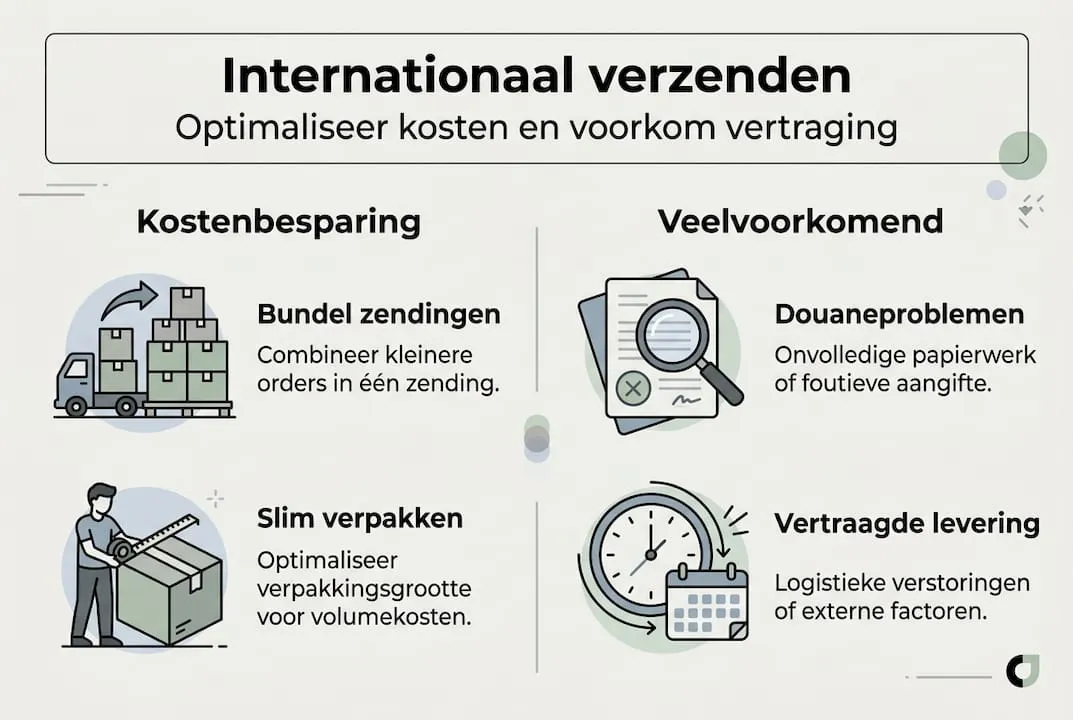
- Optimize packaging by using minimal dimensions without compromising product safety—dimensional weight often determines the price.
- Consolidate multiple orders to the same region into a single shipment to benefit from volume discounts.
- Use pre-negotiated rates with logistics partners for predictable costs and better margins.
- Prepare all customs documents before shipping to avoid delays and penalties.
- Invest in insurance only for high-value shipments, not as a standard for all packages.
- Choose track and trace selectively—premium tracking is not required for every shipment.
- Plan seasonal shipments well in advance to avoid peak pricing during busy periods.
- Evaluate your shipping data monthly to identify patterns and renegotiate rates.
Pro tip: Invest time in correctly preparing customs documents before starting international shipping. A complete set of commercial invoices, packing slips, and certificates of origin significantly reduces the risk of delays and prevents unnecessary costs for reprocessing or storage.
Choosing the right logistics partners makes a substantial difference. Partners with established customs expertise and local knowledge navigate complex regulations more efficiently. The tips for affordable international shipping emphasize the importance of long-term relationships with reliable carriers that offer volume discounts.
Optimizing international shipping costs requires a holistic approach. Analyze not only direct shipping costs but also hidden expenses such as return handling, customer service for lost packages, and reputational damage from late deliveries. Sometimes, the slightly more expensive but more reliable option is ultimately cheaper.
Step-by-step international shipping for small and medium-sized e-commerce businesses
A structured shipping process significantly increases reliability and customer satisfaction. A well-defined step-by-step plan ensures reliability and customer satisfaction by guaranteeing consistency at every stage of the shipping process. Many businesses improvise their international shipping, leading to errors and inefficiency. A systematic approach eliminates these issues.
Follow these steps for successful international shipping:
- Order verification: Check destination, product availability, and shipping restrictions for the specific country before accepting the order.
- Document preparation: Compile the commercial invoice, packing slip, and any required certificates with correct HS codes and value declarations.
- Packaging: Use suitable packaging materials that provide protection during international transport and comply with carrier guidelines.
- Carrier selection: Choose the optimal service based on weight, destination, urgency, and budget according to your predefined matrix.
- Label creation: Generate shipping labels and customs documents via your shipping platform with all required information complete and legible.
- Activate tracking: Enable track and trace and automatically share tracking information with the customer via email or SMS.
- Customs clearance: Ensure all documents are digitally available for customs and respond promptly to any inquiries.
- Customer communication: Proactively inform customers about shipping status, expected delivery time, and any delays.
- Monitor delivery: Track the shipment until successful delivery and record the signature or delivery confirmation.
- Follow-up: Collect feedback, process any claims, and optimize your process based on lessons learned.
Automation plays a crucial role in scaling international shipping. Integrate your e-commerce platform with shipping management software that automatically selects the best carrier, generates labels, and sends tracking updates to customers. This saves hours of manual work and drastically reduces errors.
Communication with customers about international shipping requires transparency. Clearly state expected delivery times on product pages, including potential customs processing time. Send proactive updates at key milestones such as shipment, customs inspection, and delivery. Customers value transparency more than speed alone.
The choice of a reliable logistics partner determines the success of your international shipping operations. A partner with expertise in starting-international-shipping helps you navigate complex regulations and provides access to more favorable rates. The role of a logistics service provider extends from transport to customs expertise and customer support.
Return processes deserve as much attention as outgoing shipments. International returns are complex and costly, so invest in clear return policies and local return options where possible. Some companies work with local partners to handle returns and reduce costs.
Discover reliable and cost-effective shipping solutions with Parcel International
Now that you understand the complexities of international shipping, it's time to turn this knowledge into action. Parcel International has provided specialized solutions for business customers seeking reliable and affordable international shipping since 2007. With access to over 220 countries and territories, we help small to medium-sized e-commerce businesses achieve their international growth.

Our comparison tools let you easily compare the best international shipping options based on your specific needs. Whether you need express, standard, or economy shipping, we offer transparent pricing with no hidden fees. Discover our practical tips for affordable shipping and start optimizing your international shipping costs today.
Can't find your question? Our support team is here for you 24/7 via the help centre.
What are the key documents for international shipments?
For international shipments, accurate customs documentation is essential, such as the CN22 or CN23 form, depending on the value of the shipment. Ensure all required information, including sender and recipient details, product description, and value, is filled out correctly to avoid customs issues.
How can I best manage shipping costs for international orders?
Optimize packaging to minimize dimensional weight, consolidate shipments to the same region, and negotiate volume discounts with carriers. Use a mix of shipping services tailored to product value and urgency instead of one expensive option for everything. Automate your shipping process to prevent errors that lead to additional reprocessing costs.
Which shipping services offer the best balance of speed and affordability?
Standard courier services provide the best balance between speed and cost, with delivery within 5-10 business days at moderate prices. For European destinations, road freight is often faster and more cost-effective than expected, with delivery within 7-14 days. Express services are only cost-efficient for high-value products where customers are willing to pay a premium.
How can I prevent my shipments from getting held up at customs?
Ensure complete and accurate customs documentation with correct HS codes, product descriptions, and declared values before shipping. Avoid vague descriptions like 'gift' or 'sample' and be specific about contents and value. Partner with a logistics provider that has customs expertise and proactively communicates in case of any customs inquiries.
What role does a logistics service provider play in international shipping?
A logistics service provider acts as your expert for international shipping, with knowledge of customs regulations, transport options, and local requirements per country. They negotiate volume discounts with carriers, offer integrated tracking, and ensure correct documentation. For small to medium-sized businesses, a good partner is essential to make international shipping scalable and profitable.
When is insurance for international shipments worth it?
Insure shipments valued above €200 or fragile products that are difficult to replace. For standard e-commerce items below this value, insurance premiums often exceed the risk of loss or damage. Analyze your damage history over six months to determine if insurance is cost-effective for your specific situation.
Get a grip on your parcel shipping
Compare carriers, choose the best price and keep track of your international shipments. You can calculate and book without an account.
