
Flawless customs clearance doesn’t start at the border—it begins weeks beforehand. Most delays, additional charges, and blocked shipments can be traced back to three root causes: incorrect product codes, missing documentation, and unclear agreements on responsibilities. Master these three, and you’ll prevent the vast majority of problems.
How to Avoid the Most Common Customs Issues
Before diving deeper into each topic, use this checklist to quickly identify the biggest risks:
- Verify HS and TARIC codes before every shipment, especially for new products or updated regulations
- Provide complete, consistent documentation: invoices, packing lists, and transport documents must match exactly
- Select the right Incoterm and contractually define who is responsible for customs formalities
- Work with an experienced customs broker who translates commercial data into legally compliant declarations
- Actively monitor regulations and track shipments via real-time updates and direct communication with your logistics partner
Why Accurate HS and TARIC Codes Are Critical
The commodity code is the foundation of every customs declaration. Outdated codes directly lead to additional charges and delays, as incorrect duties and permits are applied. The Harmonized System (HS) forms the basis; the TARIC code adds EU-specific measures and ultimately determines applicable import duties, quotas, and permit requirements.
A common mistake is reusing codes from previous shipments without verifying their current validity. Codes are updated regularly, and even a minor change can mean the difference between zero duty and a substantial tariff.
Error | Consequence | Solution |
|---|---|---|
Outdated HS code | Additional charges, delay | Verify annually via the TARIC database |
Vague description | Inspection, blockage | Use specific product descriptions for each item |
Inconsistent codes | Mismatch with invoice | Maintain a central code list per product group |
Incorrect origin | Loss of tariff benefit | Request origin documents in advance |
Pro tip: Create a fixed code list for each product group and have it reviewed by a customs specialist at least once a year. This prevents silent code changes from becoming costly surprises.
For more details on understanding-hs-codes check out the guide from Parcel International.
Which Documents Are Mandatory and Where Do Things Go Wrong?
For imports outside the EU, you need at least a commercial invoice, packing list, transport document, and import declaration. Depending on the product, additional permits, certificates, and origin documents may also be required. All customs declarations for imports and exports outside the EU must be submitted via the Customs Declaration Management System (DMS).
The three most common documentation errors are: incomplete or incorrect details such as wrong HS codes and vague descriptions, missing additional documents like permits, and inconsistencies between documents. A mismatch between the invoice and packing list is a direct red flag for customs.
Practical Measures That Make a Difference:
- Use a standardized invoice template with all mandatory fields: seller, buyer, invoice number, date, product description, quantities, value, currency, Incoterm, and country of origin
- Verify that all documents are consistent before shipment
- Store documents centrally so everyone works with the latest version
- Train staff who create documents on the specific requirements for each destination
For exports outside the EU, you also need proof of physical departure of goods to qualify for the VAT zero rate. Without automatic confirmation, a time-consuming investigation process begins.
How Incoterms and Trade Agreements Impact Your Risk

The choice of Incoterm determines who is responsible for customs formalities, costs, and risk. With DDP (Delivered Duty Paid), full responsibility for declarations, import duties, and VAT shifts to the seller. If you choose EXW, everything falls to the buyer. Many issues arise because parties agree on an Incoterm without fully understanding the associated obligations.
Trade agreements offer an additional opportunity for cost savings. If your product qualifies for preferential origin, you pay reduced or no import duties—but you must prove this with an EUR.1 form, a REX declaration, or a Certificate of Origin. Missing this proof means losing the tariff benefit.
- Specify the applicable Incoterm for each contract and define who bears which costs and formalities
- Check for each new supplier whether the country of origin qualifies for a trade agreement
- Request origin documents in advance, as retroactive applications are difficult and not always possible
Pro tip: Use the European Commission’s TARIC database to see which trade agreements apply per product code and which documents you need.
For more on applying-incoterms-in-practice read the guide from Parcel International.
What Does a Customs Broker Do and When Do You Need One?
A customs broker translates your commercial data into a legally sound declaration. This may sound technical, but the impact is significant: an experienced broker knows the pitfalls for each product category, understands which permits are required, and ensures smooth processing. Specialists drastically reduce the risk of errors and delays.
However, the legal responsibility always remains with you as the importer or exporter. A broker does not assume this responsibility. If you provide incorrect information, you are liable—even if the broker submitted the declaration.
Key Considerations When Choosing a Partner:
- Proven experience with your product category and destination countries
- Clear agreements on who provides which documents and within what timeframe
- Transparency on costs, including processing fees and potential storage fees for delays
- Accessibility in urgent situations or unexpected inspections
Through the industry organization FENEX, you can find certified customs agents in the Netherlands.
How do you stay updated on changes in customs regulations?
Customs compliance is not a one-time action. Regulations change continuously: new sanctions, updated product lists, revised TARIC codes, and adjustments in trade agreements can impact your shipments overnight.
Practical approach for active monitoring:
- Subscribe to the Dutch Customs and Ondernemersplein newsletters for regulatory updates
- Set up tracking for all your shipments and respond immediately to delays or inspection alerts
- Recheck applicable requirements for every new product line or destination
- Integrate compliance checks into your standard logistics planning, not as a separate afterthought
In the event of an unexpected customs inspection or audit: provide requested documents quickly and completely. Response time is one of the key factors for processing speed. Companies with AEO status (Authorised Economic Operator) have demonstrably better processes and therefore face fewer inspections and faster handling.
What do customs experts say about structural compliance?
Customs logistics experts agree on one thing: most problems are avoidable, but only if you structure compliance systematically.
Good customs compliance is not an occasional activity. It is a continuous process where you implement current regulations and HS code changes in a timely manner, build in internal controls, and train employees on documentation requirements. Organizations that invest in this not only reduce their risks but also strengthen their position with customs authorities. An AEO scan provides insight into where errors occur and how to structurally improve processes.
Scans focused on customs documentation help organizations identify concrete areas for improvement and reduce errors. This not only results in fewer delays but also lower long-term costs.
How do you prepare for customs duties and taxes?
Import duties and VAT are predictable costs, provided you calculate them in advance. The amount depends on the TARIC code, country of origin, and customs value of the goods. The Dutch Customs Tariff (DTV) provides an overview of all applicable charges per code.
Perform a cost check for each shipment, including transport costs, import duties, VAT, terminal fees, and any inspection costs. Also, document who bears which costs based on the chosen Incoterm. For companies that import regularly, a customs warehouse offers a cash flow advantage: goods are stored without import duties and VAT being immediately due until they enter free circulation.
Do you need an EORI number for contact with customs? Note: if your company’s legal structure changes, you must apply for a new EORI number. Failure to do so will result in your declarations being rejected.
Common pitfalls in customs declarations
Most errors in customs declarations are not spectacular. They are everyday mistakes and therefore dangerous.
Vague product descriptions such as 'parts' or 'goods' are insufficient. Customs expects specific descriptions that match the HS code. Another common mistake: incorrectly calculating the customs value. The customs value is the transaction value, including transport and insurance costs up to the EU border, not the ex-works purchase price.
Additionally, there are transport claims and documentation errors that only come to light afterward but have already caused delays or financial damage. Use a fixed checklist per country, product group, and Incoterm, and have your freight forwarder review new products or destinations in advance.
How do you communicate with customs authorities in case of issues?
If customs holds a shipment or requests additional information, every day counts. Always respond within the given timeframe and provide documents in full. Incomplete or slow responses prolong the hold and increase storage costs.
Communicate through official channels: the National Customs Helpdesk for general questions and the central electronic portal for formal messages. Keep the MRN (Master Reference Number) for each shipment at hand, as it is the reference number for all communication regarding that specific declaration. In complex situations, involve your customs agent immediately. They know the procedures and how to handle an inspection quickly and correctly.
What are the consequences of non-compliance with customs regulations?
Non-compliance ranges from minor delays to serious financial and legal consequences. Incomplete or incorrect documents lead to additional inspections, extended delivery times, fines, and retroactive charges. In severe cases, goods may be seized or returned.
The financial damage is often greater than the fine itself. Storage costs accumulate quickly for a blocked shipment, and a delayed delivery may result in contractual penalties with your customer. Companies that consistently make errors also risk a higher inspection frequency for future shipments. Those who work with robust processes and verifiable document control, however, build trust with customs authorities.
How do you package and label goods according to customs regulations?
Packaging and labeling are not trivial. Incorrect or missing labels are a direct cause of delays at the border.
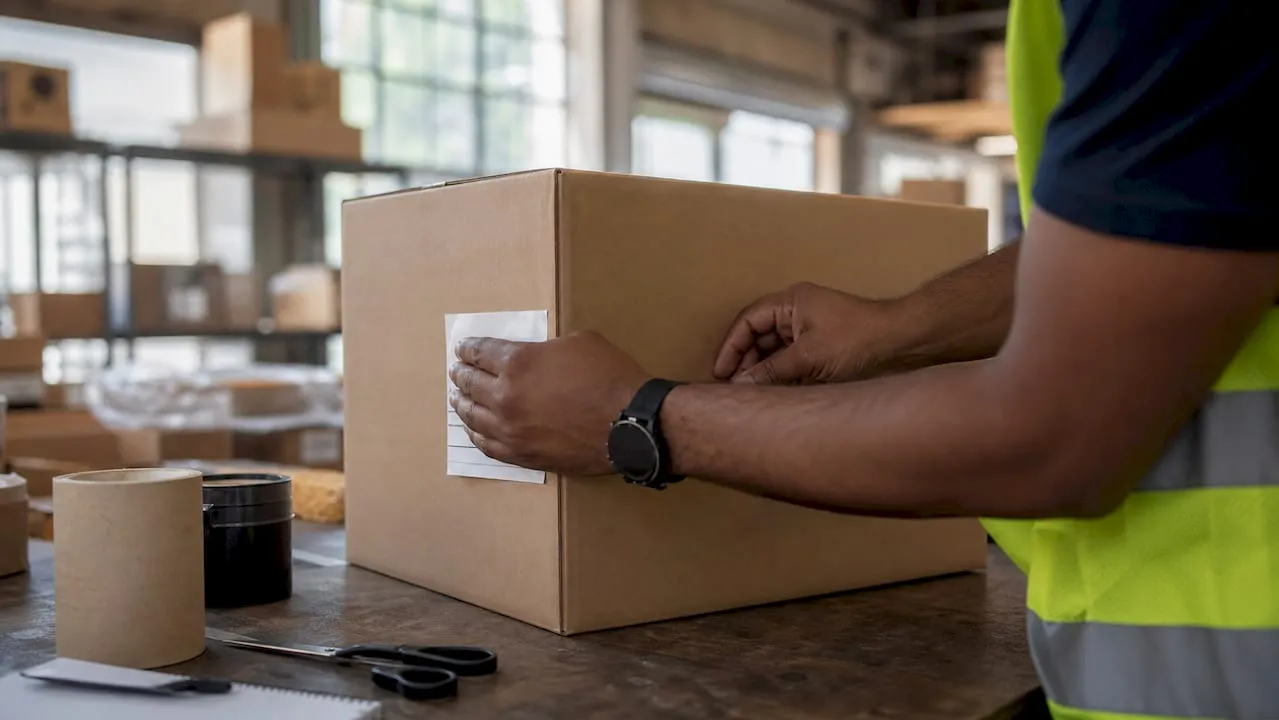
Each package must be labeled with a clearly readable tag containing the name and address of the sender and recipient, an accurate product description, weight and dimensions, and the country of origin. For certain product categories, such as hazardous materials, chemicals, or foodstuffs, additional labeling requirements apply based on European regulations.
Also ensure that the packaging itself complies with the destination country's requirements. Some countries have regulations for wooden packaging material (ISPM 15 standard) or prohibit certain materials. Verify this in advance through the customs information for each destination. Consistency between the label, packing list, and invoice is not just a formality—it’s the fastest way to get a shipment through customs without delays.
Parcel International handles the logistics, you handle the rest
Customs issues cost time, money, and customer trust. Parcel International takes the logistical side of international shipments off your hands: compare carriers, choose the best option for your destination, and ship to over 220 countries with no hidden fees. Active since 2007 and built for businesses and individuals who want to maintain control over their international shipments.

Whether you export regularly or occasionally ship outside the EU, a reliable logistics partner makes a difference in customs clearance. Parcel International doesn’t just offer rate comparisons—it also provides concrete support in selecting the right shipping option for each destination. Compare shipping options at parcelinternational.com and discover how to navigate shipments smoothly through customs. Request a quote directly via parcelinternational.com.
Key Insights
Customs issues can largely be prevented with correct product codes, consistent documentation, the right Incoterms, and collaboration with an experienced freight forwarder.
Point | Details |
|---|---|
Correct HS/TARIC Codes | Outdated codes result in additional charges; verify annually via the TARIC database. |
Consistent Documentation | The invoice, packing list, and transport document must match exactly to avoid blockages. |
Choose the Right Incoterm | The Incoterm determines who is responsible for declaration and costs; establish this contractually. |
Compliance as an Ongoing Process | Regulations change continuously; incorporate monitoring and internal controls into your logistics planning. |
Parcel International as Your Partner | Compare carriers and ship to 220+ countries with support for customs-related shipping choices. |
Get a grip on your parcel shipping
Compare carriers, choose the best price and keep track of your international shipments. You can calculate and book without an account.
