
Did you know that the volumetric weight of a parcel can sometimes be up to three times higher than its actual weight? This difference can significantly impact costs in international shipping. More and more carriers calculate shipping fees based on space, not just weight. Smart packaging and accurate volume calculation help avoid unexpected costs and prevent unpleasant surprises when sending parcels.
Key Points
- Volume Calculation is EssentialThe importance of volume calculation in the transport sector lies in determining shipping costs based on volumetric weight rather than actual weight.
- Formula for Volumetric WeightThe formula is length × width × height (cm) divided by a carrier-specific divisor, often 5000 (sometimes 4000 or 6000), ensuring fair shipping rates, especially for large, lightweight parcels.
- Difference Between Weight TypesShipping costs are always determined based on the higher weight, whether it’s the actual weight or the volumetric weight.
- Accuracy is CrucialInaccurate measurements can lead to additional costs and back charges, highlighting the importance of precise measurements.
What Is Volume Calculation for Parcels?
Volume calculation is a crucial method in the transport industry for accurately determining shipping costs. It involves calculating a parcel’s volumetric weight, using dimensions (length × width × height) instead of just the actual weight. Carriers like DHL eCommerce use this technique to ensure that large but lightweight parcels are not shipped at disproportionately low rates.
The standard formula for volume calculation is simple: the total packaging dimensions are divided by a carrier-specific divisor (often 5000, sometimes 4000 or 6000). Carriers worldwide use this method. If the calculated volumetric weight exceeds the actual weight, the shipping price will be based on the volumetric weight.
Volume calculation is particularly relevant for international shipments. It prevents senders from shipping large boxes with minimal contents at low rates. Here are some practical examples where volume calculation is crucial:
- Moving boxes with lots of packing material
- Electronic devices in large packaging
- Furniture or decorative items with a lot of empty space
Want to learn more about efficiently preparing parcels for shipping? Check out our shipping-parcels-step-by-step-guide.
Formulas and Methods for Volumetric Weight
Volumetric weight is a precision technique where carriers consider the space a parcel occupies as important as its actual weight. The standard formula, as used by DHL eCommerce Belgium, is simple yet effective: length × width × height (in centimeters) divided by 4000. This calculation helps carriers establish fair and accurate shipping rates.
There are various variations of the basic method, depending on the specific carrier and transport medium. Air freight companies often use a different divisor than sea freight or road transport. The key elements in volumetric weight calculation are:
- Accurate dimension measurements
- Use of the standard conversion factor
- Comparison with the actual weight
In practice, this means a large, lightweight parcel can cost as much as a smaller, heavier one. Carriers aim to prevent customers from shipping large boxes with minimal contents at unrealistically low rates.
The formula encourages senders to think about efficient packaging and space utilization.
Want to gain more insight into proper parcel packaging? Check out our safe-packaging-guide for professional tips and tricks.
Differences Between Actual Weight and Volumetric Weight
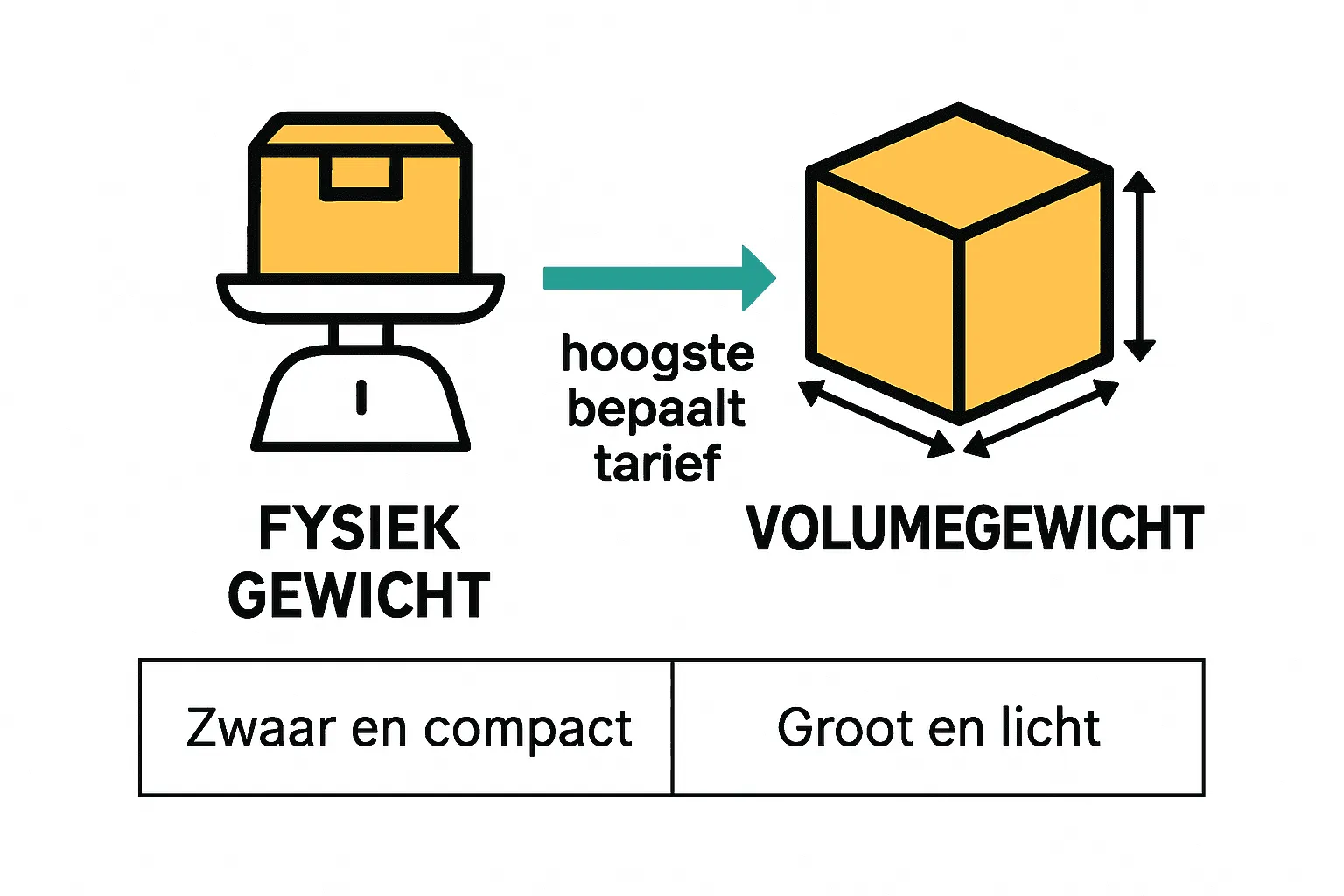
Actual weight and volumetric weight are two different methods carriers use to determine shipping costs. Actual weight is simply the real mass of the parcel, measured with a scale. Volumetric weight, however, calculates the space the parcel occupies, which is especially relevant for large but lightweight shipments.
DPD emphasizes that shipping costs are always based on the higher weight: either the actual weight or the volumetric weight. This means a large, bulky parcel can be just as expensive as a compact, heavy one. The comparison works as follows:
- Actual weight: Exact mass in kilograms
- Volumetric weight: Dimensions × conversion factor
- Rate: Based on the higher of these two values
This difference has significant implications for shippers. For example, a moving box filled with styrofoam will have a low actual weight but a high volumetric weight. Electronic devices in large packaging experience the same effect.
This method prevents carriers from incurring losses on shipments that take up a lot of space but weigh little.
Here’s an overview of the differences between actual weight and volumetric weight:
Feature | Actual Weight | Volumetric Weight |
|---|---|---|
Definition | Real mass | Based on dimensions |
Measurement Method | Weighing on a scale | Length × Width × Height / factor |
Important For | Heavy parcels | Large, lightweight parcels |
Cost Determination | If heavier weight | If higher than actual weight |
Risk of Error | Usually lower | Possible back charges |
Want to learn more about efficient shipping? Check out our shipping-parcels-step-by-step-guide for practical tips.
Application Across Different Shipping Methods
Volume calculation varies significantly between different shipping-methods, depending on the transport medium and the specific service category. TNT Belgium perfectly illustrates how conversion factors can vary for different shipping types, highlighting the complexity of volumetric weight calculation.
This differentiated approach reflects the diverse logistics challenges associated with each shipping method. For example, air freight services apply stricter volume calculations than road transport due to limited space on aircraft and higher transportation costs. Sea freight, on the other hand, offers more tolerance for large, lightweight shipments because of the available container space.
Want to gain more insight into international shipping options? Explore our guide to global shipping options for detailed information.
Costs, Risks, and Avoiding Mistakes
Incorrect volume calculation can be surprisingly costly for shippers. JBM Couriers highlights that inaccurately declared dimensions can lead to significant back charges and additional administrative fees, often around €20 per correction.
The key risks in volume calculation include:
- Inaccurate dimension measurements
- Incorrect estimation of packaging material
- Not accounting for packaging shapes
- Ignoring international shipping standards
To prevent errors, accuracy is crucial. Use a reliable measuring method, measure each package individually, and always round up for the most precise calculation. Digital measuring tools or professional scales with dimension functions can assist. Unsure about a measurement? Always take the maximum dimension to avoid surprises later.
Want to ensure safe shipping? Check out our guide to safe packaging for additional tips and tricks.
Simplify Volume Calculation with Parcel International
Accurately calculating volumetric weight can be a significant challenge. One incorrect measurement can lead to unexpected costs and frustration. Especially when shipping internationally, the difference between actual weight and volumetric weight becomes even more critical. Uncertainty about conversion factors, packaging shapes, and choosing the right provider often complicates the process unnecessarily. But it doesn’t have to stay that way.
Why wait for extra costs or failed shipments? At Parcel International, quickly compare and choose from various carriers so you never overpay for oversized or lightweight packages again. Our smart tools and personalized support help you ship error-free to over 220 countries. Learn more about our approach and take control of your volume calculation today. Start now and experience how easy international shipping can be with Parcel International.
calculating-volumetric-weight
Can't find your question? Our support team is here for you 24/7 via the help centre.
How can I calculate shipping costs for my international packages?
You can calculate shipping costs by entering shipment details such as weight, dimensions, and destination on the shipping service’s website. This helps you get an accurate estimate and identify any additional charges.
How is volumetric weight calculated?
Volumetric weight is calculated by dividing the dimensions of a package (length × width × height in centimeters) by a constant value, typically 4000, to determine a fair shipping rate.
Why is it important to know whether my package has a higher actual weight or volumetric weight?
Shipping costs are always calculated based on the higher weight, so it's essential to know which weight is greater to avoid unexpected charges.
What Are Common Mistakes in Volume Calculation?
Common mistakes include inaccurate measurement of parcel dimensions, using oversized boxes with unnecessary empty space, and underestimating volumetric surcharges. These errors can result in higher shipping costs.
What are the correct dimensions and weight for my package?
The correct size and weight depend on the shipping options you select. Measure your package accurately and choose a size that fits snugly to avoid additional costs, as every centimeter or gram can impact the shipping price.
What are hidden costs in international shipping?
Hidden costs are additional expenses such as handling fees, insurance, and surcharges that are not immediately visible in shipping rates. Include these costs in your totals to get a more realistic view of your shipping budget.
Why Do Shipping Costs Fluctuate in E-Commerce?
Shipping costs fluctuate due to a combination of factors such as fuel prices, supply and demand, seasonal trends, and external influences like geopolitical tensions and climate change.
How do fuel prices impact shipping costs?
Fuel prices have a direct impact on shipping costs, as they increase the operational expenses of transportation companies. When oil prices rise, shipping costs also become more expensive.
What are the main shipping methods and their costs?
The main shipping methods are sea freight (cost-effective, slow), air freight (expensive, fast), road transport (flexible, moderate), rail transport (cost-efficient for long distances), and multimodal transport (variable, balance between cost and speed).
How can I compare shipping rates?
Shipping costs can be compared by reviewing base shipping rates per weight category, additional charges for tracking and insurance, delivery times, and conditions for free shipping. Use online comparison tools to simplify this process.
How can I reduce shipping costs for my e-commerce business?
There are several ways to reduce shipping costs, including comparing shipping rates, leveraging volume discounts, and optimizing shipping methods based on product weight and dimensions.
How can I combine shipments for a discount?
Combine shipments by bundling multiple packages for the same destination. This can significantly reduce shipping costs by leveraging volume discounts offered by carriers for consolidated shipments.
What are the main cost factors in international shipping?
The primary costs include transportation, customs duties, taxes, administrative fees, and insurance. The share of customs and administrative costs depends on the product and destination.
How can I avoid customs issues with international shipments?
Ensure complete and accurate documentation upfront, including commercial invoices, certificates, and product descriptions. Work with experienced partners who understand customs clearance and local regulations.
Which shipping method should I choose for fast delivery?
Air freight offers the fastest delivery, with transit times of 1 to 3 days, but costs 3 to 5 times more than sea freight. This is the best option for urgent shipments or high-margin products.
Why is transparency in logistics costs important?
Transparency prevents a large portion of customers from abandoning their cart due to unexpected costs during checkout. Clear communication about all costs upfront significantly increases conversion and customer satisfaction.
How does tracking improve customer satisfaction?
Real-time tracking reduces uncertainty and customer service inquiries by allowing customers to see where their package is. Proactive updates for delays prevent frustration and negative reviews.
What are realistic delivery times for international shipping?
Within Europe, expect 3 to 7 business days for standard shipping. To other continents, it typically takes 7 to 14 business days, depending on customs processes. Express options can reduce this to 1 to 3 days, but at a higher cost.
Do I need to offer free shipping to stay competitive?
Not necessarily. Transparency is more important than free shipping. Many customers accept reasonable shipping costs if they are clearly communicated. Consider offering free shipping above a minimum order value to increase order size without hurting margins.
When is it beneficial to use local distribution centers?
If you regularly ship substantial volumes to a specific region, local distribution centers can shorten delivery times and reduce costs. This becomes cost-effective with consistent, substantial monthly volumes per region. Start by analyzing your shipping data to identify potential locations.
How do I measure the success of my shipping strategy?
Monitor key metrics such as average delivery time, percentage of damaged shipments, customer reviews about shipping, and shipping costs as a percentage of revenue. Also track delivery-times-for-international-shipments specifically to identify improvement opportunities. Set goals for each metric and evaluate monthly to ensure you are on track.
Why are shipping costs so important for conversion?
Many shoppers abandon their cart due to high shipping costs, so competitive rates directly contribute to higher conversion and reduced lost revenue.
How often should I compare shipping options?
At least once per quarter, as carrier rates and terms change frequently, and you don’t want to unknowingly overpay.
Can you really save money with shipping comparison as a small business?
Yes, even with small volumes, it can save you tens of euros per month and prevent margin loss by optimizing your shipping strategy.
What mistakes are often made when comparing shipping options?
The most common mistakes are: sticking with a single carrier, ignoring volume discounts, and not including return costs in the total calculation.
Is shipping comparison only relevant for international shipments?
No, there are also significant differences in price and service levels for domestic shipments, which can lead to consistent savings.
What are the concrete benefits of shipping optimization?
Shipping optimization leads to significant cost reduction, combined with higher conversion and better customer retention due to transparent and predictable shipping costs.
Why do customers abandon international shipping?
Many customers abandon due to high shipping costs, and some specifically due to unexpected international costs like customs and import duties.
What is DDP and why does it improve retention?
DDP means that taxes and customs duties are prepaid by the seller, so customers don’t face surprises upon delivery. This significantly increases repeat purchases compared to DDU shipping.
What is a remote area surcharge exactly?
A remote area surcharge is an additional fee charged by carriers for packages sent to hard-to-reach postal codes. The classification is based on fixed postal code lists and is independent of the popularity or wealth of an area.
How do I know if my delivery address incurs a surcharge?
Check the delivery address using the postal code verification tool provided by your carrier. Many major carriers offer this tool for free on their website.
Why does the surcharge only appear afterward on my invoice?
Many shipping platforms do not display the remote area surcharge at checkout. The fee is only charged later by the carrier, leading to unexpected additional costs.
Can I avoid the remote area surcharge?
Avoiding it completely is not always possible, but you can limit the surcharge by shipping to an urban address or pickup point, or by comparing carriers based on the total price including surcharges.
Which Dutch areas fall under the remote area surcharge?
The Wadden Islands are automatically classified under the remote area surcharge by most carriers due to limited accessibility via ferry. Always check the current postal code list of your carrier, as it is regularly updated.
What is shipping efficiency exactly?
Shipping efficiency is the ability to send parcels quickly, error-free, and at low cost. It includes order picking, packaging, carrier selection, and returns logistics.
What do customers expect from shipping in 2026?
Customers expect transparent pricing, real-time tracking, a simple returns process, and fair communication in case of delays. Sustainable shipping options are becoming increasingly popular.
How does automation help with international shipping?
Automating addressing and shipping labels prevents human errors that, in international shipments, can lead to permanently lost parcels and high reshipping costs.
What is the minimum information needed for an exact online quote?
Weight, exact dimensions, destination, desired Incoterm, and modality. Without these five details, a calculator can only provide an estimate.
What is the difference between DDP and DAP for my costs?
With DDP, you as the sender pay all import duties and taxes upfront; with DAP or DDU, the recipient pays those costs upon delivery.
Can I compare multiple carriers with Parcel International?
Yes, Parcel International displays rates from multiple carriers side by side based on the same input, allowing you to compare directly without requesting separate quotes.
How much does it cost to send a parcel?
Within the Netherlands, you typically pay €4 to €8, within Europe €8 to €15, and internationally from around €15, depending on weight, dimensions, and delivery time.
Which is cheaper, PostNL or DHL?
This varies by route, weight, and service level; neither is consistently cheaper for every shipment. Therefore, compare per shipment using a platform with multiple carriers side by side, rather than blindly relying on a single fixed partner.
How much does it cost to send a parcel via PostNL?
The exact rates for PostNL are not included in this article; check the current prices directly on the carrier’s website for your specific weight and destination.
Who is the cheapest for sending a parcel?
There is no fixed 'cheapest' carrier: the price depends on destination, weight, and speed. By comparing multiple carriers at once, such as via Parcel International, you can find the most cost-effective option per shipment without having to check each provider individually.
Should I charge VAT on shipping costs passed on to customers?
Yes, as a business, you typically charge VAT on passed-on shipping costs, and this rate usually follows the VAT rate of the shipped product itself.
Get a grip on your parcel shipping
Compare carriers, choose the best price and keep track of your international shipments. You can calculate and book without an account.
