
A significant portion of international e-commerce customers abandon their purchases due to unexpected shipping costs, directly impacting your revenue and growth. For Dutch e-commerce entrepreneurs, finding reliable international logistics solutions remains a constant challenge. Logistics not only determines customer satisfaction but also your cost control and competitive position. This guide helps you make better choices for international shipping.
Key Insights
Point | Details |
|---|---|
Effective E-commerce Logistics | Enhances customer satisfaction and enables international growth through reliable shipping. |
Transparent Shipping Costs | Comprise transport, customs, taxes, and storage; clarity prevents surprises. |
Choice of Shipping Modalities | Vary significantly in delivery time and cost; choose based on your priorities. |
Risk Management | Customs delays and hidden costs can be avoided with proper preparation. |
Technological Transparency | Real-time tracking increases visibility and strengthens customer trust. |
What is the Role of Logistics in E-commerce?
E-commerce logistics forms the crucial link between your online store and the end customer through the shipping chain. It involves efficiently moving products from warehouse to doorstep, where delivery time and reliability determine customer satisfaction. For Dutch entrepreneurs aiming for international growth, logistics is essential to scale successfully.
Complexity increases significantly with cross-border shipping. You must account for:
- Different customs regulations per country
- Varying tax rates and administrative requirements
- Longer transport times and multiple handling steps
- Higher risks of delays or damage
Transparency in the shipping chain determines whether customers continue to trust your brand. When you can precisely indicate where a shipment is and when it will arrive, you reduce uncertainty. This leads to fewer customer service inquiries and higher repeat purchases.
Pro-tip: Start with one or two destination countries where you already have customers, thoroughly test your logistics processes, and only then scale to more countries.
The choice of international logistics and e-commerce ultimately determines whether you can grow successfully on an international scale. Entrepreneurs who take their logistics strategy seriously build a competitive advantage that is difficult to replicate.
Cost Structure and Pricing for International Shipping
Shipping costs consist of various components that together determine the total price. Understanding this structure helps you budget and avoid surprises.
The main cost items are:
- Transport costs: the actual movement from point A to point B
- Customs and taxes: import duties, VAT, and other levies
- Administrative costs: document processing and certification
- Storage costs: temporary storage at transshipment points or customs
- Insurance: protection against loss or damage
Customs and administrative costs can make up a significant portion of the total amount. These costs vary greatly by destination and product type. For example, electronic goods often have different rates than textiles.
Transparency in pricing is crucial because hidden costs deter customers. When you clearly communicate all costs upfront, you prevent a large portion of potential customers from abandoning their purchase during checkout. This means being upfront about what the customer will ultimately pay.
The differences between air, sea, and road transport are substantial in terms of cost and speed. Air freight is significantly more expensive but delivers in days, while sea freight is cheaper but takes weeks. For Dutch entrepreneurs shipping to other European countries, road transport often offers the best balance.
Pro-tip: Always request an all-in price from logistics partners to understand shipping cost fluctuations and prevent budget overruns.
Comparison of Shipping Modalities: Air, Sea, and Road
The choice between different transport modalities directly impacts your costs, delivery time, and customer satisfaction. Each method has specific pros and cons that suit different situations.

Modality | Delivery Time | Cost | Best For |
|---|---|---|---|
Air Freight | 1-3 days | High | Urgent shipments, small volumes |
Sea Freight | 20-40 days | Low | Bulk goods, inventory |
Road Transport | 3-7 days | Moderate | Europe, flexible planning |
Air freight provides the fastest solution but is 3 to 5 times more expensive than sea freight. This option is ideal for high-margin products or when customers are willing to pay extra for fast delivery. Think of fashion items during sale periods or seasonal products.
Sea freight offers the most cost-effective solution for large volumes. The long lead time means you must plan ahead and maintain inventory. For recurring orders or building stock in a new country, this is ideal.
Road transport within Europe combines reasonable costs with acceptable delivery times. The flexibility is high as routes can be easily adjusted and intermediate stops are possible. For Dutch entrepreneurs shipping to Germany, Belgium, or France, this is often the best choice.
Key considerations for your choice:
- What is the urgency of the delivery?
- How much margin does the product have?
- What does your target audience expect in terms of delivery time?
- How large is the volume you are shipping?
Pro-tip: Test different modalities with small volumes before committing to one method, so you can learn the practical shipping methods and compare the best cost and speed options.
Challenges and Risks in International E-commerce Logistics
International shipping presents specific challenges that directly impact your customer satisfaction and profitability. Recognizing and addressing these risks prevents costly problems.
Customs complexity is the biggest obstacle for many entrepreneurs. Without proper documentation, customs can cause significant delays. These delays lead to dissatisfied customers and increased returns.
The most common challenges are:
- Incomplete or incorrect customs documentation
- Underestimation of import duties and taxes
- Lack of visibility during transit
- Hidden costs that only become apparent later
- Cultural and language barriers in communication
Delays have a domino effect on your business. Customers who wait longer than expected request refunds or leave negative reviews. This damages your reputation and makes future sales more difficult. The costs of returns and compensations can completely erode your profit margins.
Hidden costs often exceed the budget because entrepreneurs don’t account for all factors. Consider costs for reinspection at customs, additional handling fees, or currency fluctuations. These unexpected expenses can turn a profitable order into a loss.
Proper preparation prevents most problems. Invest time in understanding customs and delays for your key destination countries. Work with experienced partners who have knowledge of local regulations and can provide practical customs clearance tips.
Common misconceptions in e-commerce logistics
Many Dutch entrepreneurs have incorrect assumptions about international logistics that lead to disappointment and loss. It’s time to debunk these myths.
The first misconception is that logistics is only about shipping parcels. In reality, it encompasses the entire chain from inventory management, packaging, documentation, transport, customs, to delivery. Each component impacts costs and customer satisfaction. Entrepreneurs who underestimate this run into unexpected problems.
A second myth is that customs clearance automatically runs smoothly. Without proper preparation and documentation, customs can cause significant delays and extra costs. Products sometimes get stuck for weeks, frustrating customers and damaging your reputation.
The cheapest shipping option may seem attractive, but studies confirm that the cheapest option isn’t always the best for customer satisfaction. Cheap services often lack tracking, have longer delivery times, and offer poor customer service. This leads to more inquiries, complaints, and ultimately higher costs.
Other common misconceptions:
- All countries have the same regulations
- Insurance is unnecessary for small shipments
- Customers automatically accept long delivery times for international orders
- Once chosen, you can’t switch logistics partners
Knowledge about misconceptions in international logistics helps you set realistic expectations. Start with thorough research into your target markets and invest in reliable partners, even if they cost slightly more.
Technological innovations and tracking for transparency
Modern technology has transformed logistics from a black box into a transparent process where all parties have visibility. These developments provide concrete benefits for e-commerce entrepreneurs.
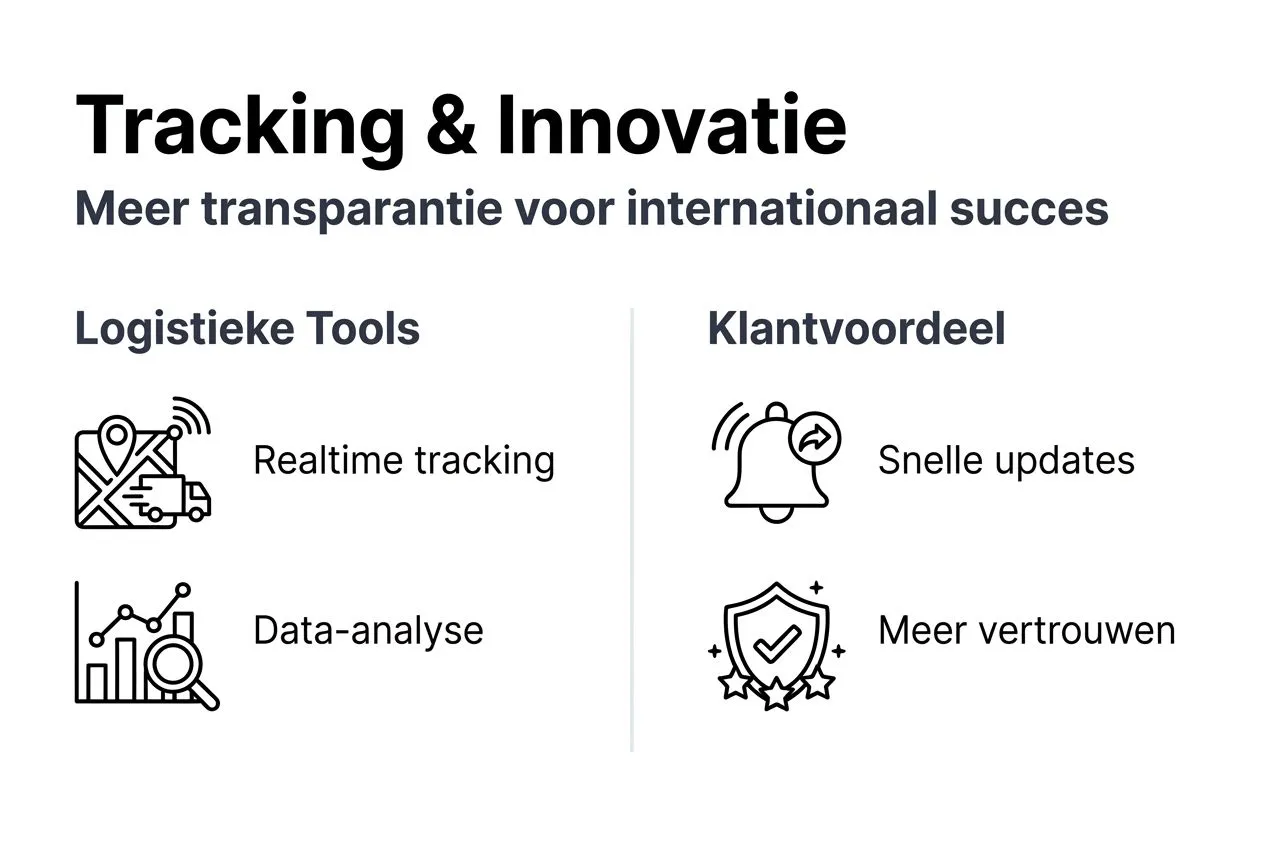
Real-time tracking forms the foundation of modern logistics. Research shows that real-time tracking reduces customer service inquiries and increases customer trust significantly. Customers can see for themselves where their parcel is and when it will arrive, eliminating uncertainty.
Technological platforms offer more than just tracking:
- Comparison of shipping options by price and speed
- Automatic customs document generation
- Notifications for key updates in the shipping chain
- Analysis of logistics performance and bottlenecks
- Integration with your webshop for seamless workflows
Transparency reduces customer stress because they are no longer left in the dark. When a shipment is delayed, you see it immediately and can communicate proactively. This prevents frustration and negative reviews. Customers value proactive communication more than perfect timing.
Digital tools help you monitor and optimize logistics performance. You can see which routes are the fastest, where delays occur, and which partners perform best. This data enables you to make better decisions and continuously improve.
Pro tip: Choose a logistics partner that offers modern tracking technology benefits and supports integration with your systems, as the impact of shipment tracking is directly visible in customer satisfaction.
Practical tips for choosing a reliable logistics partner
The choice of your logistics partner determines the success of your international e-commerce. This decision requires careful consideration of various factors.
Follow these steps to select the best partner:
- Verify transparency in all costs and processes upfront
- Compare multiple providers on price, quality, and service
- Ask about specific experience in your target countries
- Test technological capabilities like real-time tracking
- Evaluate the flexibility and response time of their customer service
- Read reviews and ask for references from other e-commerce businesses
- Start with a trial period before committing to long-term contracts
Transparency is crucial because hidden costs can lead to surprises later. A good partner explains upfront what each cost item entails and under what conditions prices may change. Be wary of providers who are vague about rates.
Experience in your specific destination countries makes a huge difference. A partner that regularly ships to Germany, for example, knows the customs procedures and typical bottlenecks. This knowledge prevents delays and issues that occur with inexperienced partners.
Technological capabilities determine how much control and insight you have. Modern platforms offer automatic updates, easy document generation, and performance analytics. These tools save time and significantly reduce errors.
Flexibility becomes crucial as you grow or face seasonal peaks. Can the partner scale quickly? Do they offer various shipping options? Can they respond to urgent situations? These questions help you find a partner that grows with you.
Pro tip: Start your selection process by creating a clear profile of your shipping needs, volumes, and priorities. This will allow you to ask targeted questions to potential partners about choosing a logistics provider and optimizing shipping costs.
Discover reliable international logistics solutions
Now that you understand what effective e-commerce logistics entails, it’s time to take the next step. At Parcel International, we provide transparent international shipping solutions tailored to your specific needs.

You can choose from various transport modes, from fast air freight to cost-effective sea freight, all with real-time tracking. Our experience since 2007 in over 220 countries means we know exactly how to maximize international shipments and their benefits. Personalized service and clear communication ensure you always know where your shipment is.
Discover how our role as a global logistics provider can accelerate your international growth. Visit Parcel International for more information about our services.
Can't find your question? Our support team is here for you 24/7 via the help centre.
What are the main cost factors in international shipping?
The primary costs include transportation, customs duties, taxes, administrative fees, and insurance. The share of customs and administrative costs depends on the product and destination.
How can I avoid customs issues with international shipments?
Ensure complete and accurate documentation upfront, including commercial invoices, certificates, and product descriptions. Work with experienced partners who understand customs clearance and local regulations.
Which shipping method should I choose for fast delivery?
Air freight offers the fastest delivery, with transit times of 1 to 3 days, but costs 3 to 5 times more than sea freight. This is the best option for urgent shipments or high-margin products.
Why is transparency in logistics costs important?
Transparency prevents a large portion of customers from abandoning their cart due to unexpected costs during checkout. Clear communication about all costs upfront significantly increases conversion and customer satisfaction.
How does tracking improve customer satisfaction?
Real-time tracking reduces uncertainty and customer service inquiries by allowing customers to see where their package is. Proactive updates for delays prevent frustration and negative reviews.
All questions about shipping costs and volumetric weight (45)
Get a grip on your parcel shipping
Compare carriers, choose the best price and keep track of your international shipments. You can calculate and book without an account.
