
International shipping rates for parcels depend on weight, volume, zone, and service level—not a fixed amount per country. The actual weight doesn’t count if your parcel is light but large: in that case, the DIM weight (volumetric weight) applies. Want a realistic estimate in five minutes? Measure your parcel, check the Incoterms to determine who covers which costs, and enter the details into a shipping calculator like the one from Parcel International.
In short:
- Shipments are primarily influenced by the chargeable weight, which is the higher of the actual weight or the volumetric weight.
- For small shipments, express or air freight is usually the cheapest, while for large volumes, sea freight often offers the best price-quality ratio.
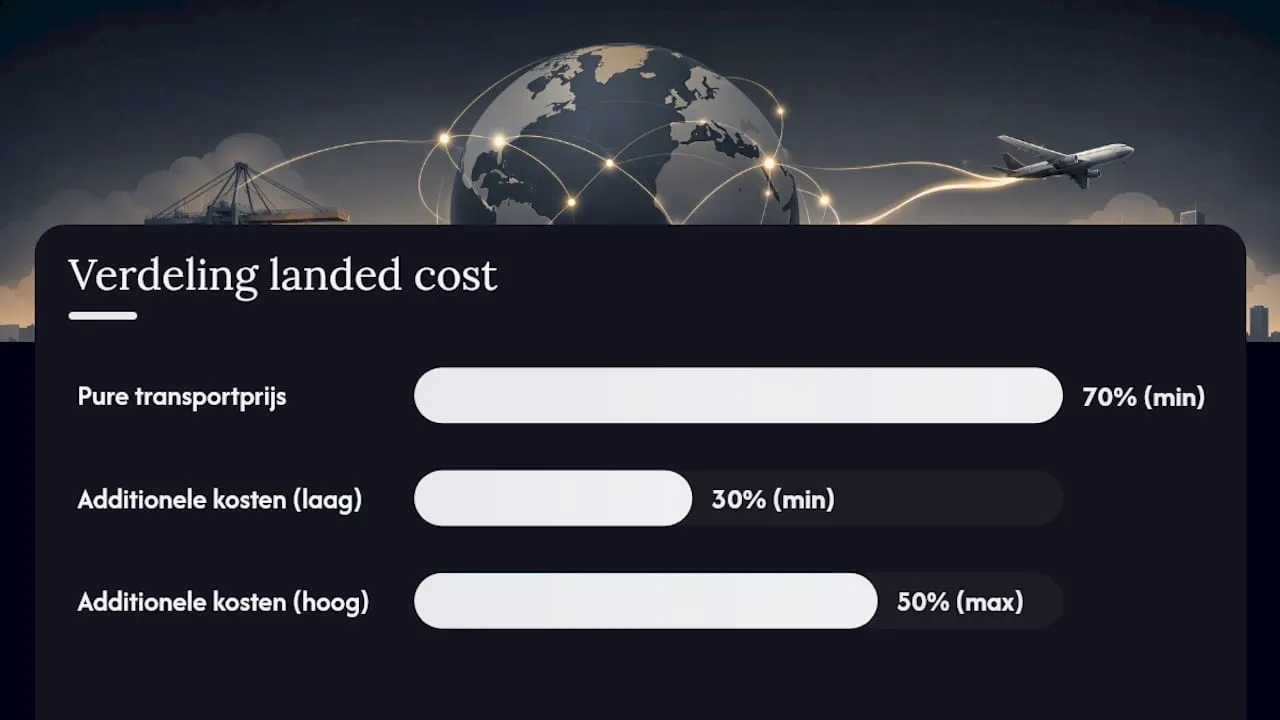
- Additional costs such as customs duties, storage, and final delivery can significantly exceed the base price and must always be calculated separately.
- Smartly consolidating orders and choosing appropriate packaging can greatly reduce shipping costs.
- Comparing rates via platforms and clearly defining Incoterms helps avoid unexpected additional costs upon delivery.
Which Components Determine International Shipping Rates
A shipping rate is never just one number. It’s the sum of choices carriers make before you click 'send.'
The foundation is the chargeable weight, the weight you actually pay for. Carriers always use the higher of two values: the actual weight on the scale or the volumetric weight calculated from length, width, and height. If you ship a light but large box full of packaging material, you often pay for the air you’re sending. Ship24 explains that this calculation method, along with zone classification and the chosen service level, forms the core of every international rate.
Additionally, these factors play a role:
- Shipping zones: destinations are divided into price zones based on distance and infrastructure, not simply by national borders.
- Service level: economy is cheaper but slower, while express costs more but delivers within days.
- Fuel surcharge: a variable fee that can change monthly with oil prices.
- Security and terminal fees: fixed handling costs at airports and seaports that are invoiced separately.
What’s rarely included in the base rate is exactly where individuals and e-commerce businesses are often surprised: customs duties, final delivery to the home address, insurance, and potential storage costs due to delays. Logos Logistics points out that these surcharges frequently change and appear separately on invoices, so a quote that looks low may end up being much higher upon delivery.
Express, Air, Sea, or Road: What’s the Cheapest Option for Your Shipment
Choosing the right shipping method is a calculation based on weight, time, and the value of the goods. There’s no universally best option, but there is a logical order to consider.
- Express is the first choice for small, time-sensitive parcels: documents, samples, urgent orders. You pay the highest price per kilogram, but the delivery time of one to three days compensates for urgent shipments.
- Air freight is the middle ground: suitable for medium-sized shipments that need to arrive quickly without the price tag of express. However, watch for minimum charges per shipment and surcharges, as air freight costs are generally significantly higher than sea freight for comparable volumes.
- Sea freight wins for bulk shipments. The cost per kilogram or cubic meter (CBM) is much lower, but the transit time extends to weeks instead of days.
- Road transport is efficient within a region or continent, such as shipments within Europe. Keep in mind final delivery costs, which carry more weight for smaller volumes.
Real-world examples show that the tipping point often depends on a specific volume: below a certain threshold, express or air freight is more cost-effective due to the fixed costs of sea freight, but for larger volumes, this reverses. Analyses of shipping routes between China and Europe reveal that many companies opt for a hybrid approach: time-sensitive items by air, bulk inventory by sea. This strategy is also emphasized by Van Thiel Transport, where smart inventory management is highlighted as the key to avoiding the most expensive option for every shipment.
How to Calculate the Landed Cost of Your Shipment Step by Step
The landed cost is the total amount your shipment actually costs, including everything that comes after the base rate. Those who only look at the transport price often miscalculate.
Follow these steps for a realistic estimate:
- Calculate the DIM weight: multiply length, width, and height in centimeters and divide by the carrier’s divisor (often 5000 for air). Compare this with the actual weight and use the higher value.
- Request the zone price and service level: use a shipping calculator or platform like Parcel International to get an up-to-date rate per destination and service level.
- Include surcharges: fuel, security, and terminal fees are separate from the base price.
- Add customs and import duties: depending on the commodity code and destination country.
- Include final delivery, insurance, and potential storage costs: especially with delays at the border, storage costs can add up quickly.
Carriers adjust fuel surcharges regularly, and a rate that’s accurate today may already be outdated next month.
Additional costs such as customs clearance, storage, and final delivery can significantly exceed the base shipping price, accounting for most surprises on the final invoice. A shipping calculator provides a quick starting point, but keep in mind that not every tool includes customs duties by default. Always verify whether import fees are included before considering the result final. For more details on the documentation required for larger shipments, refer to the guide on international-shipping-rules.
How to Save Smartly on International Shipping Costs
The biggest savings rarely come from negotiating the price per kilogram. They come from avoiding costly choices before you ship.
- Consolidate shipments: gather orders and send them together instead of as individual parcels, especially if you frequently ship to the same region.
- Pack appropriately: a slightly smaller package may fall under a different DIM-weight threshold, avoiding a price jump. Air cushions and form-fitting packaging work better than an oversized box with filler material.
- Choose the service level wisely: economy service is sufficient for non-urgent shipments, even if express feels safer.
- Explore volume agreements: if you ship regularly, you can negotiate lower per-shipment rates with platforms or carriers. Analyses of e-commerce shipping routes confirm this can make a substantial difference at higher volumes.
- Insure strategically: insuring a low-cost shipment often costs more than the risk warrants; for high-value goods, it’s essential. Learn more about the considerations in the guide on securing shipping insurance.
- Define Incoterms clearly: explicitly agree on who pays customs duties and final delivery (DDP vs. DAP) to avoid surprises at the door.
Why Parcel International: Practical Experience You Can Use Immediately
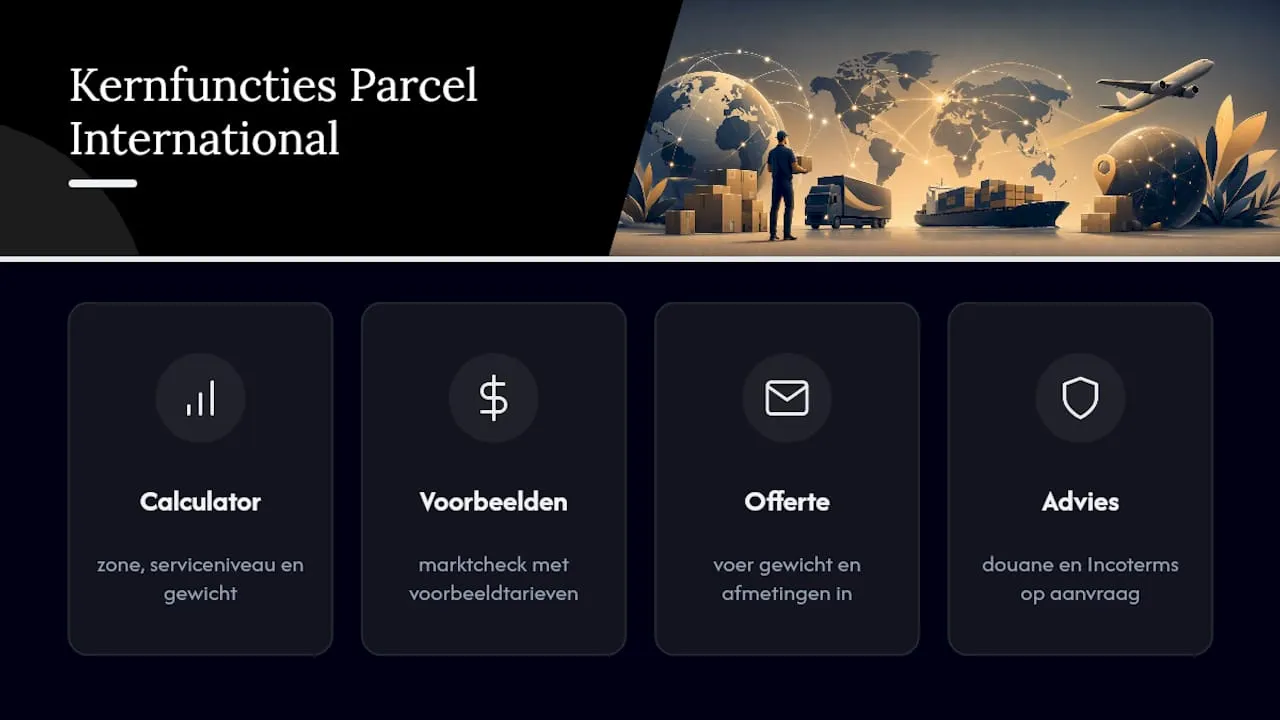
The service covers shipments to many countries and regions, backed by years of experience in international logistics. This expertise is reflected in providing a rate calculator that combines zone, service level, and weight, as well as access to sample rates, allowing you to benchmark estimates against the market.
You can get a quote by entering weight and dimensions, comparing carriers and service levels, and requesting advice on customs or Incoterms if needed. No lengthy forms or mandatory accounts are required. For those shipping internationally without a logistics background, this is the difference between guessing and calculating.
— Pascal
Compare Rates and Request Your Quote Directly
Requesting quotes from individual carriers takes time, and each provider calculates surcharges and zones differently. Platforms are available that offer side-by-side comparisons of rates from multiple carriers for express, air, sea, and road freight, without extra costs or mandatory accounts.

In addition to comparing rates, you can also arrange customs documentation, track shipments, and receive support for complex cases such as high-value or time-sensitive goods. Unsure about Incoterms, import duties, or which service level suits your shipment? Request personalized advice before booking, especially for larger or recurring shipments.
Want to see what your shipment will cost right away? Visit the page on international shipping rules, enter your weight and destination, and compare the options that fit your budget and deadline within minutes.
Get a grip on your parcel shipping
Compare carriers, choose the best price and keep track of your international shipments. You can calculate and book without an account.
