
Contact your shipping platform or courier's customer service immediately, and have your shipment number and customs documents ready before calling or emailing. For shipments to or from the United Kingdom, you can also directly contact Parcel International for bookings, tracking, and customs support. Note: Import costs may still accrue during transit—more on this below.
In summary:
- Call for stalled shipments or approaching deadlines; phone support allows for follow-up questions, while email or a ticket provides a written record.
- In your first message, include the shipment number, shipping date, destination, and the issue. Attach the invoice and any commodity codes as separate files.
- From 1 July 2026, the EU will apply a €3 levy per product category for low-value imports from the UK, not per parcel.
- Without IOSS, the courier collects VAT and clearance fees upon delivery; with IOSS, the customer pays VAT at checkout.
- For business trade with the UK, an EORI number is mandatory. An EU registration does not apply there, and a UK registration starts with 'GB'.
How to reach customer service for shipments to the UK
The channel you choose depends on the urgency of your issue. For a shipment stuck at the border or an approaching deadline, phone support is fastest, as it allows for immediate follow-up and clarification on missing documents. For less urgent matters, such as an address change or a question about rates, email or a support ticket is more practical—it creates a written record you can reference later if needed.
If you call, state the issue and shipment number upfront. This helps the agent look up the status immediately without transferring you multiple times.
If you email or open a ticket, include the following in the first line:
- Your shipment number or tracking code
- The shipping date and destination
- A brief, clear description of the problem
- Whether you’ve had prior contact and with whom
Tracking portals and chat functions are suitable for simple status inquiries but often struggle with complex customs issues. Expect a response to emails within one to two business days. If none arrives, escalating to a supervisor or trying a second channel (e.g., calling after submitting a ticket) is a reasonable next step.
Checklist: Which details and documents should you have ready
Before reaching out, save time by having these documents ready:
- Shipment number, airway bill, or tracking code.
- Commercial invoice with the value of the goods and, if known, the HS codes.
- Full sender and recipient details, including the EORI number for business shipments.
- Photos of the shipping label and packaging, especially for damaged or lost parcels.
- Any previous correspondence or ticket numbers.
Upload these documents directly in the support portal or attach them to your email so the agent doesn’t have to request additional information later.
Pro tip: Save each document as a separate, clearly named attachment (e.g., 'invoice_12345.pdf') instead of one large scan—this significantly speeds up processing by customer service.
Key customs and cost rules that trigger customer service inquiries
Many customer service questions aren’t about the shipment itself but about unexpected costs. From 1 July 2026, the EU will apply a fixed levy of three euros per product category for low-value imports from third countries, including the United Kingdom. This levy is charged per category in the shipment, not per parcel, meaning a shipment with multiple types of items may incur multiple charges.
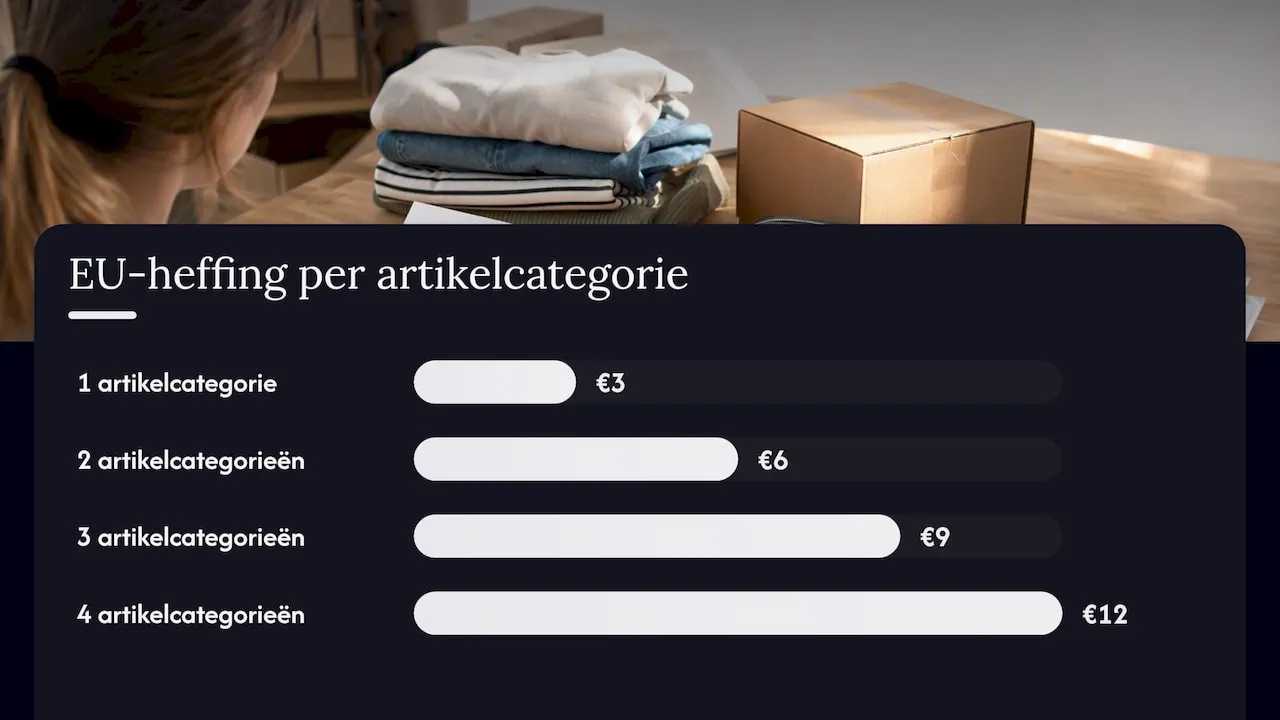
From 1 July 2026, you will pay a fixed levy of three euros per product category for low-value imports from the UK, a rule many consumers are still unaware of, which often leads to customer service inquiries about unexpected charges upon delivery.
Additionally, these cost factors come into play:
- Import VAT is collected at checkout if the seller uses IOSS; otherwise, it is collected by the courier upon delivery.
- Handling and clearance fees are typically charged by the carrier processing the customs declaration.
- Who bears these costs—the sender or the recipient—depends on the agreed delivery terms.
According to the European Commission’s factsheet on e-commerce and the UK, online stores selling to the EU must inform customers upfront about the total price, including taxes. Always check whether the seller uses IOSS and what the delivery terms specify before assuming a 'price includes all costs' scenario. For more details on who ultimately pays, read our article on what-you-really-pay-for-international-orders.
Business shipping: EORI, IOSS, and proper preparation
For businesses sending goods to or from the United Kingdom, a complete and accurately completed dossier is the fastest way to resolve support issues. Follow these steps:
- Apply for an EORI number for each direction you trade in: an EU EORI is not valid in the UK, and a UK EORI number always starts with the letters 'GB'.
- For B2C orders under €150, check whether the seller applies IOSS, as this determines whether the recipient must pay VAT upon delivery.
- For regular sales to EU customers, consider EU fulfilment or an intermediary to handle IOSS registration on your behalf, reducing processing times.
- Request the EORI number yourself through the national customs authority or have a customs agent or logistics partner arrange it for you.
GOV.UK outlines the full export procedure step by step, including goods classification and who submits the declaration. For business shipments, clearly agree in advance who will cover the clearance costs: ambiguity here is one of the most common reasons for escalation to customer service. Read more about the practical impact of these rules in our article on the consequences of Brexit for shipping costs and customs.
Parcel International: Fast assistance and customs support for shipments to and from the UK
We simplify booking a shipment to or from the United Kingdom by directly comparing multiple carriers, with no extra fees or minimum order requirements. Through Parcel International, you can choose from express, sea, air, or road transport, and we automatically generate the customs documentation—so you don’t have to figure out which form goes where.
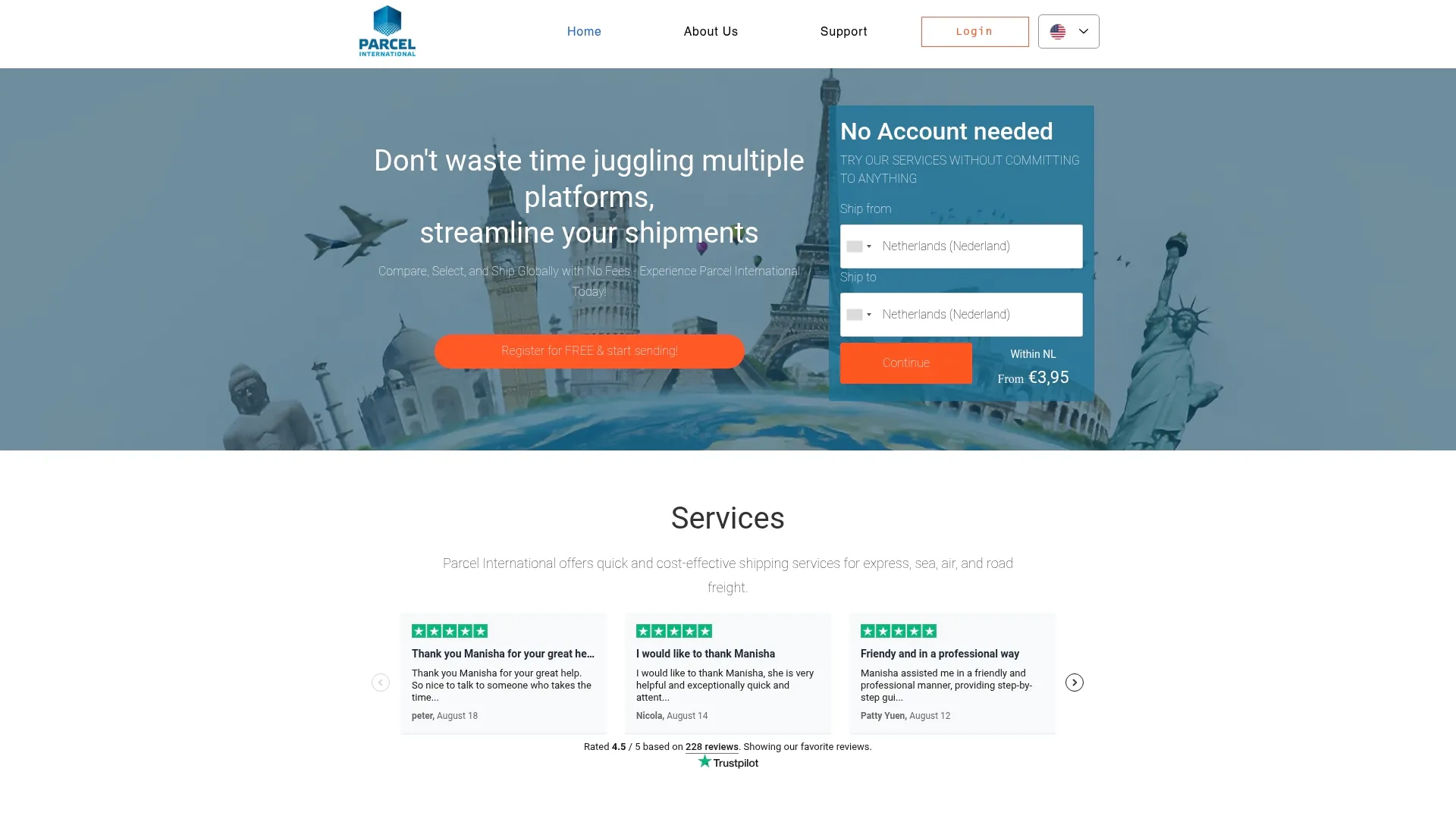
Do you already have a shipment in transit and something is stuck at the border? Upload your invoice and tracking number in the platform or contact customer service to investigate which step is still missing. For businesses with regular volumes to the UK, check out our freight-page for air, sea, and road freight and pallet options, available on request via a quote. Book a shipment or request a quote through the platform and experience how a correctly prepared file can shorten the processing time.
Practical tips from Pascal for a more effective support case
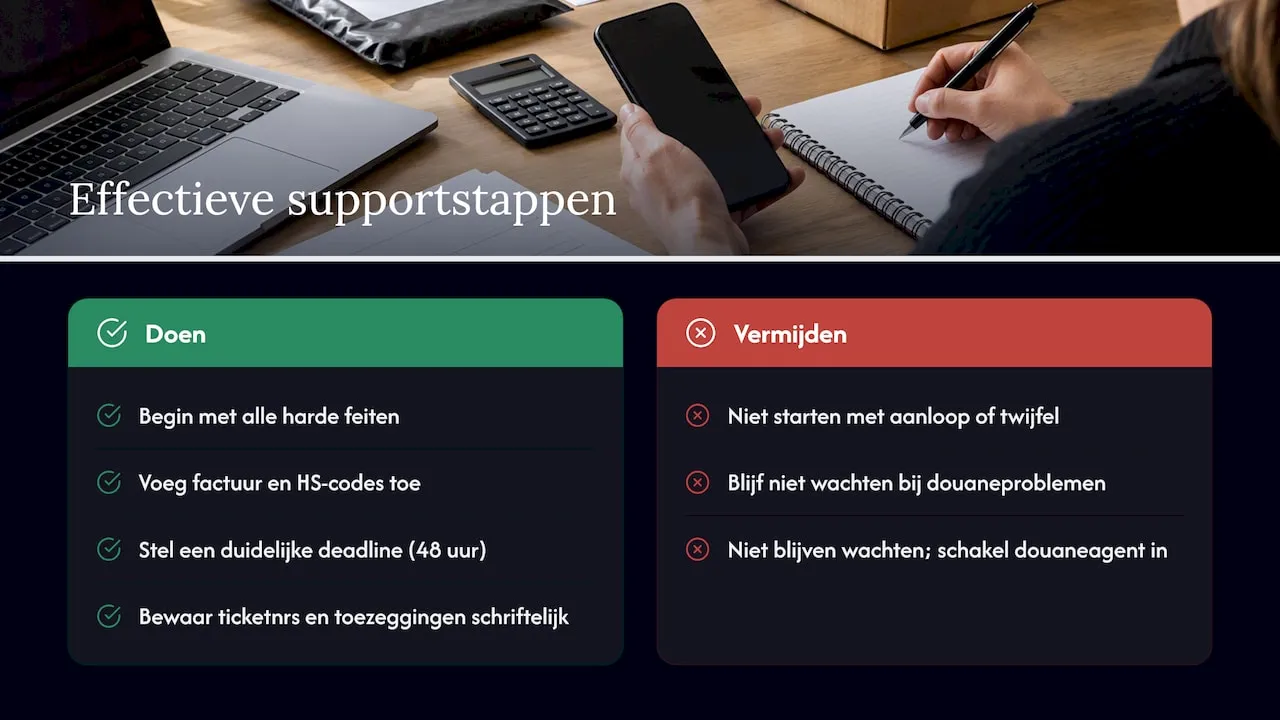
A support request that is complete in one go gets resolved in one go. Start your first message with the key facts: “Shipment number XYZ, sent on [date], held at customs since [date], invoice and HS codes attached.” No preamble, no hesitation—just the core details.
If there’s no response within the agreed timeframe, set a clear deadline in your follow-up: “I expect an update within 48 hours, otherwise I will request escalation to a supervisor.” Keep every ticket number and commitment in writing. If a shipment is stuck due to a customs technicality that customer service can’t resolve—such as an incorrect HS code or missing permit—contact a customs agent directly instead of waiting for a call center.
— Pascal
Can't find your question? Our support team is here for you 24/7 via the help centre.
Do I need an EORI number for business shipments to the UK?
For commercial shipments to the UK, an EORI number is mandatory, both on the EU side and often on the UK side. Without this number, the customs declaration cannot be processed correctly.
What is the fastest way to reach customer service for a UK shipment?
Call for urgent issues, such as a shipment held at customs, and use email or a ticket for less urgent inquiries. Always have your shipment number and customs documents ready so the agent can act immediately.
What information does customer service typically request for a UK shipment?
Your shipment number, the commercial invoice with value and any HS codes, and for business shipments, your EORI number. Photos of the label and packaging are also helpful in case of damage or a lost parcel.
Who pays the import VAT and customs fees for a shipment from the UK?
This depends on the agreed delivery terms and whether the seller uses IOSS. Without IOSS, the courier usually collects the import VAT and any clearance fees upon delivery from the recipient.
What is the new EU levy for shipments from the UK in 2026?
From 1 July 2026, the EU will apply a fixed levy of three euros per item category for low-value imports from third countries like the United Kingdom. The levy applies per category of goods in the shipment, not per parcel.
Get a grip on your parcel shipping
Compare carriers, choose the best price and keep track of your international shipments. You can calculate and book without an account.
