
Managing international shipping orders presents daily choices and challenges for e-commerce stores. To succeed, you must not only control costs but also provide a reliable and efficient process for your customers. With the right shipping platform, you can easily compare multiple carriers, automate your workflow, and maintain full control over every aspect of your global shipments.

Brief Summary
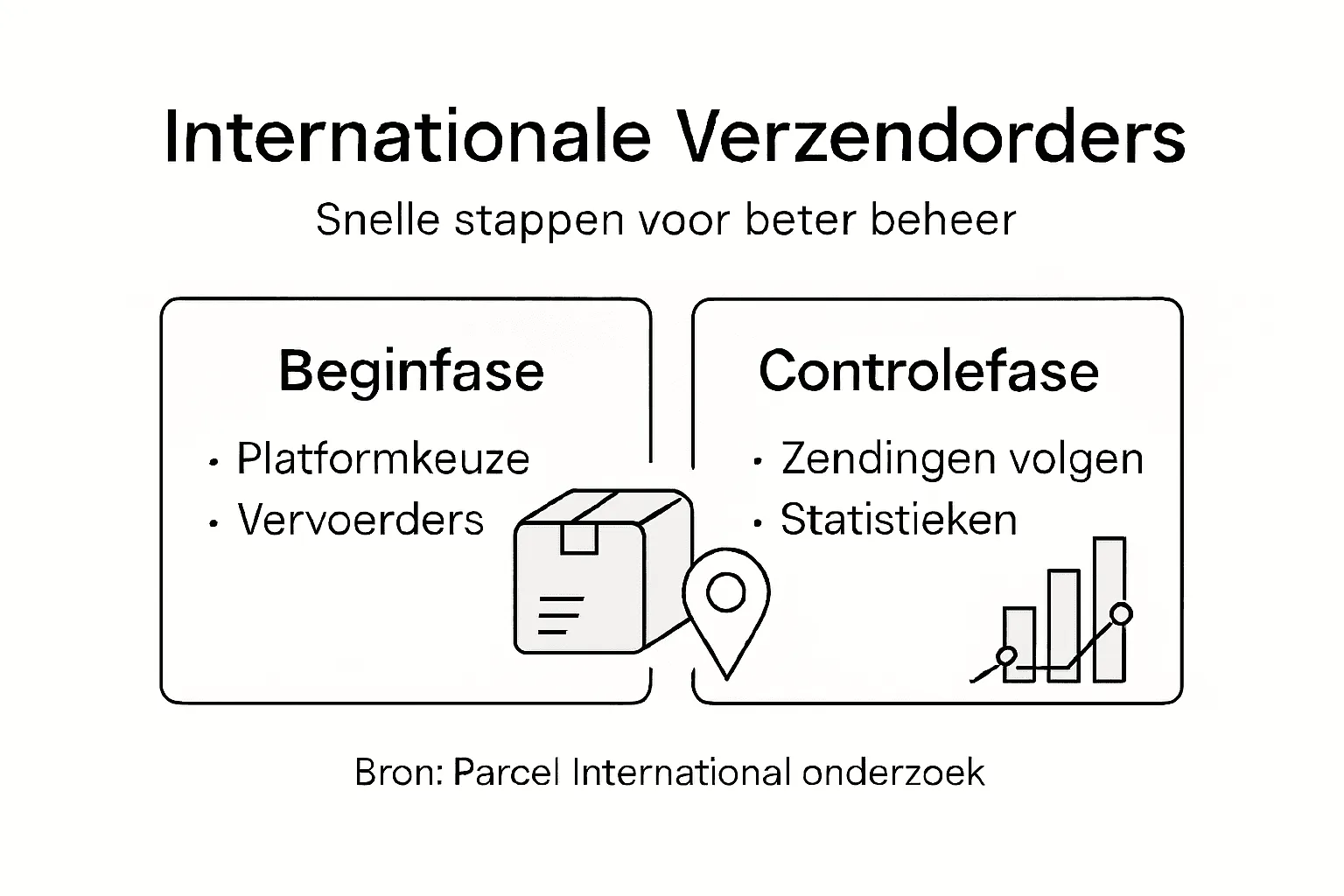
- 1. Choose a Suitable Shipping PlatformSelect a platform specifically designed for e-commerce to streamline your order processes.
- 2. Compare International CarriersCarefully compare carriers based on rates, delivery times, and reliability.
- 3. Automate Shipping Label CreationEnsure your system automatically generates shipping labels, including all required information.
- 4. Track Shipments AccuratelyUse real-time tracking to manage status updates and inform customers promptly.
- 5. Evaluate and Optimize ProcessesConduct regular analyses to identify inefficiencies and develop improvement strategies.
Step 1: Set Up a Shipping Platform for Order Management
When managing shipping orders for international e-commerce stores, selecting and setting up the right shipping platform is crucial. A robust platform helps streamline order processes and operate efficiently.
Start by choosing a platform specifically developed for e-commerce logistics. Digital logistics processes can be automated through platforms offering API integrations for seamless connectivity. Look for systems that combine multiple functions such as order management, label creation, and tracking.
During setup, ensure all necessary integrations are configured. Connect the platform to your e-commerce store, payment systems, and preferred carriers. Make sure you can manage all shipping options and that the system supports international shipping rules.
__Pro tip:__ Thoroughly test your shipping platform with sample orders before full implementation to identify any technical issues early.
Step 2: Select and Compare International Carriers
When selecting international carriers for your e-commerce store, it’s crucial to conduct a careful comparison that aligns with your business goals. The objective is to find a carrier that best fits your shipping needs and international strategy.
Begin by gathering data on various carriers. Focus on specific criteria such as shipping speed, rates, coverage area, tracking capabilities, and reliability.
Analyze each carrier’s performance by comparing their service levels. Consider aspects like delivery times, insurance options, customs handling, and availability of international routes. Request quotes and compare not only costs but also the quality of service.
Pro tip: Use a spreadsheet to systematically compare carrier options and assign scores to different performance indicators.
Below is a comparison of key criteria when selecting international carriers:
Criteria | Importance for E-Commerce Stores | Potential Consequences of Poor Choice |
|---|---|---|
Shipping Speed | Fast delivery increases customer satisfaction | Slow delivery leads to complaints and cancellations |
Tracking Capabilities | Real-time visibility reduces uncertainty | Lack of tracking causes confusion |
International Coverage | Delivers to more destinations | Limited coverage restricts market reach |
Customer Service | Efficient issue resolution | Poor service increases return rates |
Customs Handling | Fast processing at import | Prolonged customs processes cause delays |
Step 3: Create Shipping Labels and Link Orders
Creating and linking shipping labels is a critical part of efficiently managing international e-commerce orders. This process ensures accurate tracking and smooth shipping handling.
Ensure your shipping platform can automatically generate labels containing all necessary information, such as shipping address, package weight, dimensions, and international shipping codes.
When linking orders to shipping labels, accuracy is paramount. Always verify that the correct shipping details are associated with the specific order to prevent delays and potential shipping errors. Use your shipping platform to directly link tracking information to the order in your e-commerce system.
__Pro tip:__ Implement a double-check procedure where you manually verify a sample of shipping labels before final processing.

Step 4: Track Shipments and Manage Status Updates
Effectively tracking and managing status updates is crucial for transparent international shipping processes. By closely monitoring shipment progress, you can prevent delays and communicate reliably with your customers.
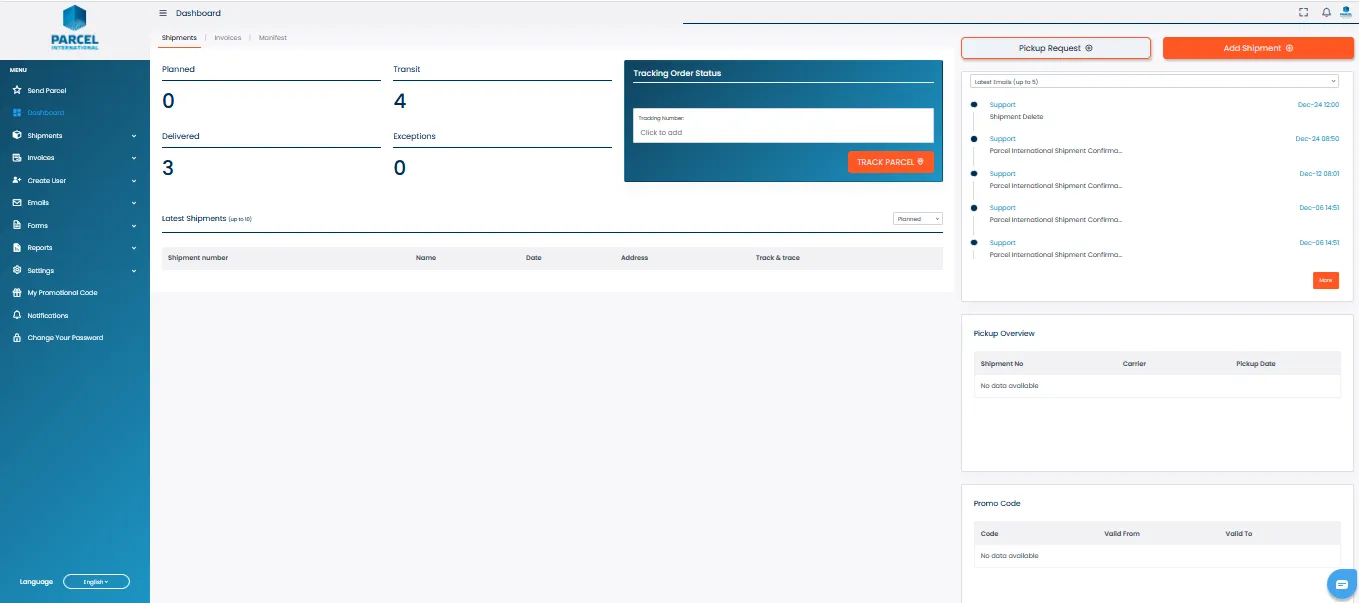
Choose a shipping platform that supports real-time tracking and provides detailed status updates. Ensure your customers receive automatic notifications about key milestones such as shipment dispatch, customs clearance, and expected delivery date.
For international shipments, it’s essential to use multiple tracking systems. Regularly check the status via your shipping platform and the carrier’s website. Pay special attention to potential delays in customs processes or international transit points. Document discrepancies and proactively contact the carrier if irregularities arise.
__Pro tip:__ Establish a daily routine to review all pending shipments and quickly identify potential delays.
Step 5: Review Deliveries and Optimize Processes
Continuously monitoring and optimizing your shipping processes is essential for the success of international e-commerce stores. By systematically analyzing your deliveries, you can improve efficiency and reduce costs.
Supply chain optimization techniques help e-commerce stores continuously improve their logistics processes. Collect detailed data on shipping times, transportation costs, and customer feedback. Identify patterns and bottlenecks in your shipping chain and develop targeted improvement strategies.
Regularly analyze your shipping statistics to uncover inefficiencies. Pay attention to aspects such as average delivery times, percentage of damaged packages, and shipping costs per region. Consider negotiating with carriers for better rates or adjusting your packaging processes to lower transportation costs.
Pro tip: Implement a monthly evaluation process where you analyze shipping data in detail and define concrete improvement actions.
Here’s an overview of common improvement points when optimizing international shipping processes:
Improvement Point | Brief Explanation | Business Benefit |
|---|---|---|
Data Analysis | Regularly compare performance | Identify bottlenecks faster |
Label Automation | Automatically generate and link | More efficient order management |
Adjust Shipping Strategy | Reevaluate routes and carriers | Long-term cost savings |
Leverage Customer Feedback | Collect delivery feedback | Continuously improve customer satisfaction |
Simplify and streamline your international shipping management
Managing shipping orders for international e-commerce stores introduces complexities such as choosing the right carrier, creating accurate labels, and tracking shipments in real-time. Many entrepreneurs experience frustrations when comparing shipping options, preventing delays in customs clearance, and efficiently linking orders to shipping labels. With these challenges in mind, it’s essential to choose a solution that streamlines these processes and ensures transparency and reliability.
At Parcel International we understand how important it is to manage international shipments quickly and reliably. Our platform enables you to easily compare shipping options, select the most suitable carrier, and ship to over 220 countries and regions without hidden costs. Thanks to our extensive experience since 2007, we provide an efficient, technology-driven approach tailored to your unique shipping needs.
Discover how you can optimize your international shipping process with our user-friendly solution. Visit Parcel International now and take the first step toward seamless order management. Ready to simplify your shipments and boost customer satisfaction? Start today and experience the convenience of a professionally managed logistics process.
manage-shipping-orders
Can't find your question? Our support team is here for you 24/7 via the help centre.
What is a shipping platform?
Shipping platforms are digital solutions that help e-commerce businesses streamline their international shipping processes. They act as hubs connecting online stores with logistics networks for efficient order management.
What are the benefits of using a shipping platform for my e-commerce business?
A shipping platform saves you time with automatic integration into your webshop, reduces shipping costs through rate comparison, and enhances customer service with automated tracking and returns management.
How do shipping platforms assist with international shipping?
Logistics platforms provide solutions for cross-border shipping through accurate product classification, complete customs documentation, and insights into local regulations. These features minimize errors in international shipping.
How does integrating a shipping platform with my online store work?
A seamless shipping platform integrates with your online store by automatically transferring order data, eliminating the need for manual entry.
How do I set up a shipping platform for my international online store?
Start by selecting a platform suitable for e-commerce logistics. Follow the installation instructions to connect your webshop, payment systems, and carriers to the platform.
What should I consider when choosing a shipping platform?
Consider the pricing structure, the quality of integration with your systems, the features offered such as automation and returns management, and the transparency of costs.
What are the costs associated with shipping platforms?
The cost structure of shipping platforms can vary and typically includes monthly subscription fees, per-shipment costs, integration fees, and additional service charges. It is important to carefully analyze all cost components.
How can I automate shipping processes for my e-commerce business?
With the right software you can automate order processing and shipping. Look for solutions that offer real-time tracking, automatic processing and integration with your current e-commerce platform.
What is a shipping API?
A shipping API is a software solution that helps businesses automate and optimise their shipping processes, such as creating shipping labels and calculating shipping costs.
When should I use a shipping API?
Use a shipping API if you want shipping costs calculated automatically, want to integrate real-time status updates, or ship large volumes of parcels and want to work more efficiently.
What are the main features of a shipping API?
Important features of a shipping API are data compression, security protocols such as OAuth 2.0, support for several data formats and real-time synchronisation of shipment statuses.
How do I create shipping labels for orders in my webshop?
Use a shipping platform that automatically generates shipping labels with all required information. Always verify the accuracy of the data before finalizing the labels.
What types of shipping software are there for small businesses?
There are several types, including basic solutions for start-ups, mid-range platforms with advanced features and enterprise solutions for larger organisations that need full logistics integration.
How do I choose the right carrier for my e-commerce shipment?
Select a carrier based on rates, delivery times, and additional services such as tracking and insurance. Compare specific shipping services and use online comparison tools to find the most cost-effective option.
What are the benefits of optimizing packaging for shipping?
Optimized packaging helps reduce shipping costs and meets sustainability demands. Choose packaging that fits your product size precisely and use renewable materials to minimize costs and environmental impact.
What should I know about customs and import fees for international shipping?
Ensure your customers are well-informed about potential customs and import duties before they make a purchase. Calculate these costs based on the total product value, including shipping fees, and communicate them clearly in your product description.
How can I benefit from bulk shipping?
Bulk shipping offers discounts that significantly reduce your shipping costs. Plan and bundle shipments with similar destinations to save on shipping expenses by sending larger volumes at once.
What are the key components of an effective returns process?
A good returns process includes clear terms, a user-friendly returns portal, and fast credit processing. Implement these elements to enhance customer satisfaction and encourage repeat purchases.
What does shipping software do?
Shipping software automates and optimizes the international shipping process by offering features such as automatic label generation, real-time tracking, and integration with various carriers.
Why is shipping software important for e-commerce businesses?
Shipping software is essential for e-commerce businesses because it reduces administrative burdens, increases efficiency, and helps meet international shipping requirements.
How can logistics automation lead to cost savings?
Logistics automation lowers operational costs by reducing manual processes, enabling faster order processing, and increasing efficiency, resulting in a better customer experience.
How does an OMS simplify international orders?
An Order Management System (OMS) automates complex tasks such as generating customs documents, calculating import duties, and selecting the right carrier per destination. It prevents errors by applying standardized workflows and validation rules to every international order.
Is ERP integration mandatory for an OMS?
Integration is not strictly mandatory but highly recommended. Without a connection, you must manually synchronize data between systems, which is time-consuming and prone to errors. Most modern OMS platforms offer standard API integrations with popular ERP systems.
Does a good OMS shorten my delivery times?
Yes, an effective Order Management System (OMS) shortens delivery times by enabling faster order processing and smarter fulfillment decisions. Dynamic routing directs orders to the nearest inventory location, and automated processes eliminate wait times between order steps.
How does returns handling work via OMS for international shipments?
A good OMS automatically generates international return labels with correct customs information and routes returned items to the appropriate location. The system records the return reason, initiates refunds according to your policy, and updates inventory levels once items are inspected.
What are the costs of an Order Management System?
Costs vary widely depending on functionality and order volume, ranging from tens to thousands of dollars per month. Calculate your ROI by factoring in time savings and error reduction.
What is an optimized shipping planning workflow?
An optimized shipping planning workflow involves setting up logistics processes so that carrier selection, label generation, and order status updates occur automatically. The goal is to reduce manual work, minimize errors, and speed up deliveries.
Which systems are needed for an automated shipping workflow?
The foundation includes a WMS for warehouse management, a TMS for transport planning, and a multi-carrier platform for rate comparison. API integrations between these systems ensure automatic data exchange.
How do I measure if my shipping workflow is performing well?
Measure weekly KPIs such as shipping time, error rates, and return rates. Data-driven improvements enhance your webshop's efficiency and customer satisfaction over time.
Why is returns logistics part of the shipping workflow?
Incorporating returns logistics into shipping planning increases customer satisfaction and simplifies operational handling. An efficient returns process leads to more repeat purchases and lower processing costs.
What is order processing?
Order processing is the entire process from order receipt to delivery to the customer, including inventory checks, picking, packing, shipping, and handling returns. It is the operational core of every online store.
How does order processing impact customer satisfaction?
Research based on 385 consumers shows that customer satisfaction has six dimensions: convenience, enjoyment, delivery, track & trace, communication, and product accuracy. A single error in any dimension can result in a negative review.
Why is customs classification so important in international shipping?
Errors in customs classification and product data often lead to delays and additional costs. Correct classification upfront is the only way to prevent this.
What does automation do for order processing?
Automation takes over repetitive tasks such as inventory updates, reordering, and order confirmations. This reduces errors and makes the process scalable for higher order volumes.
How can you shorten delivery times for international orders?
Choose carriers with local expertise in your target market, ensure correct customs documentation for shipments, and use real-time track & trace. More tips can be found in the article on reducing-delivery-times for international shipments.
How long does it take for automation to work stably?
Test new workflows for at least 4 weeks before scaling up. This period provides enough data to identify errors and adjust the system.
What is the cost of automation for a small webshop?
No-code tools like n8n or Make start at around €50 per month, making shipping workflow automation financially feasible for small e-commerce businesses.
Why is master data so important for international shipping?
Accurate master data, such as HS codes and address details, is mandatory for automatic processing by customs and carriers. Missing or incorrect data directly leads to delays.
What does AI add compared to standard automation?
AI introduces predictive tasks such as pick optimization and ETA calculation. Standard automation reacts to fixed rules, while AI recognizes patterns and proactively adjusts processes based on historical data.
Can I always pay by credit card on a shipping platform?
Yes, nearly every shipping platform accepts common credit cards like Visa and Mastercard alongside other payment methods. You typically complete the payment with an additional verification step via your banking app, as required under the European PSD2 directive.
Is a shipping platform allowed to charge extra fees for credit card use?
No, within the EU, sellers generally cannot impose a surcharge for paying with a debit or credit card, as confirmed by Your Europe. If you see an extra charge, it usually comes from the exchange rate applied by your card issuer.
Why do I need to confirm my payment again?
This step is called Strong Customer Authentication and is mandatory under PSD2 to reduce fraud in online card payments. Reporting by the Bundesbank shows that this verification measurably lowers fraud rates.
What additional costs may apply to my shipment from 2026?
Since July 1, 2026, a fixed import duty of €3 applies to shipments under €150, now that the previous exemption has been abolished, according to the European Commission. From November 1, 2026, an additional handling fee may apply, the amount of which is yet to be determined by the Commission.
Who is responsible for VAT on an international order?
Often, the platform or non-EU seller collects VAT upfront via the IOSS system, so you pay nothing extra upon delivery. If this is not done, a border charge may still apply, as outlined in the rules for distance selling of imported goods.
What is the cost of shipping via Parcel International?
The price depends on the chosen shipping method, such as express, sea, air, or road freight, and is calculated per shipment. Current rates can be found via the rate comparison on the website.
Get a grip on your parcel shipping
Compare carriers, choose the best price and keep track of your international shipments. You can calculate and book without an account.
