
A commercial invoice is the key document customs uses to determine the value, classification, and origin of your goods. Without a correct commercial invoice, your shipment will be held at the border simply because customs officials have no basis to calculate import duties or release the goods.
The six fields that guide every shipment through customs and carriers: Seller (legal name + address + EORI/VAT number), Buyer (name + address), Invoice number and date, Detailed goods description, HS code(s) and Total invoice value including currency.

The Dutch Tax and Customs Administration and Chamber of Commerce are the primary authorities for invoice requirements and export documents in the Netherlands. Parcel International provides additional templates and practical support for international shipments as a logistics platform.
Key Insights
A commercial invoice is the only document customs uses to calculate import duties, classify goods, and release a shipment. Without a correct invoice, your shipment will be stopped.
Point | Details |
|---|---|
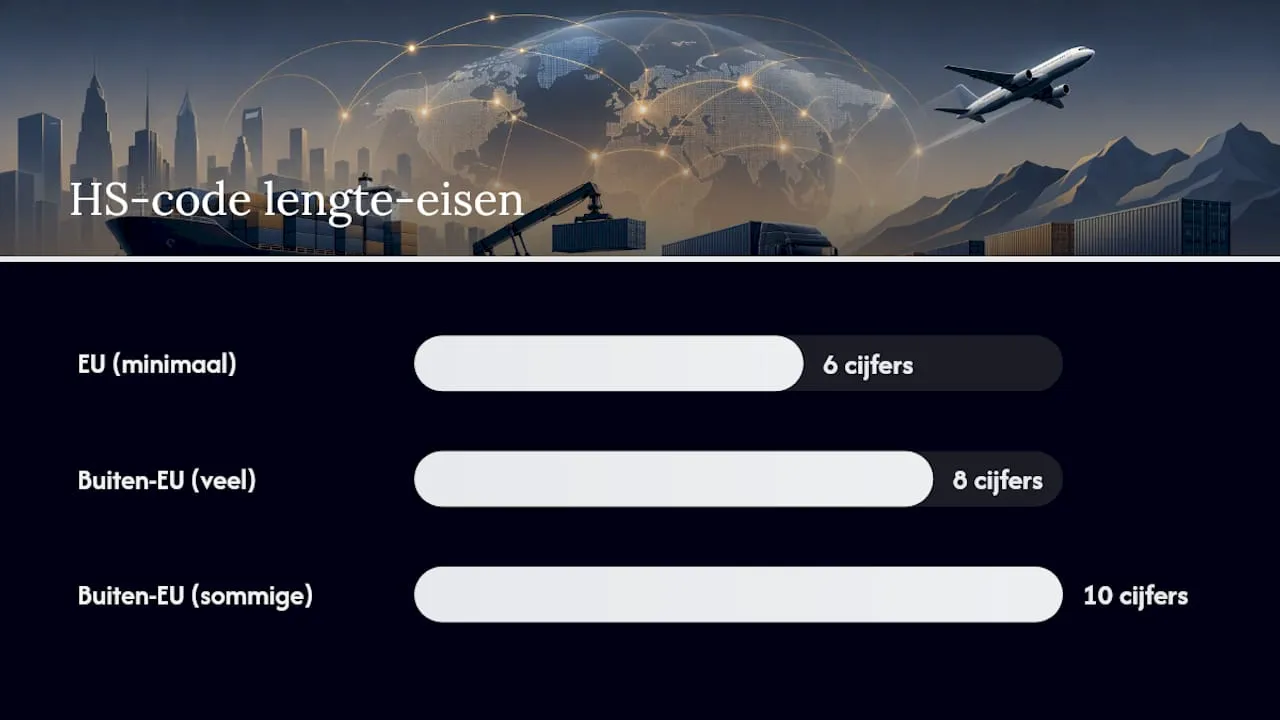
HS code is the foundation | Use at least 6 digits; many countries require 8 or 10. An error here is the costliest mistake in commercial invoices. |
Invoice date before shipping date | The invoice date must never be later than the date on the waybill. A later date leads to inspection due to suspicion of undervaluation. |
Always state currency and incoterm | Note the ISO currency code and the incoterm with the named place. Without this information, the invoice is incomplete for customs and carriers. |
Consistency with all attachments | Weights, quantities, and descriptions on the commercial invoice must exactly match the packing list and waybill. |
Seven-year retention obligation | Keep all commercial invoices and attachments for at least seven years in accordance with Dutch legal retention requirements. |
Why is a commercial invoice essential for customs and clearance?
Customs uses the commercial invoice for three key decisions: calculating import duties and VAT, classifying goods via the HS code, and screening for prohibited or licensed products. Without a fully completed invoice, customs has no basis to release a shipment.
The consequences of errors are immediately noticeable:
- Delay: a shipment can be held in customs for days while additional information is requested.
- Physical inspection: inconsistencies between the invoice and packing list or waybill automatically lead to a more thorough inspection.
- Additional assessments: an incorrect value or wrong HS code results in recalculated duties, sometimes with a penalty.
- Return shipment: in cases of serious errors or prohibited goods, the shipment is returned at the sender’s expense.
Carriers like FedEx and UPS also review the commercial invoice internally before accepting a shipment for international transport. They compare the invoice details with the packing list and waybill. Any discrepancy, no matter how small, can stop a shipment before departure.
Parcel International’s practical customs tips show that consistency across all accompanying documents is the most effective way to prevent delays.
What fields must be included on a commercial invoice?
A complete commercial invoice contains more than just a name and price. Below are all mandatory and practically necessary fields, based on the requirements of the Dutch Tax and Customs Administration and the Chamber of Commerce.
Seller and buyer
- Legal name, full address, and contact details of the seller
- Seller’s EORI number and VAT number (EORI required for exports outside the EU; VAT number for intra-EU B2B deliveries)
- Name, full address, and, if applicable, VAT number of the buyer
- Name and address of the consignee if different from the buyer
Invoice details
- Unique invoice number (use a logical numbering system, never duplicates)
- Invoice date (must be the same as or earlier than the date on the waybill)
- Delivery or export date if different from the invoice date
Goods description per line item
- Clear description: material, function, brand, and model where relevant
- Number of units and packaging units
- Net and gross weight per item
Classification and origin
- HS code per line item: at least 6 digits internationally, though many countries require 8 or 10 digits. An error in the HS code is the costliest mistake in commercial invoices.
- Country of origin per item
- Preferential origin declaration or EUR.1 form where applicable
Financial details
- Price per unit and total price per line item
- Total invoice value
- Currency as ISO code (EUR, USD, GBP)
- Incoterm and named place (e.g., CIF Rotterdam, DAP Berlin)
- Payment terms (e.g., net 30 days, prepayment)
Other mandatory elements
- Export license number or reference to exemption where applicable
- Signature and declaration of the seller (name, position, date)
Pro tip: Ensure the description, weight, and quantity on the commercial invoice exactly match the packing list and waybill. Customs officials routinely compare these documents. A single discrepancy is enough to trigger an inspection.
How to complete a commercial invoice step by step
Follow this order when filling it out. This ensures you don’t miss any fields and maintain the logical structure expected by customs and carriers.
- Fill in the seller and buyer details. Start with the legal name, full address, EORI number, and VAT number of your company. Then, enter the full details of the buyer. Verify that the name exactly matches the waybill.
- Set the invoice number and date. Use a unique numbering system. The invoice date must never be later than the date on the waybill or Bill of Lading. A later-dated invoice raises suspicion of undervaluation and may lead to a physical inspection.
- Describe the goods per line item. Provide a clear description for each item: what it is, what it is made of, and its purpose. 'Electronics' is insufficient. 'Wireless Bluetooth headphones, plastic housing, model XZ-200' is correct.
- Look up the correct HS code. Use the EU TARIC database or the Dutch Tax and Customs Administration's CN nomenclature. Record at least 6 digits, but verify how many the destination country requires. Many non-EU countries require 8 or 10 digits.
- Specify the country of origin. This is the country where the goods were produced or sufficiently processed, not the country of shipment. For preferential origin, include an EUR.1 form or invoice declaration.
- Enter the price, currency, and total value. Record the price per unit and the total price per item. Always use an ISO currency code. Specify the incoterm and the named place.
- Add incoterms and payment terms. Select the correct incoterm (e.g., EXW, FOB, CIF, DAP) and include the named location. This determines who is responsible for costs and risk at each stage.
- Sign the invoice. Add the name, position, and signature of the authorized person, along with a statement confirming the accuracy of the information.
- Attach supporting documents and verify consistency. Compare the invoice with the packing list and waybill. Every number, description, and weight must match.
Below is a concise example table showing how a completed line item should look:
Field | Example Value |
|---|---|
Seller | Company BV, Main Street 1, Amsterdam, NL, EORI: NL123456789 |
Buyer | Firma GmbH, Musterstraße 5, Berlin, DE |
Invoice Number | INV-2026-0042 |
Invoice Date | March 2026 |
Description | Wireless Bluetooth headphones, plastic, model XZ-200 |
HS Code | 8518 |
Country of Origin | China |
Quantity | units |
Net Weight | kg |
Price per Unit | € |
Total Value | EUR |
Incoterm | DAP Berlin |
Payment Terms | Net 30 days |
Parcel International provides templates and how-to guides for correctly completing commercial invoices and other customs documents.
Commercial invoice or proforma invoice: when to use which?
The key difference is legal in nature. A commercial invoice is the definitive proof of a completed sales transaction. Customs uses it as the basis for clearance and tariff calculation. A proforma invoice is a price quotation or preliminary invoice without legal finality.
When to use a proforma invoice?
- For samples or exhibition goods without commercial value
- For temporary exports under an ATA carnet
- As a price indication for the buyer before final order confirmation
- For internal transfers within a company
When is a commercial invoice mandatory?
- For every commercial sale to a country outside the EU
- For customs clearance of goods with a declared value
- When the carrier or customs requests a final invoice
The risk of choosing incorrectly is tangible: submitting a proforma invoice for an actual commercial shipment leads to rejection by customs or delays until the correct invoice is provided. Carriers like FedEx and UPS do not accept a proforma as a substitute for a commercial invoice for shipments requiring customs clearance.
Which attachments should you include, and how does electronic submission work?
The commercial invoice rarely stands alone. Customs and carriers expect a set of consistent documents that validate each other.
Standard attachments for international shipments:
- Packing list: detailed overview of contents, weight, and packaging units per item
- Waybill or Bill of Lading: transport document identifying the shipment
- Certificate of Origin (CO) or EUR.1 form: required for preferential tariffs or when the destination country demands it
- Export license: mandatory for controlled goods (dual-use, weapons, certain chemicals)
- ATA carnet: for temporary export of goods that will return, such as trade show materials or professional equipment
Electronic submission via carrier and customs portals:
Both FedEx and UPS offer electronic submission through their own portals. FedEx uses Electronic Trade Documents (ETD), allowing you to send the invoice and packing list digitally. UPS has a similar system via UPS Paperless. Both systems process PDF documents, but some customs portals require structured EDI data. Always verify the specifications of the destination country.
ERP and TMS systems like Dynamics 365 Supply Chain Management use commercial invoices as the source for automated e-filing. Ensure your invoice fields match the field specifications of your carrier or customs portal to avoid failed automated processing.
Pro tip: Name your files clearly with the invoice number and date, such as 'INV-2026-0042_commercial-invoice.pdf'. Always keep a copy of the version you submitted. In case of corrections or disputes with customs, you need to know exactly which document was processed.
Learn more about the full set of logistics documents for international shipments at Parcel International.
Intra-EU deliveries vs. exports outside the EU: what are the differences?
Whether a shipment stays within the EU or crosses the border to a third country determines which rules and documents apply. The Dutch government publishes the current list of EU member states to verify if a destination is intra-EU or an export.
Intra-EU deliveries:
- No import duties, but you need proof of transport to justify VAT exemption
- Include the buyer's VAT number on the invoice; without a valid VAT number, the VAT exemption does not apply
- Note 'intra-community supply' on the invoice
- VAT reverse charge applies when the buyer is a VAT-registered business in another EU member state
- The Dutch Tax and Customs Administration sets mandatory invoice details, including when additional information such as the VAT number is required
Exports outside the EU:
- Commercial invoice mandatory for clearance in the destination country
- Customs value on the invoice is the basis for import duties and VAT in the destination country
- Country of origin partly determines which tariff applies
- A EUR.1 form or invoice declaration can activate preferential rates when a trade agreement applies
- Check HS codes and tariffs via the EU TARIC database for the specific destination country
Consult the Tax and Customs Administration and the Chamber of Commerce (KVK) for specific product categories, as some goods are subject to additional regulations or export restrictions.
Common mistakes that delay or increase the cost of your shipment
Most customs issues can be traced back to a handful of recurring errors. Recognize them, and you’ll save yourself significant costs and frustration.
- Vague goods description: “parts,” “clothing,” or “electronics” is insufficient. Customs needs to know exactly what it is, what it’s made of, and its purpose.
- Incorrect HS code: the most costly mistake. A wrong code leads to incorrect tariffs, additional charges, and potential fines. Always use the official TARIC database or ask a customs broker for verification.
- Missing or incorrect currency: always note the ISO currency code. “€” without a code is insufficient in automated systems.
- Invoice date after shipment date: an invoice dated later than the waybill raises suspicion of undervaluation and leads to physical inspection.
- Inconsistency with packing list or waybill: mismatched weights, quantities, or descriptions are a direct trigger for inspection.
- Missing signature or declaration: without a signature, the invoice is legally incomplete.
- Incorrect or missing Incoterm: without an Incoterm, it’s unclear who is responsible for costs and risk, which can lead to disputes in case of damage or loss.
How to correct an already issued commercial invoice? Send a credit note that fully cancels the original invoice, followed by a new, correct invoice with a new invoice number. Reference the original invoice number in both documents. Notify the carrier and customs immediately if the shipment is already in transit.
Pro tip: Review HS codes at least annually. The HS nomenclature is updated every year, and a code that was correct last year may have changed or been discontinued this year.
Keep all commercial invoices and attachments for at least seven years. This is the legal retention period for administrative documents in the Netherlands. Store documents in a structured folder system with the invoice number and date, so you can quickly retrieve what you submitted in case of a customs inspection or dispute.
What I recommend to every exporter before you ship
Most customs delays aren’t bad luck. They result from one of two things: a vague description or an incorrect HS code. Everything else—the missing signature, the wrong currency, the inconsistent packing list—are mistakes you can prevent in five minutes with a simple checklist.
What I always advise exporters: start with the HS code and the customs value. Those two determine how much import duty the buyer pays and whether the shipment will be released at all. A mistake there isn’t just an administrative issue; it’s a financial risk for both parties.
Parcel International offers templates and step-by-step guides for correctly completing commercial invoices and other customs documents, so you don’t have to start from scratch.
Sources
- Mandatory details on your invoice | Tax and Customs Administration
- Exporting with the correct documents | Chamber of Commerce (KVK)
- Requirements for commercial invoices for international shipping
- Commercial invoices – Supply Chain Management | Dynamics 365
- Dutch Government
This article provides general information and does not replace the advice of a qualified financial advisor. Consult a qualified financial professional about your specific situation before acting on this content.
Get a grip on your parcel shipping
Compare carriers, choose the best price and keep track of your international shipments. You can calculate and book without an account.
