
When shipping internationally, things can always go wrong. Even when transporting valuable goods, unexpected risks can never be entirely ruled out. A good insurance policy provides security against loss, theft, or damage and protects your business from financial setbacks. This article explains which shipping insurance policies are indispensable and how to smartly manage risks and costs.
Key Points
Point | Details |
|---|---|
Insurance is essential | For international shipments, insurance protects against risks such as damage, loss, or theft of goods. |
Types of insurance | Cargo, liability, and all-risk insurance are crucial, depending on the value and vulnerability of the goods. |
Documentation is key | Keep detailed records of shipments to facilitate claims and increase the likelihood of full compensation. |
Legal obligations and compliance | Compliance with international regulations and customs requirements is crucial to avoid delays or penalties. |
What are the key shipping insurance policies?
For international shipping, insurance is not just an optional extra—it is an essential part of reliable logistics. Insurance coverage protects both shippers and recipients from unexpected risks such as damage, loss, or theft of goods during transit.
Several types of insurance are crucial for safe shipping:
- Cargo insurance: Covers damage to products during air, sea, or land transport
- Liability insurance: Protects against third-party claims in the event of transport incidents
- All-risk insurance: Provides the most comprehensive coverage for virtually all possible transport risks
When selecting an insurance policy, several critical considerations come into play. The value of your shipment, the vulnerability of the goods, and the transport route determine which insurance coverage is most suitable. Explore our guide to reliable shipping for more detailed insights into selecting the right insurance strategy.
It is advisable to always maintain detailed documentation of shipped goods, including original invoices and detailed descriptions.

This facilitates the claims process and increases the likelihood of full compensation in the event of damage or loss.
Businesses that regularly ship internationally will particularly benefit from an ongoing cargo insurance policy. This type of insurance provides continuous coverage for multiple shipments, offering both cost savings and peace of mind.
Types of transport and shipping insurance
For international shipping, various types of insurance are available, each covering specific risks. Choosing the right insurance depends on the nature of your shipment, the transport method, and your specific business needs.
Here is an overview of the key types of transport and shipping insurance:
Insurance type | Coverage | Ideal application | Key benefit |
|---|---|---|---|
Cargo insurance | Damage during transport | Fragile or high-value goods | Specific coverage per transport mode |
All-risk insurance | All transport risks (very broad) | High-value shipments | Maximum security |
Liability insurance | Third-party legal claims | Carriers | Protection against claims |
Cargo insurance
- Coverage: Protects against physical damage to goods during transport
- Application: Ideal for fragile or high-value products
- Variants: Available for air, sea, rail, and road transport
All-Risk Insurance
- Coverage: Most comprehensive insurance type
- Protection: Virtually all possible transport risks
- Suitable for: High-value or high-uncertainty shipments
Liability Insurance
- Coverage: Protects against third-party legal claims
- Key aspects: Property damage and personal injury
- Target audience: Transport companies and wholesalers
Discover more about international shipping options to find the best insurance solution for your specific situation.
Selecting the right insurance requires careful analysis of your specific transport needs.
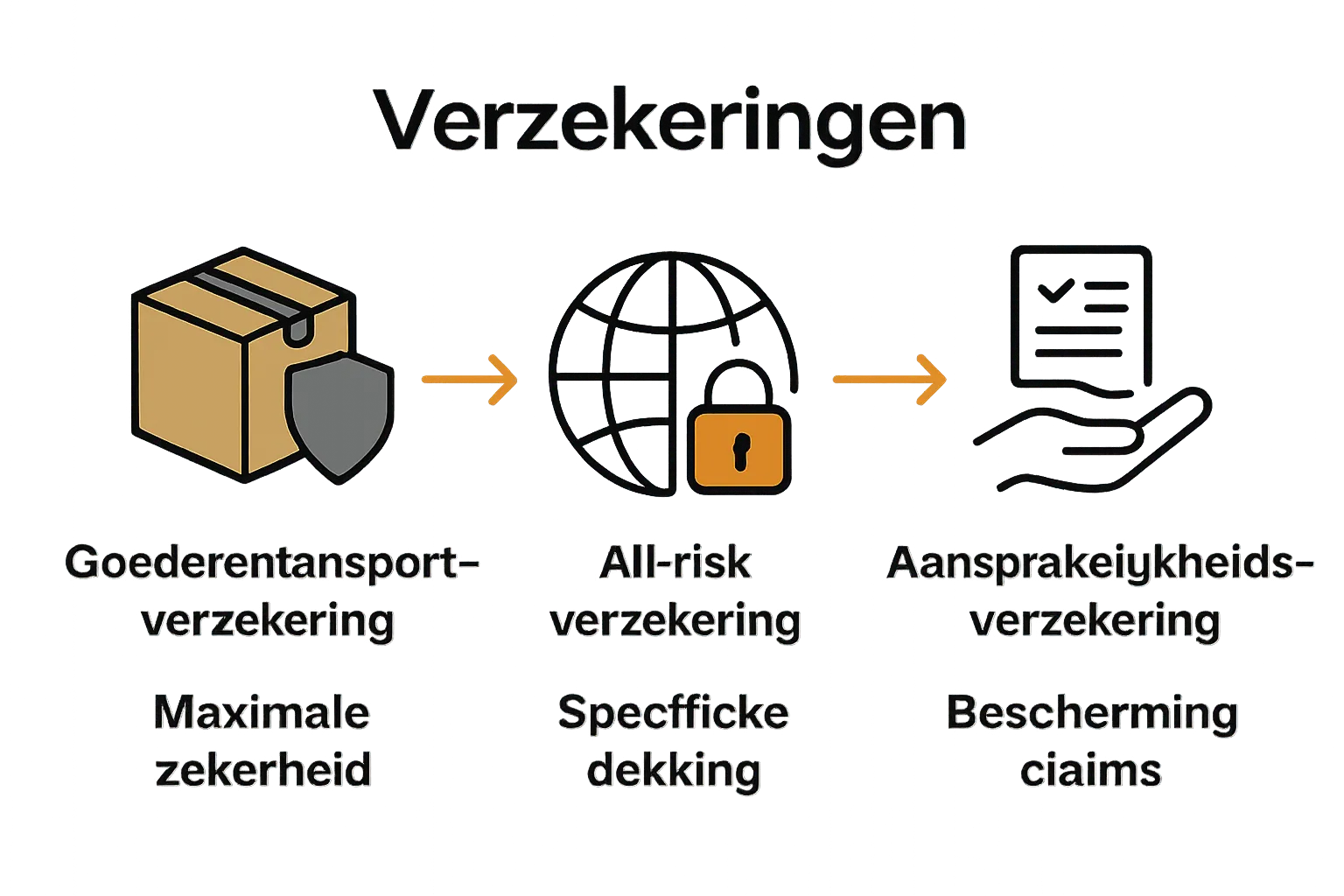
Consider factors such as shipment value, transport route, vulnerability of goods, and potential risks. Professional advice can help determine the most suitable coverage and minimize financial risks.
How does shipping insurance coverage work?
Shipping insurance coverage is a complex process that provides protection against financial risks during international transport. It acts as a safety net, safeguarding shippers from unexpected damage, loss, or theft of goods throughout the entire shipping route.
Insurance coverage process
- Application: Shipper determines the insured value of the shipment
- Assessment: Detailed inventory of goods and their value
- Premium calculation: Establishing the insurance rate based on risks
Claims procedure
- Document damage immediately
- Gather evidence
- Submit a detailed claim to the insurer
- Await assessment and compensation
Explore our guide to reliable shipping for more insights into optimizing your insurance strategy.
Key factors such as transport method, nature of goods, and international regulations influence coverage. Professional freight forwarders often recommend specific insurance types tailored to the unique characteristics of your shipment.
Time and accuracy are critical when filing claims. The faster and more detailed you report damage, the greater the chance of full compensation. Always retain original documents, packaging materials, and photographic evidence of shipped goods.
Legal obligations and international regulations
International shipping involves complex and essential legal obligations for smooth and legally compliant cross-border goods exchange. Shippers must consider various international regulations that govern the transfer of goods across borders.
Key Legal Aspects
- Customs Regulations: Detailed documentation required
- Import Duties: Taxation on international shipments
- Export Restrictions: Specific rules per product category
According to Evofenedex play Incoterms a crucial role in defining international delivery terms. These standardized trade terms precisely determine the legal obligations and responsibilities between buyers and sellers.
Compliance Requirements
- Gather all required export documents
- Check specific country import rules
- Calculate and pay correct customs duties
- Observe legal restrictions
Learn more about customs clearance to better understand complex international shipping regulations.
Failure to comply with international legal obligations can result in significant fines, shipment delays, or even confiscation of goods. Professional freight forwarders possess specialized knowledge to navigate these legal challenges and ensure compliance.
Businesses must stay continuously informed about evolving international trade regulations. Regular training, up-to-date documentation, and collaboration with experienced logistics partners are essential for successful international shipments.
Risks, Costs, and Common Shipping Mistakes
International shipping entails numerous risks and potential financial challenges that require careful preparation and strategic planning. Understanding these complex aspects can help minimize unexpected costs and operational disruptions.
Common Shipping Risks
- Transport Damage: Physical damage during shipping
- Shipment Loss: Complete or partial disappearance
- Delays: Unexpected logistical obstacles
- Customs Issues: Complex documentation and regulations
Financial Risks
- Unexpected additional charges
- Insurance Gaps
- Currency Fluctuations
- Inaccurate Cost Calculations
Discover our tips to prevent package loss to minimize the most common shipping risks.
Common mistakes in international shipping include inaccurate addressing, insufficient packaging, and ignoring specific country import regulations. Each of these errors can lead to significant delays, additional costs, or even complete loss of the shipment.
A proactive approach is crucial. Invest in detailed documentation, choose reliable shipping partners, and ensure comprehensive insurance coverage. Regular employee training and continuous monitoring of shipping processes can effectively reduce significant risks.
Ensure Proper Insurance Coverage for International Shipping
International shipping carries risks such as damage, loss, and legal complications. Protect your shipments with the right insurance, such as cargo or all-risk insurance. This article explains exactly how to mitigate these risks and which insurance best suits your situation.
At Parcel International , we simplify organizing safe and efficient shipments with reliable partners and clear terms. Discover how to compare shipping options without extra costs and with direct access to expert support. For example, check out our guide for reliable shipping to better prepare for your international shipment.

Don’t wait until damage or loss impacts your business. Use our platform today to explore insurance options available per carrier. Start discovering the benefits at Parcel International and gain full control over your international shipments.
Can't find your question? Our support team is here for you 24/7 via the help centre.
What are the main types of shipping insurance?
The main types of shipping insurance are cargo insurance, all-risk insurance and liability insurance. They protect against damage, loss or theft of goods during transport.
How do I determine the best shipping insurance for my shipment?
Assess the value and vulnerability of your products to choose the right insurance. Compare different coverage levels and conditions to find the best option for your specific shipment.
How does the claims procedure for shipping insurance work?
Document the damage immediately, gather evidence and submit a detailed claim to your insurer. This makes the assessment easier and can increase the chance of full compensation.
Why is it important to understand legal obligations and international regulations in shipping?
Understanding legal obligations and international regulations is crucial to avoid fines, delays, or seizure of goods. It also helps you gather the correct documentation and comply with customs and import duty requirements.
Get a grip on your parcel shipping
Compare carriers, choose the best price and keep track of your international shipments. You can calculate and book without an account.

Recommendation
- 7 Tips to Prevent Package Loss for Safe Shipping – Send with Parcel International
- Secure Shipment Explained: Complete Guide – Send with Parcel International
- Safe Packaging Guide for International Shipping – Send with Parcel International
- Shipping Packages Step-by-Step: Send Your Package Efficiently – Send with Parcel International