
Did you know 45% of Dutch consumers do not reorder from online stores with poor tracking and communication? For SME owners and e-commerce vendors, this is an alarming signal. Customer communication in logistics determines not only whether a package arrives but also whether the customer returns. This article covers the key challenges in international shipping, highlights technologies that enable real-time updates, and provides practical steps to improve your customer communication immediately.
Key Insights
Point | Details |
|---|---|
Real-Time Updates Essential | Real-time updates keep customers continuously informed about the status of their shipment. |
Delivery Issues Among Consumers | Approximately sixty percent of Dutch consumers have experienced delivery issues, and nearly half no longer order from the same online store. |
Automation with Personalized Service | Automation combined with personalized service works effectively and increases customer loyalty. |
Multi-Channel Communication | A multi-channel approach using SMS, email, chatbots, and automated portals increases reach and reduces the number of customer inquiries. |
Challenges in Customer Communication for International Logistics
International shipping presents unique communication challenges that SMEs and e-commerce vendors experience daily. The difference between domestic and cross-border logistics lies primarily in complexity: multiple carriers, customs procedures, longer delivery times, and different time zones make it harder to keep customers accurately informed.
Research shows that 60% of Dutch consumers have recently experienced delivery issues, and nearly half of them choose not to order from the same online store again. These figures underscore how crucial good communication is for customer retention. When a package is en route abroad, customers expect regular updates on its status, especially in cases of delays or unexpected customs inspections.
The biggest communication issues in practice are:
- Lack of real-time tracking information, causing customer uncertainty
- Unclear communication about customs costs and expected delivery times
- Language barriers in international customer service
- Delayed responses to questions via email or phone
- Inconsistent information across different communication channels
Expectation management plays a key role in customer satisfaction. Customers accept longer delivery times for international shipments, but only if they are clearly informed in advance. A study shows that transparency about potential delays increases trust, even when the actual delivery time is longer than desired.
“Customers forgive logistics mistakes, but not the lack of communication about them. Proactively informing about issues prevents escalation and maintains customer loyalty.”
For SMEs that want to optimize international e-commerce logistics it is essential to invest in systems that enable automatic updates. Without this infrastructure, manual communication remains time-consuming and error-prone, directly impacting the customer experience.
Technologies and Tools for Real-Time Customer Updates
Modern technology makes it possible to automatically and in real-time inform customers about their shipments without manual intervention. Effective customer communication includes real-time updates via SMS, email, chatbots, and automated tracking portals that are accessible 24/7. This multi-channel approach ensures customers are reached through their preferred channel.
Key Communication Channels and Their Benefits:
Communication Channel | Benefits | Best Used For |
|---|---|---|
Detailed information, cost-effective, high open rate | Order confirmations, shipping notifications, invoices | |
SMS | Direct attention, high read rate (98%), mobile reach | Urgent updates, delivery notifications, delays |
Chatbots | 24/7 availability, instant responses, scalability | Frequently asked questions, tracking status, basic support |
Customer Portal | Self-service, full order history, tracking | Detailed tracking, documentation, returns |
Push Notifications | Real-time alerts, high engagement via app | Status updates, delivery notifications, required actions |
Integration with customer service and shipping software significantly simplifies this multi-channel communication. These systems connect directly to your online store and carriers, automatically sending status updates to customers at critical moments: order confirmation, shipping, in transit, delivery, and any issues.
Pro tip: Combine automated tracking updates with personal follow-up for high-value orders or when customers ask specific questions. This hybrid model offers efficiency without losing the human touch.
For e-commerce businesses offering international shipping, the benefits of track and trace are enormous. Customers can follow their shipment step by step, drastically reducing the number of customer inquiries while increasing trust.
The role of tracking systems goes beyond just providing information. Modern systems analyze shipping patterns, predict potential delays, and send proactive notifications before customers become concerned. This predictive communication is the future of logistics customer service.
When choosing technology, it is important to consider:
- Integration capabilities with your current online store and ERP system
- Support for multiple carriers and international tracking
- Customizability of communication templates to match your brand style
- Reporting features to measure communication effectiveness
- Scalability for growing order volumes
Personalized Service vs. Automation in Customer Communication
The balance between automated communication and personal attention often determines the difference between satisfied and loyal customers. Automation offers efficiency and consistency, but personal account management and quick complaint resolution carry more weight than purely automated technology in the logistics customer experience.

For SMEs and e-commerce vendors, it is crucial to understand when each approach is most effective. Standard updates and routine information can be perfectly automated, while complex situations and complaints benefit from human intervention.
Aspect | Automated communication | Personal communication |
|---|---|---|
Speed | Instant, 24/7 availability | Dependent on team availability |
Consistency | Always the same quality and tone of voice | May vary per employee |
Scalability | Unlimited number of customers simultaneously | Limited by team size |
Complex issues | Limited to pre-programmed scenarios | Flexible and creative problem-solving |
Emotional intelligence | Lacking, can feel impersonal | Empathy and understanding for frustration |
Costs | Low variable cost per interaction | Higher personnel costs |
Customer preference | Preferred for simple questions and updates | Preferred for complaints and complex situations |
The most effective strategy combines both approaches in a hybrid model. Use automation for:
- Order confirmations and shipping notifications
- Tracking updates during normal progress
- Frequently asked questions via chatbots
- Reminders for actions (such as customs documents)
- Feedback requests after successful delivery
Use personal service for:
- Complaint handling and escalations
- Complex questions about customs or shipping options
- High-value orders or VIP customers
- Situations where empathy is crucial
- Proactive outreach for recurring issues
Pro tip: Train your customer service team to seamlessly take over where automation ends. Ensure employees have access to the full communication history so customers don’t have to repeat their story.
For e-commerce shipping this hybrid approach is essential. Customers appreciate the speed of automated updates but want to speak directly to a person who understands their situation and can offer solutions beyond standard protocols when problems arise.
The investment in personal service pays off in customer loyalty. Research shows that customers who have a positive experience resolving a problem are more loyal than customers who never experienced a problem. This paradoxical effect underscores the importance of excellent personal contact at the right moments.
Practical steps and best practices for effective customer communication
Implementing effective customer communication requires a systematic approach that brings together technology, processes, and people. Follow these steps to improve your logistics communication immediately:
- Analyze your current communication: Inventory all customer touchpoints and identify where communication is already working well and where improvements are needed.
- Choose the right technology: Select a platform that integrates with your webshop and carriers and supports multi-channel communication.
- Create communication templates: Develop consistent messages for each phase of the shipping process, tailored to your brand voice.
- Implement tracking systems: Ensure customers can track their shipments themselves without needing to make contact.
- Train your team: Prepare employees to handle escalations and complex questions that automation cannot resolve.
- Monitor and optimize: Use data to see which communication works and where customers still have questions.
A practical checklist for your communication channels:
- Are order confirmations immediate and do they contain all relevant information?
- Do customers receive a notification as soon as their package is shipped?
- Is tracking information real-time and easy to understand?
- Are customers proactively informed about delays?
- Is there a clear contact channel for questions?
- Are complaints responded to within 24 hours?
- Do you request feedback after delivery to learn?
Pro tip: Use A/B testing for your communication messages. Test different versions of emails and SMS messages to discover which tone of voice and information work best for your customers.
The use of multi-channel tools can provide a competitive advantage for SMEs and e-commerce businesses looking to stand out. Most large webshops have already implemented these systems, so customers now expect this level of service as standard.
For practical examples of logistics services in e-commerce, look at how successful companies have structured their communication. Many of these best practices are applicable regardless of your company’s size.
Key metrics to track:
- Percentage of customers using tracking information
- Number of customer inquiries per shipment
- Average response time to inquiries
- Customer satisfaction score (CSAT) specifically for shipping
- Percentage of repeat purchases
- Net Promoter Score (NPS) related to delivery experience
These tips for e-commerce shipping help you optimize not only communication but the entire shipping process. Good communication starts with reliable logistics.
Continuous improvement is essential. Systematically collect customer feedback through short surveys after delivery and analyze patterns in customer inquiries. If the same question comes up often, it means you need to improve proactive communication on that point. Use these insights to regularly update your templates and automations.
Discover Parcel International for optimal international shipping and communication
If you’re struggling with communication challenges in international shipping, Parcel International offers the solution. With over 15 years of experience in logistics to 220 countries, we understand the complexity of cross-border shipping. Our expertise helps SMEs and e-commerce vendors to delays in international shipments by using proactive communication and reliable tracking.
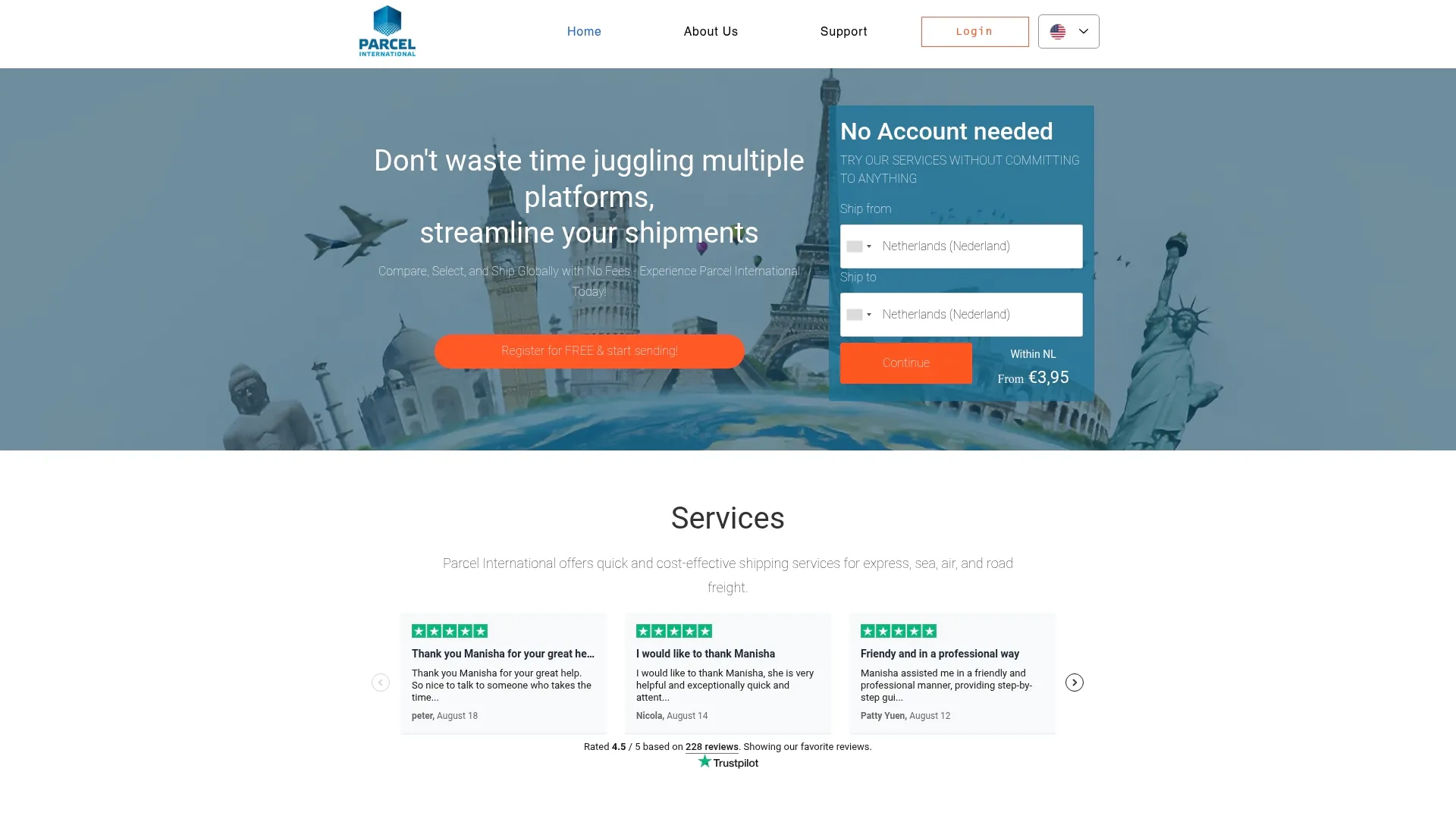
We support you with transparent information about 7 international shipping methods, so you can precisely inform your customers about how their package is traveling. Our #how-to-guides provide practical guides for every step of the shipping process, from customs documentation to track and trace. By choosing a partner that values communication as much as reliable delivery, you prevent customer loss and strengthen trust in your brand.
Can't find your question? Our support team is here for you 24/7 via the help centre.
What is real-time tracking and why is it important?
Real-time tracking monitors the status of a shipment and shares updates with the customer as soon as a new scan occurs. For parcels, this happens via scans at each checkpoint along the route. It is important because transparency builds trust, even during delays.
How can I proactively keep customers informed?
Send automatic updates at key moments: order confirmation, shipment, in transit, delivery, and in case of any issues. Inform customers about potential delays before they reach out. Use multiple channels such as email and SMS to ensure messages are received, and offer self-service tracking via a customer portal.
What are the best communication channels for logistics?
The most effective approach combines email for detailed information, SMS for urgent updates, chatbots for immediate questions, and a customer portal for self-service tracking. Email works well for order confirmations, while SMS is quickly read and suitable for delivery notifications. Chatbots provide 24/7 support for frequently asked questions.
How should I handle customer complaints about delivery?
Respond within 24 hours with empathy and acknowledgment of the issue. Offer a concrete solution and timeline for resolving the situation. Use personal contact via phone or email instead of automated messages. Follow up until the issue is resolved, and consider compensation for significant delays to maintain goodwill.
Which technologies are suitable for SMEs?
There are affordable customer service and tracking tools that integrate with popular e-commerce platforms and carriers. These systems automate tracking updates and multi-channel communication without large investments. Start with basic tracking and email notifications, and expand to SMS and chatbots as you grow. Cloud-based solutions offer scalability without high startup costs.
How can I reduce delivery times for international shipments?
Optimize your international-delivery-times by choosing efficient carriers, preparing customs documentation in advance, and considering strategic inventory locations. Communicate realistic expectations to customers and offer premium shipping options for those who prioritize speed. Proper preparation and tracking prevent delays and keep customers informed about progress.
Get a grip on your parcel shipping
Compare carriers, choose the best price and keep track of your international shipments. You can calculate and book without an account.
