
Unexpected customs costs and delays are a recurring issue for many e-commerce businesses. A package stuck in customs for weeks, a customer sending angry messages, and margins evaporating due to unforeseen import duties—this is the reality when international shipments aren’t properly prepared. Fortunately, smart customs clearance isn’t rocket science. With the right knowledge of regulations, trade agreements, and fiscal policies, you can significantly reduce costs and avoid unpleasant surprises. This article provides directly applicable tips.
Key Insights
Point | Details |
|---|---|
Smart Registration | An EORI number and correct product codes prevent delays and extra costs at customs. |
Leverage Trade Agreements | Use preferential origin documents to reduce import duties. |
Optimize Customs Procedures | Temporary import and inward processing offer fiscal benefits; learn when these apply. |
VAT Rules for E-commerce | Shipments up to €150 fall under a special VAT scheme, but note: as of July 1, 2026, new customs rules apply to these shipments. |
Dropshipping Considerations | For dropshipping, always verify VAT settlement and customs compliance requirements. |
Criteria for Successful Customs Clearance
Before sending even a single package across the border, there are a few basic requirements you must have in order. Without these fundamentals, you’ll almost certainly run into problems.
The most common mistake? No valid EORI number. This number is mandatory for all customs declarations in the EU. Register your EORI number and use the correct HS/Taric codes for product classification and duty assessment. An incorrect code can result in overpayment or underpayment of import duties—both problematic.
Other key considerations:
- EORI number: mandatory for every importer or exporter in the EU
- HS/Taric codes: determine the duty rate and regulations per product category
- Customs value: even free products have a customs value based on market price
- Current legislation: as of July 1, 2026, the import duty exemption for shipments up to €150 no longer applies
- Incoterms: define who is responsible for customs costs and risk
Pro tip: Review your HS codes at least once a year. Duty rates and regulations change frequently, and an outdated code can cost you unnecessarily. For more on how customs clearance works in practice, read this customs-clearance-explanation.
Leverage Trade Agreements and Preferential Origin
Now that the basic criteria are clear, explore how trade agreements and origin documents can provide direct financial benefits. The EU has trade agreements with dozens of countries. If your products originate from one of these, you may qualify for zero or significantly reduced import duties.
Use trade agreements and preferential origin documents to lower import duties for products from countries with EU trade agreements, such as Canada, Japan, South Korea, and Vietnam. However, note: you must prove that your product genuinely originates from that country.
Key benefits include:
- Lower or zero import duties with proven preferential origin
- Competitive advantage over suppliers who don’t apply this
- Better margins without raising prices for customers
Required documents vary per agreement. Common proof includes the EUR.1 certificate, invoice declaration, or the REX system (Registered Exporter). Ensure your supplier can provide these documents.
Many businesses leave money on the table because they’re unaware their products qualify under a trade agreement. A quick check with customs or your freight forwarder can save thousands per year.
For more practical tips on efficient-ecommerce-shipping it’s smart to align your shipping strategy with your customs strategy.
Smart Customs Procedures: Bonded Warehouse and Inward Processing
Beyond reducing import duties through agreements, there are additional procedures for extra fiscal benefits. Two are particularly interesting for e-commerce businesses operating internationally.
Apply customs procedures like bonded warehouses and inward processing to pay no or reduced import duties for temporary imports or re-exports. Here’s how it works:
- Bonded warehouse: store goods in an approved bonded warehouse without paying import duties upfront. You only pay the duty when releasing the goods for the EU market. Ideal if you’re unsure where the goods will go next.
- Inward processing: import raw materials or semi-finished goods, process them in the EU, and export the final product. You pay no import duties on the processed goods if they leave the EU again.
- Temporary import: for products temporarily in the EU, such as trade fair goods or test products, you can apply for full or partial import duty exemption.
Pro tip: Bonded warehouses aren’t just for large companies. More logistics providers now offer shared bonded warehouse space, allowing smaller e-commerce businesses to benefit from this procedure. See how logistics services for e-commerce can support you.
VAT-Free Import Scheme for E-commerce Shipments Up to €150
After exploring alternative customs procedures, it’s important to understand the specific e-commerce import scheme. For online stores shipping directly to consumers, the import scheme is a key tool.
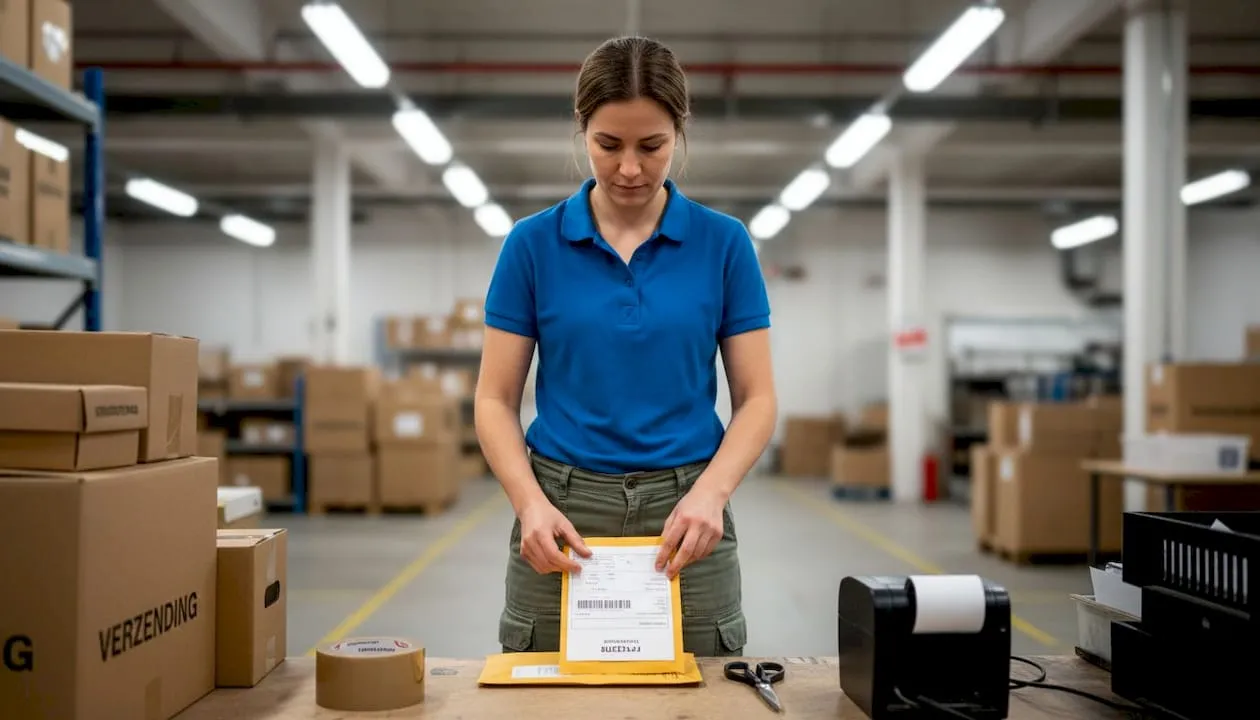
Use the import scheme for e-commerce shipments up to €150 to consumers: you declare VAT monthly in one go and pay no VAT at import. This significantly simplifies your administration and prevents double VAT payments.
Feature | Import Scheme (IOSS) | Standard Import |
|---|---|---|
Threshold | Up to €150 per shipment | No limit |
VAT Declaration | Monthly via IOSS | Per shipment at import |
VAT at Import | Not applicable | Applicable |
Administrative Burden | Low | High |
Suitable for | B2C e-commerce | B2B and High-Value Shipments |
What You Need to Know:
- You must register for the IOSS (Import One Stop Shop) scheme in an EU member state
- The scheme applies only to deliveries to consumers, not businesses
- From July 2026 the €150 exemption for shipments will no longer apply, and you will temporarily (until July 1, 2028) pay a fixed import duty of €3 per product category for shipments from outside the EU to consumers; a handling fee of €2 is expected around November 2026 but is not yet finalized
This change will have significant implications for webshops importing low-cost products from China or other non-EU countries. Read more about international shipping standards and how to manage e-commerce returns efficiently.
Dropshipping and Customs: What to Consider
In addition to standard e-commerce shipping methods, dropshipping presents unique challenges for customs clearance. The model is appealing: no inventory, no warehouse, low startup costs. However, customs and VAT obligations remain.
With dropshipping, you hold no inventory, but pay attention to VAT when delivering to consumers. As the seller, you are responsible for VAT remittance, even if goods ship directly from a supplier in China to your customer in the Netherlands.
Key Considerations:
- Customs Value of Free Products: even samples or promotional items have a customs value based on market price
- Accurate Invoice Value: undervaluing goods on customs documents is fraud and results in penalties
- VAT Registration: verify in which country VAT is due, depending on your customer’s location
- Delivery Timelines: dropshipping from Asia often means longer delivery times, impacting customer expectations
Pro Tip: Work with a dedicated freight forwarder experienced in dropshipping shipments. They know the pitfalls and ensure your documentation is always accurate. Learn more about managing shipping-orders-for-international-webshops and international distribution for e-commerce through these links.
Comparison: Customs Clearance Approaches in Practice
Finally, here’s a clear comparison of the discussed options to help you choose the right solution for your situation.
Free products still have a customs value based on market value; the transaction value method takes priority. Keep this in mind for all methods below.
Method | Costs | Risk | Ease | Suitable For |
|---|---|---|---|---|
Import Scheme (IOSS) | Low | Low | High | B2C up to €150 |
Customs Warehouse | Moderate | Low | Moderate | Re-export, uncertain destination |
Trade Agreements | Low | Moderate | Moderate | Established supplier countries |
Active Processing | Low | Moderate | Low | Production and re-export |
Dropshipping | Variable | High | Low | Low volumes, test phase |
The choice depends on your product type, volume, and destination. A combination of methods is often most effective. Also, review the practical-ecommerce-shipping-tips for a more complete picture.
Smooth Customs Clearance for Your International Shipments
After reviewing the options and comparison, you can confidently optimize your customs clearance. But knowledge alone isn’t enough—you also need a reliable partner to handle execution.
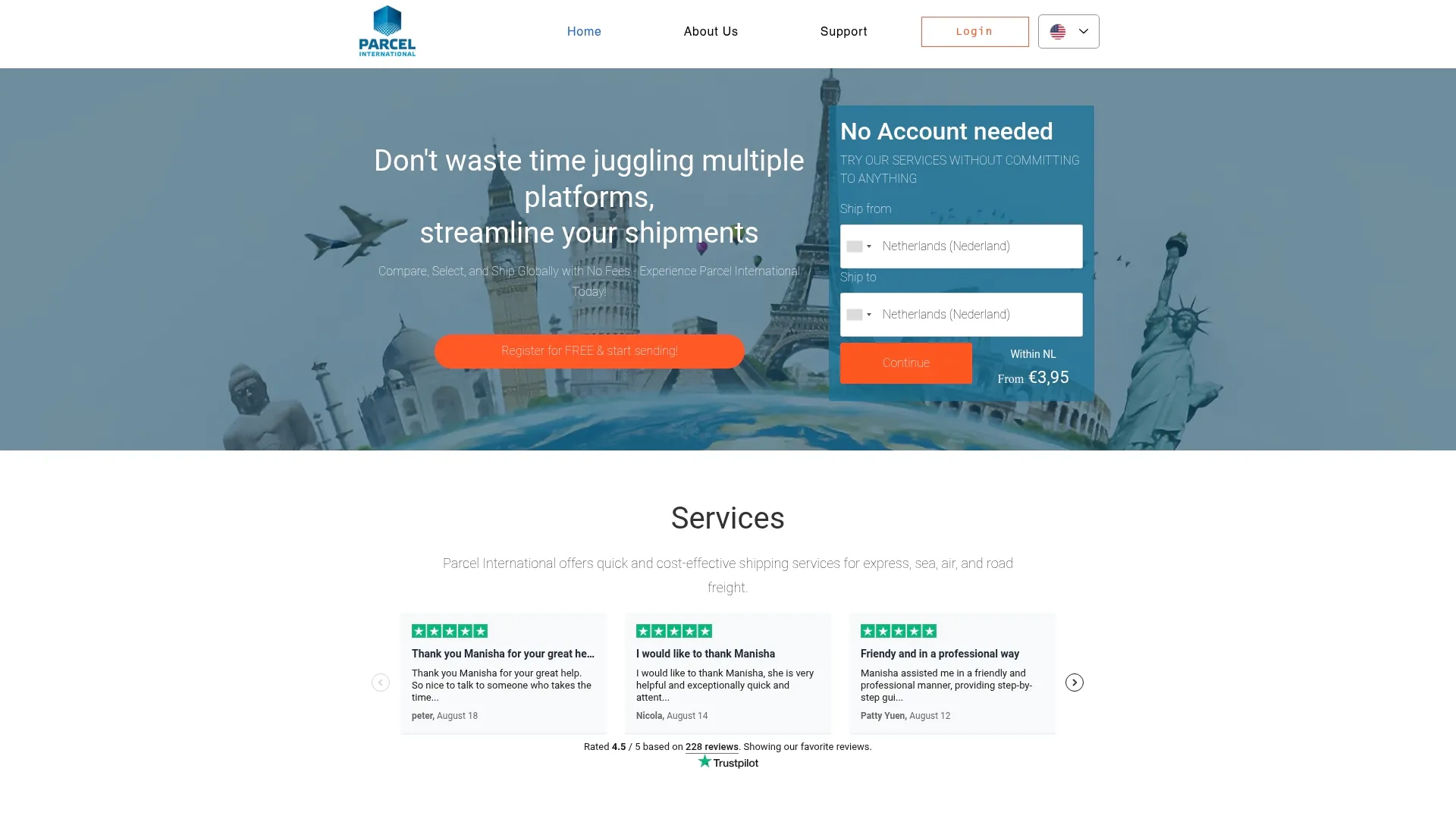
Parcel International has supported e-commerce businesses since 2007 with international shipments to over 220 countries and territories. Whether it’s avoiding delays-in-international-shipments, choosing the right international-transport-methods , or comparing rates without hidden fees, via Parcel International , you can easily compare shipping options, select the best carrier, and send parcels worldwide with full transparency on costs and customs obligations. This keeps you in control of your margins and customer satisfaction.
Can't find your question? Our support team is here for you 24/7 via the help centre.
Why is an EORI number important for international shipping?
An EORI number is a unique identification number used by customs authorities. It is mandatory to register as a market participant and ensures that your shipments are processed faster and more efficiently.
How do I determine the customs value of free products?
Even free products must be valued based on market value. The transaction value method takes priority and is decisive for customs declarations.
What changes on July 1, 2026, for small shipments?
The exemption for shipments up to €150 has been abolished. Until July 1, 2028, a temporary fixed import duty of €3 per product type applies to shipments from outside the EU to consumers. A handling fee of €2 is expected around November 2026 but is not yet finalized.
How does dropshipping work for customs and VAT?
In dropshipping, you hold no inventory but are still responsible for VAT when delivering to consumers. Ensure proper documentation and registration.
How can I save on import duties with trade agreements?
Check if your product and country of origin qualify under an EU trade agreement and use the correct origin documents to benefit from preferential tariffs.
Get a grip on your parcel shipping
Compare carriers, choose the best price and keep track of your international shipments. You can calculate and book without an account.
