
Dropshipping means you sell products without holding inventory yourself: the customer orders from your online store, but an external supplier ships the package directly to the customer’s address. You never own the stock or handle the product yourself.
What many beginners overlook: this distance from the product does not change your legal position. As the seller, you remain fully responsible for consumer rights, product safety, and accurate information—even if the supplier is in China or Turkey and you’ve never seen the package. The Dutch Government is clear on this, and regulators like the ACM can impose significant fines for violations.
- Definition in one sentence: You sell, a supplier delivers; you bear the legal responsibility.
- Product safety: The NVWA often considers you the importer when sourcing outside the EU.
- VAT and import duties: For shipments up to €150, the IOSS scheme applies; ignore it, and your customer may receive an unexpected bill at their door.
Key considerations: Dropshipping is not prohibited or a gray area. It is a legitimate sales model, provided you handle the administrative and legal aspects as seriously as your marketing.
Pro tip: Set up a Dutch return address and an IOSS number before launching your first ad. These two steps prevent most complaints new dropshippers face.
Key Insights
Dropshipping only works sustainably if you treat legal responsibilities—consumer rights, product safety, and VAT—as seriously as your marketing and supplier selection.
Point | Details |
|---|---|
Inform customers upfront | Clearly state the origin, delivery time, and return address to avoid misleading customers. |
Set up a Dutch return address | Prevents customers from having to return products abroad. |
Test every supplier first | Place a trial order before committing to selling a product long-term. |
Configure IOSS for imports | Avoid unexpected VAT costs for shipments up to €150. |
Consider a shipping partner as you scale | Parcel International helps compare and book international shipments. |
Dropshipping Explained: What Is Dropshipping Exactly?
What does dropshipping look like in practice? It involves three parties: your online store, a supplier or wholesaler, and the customer. You manage the front end, customer communication, and marketing. The supplier holds the inventory and handles shipping. Once an order is placed, you forward it to the supplier, who packs and ships the product.
The difference between a supplier within the EU and one outside is greater than most beginners realize. A Dutch or German wholesaler typically delivers within two to five business days, with smooth returns and EU warranty terms. A supplier in China often ships via long postal routes, taking two to four weeks, and returns require the customer to send the product back across the world—a process that rarely happens in practice.
- Supplier: The party that holds the physical product in stock and ships it.
- Wholesaler: Often the same role, but with broader assortments and sometimes minimum order quantities.
- Marketplace: Platforms like bol.com or Amazon, where dropshippers can operate through an external sales environment, with additional rules on top of legal obligations.
Pro tip: Always ask potential suppliers explicitly about the shipping country. “EU stock” on a website does not automatically mean every product is shipped from Europe.
How Dropshipping Works: A Step-by-Step Process
How does dropshipping work in daily practice? The process consists of a fixed chain of steps that can largely run automatically once you’ve set up the technology correctly.
- Customer places an order in your online store and pays the full sale price.
- Your system forwards the order to the supplier, manually or via a connected app.
- Supplier processes and packs the product, usually within one to three business days.
- Shipping begins with a tracking code sent automatically to your customer.
- You track the shipment and proactively inform the customer of any delays.
- Returns or complaints are handled by you according to your own terms, even if the supplier is slow to respond.
Platforms like Shopify simplify the technical side: through apps, you can automatically sync inventory levels and order data with the supplier, eliminating the need to forward each order manually. For smaller volumes, a simple API integration or even a CSV export often suffices, as long as you regularly check the synchronization.
Pro tip: Place at least two test orders for yourself before going live. This way, you experience the packaging, delivery time, and quality firsthand, rather than your first customer.
Pros and Cons of Dropshipping: Is It Right for You?
The biggest appeal of dropshipping lies in its low barrier to entry. You don’t need to rent a warehouse, pre-finance inventory, or test dozens of product categories at once without financial risk. This makes it attractive for beginners with limited budgets who want to discover what sells.
On the other hand, you have less control over the very aspects customers hold you accountable for: delivery time and quality. Margins are often lower than with your own inventory, as the supplier already builds in profit before you add your own margin. And as mentioned earlier, you remain fully liable, even when the issue originates entirely with the supplier.
Advantages:
- Low startup investment, no inventory risk.
- Quickly test new products without purchase obligations.
- Scalable without needing your own storage space.
Disadvantages:
- Limited control over delivery time and packaging quality.
- Lower margins due to the extra link in the supply chain.
- Full legal liability, even for supplier errors.
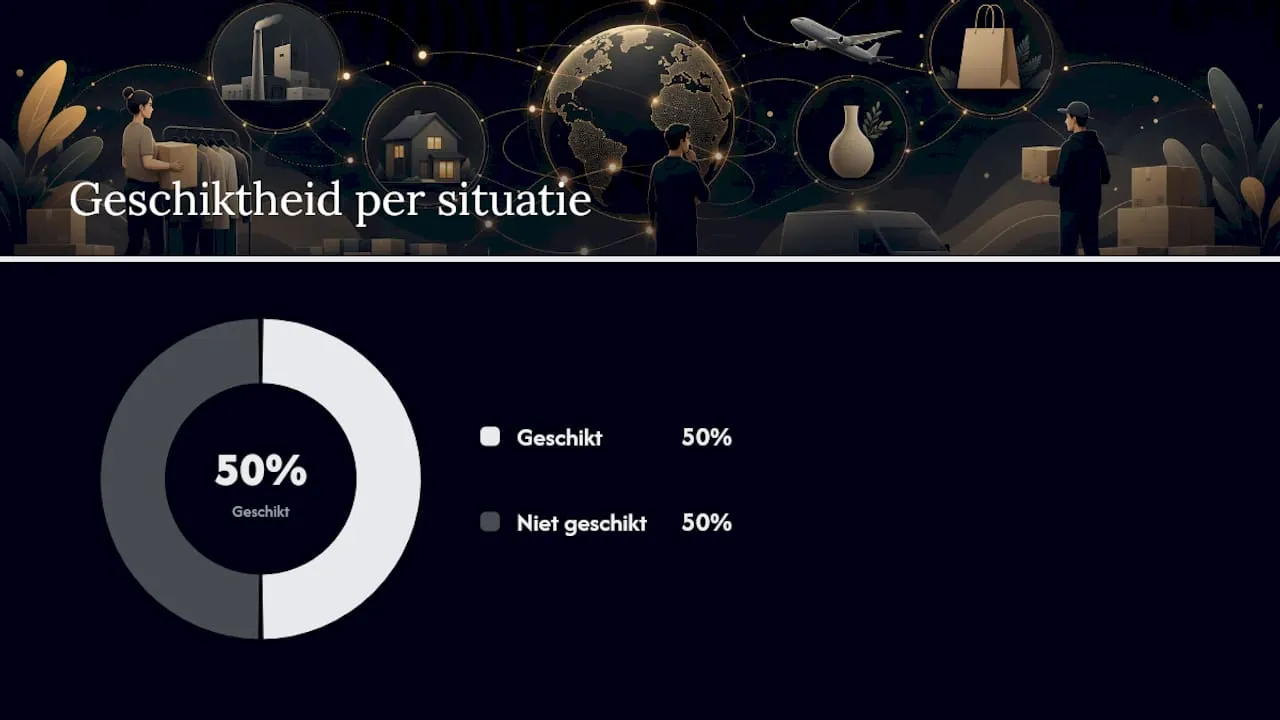
Situation | Suitable for dropshipping? |
|---|---|
Limited startup capital, want to test first | Yes, ideal for gauging market demand |
Customer expects delivery within 1-2 days | No, unless you work with EU suppliers |
Want high margins on a unique brand | No, own inventory or branded dropshipping is a better fit |
Building an online store alongside a full-time job | Yes, provided you allocate time for customer service |
Those seeking speed and full control over quality are better off with their own inventory or contracted manufacturing. Those willing to experiment with low risk and invest in strong customer communication will find dropshipping a viable starting point.
Starting with dropshipping: supplier and platform checklist
Before finalizing a supplier, it is best to go through a fixed set of checks. This prevents discovering later that your main supplier does not accept returns or cannot provide customs documentation.
- Check delivery times: ask about average and maximum shipping times, not just the optimistic scenario.
- Check minimum order values: some wholesalers have minimum amounts that do not align with dropshipping.
- Inquire about quality control: how does the supplier check products before they are shipped?
- Define the return process: who pays for the return shipment and where should it be sent?
- Determine the origin of production: required for your own information obligations toward the customer.
Ask each potential supplier specific questions: do you provide tracking numbers per shipment, what packaging do you use, what warranty period applies, and can you provide customs documentation for shipments from outside the EU?
- Request a sample of the tracking email the customer receives.
- Ask about average packaging quality via photos of previous shipments.
- Explicitly ask about warranty periods per product category.
For the technical side, many beginners choose a platform like Shopify due to the wide availability of integrations with suppliers and payment providers. A detailed guide on setting up dropshipping shows how such an integration works in practice.
Pro tip: Always request a physical product sample before committing to a supplier long-term. Photos on a supplier platform rarely tell the full story about material and finish.
Legal obligations: what you must arrange as a dropshipper
If you run a dropshipping online store in the Netherlands, the same consumer rights apply as with any other online store. Customers have a statutory cooling-off period, and you must clearly state in advance where the product comes from and how long delivery will approximately take. Concealing that a package comes from a non-EU country is considered misleading by the Dutch government.
When importing from outside the EU, you are in many cases considered the importer by the NVWA even if you never physically handled the product. This means you are responsible for European product safety requirements, from CE marking to correct user instructions.
For tax purposes, since July 1, 2021, VAT must be paid on shipments up to €150 upon import. The IOSS scheme allows you to declare this VAT in one EU country and pass it directly on to the customer, preventing unexpected costs upon delivery. Without IOSS, you risk packages getting stuck at customs or customers receiving additional charges.
Obligation | What it entails |
|---|---|
Cooling-off period | Customer has a statutory right to return without giving a reason |
Information obligation | Clearly state origin, delivery time, and return address in advance |
Product safety | You are often considered the importer and must comply with EU requirements |
VAT on import | Use IOSS for shipments up to €150 to avoid surprises |
Contractual agreements with your supplier do not change these legal liabilities. As the checklist from Ondernemersplein indicates, you remain fully liable as the seller for defects and damage, regardless of what you have agreed with the supplier. From December 2026, the revised European Product Liability Directive will further expand the circle of liable parties, which will also impact fulfillment services and marketplaces.
Therefore, arrange in advance: clear general terms and conditions, a Dutch return address, accurate product information, and a fixed complaints process for your customer service to rely on.
Logistics risks in dropshipping and how to mitigate them
The biggest operational threat to a dropshipper is not a poor product, but an unreliable supply chain. Long delivery times, missing tracking, and damaged packages quickly lead to reputational damage, especially when customers share their experiences on social media.
- Long delivery times often occur because suppliers underestimate peak periods, especially around holidays.
- Lack of tracking makes it impossible to proactively inform customers about delays.
- Loss and damage are more common with cheap shipping methods without insurance.
- Inconsistent packaging without your own branding makes it difficult to build a recognizable customer experience.
Mitigate these risks with concrete agreements. Establish service level agreements with your supplier regarding maximum processing time. Standardize packaging and labeling requirements so every shipment looks the same. Actively monitor inventory availability to avoid selling products that the supplier has already sold out: an out-of-stock notification after payment is one of the fastest ways to lose trust.
Pro tip: Engage a forwarding or fulfillment partner as soon as you combine multiple suppliers from different countries. Consolidating shipments prevents each package from having to go through customs separately, saving time and costs.
When a shipping partner truly adds value
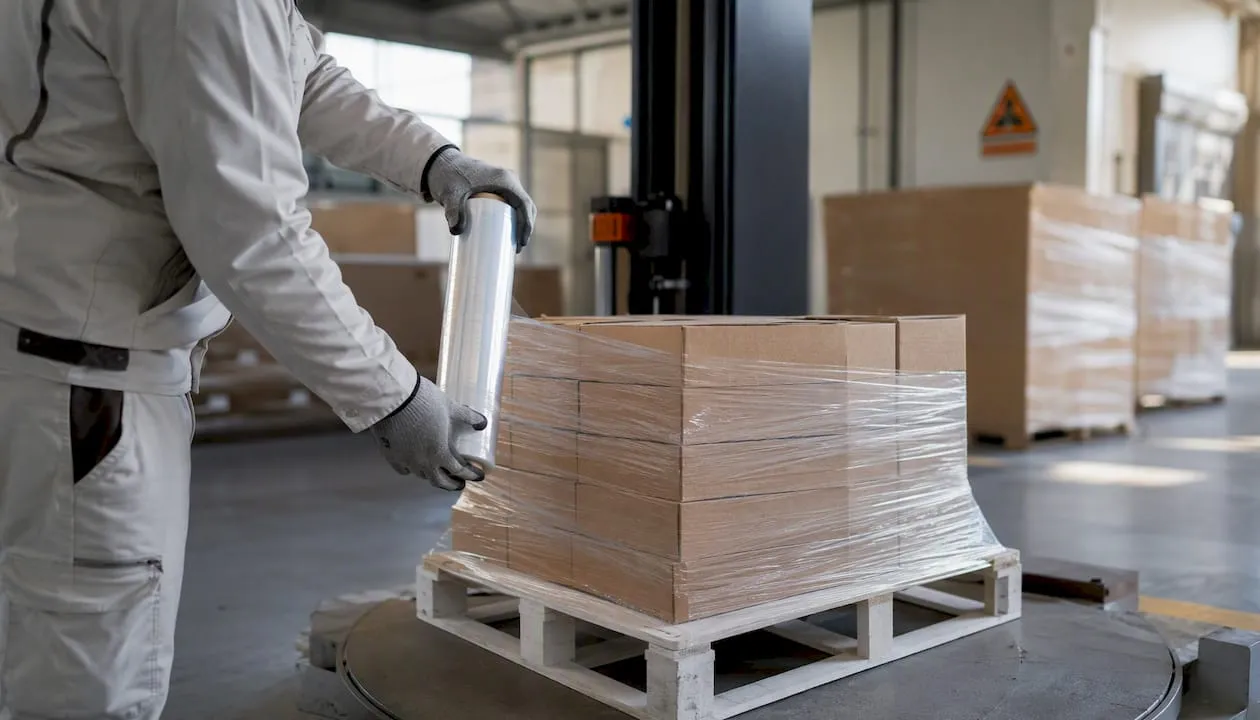
Not every dropshipper needs an external logistics partner right away. With low volumes and a single reliable EU supplier, you can easily handle tracking and customer communication yourself. However, once you scale up to multiple suppliers, multiple countries of origin, or higher product values, that calculation changes.
A specialized partner takes over concrete tasks: consolidating shipments from different countries into a single delivery, assisting with customs documentation, providing a Dutch return address for your customers, and integrated tracking that you can directly link to your webshop. For webshops combining products from multiple non-EU countries, this often makes the difference between a chaotic return process and a customer being helped neatly within a week.
Consolidation and return handling are precisely the areas where a shipping partner adds value the fastest, as these are the points where reputational damage hits hardest when things go wrong.
Parcel International offers this type of support for webshops shipping internationally, from comparing shipping options to customs guidance. Learn more about how such a collaboration works in the overview of international shipping for webshops.
Pro tip: Don’t just calculate the costs of a shipping partner, but also the time you currently spend manually resolving shipping issues. That time is often more expensive than the service costs.
Costs and margins: how to calculate your selling price
The basic formula for a healthy selling price consists of five components: purchase price, shipping costs, import costs or VAT, platform fees, and your own margin. Those who skip these steps often only realize the margin is too low after the first hundred orders have already been shipped.
- Determine the purchase price charged by the supplier, including any packaging costs.
- Add the shipping costs charged by the supplier or arranged by you through a partner.
- Include VAT and import costs according to the IOSS scheme for shipments up to €150.
- Add platform fees, such as transaction fees from your payment provider or sales platform.
- Determine your margin as a percentage on top of the total cost price, not as a fixed amount.
Cost component | Explanation |
|---|---|
Purchase price | Base price charged by the supplier per unit |
Shipping costs | Often variable by destination country and weight |
VAT/Import | Settled via IOSS for shipments up to €150 |
Platform fees | Transaction or sales fees from your webshop platform |
Margin | Percentage on top of the full cost price, not just the purchase price |
Also account for hidden costs that only become visible later: additional carrier fees for deliveries to remote addresses, the costs of return shipments you often bear yourself, and administrative burdens around customs paperwork for shipments from outside the EU. Those who estimate these items in advance instead of discovering them afterward prevent a seemingly profitable product from turning out to be loss-making in practice.
Common mistakes and red flags with suppliers
Certain signals almost always indicate problems further down the chain. Recognize them early, before a customer pays the price for an issue you could have seen coming.
- Supplier has no clear return address or refuses to provide one.
- No tracking numbers available, or codes that don’t work with the carrier.
- Delivery times vary significantly per order without clear reason.
- Product origin remains unclear, even after inquiry.
- Quality specifications are missing or contradict product photos.
If you encounter such a red flag, take immediate action:
- Temporarily stop selling the product in question until the issue is resolved.
- Request additional documents, such as certificates of conformity or customs paperwork.
- Place a test order to verify quality and delivery time yourself.
- Document contract terms in writing, including agreements on warranty and refunds.
For warranty claims and chargebacks: your customer claims with you, not the supplier. Ensure you first have a chargeback agreement with the supplier, so you’re not left empty-handed if a product turns out to be structurally defective.
What I learn from daily shipping practice
What stands out in logistics practice is how quickly one bad supplier can damage the reputation of an otherwise solid webshop. A series of delayed shipments during a busy period like Black Friday, and the reviews that follow often remain visible for years. This isn’t an exception—it’s more the rule for dropshippers who intervene too late.
The entrepreneurs who get it right do two things differently. They start small with one or two suppliers they thoroughly test, instead of launching ten product categories at once. And they standardize their processes early: fixed agreements on delivery time, fixed packaging requirements, a fixed complaints protocol. Those who only address this after the first complaints come in are always playing catch-up.
My advice is unconventional for beginners: don’t invest first in ads, but in testing and monitoring your supplier. A beautiful webshop with an unreliable supply chain underneath won’t retain a customer for more than one bad experience.
Direct help with international shipping for your webshop
Once you combine multiple suppliers in different countries, handling customs paperwork, consolidation, and a Dutch return address yourself quickly becomes a time-consuming task alongside your actual work: selling. Parcel International helps dropshippers with comparing and booking shipping options from multiple carriers, without requiring an account.
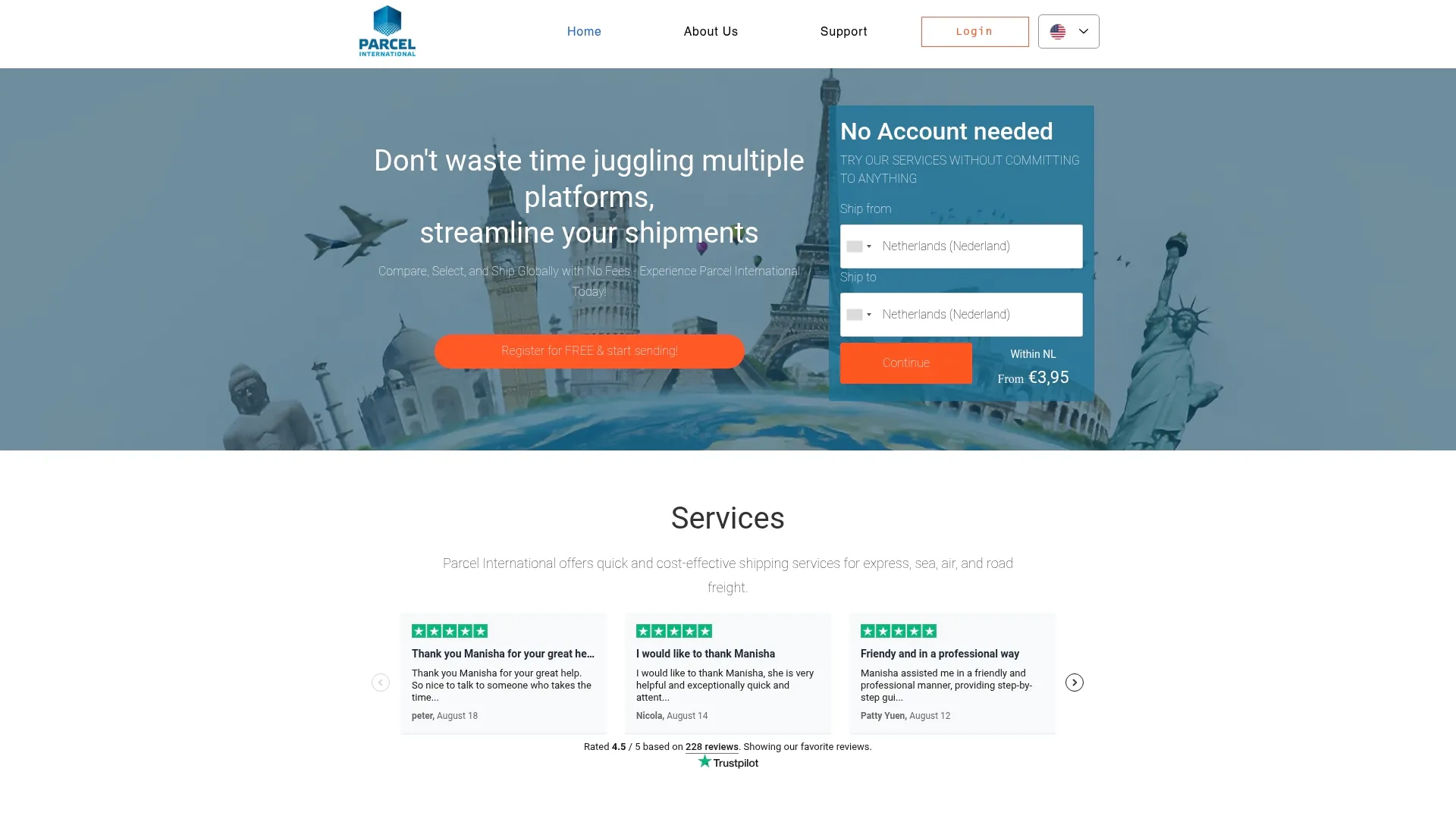
If you work with suppliers outside the EU and notice that returns and customs handling are taking up more and more time, compare for yourself which shipping option best suits your volume.
Frequently asked questions about dropshipping
What exactly is dropshipping at its core?
Dropshipping means you sell products without holding your own inventory; an external supplier ships the product directly to your customer, while you remain responsible for the legal and customer-facing aspects of the sale.
What does dropshipping entail for the seller's liability?
As a seller, you remain fully liable for consumer rights and product safety, even if you never physically handled the product and the supplier is located outside the EU.
What is a dropshipper and what do they do on a daily basis?
A dropshipper manages the online store, marketing, and customer communication, while an external party handles inventory and shipping. Daily tasks primarily involve order follow-up, customer service, and supplier management.
What is branded dropshipping?
Branded dropshipping is a variant where products are shipped with your own packaging, logo, or included inserts, so the customer receives a branded experience instead of an anonymous package from the supplier.
What are the costs and margins in drop shipping?
Costs include purchase price, shipping fees, VAT or import duties via IOSS, platform fees, and your own margin. Since there is an additional step between purchasing and selling, margins are often lower than with your own inventory.
Do I need to register for IOSS if I only dropship occasionally?
If you ship consignments worth up to €150 to EU customers, IOSS is the recommended route for correctly remitting VAT, regardless of your volume. If in doubt, consult the Tax Authority or an advisor for your specific situation, as this article provides general information and does not replace tax advice.
This article contains general information and does not replace the advice of a qualified lawyer. Consult a qualified legal professional about your own situation before acting on the content of this article.
Get a grip on your parcel shipping
Compare carriers, choose the best price and keep track of your international shipments. You can calculate and book without an account.
