
TL;DR:
- Direct shipping offers maximum control and higher margins, especially for large volumes.
- Indirect shipping is ideal for testing phases, low volumes, and rapid market entry.
- Hybrid strategies smartly leverage both models, tailored to growth and market needs.
Many e-commerce businesses assume a shipment is just a shipment. Package in, label on, send it off. Yet, the choice between direct and indirect shipping makes a world of difference for your margins, delivery times, and customer satisfaction. Companies that overlook this distinction miss out on economies of scale or lose control when it truly matters. After reading this article, you’ll know exactly what both models entail, when to choose which approach, and how to pivot smarter as your business grows.
Key Insights
Point | Details |
|---|---|
Direct means control | With a direct shipping model, you manage inventory and shipping entirely yourself. |
Indirect means flexibility | Indirect shipping offers flexibility and lower operational burdens, often ideal for international growth. |
Hybrid approach best for growth | Many successful e-commerce businesses combine both methods for optimal scalability. |
Don’t forget customs | For non-EU shipments, proper customs representation is essential in both models. |
What is Direct Shipping?
Direct shipping means that you, as the seller, manage the inventory, pack the orders, and ship the packages to the end customer. There are no intermediaries handling the shipment. You have full control over the process, from the moment an order is placed until the package arrives at your customer’s doorstep.
According to the Shopify Knowledge Base direct shipping is shipping from your own inventory without intermediaries, unlike dropshipping. This sounds simple, but it has major implications for how you structure your logistics.
With direct shipping, you handle the following yourself:
- Inventory management and procurement
- Storage in your own warehouse or fulfillment center
- Packing and labeling orders
- Choosing the carrier per shipment
- Handling returns
This gives you maximum control. You decide how the package looks, which carrier you choose, and how quickly the order is dispatched. For brands that prioritize customer experience, this is a major advantage. Think personalized packaging, fast turnaround times, or specific quality checks for fragile products.
The downside is that direct shipping also comes with operational burdens. You invest in storage space, staff, and processes. At low volumes, this can be relatively expensive.
“Direct shipping provides the strongest foundation for brand loyalty and repeat purchases, as every step of the customer journey is in your hands.”
The examples of shipping methods show that direct shipping is most suitable when you have a stable product assortment, process consistent volumes, and want to actively differentiate your brand through the unboxing experience.
Pro tip: Combine direct shipping with a shipping comparison tool so you can choose the cheapest or fastest carrier per order without manual searching. Also, check out the practical shipping tips #practical-shipping-tips
What is Indirect Shipping?
With indirect shipping, you engage one or more intermediaries to handle the transport or storage of your products. You sell, but someone else manages the physical delivery. This can work in different ways.
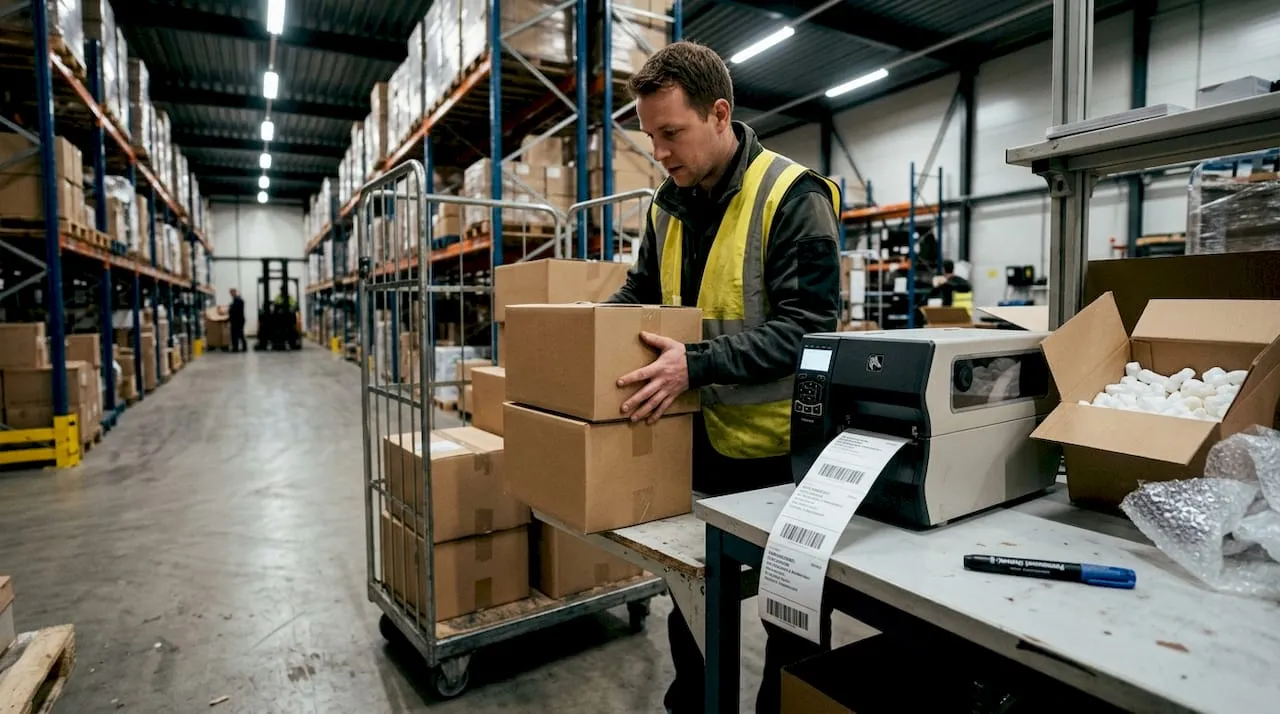
According to the Shopify Knowledge Base, indirect shipping includes dropshipping, marketplaces, and the use of distributors or freight forwarders. Each of these variants has its own dynamics.
The most common forms of indirect shipping are:
- Dropshipping: your supplier ships directly to your customer; you don’t hold inventory
- Marketplaces: platforms like Amazon or bol.com handle storage and shipping through their own network
- Freight forwarders: specialized logistics partners that consolidate, bundle, or take over shipments
- Distributors: regional partners that store and distribute products locally
Indirect shipping is attractive if you’re just starting out, testing a new market, or have limited storage capacity. You don’t need to invest in warehouse space and can launch quickly. Additionally, the intermediary takes on some of the operational risk.
But there are also risks. You have less visibility into shipment status, less control over packaging quality, and depend on the reliability of your partner. If a dropshipping supplier is out of stock, your customer notices first.
For international growth, it’s smart to manage international shipping orders #manage-international-shipping-orders
via a central system, even when using indirect partners. This way, you maintain oversight without having to execute everything yourself.
Pro tip: Opt for indirect shipping if you want to test a new market with low volume or limited market knowledge. You minimize risk and can pivot quickly without major infrastructure investments.
Comparison: Direct vs. Indirect Shipping
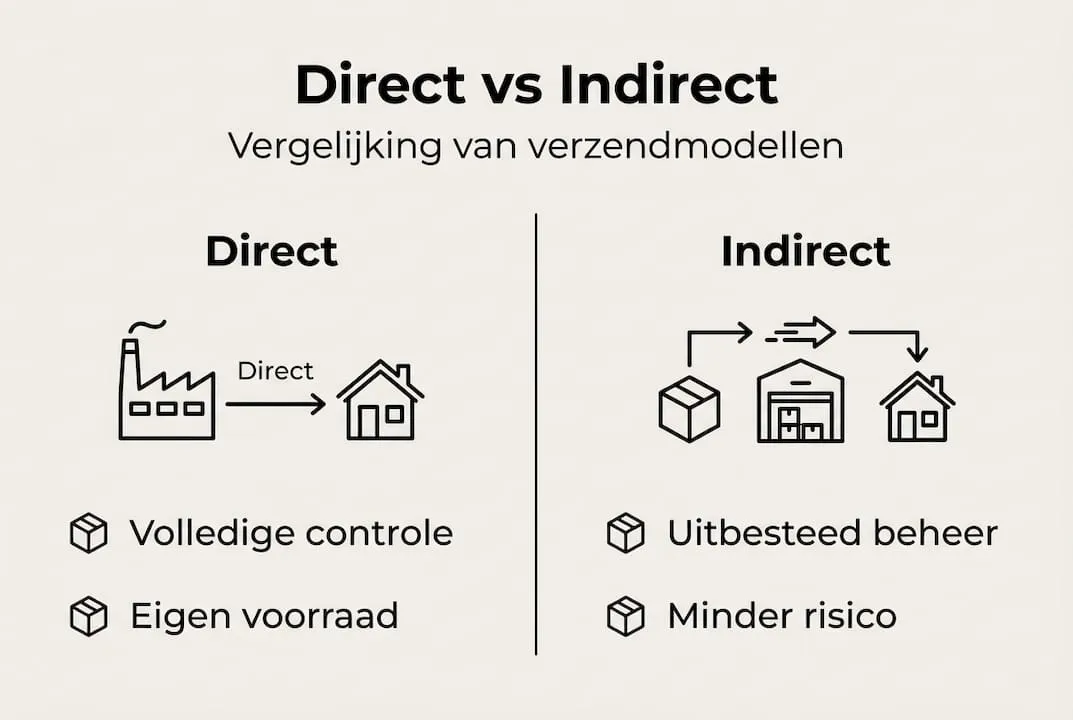
Now that both models are clear, it’s time to compare them side by side. The choice depends on your phase, volume, and strategic priorities.
According to the Shopify Knowledge Base, direct shipping offers more control, while indirect shipping reduces risk and operational burdens. Both statements are correct, but the context determines which carries more weight. | Criteria | Direct Shipping |
|---|---|---|
Indirect Shipping | Control over shipping | High |
Low to medium | Startup costs | High |
Low | Operational burden | High |
Low | Flexibility for growth | Limited without investment |
Quick to scale | Customer experience | Fully customizable |
Dependent on partner | Profit margin per order | Higher |
Lower due to intermediary | Risk in case of errors | Yours |
Shared with partner
- Volume: Do you consistently process many orders per day? Then direct shipping is often worthwhile.
- Margin: Is your product margin tight? Then an intermediary eats too much into your profit.
- Market knowledge: Still unsure if a market works? Start with indirect shipping.
- Brand Experience: Is unboxing part of your strategy? Choose direct shipping.
- Capacity: No storage space? Indirect shipping is the logical starting point.
A hybrid approach is also possible. You ship your core products directly and use a dropship supplier for additional items. This way, you benefit from efficient shipping on your bestsellers while expanding your assortment without risk.
The advantages of shipping comparisons apply to both models: by comparing rates, you structurally reduce costs per shipment. And with the right track & trace solution you maintain visibility, even when an external partner handles the shipment.
Practical applications and pitfalls in practice
The difference between direct and indirect shipping only truly comes to life when applied to your own logistics situation. Theory is great, but practice delivers the real lessons.
A common mistake is clinging too long to indirect shipping when volume already justifies shipping in-house. Some companies stay with a dropship supplier for years, while they could save tens of percent on costs and increase customer satisfaction with their own shipping.
The reverse is also true: switching to direct shipping too early without the right infrastructure leads to chaos. Orders get delayed, returns pile up, and customer service becomes overwhelmed.
For international shipping outside the EU, an additional dimension comes into play: customs clearance. Whether you ship directly or indirectly, you need to know who the customs representative is. For indirect shipping outside the EU, customs representation is crucial to avoid delays and fines. Check out the tips-for-customs-clearance to be well-prepared for this.
The impact on delivery time and customer satisfaction is measurable:
Situation | Average Delivery Time | Customer Satisfaction |
|---|---|---|
Direct shipping, in-house warehouse | 1 to 2 days | High |
Indirect shipping, dropship within EU | 3 to 7 days | Average |
Indirect shipping, dropship outside EU | 7 to 21 days | Low to average |
Hybrid model | 2 to 5 days | High |
Pitfalls to avoid:
- No clear agreements with indirect partners on delivery times and return policies
- No visibility on inventory levels with your dropship supplier
- Forgetting who is responsible for customs declarations for non-EU shipments
- Switching to a direct model too late, allowing competitors to deliver faster
Pro tip: Use a real-time dashboard for customs procedures if you frequently ship outside the EU. This saves you time and prevents costly delays at the border.
Our vision: the real secret behind a smart shipping strategy
Most articles on this topic end with a simple conclusion: choose the model that fits your situation. But that’s exactly the pitfall. Many starting e-commerce businesses pick one model and stick to it too rigidly, even as their situation changes.
What we see with companies that truly grow is different. They build modularity into their logistics. They start with indirect shipping to test quickly, gather data on which products and markets work, and strategically switch to direct shipping for their bestsellers. They use a smart shipping strategy as a tool, not a dogma.
It’s not a black-and-white choice. The companies that adapt fastest to market changes are those that think hybrid. They know when control yields more than convenience, and when an intermediary provides the space to grow without getting bogged down in operational details. That’s the real shipping strategy.
Get more from your logistics? Discover our solutions
Now that you understand how direct and indirect shipping relate to each other, the next step is applying it to your own situation. Parcel International provides the tools to do that right away.
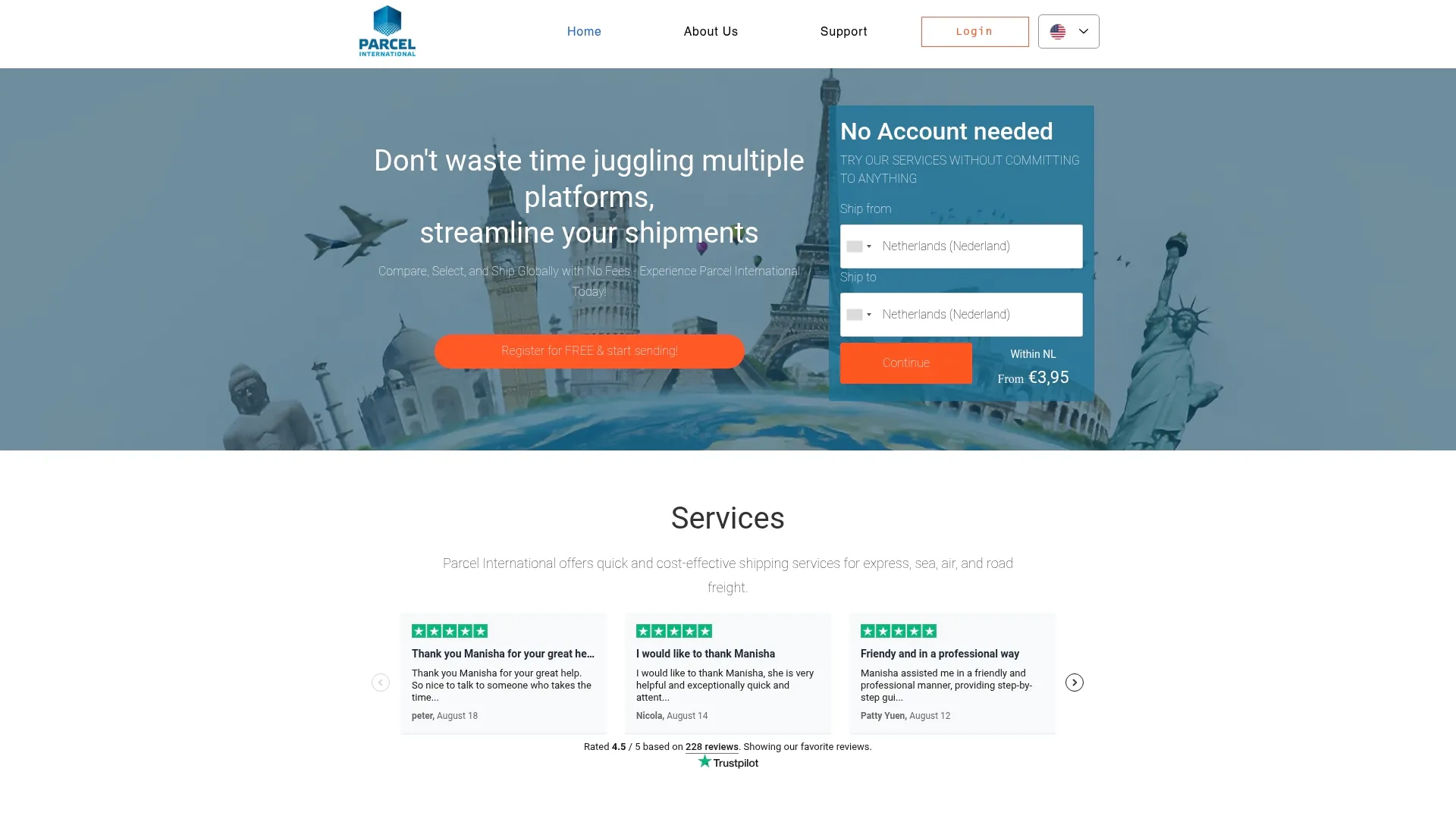
Through our platform, you can easily compare-parcel-services without needing an account. This gives you a clear overview of which carrier best fits your shipment, route, and budget. Want more insights on which approach suits your growth path? Check out the explanation on international shipments and their benefits. We help you ship smarter, whether you’re just starting out or already processing hundreds of orders per day.
Can't find your question? Our support team is here for you 24/7 via the help centre.
What exactly is indirect shipping?
Indirect shipping includes dropshipping, marketplaces, and engaging freight forwarders or distributors. In all these models, a third party handles part of the transportation or storage.
When is direct shipping better for my online store?
Direct shipping is more advantageous when you want maximum control over inventory, packaging, and customer experience. Shipping directly from your own stock without intermediaries yields higher margins and better customer satisfaction at sufficient volume.
Is hybrid shipping possible and worthwhile?
Yes, many online stores start with indirect shipping and transition to a hybrid model as they grow. Begin with indirect shipping at low volumes and switch to direct or hybrid once control and economies of scale become more important.
What is more important for international shipments: direct or indirect shipping?
For international shipments, customs procedures and risk distribution are often more decisive than the shipping model alone. Customs representation in non-EU trade is crucial to avoid delays and additional costs, regardless of the model you choose.
Get a grip on your parcel shipping
Compare carriers, choose the best price and keep track of your international shipments. You can calculate and book without an account.

Recommendation
- Role of Customs: Impact on International Shipments – Send with Parcel International
- Advice for Reliable Shipping: Understand How It Works – Send with Parcel International
- Economy vs Standard Shipping: Save Smartly – Send with Parcel International
- What Is Express Shipping? Explanation and Understanding – Send with Parcel International