
Small online stores with international shipping must make smart choices between pickup or delivery. Understanding which delivery method best suits your business and customers helps reduce costs, increase customer satisfaction, and optimize logistics.
Key Takeaways
Point | Details |
|---|---|
Pickup vs. Delivery | E-commerce businesses must strategically choose between pickup and delivery, as both methods have different operational and financial implications. |
Investment Requirements | Delivery requires higher investments in logistics, while pickup often involves lower initial costs. |
Customer Satisfaction | The chosen delivery method directly impacts customer satisfaction; clear communication and user-friendly return procedures are crucial. |
Risks and Liability | Different risks per method; with delivery, liability lies with the carrier until drop-off, while with pickup, it shifts to the customer. |
What Do Pickup and Delivery Entail?
Pickup and delivery are two fundamental delivery methods in the modern e-commerce world that significantly change how customers receive their products. Delivery involves products being shipped directly to the customer’s home or a location of their choice. This can range from standard deliveries to express services where parcels are delivered within hours or days.
With pickup the customer chooses to collect the product themselves at a specific location such as a store, parcel point, or pickup location. Urban delivery strategies show that pickup points are an effective method to reduce logistical challenges, significantly decreasing the number of individual deliveries.
The choice between pickup and delivery depends on various factors such as convenience, delivery costs, availability of pickup points, and individual customer preferences. E-commerce businesses must consider both options to meet the diverse needs of their customers and offer a flexible delivery strategy.
Pro Tip: Consider offering multiple delivery options to increase customer satisfaction and improve logistical efficiency.
Key Differences for E-Commerce Businesses
E-commerce businesses must strategically consider the choice between pickup and delivery, as both methods have significant operational and financial implications. Distribution costs and customer experience play a crucial role in determining the optimal delivery strategy.
For delivery the main considerations are infrastructure for parcel transport, shipping costs, and delivery speed. E-commerce businesses must invest in reliable delivery networks and flexible shipping options. On the other hand, pickup requires a different approach, involving physical pickup points or stores where customers can collect their orders.
The economic impact varies by method. Delivery often results in higher individual shipping costs, while pickup points allow for consolidated shipments, significantly improving logistical efficiency. Additionally, the chosen method directly affects customer satisfaction, return processes, and overall business economics.
Here’s an overview of the key aspects of delivery and pickup for e-commerce businesses:
Aspect | Delivery | Pickup |
|---|---|---|
Investment | High logistical costs | Lower initial costs |
Customer Convenience | Home delivery, higher expectations | Self-pickup, flexible timing |
Logistical Efficiency | Individual shipments | Consolidated, less transport |
Return Process | Complex, dependent on shipping | Possible on-site |
Pro Tip: Regularly analyze your delivery statistics to identify the most cost-effective and customer-focused delivery method.
Logistical Processes and Costs per Option
The logistical processes for delivery and pickup have substantially different cost structures and operational challenges. Logistics cost analysis reveals the complex mechanisms behind each delivery model.
For delivery logistical processes include multiple critical steps: order processing, packaging, transport, and final drop-off. This method requires significant investments in infrastructure such as vehicles, tracking systems, and distribution networks. Shipping costs are directly influenced by factors like weight, volume, distance, and delivery speed.
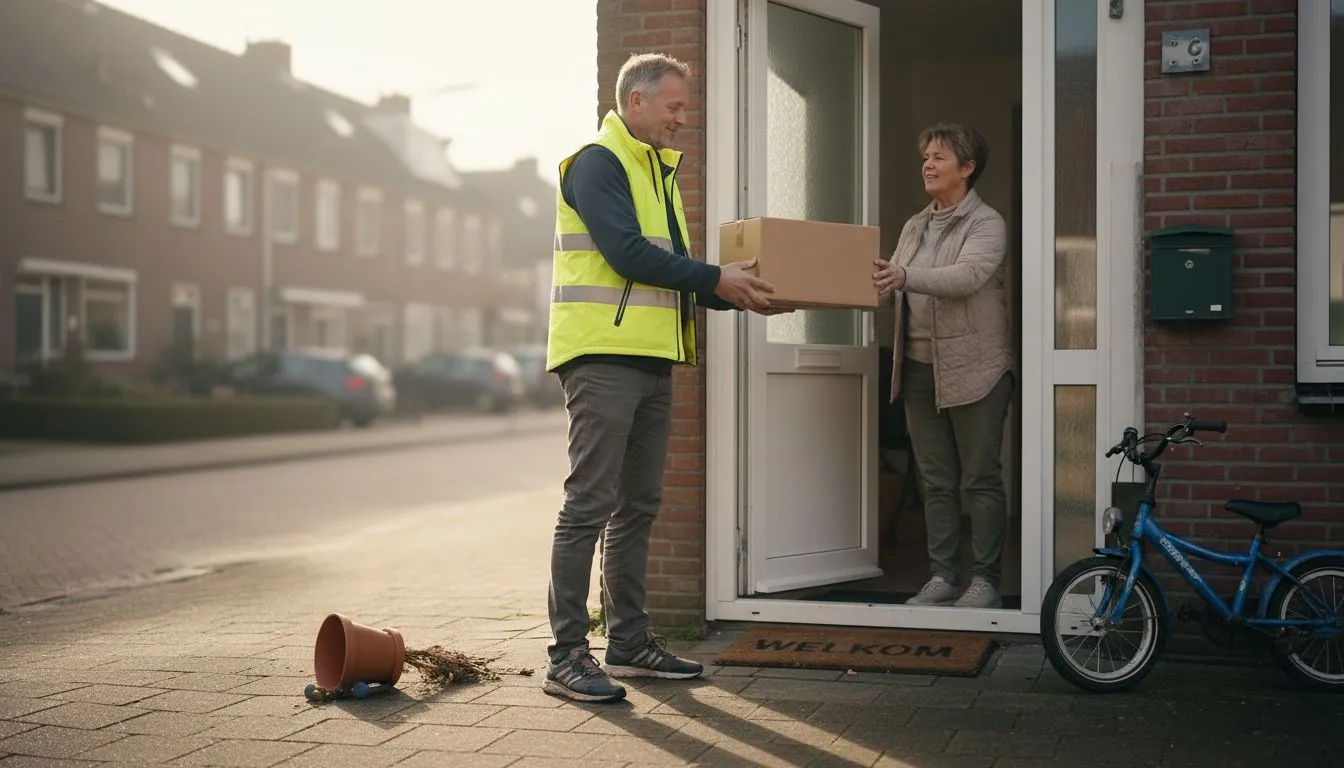
The pickup option has a different cost structure, focusing on inventory management and spatial organization of pickup points. While initial investment costs may fluctuate, pickup points offer potential cost savings through consolidated shipments and reduced individual transport costs. Additionally, businesses can save space with efficient warehouse layouts and optimized inventory flows.
Pro Tip: Develop a detailed cost model that accurately maps both direct and indirect logistical costs for both delivery methods.
Impact on Customer Satisfaction and Returns
The choice between delivery and pickup significantly impacts overall customer satisfaction and the return process. Delivery methods and customer experience play a crucial role in determining the end-user experience.
With delivery customers value the convenience of direct home delivery but often have higher expectations regarding delivery speed and accuracy. The return process can be more complex, as customers must physically prepare and ready a parcel for return. Transparent communication about return procedures and potential costs is essential to avoid disappointment.
The pickup option Provides customers with greater flexibility and control over their delivery times. Pickup points can positively impact customer satisfaction by allowing multiple parcels to be collected at once and returns to be processed on the spot. Additionally, customers often experience more certainty as they can inspect the parcel immediately and resolve any issues on the spot.
Pro tip: Develop a clear and user-friendly returns policy optimized for both delivery and pickup.
Risks, Liability, and Common Mistakes
In both delivery and pickup, risks and liability issues play a central role in logistics services. Delivery risks and legal aspects require a precise approach to risk management.
For delivery the primary risks involve parcel loss, damage, and delays. Carriers are typically liable until the moment of delivery, but unclear address details or unreachable recipients can lead to significant logistical challenges. Common mistakes include inaccurate tracking, poor communication about delivery times, and insufficiently prepared shipments.
The pickup option has different risk profiles, with responsibility shifting to the consumer once the parcel has been received. Potential issues arise from inefficient pickup procedures, long wait times, and unclear identification processes. Moreover, incorrect expectations and insufficient information can lead to customer dissatisfaction and potential liability issues.
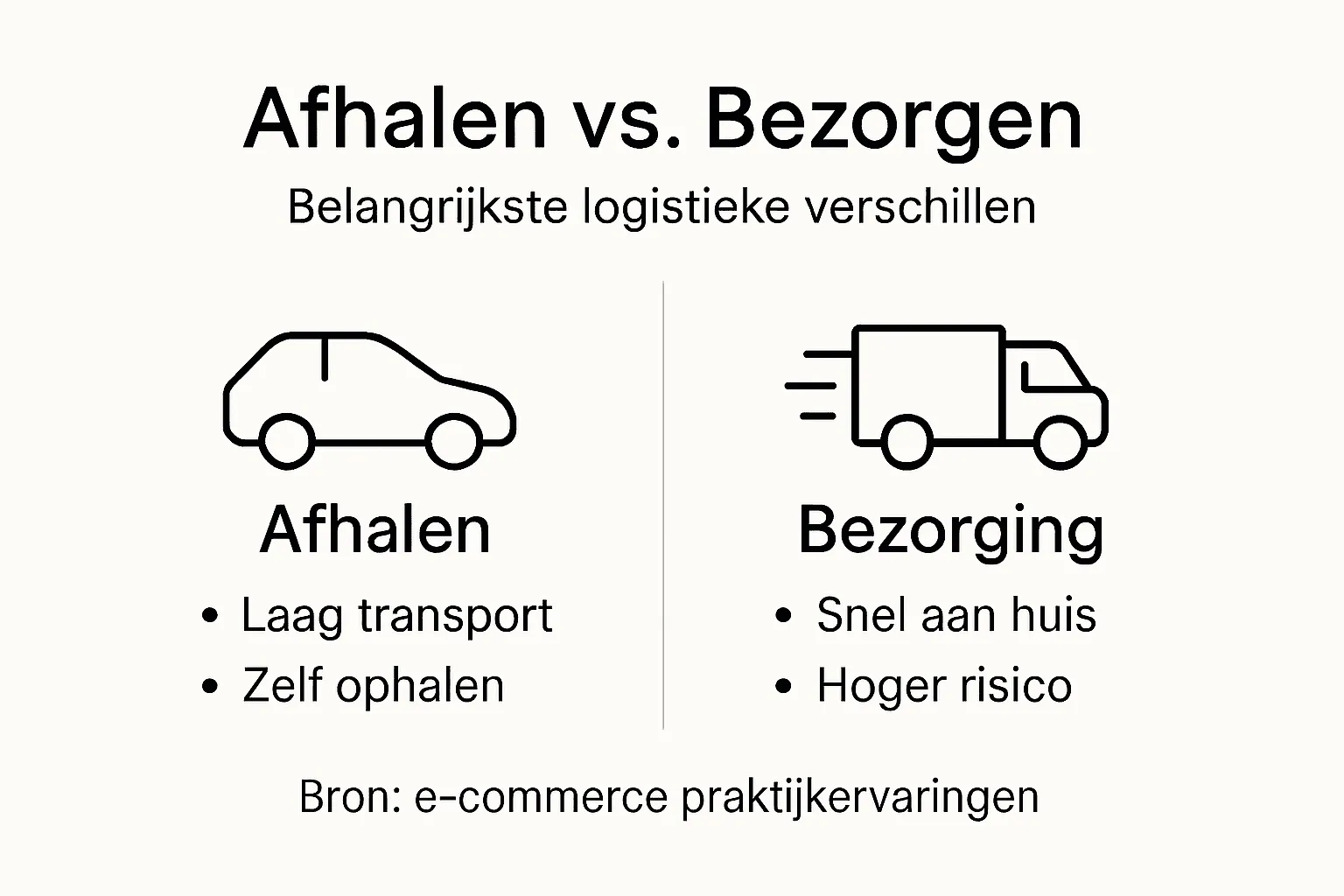
Below is a summary of common risks and responsibilities for both delivery methods:
Risk | Delivery | Pickup |
|---|---|---|
Parcel Loss | Common during transport | Less likely, customer collects in person |
Damage | Risk during transport, insurance required | Inspection at pickup, immediately visible |
Delays | Due to traffic and address issues | Rare, dependent on pickup times |
Liability | Carrier until delivery | Customer after receipt at pickup point |
Pro tip: Develop a detailed risk management protocol that specifically addresses the unique challenges of both delivery and pickup.
Optimize Your Logistics with Smart Delivery Choices
The choice between pickup and delivery presents a key challenge for e-commerce businesses aiming for efficient and customer-focused logistics. The additional costs and complexity of transport can lead to frustration and unnecessary delays. At Parcel International, we understand that reducing shipping costs and ensuring smooth international shipments are essential to your success. With our experience since 2007 and our extensive network in over 220 countries, we can help you find the best shipping options tailored to your inventory management and delivery needs.

Discover how Parcel International makes it easy to compare your international shipments and create the optimal mix of delivery and pickup. Benefit from transparent communication, reliable delivery services, and flexible solutions that enhance customer satisfaction and minimize risks. Take a look at Parcel International and see how we can simplify your logistics. Don’t waste time with unclear delivery options—order a reliable solution through Parcel International today.
Can't find your question? Our support team is here for you 24/7 via the help centre.
What are the key differences between pickup and delivery?
Pickup means customers collect their orders themselves at a specific location, while delivery involves products being shipped directly to the customer's home or another location.
How do pickup and delivery impact customer satisfaction?
Pickup offers customers more control and flexibility, while delivery provides convenience. Both methods influence satisfaction, with pickup points enabling direct return options and delivery services meeting the demand for home delivery.
What are the logistical costs of pickup compared to delivery?
Pickup typically incurs lower initial costs as shipments can be consolidated, whereas delivery involves higher transportation costs due to individual shipments and the required infrastructure.
What risks are associated with pickup and delivery?
For delivery, the main risks include package loss, damage, and delays. With pickup, liability shifts to the customer upon receipt, but inefficient processes can lead to long wait times and customer dissatisfaction.
Get a grip on your parcel shipping
Compare carriers, choose the best price and keep track of your international shipments. You can calculate and book without an account.
