
DHL Business provides Dutch companies with multiple shipping options: standard parcel delivery, pallets and freight transport, and international express. A business account becomes cost-effective at a consistent shipping volume, typically between 30 and 50 shipments per month, or as soon as you regularly ship internationally. If your volume is lower, a pay-as-you-go account or a comparison service is often more economical. For higher volumes, read below to learn how to get started and where you can save.
In summary:
- A DHL business account is most cost-effective from 30 to 50 shipments per month, depending on volume and international needs.
- Rates are determined by weight, zone, service level, and total volume, with volumetric weight often being an underestimated factor that increases costs.
- Choosing the right service depends on whether you primarily ship within Europe, send large shipments to businesses, or require fast, global transport.
- Additional costs such as fuel surcharges, address correction fees, and customs duties can significantly increase total shipping costs, so understanding these components is crucial.
- For complex international shipments and customs documentation, using comparison platforms can be valuable, as DHL does not always offer the cheapest or most suitable route.
Which DHL Business Services Fit Your Company?
DHL broadly divides its business offerings into three categories: parcels and documents, pallets and freight, and express. Each type serves a different purpose, and a common mistake entrepreneurs make is using one service for everything.
DHL eCommerce (formerly DHL Parcel) is the standard choice for online stores shipping within the Netherlands and Europe. Delivery times typically range from 24 to 48 hours, and products like Europlus and Parcel Connect are volume-based: the more parcels you ship, the lower the price per unit. For an online store sending a hundred orders per week to German and Belgian customers, this is almost always the most cost-effective option, according to comparative research on DHL services.
Pallets and Freight come into play when you ship larger B2B orders, such as a wholesaler sending pallets of inventory to a retail chain.
DHL Express is the service for time-sensitive and international shipments: a critical spare part that could halt a production line, or a contract that needs to be signed and delivered to another continent by tomorrow. The same research confirms that Express is most valuable for urgency, not regular volume.
Practically, the choice comes down to three questions:
- Do you primarily ship individual parcels within Europe? Choose eCommerce.
- Do you ship large or heavy loads to businesses? Choose pallets/freight.
- Does it need to be fast and global? Choose Express, and expect a higher price per shipment.
How Are DHL Business Rates Structured?
A DHL invoice is not a fixed amount per parcel. Four factors determine the price: weight or volumetric weight, destination zone, chosen service level, and your total shipping volume. Additionally, surcharges often go unnoticed until the bill arrives, as shown in an analysis of DHL business rates.
Volumetric weight is the hidden killer in many invoices: a lightweight but large box is charged based on size, not weight. If you regularly ship products with a lot of empty space in the packaging, you may be consistently overpaying without realizing it.
Here’s how to address this practically:
- Start by gathering your own data. Average weight, top destinations, and monthly volume form the basis of any negotiation, and without these figures, you’re entering discussions unprepared.
- Optimize packaging before negotiating. Smaller boxes directly reduce volumetric weight, often with a measurable impact on your total bill.
- Bundle shipments where possible. One larger shipment is often cheaper than three small ones, especially to the same zone.
- Compare surcharges side by side. Ask specifically what percentage of your invoice consists of surcharges—this figure alone often reveals room for negotiation.
Pro tip: Ask DHL for a breakdown of your last three invoices by cost component.
Want to calculate this yourself? An international-shipping-cost-calculator provides a preliminary estimate in four steps, or check the international-rates-for-2026 for concrete benchmark prices per zone.
How to Apply for a DHL Business Account?
A business account becomes worthwhile at around 30 to 50 shipments per month, the threshold at which volume discounts make the application process worthwhile, according to market-research-on-business-rates. If your volume is lower, you often spend more time managing the account than you save.
Here’s how to get started:
- Compile your shipping profile. Include your Chamber of Commerce number, average monthly volume, key destinations, and average weight per shipment. This profile determines the rate you’re offered.
- Request a quote. Compare your profile with similar shippers and explicitly ask about tiered discounts for higher volumes.
- Test with a trial shipment. Before signing a contract, send a few real shipments to evaluate delivery times, label processes, and customer service.
- Review the first invoices thoroughly. This is where surcharges that weren’t mentioned in discussions often appear, so compare every line item with the agreed terms.
A complete shipping profile with monthly volume and top destinations significantly speeds up this process. Those who come with scattered data negotiate in the dark; those with a dossier get a sharper offer faster.
Which Tools Make Business Shipping Easier?
Manually printing labels for a hundred parcels per week is a recipe for errors. DHL offers a portal and mobile apps for business users to create, track, and manage shipments, available via the Parcel International app on Android and the My DHL app on iOS.
The real time savings come from webshop integrations. A connection between your webshop and DHL automatically generates labels as soon as an order is placed, and tracking & tracing data flows directly to the customer. This not only saves time but also prevents the classic mistake: an incorrect address only discovered upon delivery.
Practically speaking, this works best if you:
- First test with a small portion of your orders before fully switching over.
- Ensure product data (weight, dimensions) is correctly entered into the system, otherwise the rate calculation will be inaccurate.
- Arrange a dedicated contact person for technical questions about the integration.
For webshops combining dropshipping or large order volumes, automation in the shipping chain aligns with broader e-commerce processes.
Why Parcel International finds this relevant for Dutch SMEs
Since 2007, Parcel International has compared shipping options in over 220 countries, and that experience teaches one key lesson: DHL Business suffices for the majority of regular European shipments, but reaches its limits with complex international routes. Think of shipments requiring customs documentation to non-EU countries or urgent orders where comparing rates from multiple carriers pays off.
In these cases, a comparison platform adds value—not as a replacement for DHL, but as a supplement that presents alternative routes, rates, and customs support side by side before you book.
What is the total cost of a DHL Business shipment?
The base price on a quote is rarely the amount you ultimately pay. In addition to the base price, account for at least three extra cost items.
Fuel surcharge fluctuates with oil prices and is adjusted monthly, typically a few percent of the base price. Address correction fees arise from incomplete or incorrect address details, and with business volumes involving many different delivery addresses, these add up quickly. Zone corrections occur when a destination turns out to be more expensive than initially assumed, such as remote areas within a European country.
Situational costs also apply: insurance for high-value shipments, extra charges for oversized or overweight packages outside standard dimensions, and customs fees for non-EU shipments. For an average webshop shipping primarily within Europe, these extras often remain limited to a few percent of total shipping costs. For businesses with international or time-sensitive shipments, that percentage can be significantly higher, especially if customs clearance or express service is required.
The only reliable way to budget for this is to request a quote based on your own shipping profile rather than calculating with an average price per kilogram. A rate calculator provides an initial estimate, but the final invoice depends on destination, weight, and the accuracy of your address data.
How do you choose between DHL and another business carrier?
The choice of a shipping partner hinges on four criteria that outweigh the lowest price per package.
Coverage and delivery time. How many countries does the carrier serve directly, and what is the average delivery time per zone? For a business shipping primarily within Europe, this is usually not a distinguishing factor; for companies with global customers, it is.
Rate structure and transparency. Some carriers use simple tiered pricing, while others have complex surcharge structures that only become clear on the invoice. Always request a full rate card, not just a base price.
Digital support. A robust API integration or webshop plugin determines how much time you save systematically. Manual processes do not scale with your growth.
Customer service for issues. A shipment stuck in customs or a damaged pallet requires fast, accessible support. Test this during the trial period, not just when something goes wrong.
Always weigh these four criteria alongside your own shipping profile. A business primarily handling Dutch B2C packages has different priorities than a wholesaler shipping pallets to three continents.
What can and cannot be shipped via DHL Business?
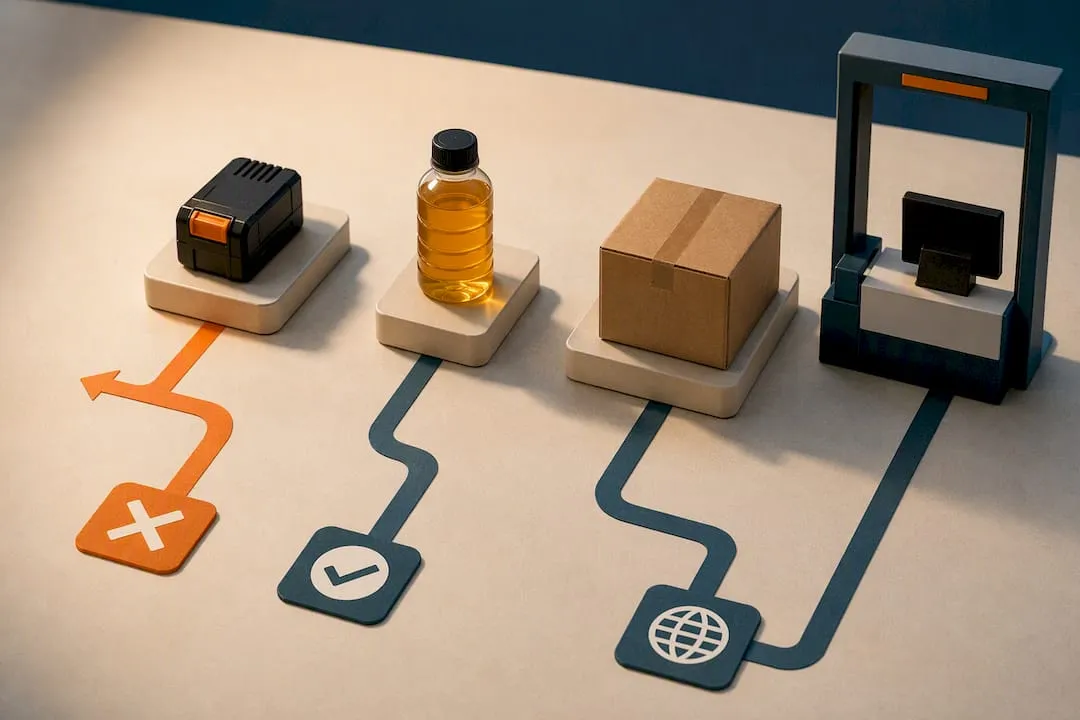
Every carrier has a list of prohibited and restricted goods, and violating these rules leads to delays, extra costs, or, in the worst case, confiscation. Hazardous materials, flammable liquids, weapons, and certain chemicals are standard on the prohibited list. Batteries, perfume, and certain food items fall under restricted goods: shippable but with additional conditions or documentation.
Insurance is a separate consideration. The standard coverage for most business rates is limited per shipment, often insufficient for high-value B2B cargo. If you ship electronics, jewelry, or other valuable goods, additional insurance is almost always advisable, even if it means a small extra cost per shipment.
For international shipments outside the EU, customs documentation is also required: a correct invoice, HS code, and certificate of origin prevent a shipment from being held at the border for weeks. A customs clearance checklist helps avoid underestimating this step, as this is where mistakes most commonly occur for businesses shipping internationally for the first time.
What most DHL Business advice overlooks
Most guides on DHL Business stop at listing services and rates. That’s useful, but they miss the point where businesses actually lose money: not in the base price, but in the accumulation of surcharges and packaging choices that no one systematically tracks.
Conventional wisdom says: compare rates and choose the cheapest. In practice, a business gains more by refining its own shipping profile than by endlessly negotiating the base price per zone. Those who know what percentage of their invoice consists of surcharges hold a stronger position at the negotiating table than those who only know the price per kilogram.
Where I would prioritize: start with data, not a contract. First, gather three months of shipping data before applying for a business account or switching providers. That dossier determines whether DHL Business is the right choice for you or if a combination with a comparison service for specific international routes yields more. Carriers change their rates, but a strong shipping profile remains your best negotiating tool.
— Pascal
How Parcel International Can Strengthen Your Business Shipments
Parcel International complements DHL Business for moments when a single carrier is no longer sufficient. This applies to international routes with customs formalities, urgent shipments requiring consolidation, or when you simply want to compare rates from multiple routes before booking.

Comparing shipping options for international shipments can be an efficient way to find suitable routes, even for shipments to many countries and regions. For an international shipment, you can gain insight into possible routes and carriers in advance, and sometimes receive assistance with customs documentation. If you're considering a shipment beyond the well-trodden European paths, read more on the page about international-shipping-rules how the process works in practice and what steps you can take to request a quote today.
Can't find your question? Our support team is here for you 24/7 via the help centre.
At what volume does a DHL business account become cost-effective?
A business account typically becomes worthwhile at 30 to 50 shipments per month, the point at which volume discounts offset the time spent on account management.
What is the difference between DHL eCommerce and DHL Express?
DHL eCommerce is designed for standard parcel delivery within the Netherlands and Europe, often with delivery within 24 to 48 hours, while DHL Express is more commonly used for time-critical international shipments.
Which surcharges increase my DHL invoice the most?
Fuel surcharges and address correction fees are the most common cost drivers, and together they can add ten to fifteen percent to the base price.
Can I combine DHL business with other shipping solutions?
Yes, many companies use DHL business for standard European shipments and engage a comparison service like Parcel International for more complex international routes or urgent shipments.
What do I need to apply for a DHL business account?
You will need at least a Chamber of Commerce (KvK) number, an estimate of your monthly shipping volume, your primary destinations, and average shipment weights to receive a pricing proposal.
Get a grip on your parcel shipping
Compare carriers, choose the best price and keep track of your international shipments. You can calculate and book without an account.
