
In short:
- Shipping errors in international parcels often stem from incorrect documentation, address details, or packaging. These mistakes cause delays, fines, and sometimes loss of shipments. Using a standardized checklist and proper preparation helps prevent these issues.
Shipping errors in international parcels refer to mistakes in documentation, addressing, packaging, or goods classification that result in delays, fines, or lost shipments. The most common errors are easily preventable with the right preparation. Yet, individuals and small businesses repeatedly make the same mistakes: vague product descriptions, incorrect HS codes, or minor address typos. This article outlines the key shipping errors and provides actionable tips to avoid them, ensuring your parcel arrives without delay.

What are the most common shipping errors in international shipments?
Incorrect or incomplete documentation is the leading cause of delays in international shipping. Missing packing lists, incorrect invoice values, and inconsistencies in address details trigger additional inspections and delivery delays. Customs officials do not accept guesswork—every document must match the parcel’s contents exactly.
Common shipping errors at a glance:
- Incorrect or incomplete invoices. An invoice without a declared value or country of origin will be held by customs.
- Vague product descriptions. Labels like ‘goods’ or ‘products’ are insufficient. Always specify what the product is, its purpose, and the materials it is made of.
- Incorrect HS codes. Wrong HS codes lead to inspections and delays, even if the error is unintentional.
- Ignoring import restrictions. Failing to comply with destination-specific regulations results in seized goods and fines.
- Address errors. Typos, missing postal codes, or incorrect phone numbers can result in lost parcels.
- Poor packaging. Inadequate protection increases the risk of damage and additional costs.
- Incorrect weights and dimensions. Carriers calculate pricing based on actual or volumetric weight. Discrepancies lead to additional charges or refusal of shipment.
Pro tip: Use a standardized checklist for every international shipment. Verify documentation, address details, HS code, and packaging before handing over the parcel. A shipping checklist saves hours of corrective work later.
How can you prevent errors in customs documentation?
Customs formalities are not insurmountable obstacles. With accurate invoices and permits, you can significantly reduce customs issues. The key is preparation, not luck.
Follow these steps for error-free documentation:
- Prepare a correct commercial invoice. Include the full name and address of the sender and recipient, a detailed product description, the quantity, value per unit and total value, country of origin, and currency.
- Always include a packing list. The packing list describes the contents of each box or package. Inconsistencies between the invoice and packing list cause prolonged customs delays, even if unintentional.
- Determine the correct HS code. The Harmonized System code (HS code) is an international classification system for goods. Use the official customs or World Customs Organization (WCO) search tool to find the correct code. An incorrect code leads to fines and rejection.
- Write specific and complete product descriptions. Avoid generic terms. For example, do not write ‘clothing’ but ‘cotton women’s blouse, size M, white.’ Detailed descriptions expedite customs clearance.
- Check import restrictions for the destination country. Some countries prohibit or restrict certain products, such as food, electronics, or cosmetics. Ignoring import restrictions results in refusal and fines.
- Keep copies of all documents. In case of a dispute or delay, you will need evidence. Save digital copies in a folder for each shipment.
Pro tip: Even minor typos in documents can cause days of delays. Have a colleague or partner review the documents before submission.
What role do packaging and addressing play in shipping errors?
Proper packaging prevents damage and delays. Incorrect packaging increases the risk of damage and leads to additional shipping costs. Carriers may refuse parcels that do not meet their packaging requirements, resulting in returned or stalled shipments.
Pay attention to these packaging and addressing details:
- Use sturdy cardboard. Choose boxes that can support the weight of the contents. Reused boxes are acceptable, but ensure they are not damaged.
- Fill empty space. Use cushioning materials like bubble wrap or paper to prevent movement of the contents. Items that shift are more likely to break.
- Secure the label properly. A label that detaches during transit makes your parcel unidentifiable. Use a label holder or laminate the label.
- Always include a return address. If delivery fails, the carrier must be able to return the parcel somewhere.
- Check the address three times. Address errors like typos or incomplete details result in lost parcels. Copy the address from a confirmation email or official document instead of retyping it.
- Use the correct address format for each country. In some countries, the postal code precedes the city name, while in others, it follows. Verify the local address format for the destination country.
- Remove old labels. Old barcodes or addresses on reused boxes confuse scanners and sorting machines.
A damaged or unreadable parcel not only costs you money for repairs or replacements but also harms your reputation as a shipper, especially for business shipments.
Which shipping options increase the risk of errors?
The choice of shipping method directly impacts the risk of errors and unexpected costs. Incorrect selection of shipping options causes unexpected surcharges and delays. Unclear communication about shipping costs leads to complaints and unexpected invoices.
Shipping Option | Risk | Key Consideration |
|---|---|---|
Express Shipping | High costs due to incorrect weight estimation | Always weigh and measure precisely before declaration |
Sea Freight | Long lead time due to document errors | Ensure complete paperwork before departure |
Air Freight | Strict restrictions on hazardous materials | Check the list of prohibited goods |
Road Transport (Europe) | Customs issues for non-EU destinations | Verify import regulations per country |
Parcel Service (PostNL, DHL, FedEx) | Additional charges for incorrect weight | Use a calibrated scale |
The table shows that each method has its own pitfalls. Express shipping via DHL or FedEx is fast but expensive if you misdeclare the weight or dimensions. Sea freight is cost-effective for large shipments, but one missing document can hold up your cargo for weeks at the port.
Pro Tip: Always compare shipping options for international shipments based on actual weight and volumetric weight. Carriers charge the higher of the two. A lightweight but large box costs more than you think.
How can small businesses and individuals practically avoid shipping errors?
Avoiding shipping errors starts with a system, not luck. Shippers who focus on accurate documentation and codes experience demonstrably fewer issues and costs. Small businesses and individuals don’t need a large logistics team to get this right.
- Use a standardized shipping checklist. Create a list of all steps: invoice, packing list, HS code, address verification, weight, packaging, and label. Check off each item before handing over the package.
- Choose a reliable logistics partner. A partner like Parcel International, active since 2007 and operating in over 220 countries, knows the regulations for each destination and helps you avoid mistakes. Leverage their expertise instead of figuring everything out yourself.
- Use digital shipping labels. Handwritten labels are error-prone and difficult for scanners to read. Always print labels through the carrier’s system or your logistics partner.
- Review the import regulations of the destination country. The customs website of the destination country provides an overview of prohibited and restricted goods. This takes five minutes and prevents weeks of delays.
- Recognize early signs of errors. If you receive a notification that your shipment is being held, respond immediately. The longer you wait, the greater the chance of additional costs or shipment return.
- Actively track your shipment. Use your carrier’s tracking feature. A shipment that remains stationary longer than expected often has a documentation issue that you can resolve quickly.
Gaining more insight into optimizing international shipping helps you transition from reactive to proactive shipping.
Key Insights
The most common shipping errors in international shipments are almost always preventable with accurate documentation, the correct HS code, proper packaging, and careful address verification.
Point | Details |
|---|---|
Documentation is the foundation | A correct invoice and packing list prevent most customs delays. |
HS codes are mandatory and exact | An incorrect code leads to fines and rejection, even for unintentional errors. |
Packaging protects more than just the contents | Poor packaging increases the risk of damage and the likelihood of carrier refusal. |
Address errors cost shipments | Verify each address field three times and use the local address format. |
A checklist prevents repetition | Working systematically with a standardized list eliminates the most common errors. |
What I’ve learned about errors after years of shipping
Over the years, I’ve managed hundreds of international shipments. The most frequent error I see isn’t the most complex—it’s the product description. Shippers write ‘parts’ or ‘gifts’ on the invoice because they think it speeds things up or attracts less attention. The opposite is true. Customs officers flag precisely those vague descriptions.
What also stands out: small businesses sometimes invest hundreds of euros in a great product but cut corners on packaging. A flimsy box or insufficient padding ultimately costs more than sturdy packaging ever would. Damage during transport is almost always preventable.
The most underestimated tip I give: check the import regulations of the destination country before you pack anything. Not after. I’ve seen shipments held up for products that are perfectly legal in the Netherlands but require a permit in the destination country. That’s not bad luck—it’s a lack of preparation.
Delays in international shipments are rarely the result of external factors. They are almost always traceable to something the shipper could have prevented. That’s not a criticism—it’s an opportunity.
— Pascal
Parcel International helps you prevent shipping errors
Errors in international shipping cost time, money, and sometimes customers. Parcel International has been working since 2007 with individuals and small businesses shipping packages to over 220 countries and territories. The platform lets you compare shipping options, choose the right carrier, and manage your shipment without hidden costs.
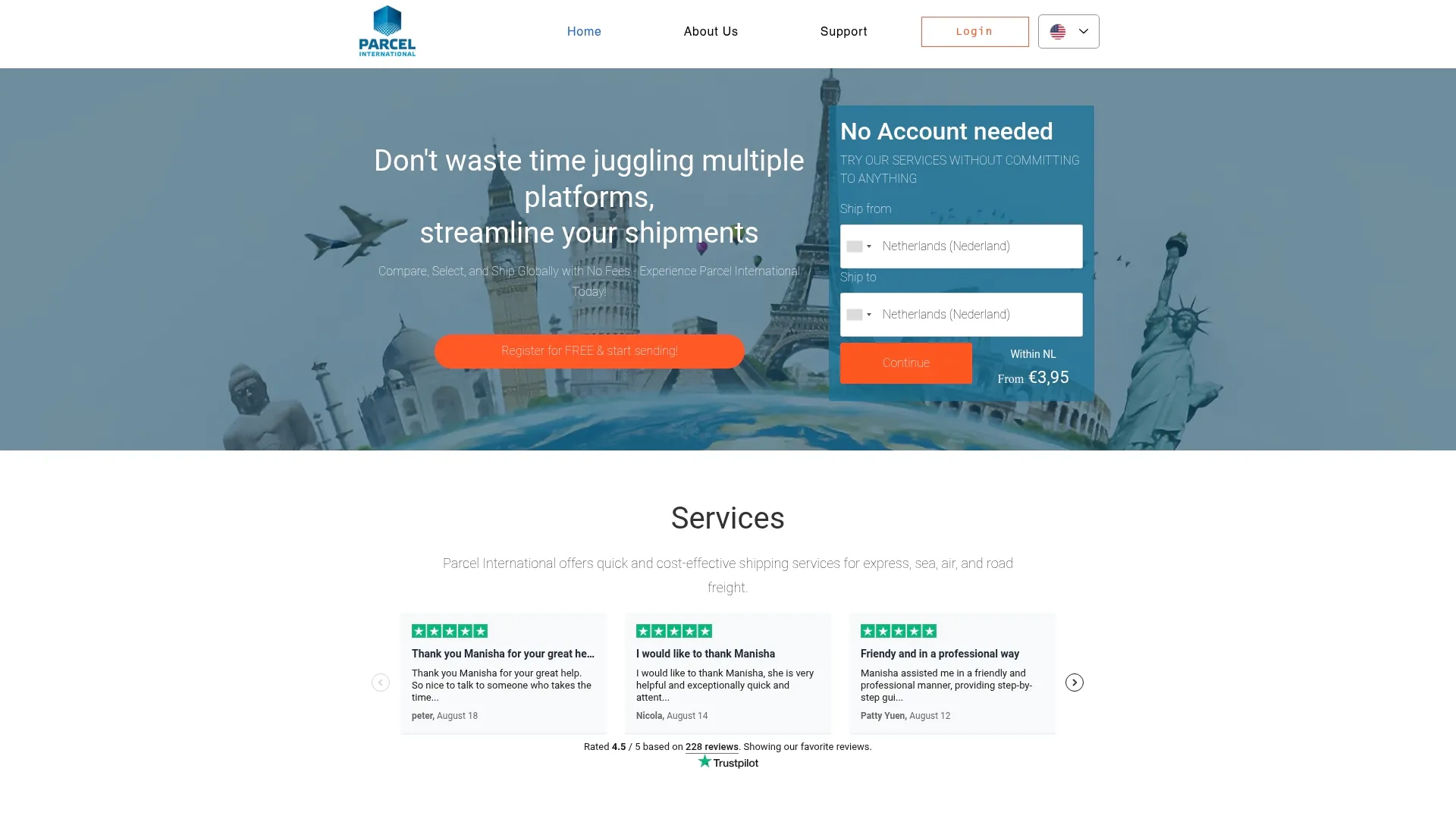
Through Parcel International, you can compare and book carriers and generate the required documents. Explore the options at parcelinternational.com and send your first package with confidence.
Can't find your question? Our support team is here for you 24/7 via the help centre.
What is the most common mistake in international shipping?
Incorrect or incomplete documentation is the most common mistake. Missing invoice values and vague product descriptions directly lead to customs delays.
How do I find the correct HS code for my product?
Use the official search tool of the Dutch Customs or the World Customs Organization. Enter a specific product description and select the most appropriate code.
What happens if my package has the wrong address?
A package with an incorrect address will not be delivered and will end up in the carrier’s depot. Without a return address, the package is lost. Always double-check each address field before shipping.
Do I always need to include a packing list?
For shipments outside the EU, an invoice is mandatory; a packing list is strongly recommended, especially for multiple packages. Inconsistencies between the invoice and packing list can lead to delays, even if the error is minor.
How do I choose the right shipping option for my package?
Compare options based on weight, dimensions, delivery time, and destination. Consider volumetric weight, as carriers charge based on the higher of the two (actual or volumetric weight).
Get a grip on your parcel shipping
Compare carriers, choose the best price and keep track of your international shipments. You can calculate and book without an account.
