
International shipments often come with unexpected costs and financial errors. For e-commerce businesses, reviewing every shipping invoice can seem time-consuming and complex due to fluctuating rates and international regulations. Thanks to a freight audit you uncover hidden billing errors and gain control over shipping trends, leading to direct cost savings and better financial insight. This allows you to use your logistics data more effectively and maintain a strong competitive position.

Key Points
- Cost Savings Through Freight AuditAccurately reviewing transport invoices prevents overpayments and improves financial efficiency.
- Advanced TechnologiesUsing AI and automation in audits increases the accuracy and speed of invoice reviews.
- Strategic Insight into Shipping ProcessesA detailed analysis of shipping costs provides opportunities for process optimization and better decision-making.
- Error PreventionSystematic audits help identify and prevent costly billing errors.
Freight Audit Explained: Definition and How It Works
A freight audit is a detailed process where e-commerce businesses meticulously review and analyze their transport invoices. The goal is simple yet crucial: to prevent overpaying for shipping costs.
The process involves several key steps:
- Collecting all transport invoices
- Verifying rates against original contract terms
- Identifying billing errors such as duplicate charges
- Analyzing shipping trends and cost movements
According to research, freight cost verification helps businesses prevent significant financial inefficiencies. This is especially true for e-commerce companies with complex international shipping processes.
Auditing freight rates goes beyond simply checking invoices. It provides deep insight into your logistics operations, enabling you to make strategic decisions about your shipping policies. By systematically analyzing each invoice, you uncover hidden cost-saving opportunities.
Key Benefits of Freight Audit:
- Direct Cost Reduction
- Increased Financial Transparency
- Better Negotiation Position with Carriers
- Detailed Insight into Shipping Costs
__Pro-tip:__ Consider specialized freight audit software that automatically reviews invoices and flags discrepancies.
Key Types and Processes of Freight Audit
freight audit encompasses various advanced methods that e-commerce businesses can use to accurately manage their shipping costs. Modern audit techniques leverage advanced technologies to maximize efficiency.
Below is a comparison of different types of freight audits and their typical applications in e-commerce:
Audit Type | Level of Automation | Ideal Use Case | Real-World Example |
|---|---|---|---|
Manual Review | Low | Small volumes/flexible needs | Periodic sample audits |
Automated Audit | High | Large volumes, scalable | Continuous monitoring via software |
Hybrid Method | Medium | Complex shipping flows | Manual review of critical transactions; automated for the rest |
Data-Driven Analysis | Very High | Strategy and optimization | Trend analysis for contract negotiations |
- Manual Reviews
- Automated Audits
- Hybrid Audit Methods
- Data-Driven Analyses
The freight audit process is complex and requires a systematic approach. Each audit begins with collecting and validating transport invoices, where every detail is checked against the original contract terms.
Modern technological advancements have transformed freight auditing. Artificial intelligence and advanced data processing make it possible to:
- Review multiple invoices simultaneously
- Uncover hidden cost discrepancies
- Identify patterns in shipping costs
- Generate real-time financial insights
Freight audit is not just about cost control; it is a strategic tool for financial optimization.
Key Technological Components:
- Machine Learning Algorithms
- Automated Verification Systems
- Integrated Reporting Mechanisms
- Cloud-Based Analytics Platforms
__Pro-tip:__ Invest in specialized freight audit software that uses AI technology for maximum accuracy and cost savings.

How Freight Audit Prevents Costs and Errors
The freight audit plays a crucial role in preventing financial losses for e-commerce businesses. Automating freight audits can reduce errors by up to 85%.
Identifying and preventing costly errors involves several strategic steps:
- Detecting duplicate invoices
- Verifying rate accuracy
- Validating weight and dimension calculations
- Confirming contractual terms
This table provides an overview of the most common shipping invoice errors and their potential financial impact:
Error Type | Possible Cause | Financial Impact |
|---|---|---|
Incorrect Contract Reference | Overpayment on every shipment | |
Human Error | Accumulation of small losses | |
Contract Violation | Non-compliance with agreements | Fines or repayments |
Unjustified Additional Charges | Duplicate or improper invoicing | Unnecessary cost increases |
- Incorrect Rate Application
- Manual calculation error
A systematic freight audit not only prevents financial leaks but also optimizes the entire logistics cost structure.
Key Prevention Methods:
- Real-Time Rate Validation
- Automated Error Detection Systems
- Standardized Invoice Review Processes
- Periodic Accuracy Audits
__Pro-tip:__ Implement automated audit algorithms that continuously analyze your shipping costs and flag suspicious transactions.
Data Insights and Process Optimization in E-commerce
Modern e-commerce requires a data-driven approach to logistics processes. Data warehouses form the backbone enabling continuous performance measurement and process optimization through smart business operations.
Key data-driven strategies for e-commerce include:
- Real-time shipment tracking
- Detailed cost analysis
- Predictive route optimization
- Customer behavior analysis
The integration of advanced data analytics delivers tangible benefits:
- More accurate cost forecasts
- More efficient route planning
- Enhanced customer experience
- Faster decision-making
Smart data insights transform logistics processes from reactive to proactive management.
Critical data sources for optimization:
- Shipping history
- Customer feedback systems
- Vehicle and route data
- Rate comparisons
__Pro-tip:__ Invest in integrated analytics platforms that can combine multiple data streams and generate real-time insights.
Financial benefits, risks, and alternatives discussed
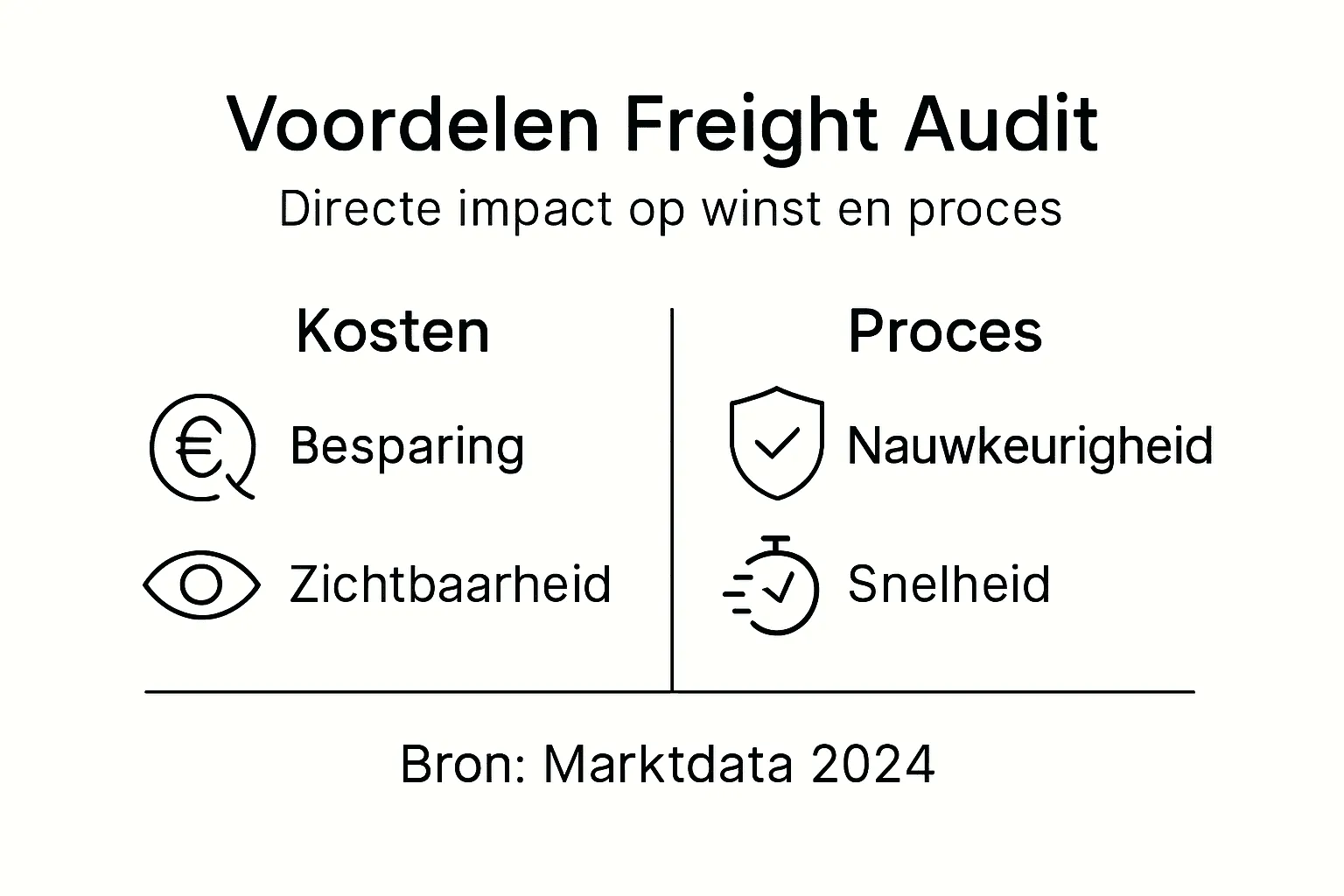
freight audit provides e-commerce businesses with crucial financial opportunities. Implementing audit systems can yield significant savings and operational improvements.
Key financial benefits:
- Direct cost reduction
- More accurate budgeting
- Increased financial transparency
- Prevention of unnecessary expenditures
Potential risks businesses should consider:
- Initial implementation costs
- Complexity of data integration
- Potential compliance challenges
- Technical infrastructure requirements
A well-implemented freight audit transforms financial risks into strategic opportunities.
Alternative approaches to freight audit:
- Manual invoice verification
- Partially automated systems
- Outsourcing to specialized service providers
- Hybrid verification methods
__Pro-tip:__ Choose an audit solution that is flexible and can scale with your e-commerce business.
Discover how Freight Audit can boost your e-commerce profitability
Many e-commerce entrepreneurs struggle with opaque shipping costs and hidden errors in their transport invoices. The power of a thorough freight audit lies precisely in preventing these cost leaks and creating financial transparency. Now that you know how these audits help identify incorrect rate applications, duplicate invoicing, and unjustified surcharges, it’s time to optimize your logistics in practice.
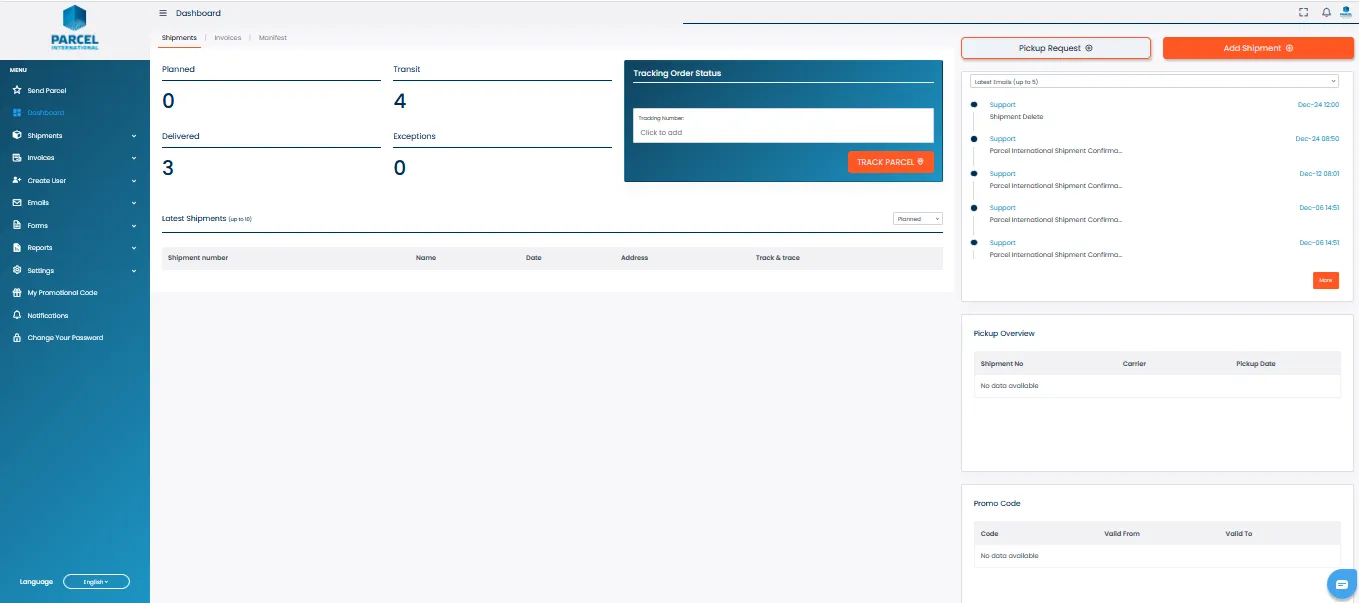
At Parcel International , we’re happy to assist you with a simple and reliable process for international shipping. Thanks to our experience since 2007 and our global network in over 220 countries and regions, you can always choose the best carrier that fits your budget and needs. We make it easy to compare rates and ensure clear communication, so you gain control over your shipping costs and can send packages without hidden surprises.
Want to benefit immediately from lower shipping costs and more control over your logistics? Start improving your shipping process today with Parcel International. Discover how we can enhance your freight audit insights with efficient and cost-saving shipping solutions. Visit our website and take the next step toward profitable e-commerce operations.
freight-audit
Can't find your question? Our support team is here for you 24/7 via the help centre.
What is cross-docking?
Cross-docking is a logistics method where goods are directly transferred from inbound to outbound vehicles without long-term storage. This accelerates shipping and reduces costs.
What is groupage shipping?
A groupage shipment is a logistics solution in which loads from different senders are combined into one transport, resulting in more efficient and cost-saving transport.
What is Just In Time Delivery?
Just-in-Time (JIT) delivery is a logistics approach where products are delivered exactly when needed, minimizing inventory costs and storage space.
What is first mile delivery?
First mile delivery is the initial phase of the logistics chain where products are collected from the supplier or manufacturer and prepared for further shipment.
What is package consolidation?
Parcel consolidation is a logistics strategy where multiple smaller packages are combined into a single larger shipment. This helps reduce shipping costs and improve transport efficiency.
What is parcel routing?
Parcel routing is a logistics process that determines how packages take their most efficient journey through transportation networks, considering variables such as distance, transport modes, and real-time conditions.
What is Shipping Management?
Shipping management is the process of coordinating and managing all logistics activities to transport goods efficiently and securely from one location to another. It includes planning, tracking, and risk management.
What is package forwarding?
Parcel forwarding is a logistics service where a company acts as an intermediary for shipping packages to hard-to-reach destinations.
What is Parcel Throughput?
Cross-docking is a logistics process where packages are shipped through a central distribution center instead of directly from sender to recipient.
What are split shipments?
Split shipments are shipping methods where a single order is divided and sent in multiple packages, often because products come from different warehouses.
What is international last mile?
International last mile refers to the final segment of the shipping process where a parcel reaches its ultimate destination. It involves significant logistical challenges and is crucial for customer satisfaction.
What is a freight audit?
A freight audit is the process where e-commerce companies review and analyze their shipping invoices to ensure they are not overpaying for transportation costs.
What is a secure shipment?
A secure shipment involves a process that ensures the safety and integrity of goods during transport through load securing, pre-shipment inspection, and compliance with transportation regulations.
What is pre-shipment inspection?
Pre-shipment inspection is a quality control process conducted by independent third parties to verify that products meet technical specifications and packaging standards before shipment.
What is international distribution?
International distribution is the process of shipping products from the supplier to the end user, involving various logistics steps and customs procedures.
What is order picking and why is it important?
Order picking is the process of collecting and assembling products for specific customer orders. It is essential for customer satisfaction and operational efficiency in e-commerce logistics.
What are the different order picking methods?
There are several order picking methods, including manual picking, automated picking, batch picking, and zone picking. Each method has its own advantages and disadvantages depending on a company's specific needs.
How does order picking impact a company's costs?
Order picking has a significant impact on operational costs, including labor, time, error, and infrastructure expenses. A well-optimized system can substantially reduce these costs.
What are the key technologies that optimize order picking?
Technological innovations such as robotics, augmented reality, artificial intelligence, and the Internet of Things improve the efficiency and accuracy of order picking by streamlining processes and providing real-time insights.
What exactly is indirect shipping?
Indirect shipping includes dropshipping, marketplaces, and engaging freight forwarders or distributors. In all these models, a third party handles part of the transportation or storage.
When is direct shipping better for my online store?
Direct shipping is more advantageous when you want maximum control over inventory, packaging, and customer experience. Shipping directly from your own stock without intermediaries yields higher margins and better customer satisfaction at sufficient volume.
Is hybrid shipping possible and worthwhile?
Yes, many online stores start with indirect shipping and transition to a hybrid model as they grow. Begin with indirect shipping at low volumes and switch to direct or hybrid once control and economies of scale become more important.
What is more important for international shipments: direct or indirect shipping?
For international shipments, customs procedures and risk distribution are often more decisive than the shipping model alone. Customs representation in non-EU trade is crucial to avoid delays and additional costs, regardless of the model you choose.
What are the key benefits of fulfillment logistics?
Fulfillment logistics ensures faster and more reliable order processing and improved customer satisfaction, thanks to high order accuracy and quick returns handling.
How long does returns processing take in fulfillment logistics?
According to industry benchmarks, returns processing is completed within 48 to 72 hours by professional fulfillment providers.
What fulfillment models are available for e-commerce businesses?
You can handle fulfillment in-house for full control, outsource to a 3PL partner for scalability, or choose a hybrid combination of both models.
Why is fulfillment logistics important for international e-commerce?
It optimizes the entire order chain from picking to returns, which is essential for growth in a rapidly expanding cross-border market.
What is last-mile delivery and why is it such a challenge?
Last-mile delivery is the final leg of the delivery journey: from the depot or distribution center directly to the customer's home. It is challenging because this segment is the least predictable, with fluctuating traffic conditions, absent customers, and high costs per stop. Last-mile delivery is therefore the largest cost factor in e-commerce logistics and is the first area requiring optimization.
What are the benefits of reducing returns with smart technologies?
Fewer returns mean lower processing costs, faster inventory availability, and higher customer satisfaction. In the fashion industry, where return rates can be high, AI-driven size recommendations and 360-degree product images make the difference between profit and loss per order.
How important is sustainable logistics for conversion?
Sustainable shipping options have become a proven conversion tool. Online stores that offer green delivery choices during checkout often see an increase in conversion rates and a reduction in delivery trips, which also lowers operational costs.
Is outsourcing logistics better for every online store?
Not for every online store or at every stage of growth. For online stores with high volume and international expansion, outsourcing to a 3PL partner is almost always more efficient. For small online stores with highly personalized products, in-house management has advantages. Outsourcing fulfillment to 3PL partners works best when you also maintain internal control over quality and communication.
Get a grip on your parcel shipping
Compare carriers, choose the best price and keep track of your international shipments. You can calculate and book without an account.
