
TL;DR:
- The choice between air and sea freight depends on urgency, volume, and the value of goods.
- Air freight is faster but more expensive, while sea freight is cost-effective for large volumes without time pressure.
- Proper planning, correct documentation, and partner selection prevent extra costs and delays.
Many businesses assume that air freight is always the fastest and most expensive option, and sea freight is always the cheapest but slowest. This assumption is only partially true. The actual choice depends on factors such as the weight of your shipment, destination, delivery urgency, and the value of your goods. Opting for air freight too quickly may result in unnecessary costs, while choosing sea freight without knowing lead times could cause missed customer deliveries. In this article, you’ll learn exactly when each method is the right choice, including concrete examples and practical considerations.
Key Insights
Point | Details |
|---|---|
Speed vs. Affordability | Air freight is fast, while sea freight is cost-efficient for larger shipments. |
Choosing Based on Needs | The best choice depends on urgency, product value, and volume. |
Avoid Common Mistakes | Proper planning and documentation prevent costly delays. |
Mixed Methods Possible | Combining air and sea freight sometimes offers the best of both worlds. |
What Is Air Freight and What Is Sea Freight?
Now that the challenge is outlined, it’s important to first clarify what air freight and sea freight actually entail.
Air Freight refers to the transportation of goods by airplane. This can be via dedicated cargo planes or as additional cargo in passenger aircraft. Air freight is suitable for small to medium-sized volumes where speed and reliability are priorities. Examples include electronics, pharmaceutical products, fashion collections, and perishable goods.
Sea Freight is the transportation of goods by container ship. Goods are loaded into standard 20- or 40-foot sea containers. Sea freight is ideal for large volumes with less time pressure. Examples include furniture, machinery, raw materials, and bulk goods.
Both methods have their own areas of application. Air freight is faster but generally more expensive than sea freight, which directly impacts your total logistics costs. For a complete overview of all available international shipping methods, this helps you make the right choice for your specific situation.
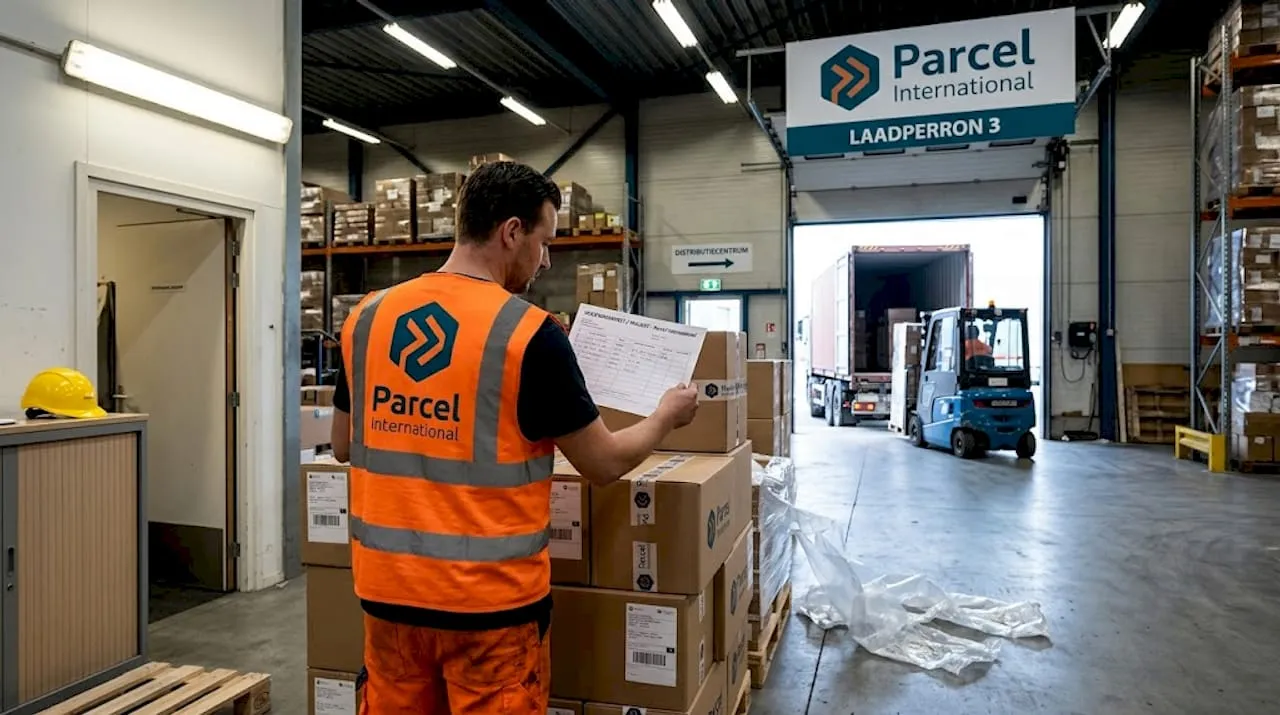
Below is an overview of typical applications for each method:
Air Freight Is Suitable For:
- Time-sensitive shipments such as urgent orders
- High-value-per-kilo products, such as jewelry or electronics
- Small volumes that need to be delivered quickly
- Perishable goods such as fresh fruit, flowers, or medicines
- Shipments to destinations without good seaports
Sea Freight Is Suitable For:
- Large volumes and heavy cargo
- Low-value-per-kilo goods, such as furniture or bulk clothing
- Non-urgent shipments with longer delivery times
- Environmentally conscious choices, as sea freight has a lower CO2 emission per ton
- Shipments where cost savings outweigh speed
For e-commerce businesses that regularly replenish large inventories, sea freight is often the standard choice for base stock. Air freight is then used for urgent replenishments or seasonal goods. If you work with an air freight step-by-step plan, you can streamline this process and avoid unnecessary costs.
It’s also good to know that sea freight has two variants: FCL (Full Container Load) and LCL (Less than Container Load). With FCL, you rent an entire container. With LCL, you share the space with other shippers, which is cheaper but sometimes slower due to additional transshipment points.
Comparison of Costs, Speed, and Reliability
With the basics covered, it’s time to clearly compare the key differences side by side.
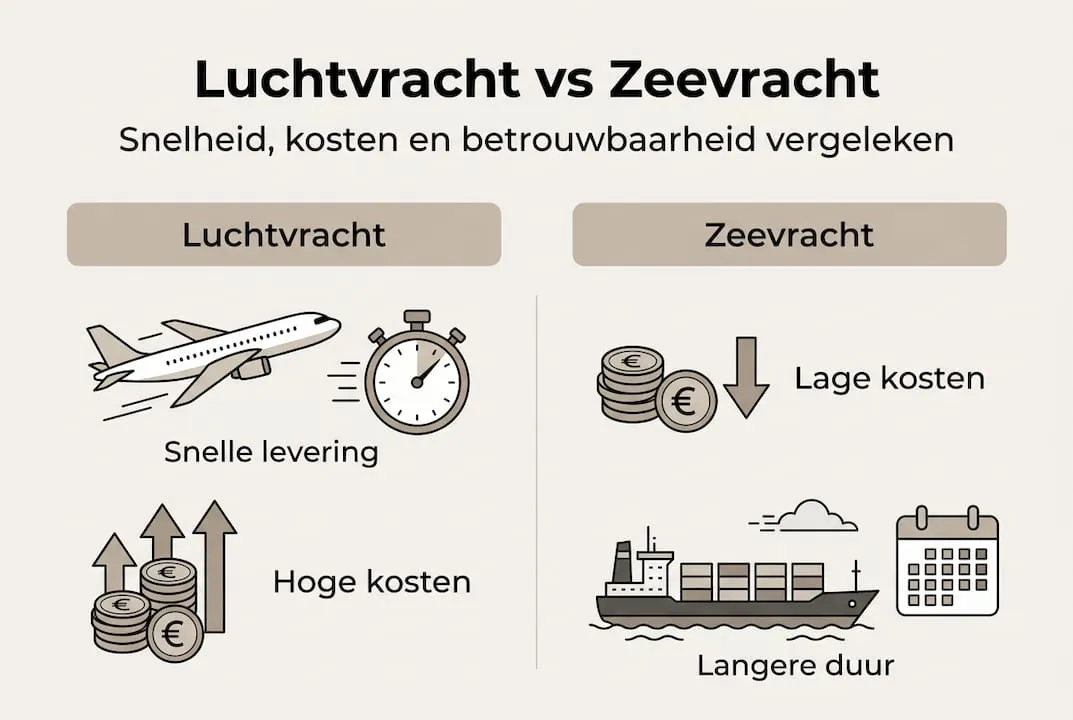
The biggest misconception is that air freight is always the better choice if you want fast delivery. This is true for distances over 5,000 kilometers, but for regional shipments, sea freight via fast connections can also offer acceptable lead times. Air freight is on average 4 to 6 times faster than sea freight, but costs are significantly higher. This difference in speed is most noticeable on routes such as Europe to Asia or North America to Australia.
Characteristic | Air Freight | Sea Freight |
|---|---|---|
Average Transit Time Europe-Asia | 3 to 7 days | 20 to 35 days |
Cost per Kilogram | High (approx. €4 to €8) | Low (approx. €0.10 to €0.50) |
Maximum Volume | Limited | Virtually unlimited |
Reliability | High | Variable |
CO2 Emissions | High | Lower per ton |
Tracking | Real-time | Limited but improving |
Customs Procedures | Fast | More complex |
In addition to the base costs, there are also hidden costs to consider. For air freight, you often pay fuel surcharges, security fees, and handling costs at the airport. For sea freight, there are port fees, documentation costs, and sometimes storage fees if your container is not picked up on time.
Seasonal influences also play a major role. Around the holidays, air freight rates rise sharply, sometimes by 30 to 50 percent. Sea freight rates also fluctuate but are generally more stable. By using tools to optimize shipping costs, you can better anticipate these fluctuations.
Reliability is another difference. Air freight has a lower risk of delays due to external factors, but flights can be canceled or fully booked. Sea freight is more susceptible to weather conditions, port congestion, and strikes. These are risks you must factor into your planning.
Pro tip: Book sea freight shipments at least four to six weeks in advance. This gives you better rates and more departure time options. For air freight, during peak periods like November and December, plan at least two weeks ahead to secure capacity.
Also consider the different shipping options available for your route. Sometimes, a combination of sea freight and local express service is cheaper than pure door-to-door air freight.
When to choose air freight, when sea freight?
After understanding the facts, translating this into practice is essential: what should you actually consider when making your choice?
The decision is rarely black and white. But with a clear sequence of considerations, you can quickly arrive at the right choice. For time-sensitive shipments and small volumes, air freight is the best option, while large volumes with lower urgency are better suited for sea freight.
Follow this sequence for every shipment:
- How urgent is the delivery? If the customer needs the product within a week and the destination is in Asia or America, air freight is virtually the only option.
- What is the weight and volume? Air freight quickly becomes unaffordable above 500 kilograms or for large volumes. Sea freight scales much better.
- What is the value of the goods? Products with a high value per kilogram, such as electronics or luxury goods, are better off with air freight due to the shorter exposure to risks.
- How often do you ship to this destination? For regular shipments, it pays to set up a fixed sea freight flow and use air freight only for emergencies.
- What are the customs requirements at the destination? Some countries have strict import regulations that further extend the lead time for sea freight.
Here are two concrete practical examples to clarify this:
Example 1: Urgent order for medical equipment
A hospital in Singapore urgently needs a replacement part for an MRI scanner. The part weighs 12 kilograms and has a value of €8,000. Delivery must be completed within 48 hours. In this case, air freight is the only logical choice. The cost of freight is negligible compared to the value of the product and the urgency of the situation.
Example 2: Seasonal clothing purchase
A Dutch webshop orders 2,000 kilograms of summer jackets from a manufacturer in China for the upcoming season. Delivery is not needed for another six weeks. Sea freight might cost €400 here, while air freight for the same volume could easily cost €6,000 or more. The choice is clear.
Quick decision guide:
- Delivery needed within 7 days: choose air freight
- Volume over 500 kilograms and not urgent: choose sea freight
- High product value and fragile goods: consider air freight
- Regular large shipments: plan sea freight as standard
- Uncertain about the right choice: request a quote for both options
More practical examples of shipping methods help you make these kinds of decisions faster and better in your daily operations.
Common mistakes and smart optimization tips
To conclude, here are common mistakes and directly applicable optimization tips that can truly make a difference.
Many companies unnecessarily lose money or time due to avoidable errors in their freight planning. Poor customs documentation or late bookings significantly increase the risk of delays and additional costs. These are the most common pitfalls:
- Booking too late: Especially with sea freight, capacity is scarce during peak periods. Late bookings lead to higher rates or even no available space.
- Incorrect packaging: Goods that do not meet the packaging requirements for air or sea freight are rejected or delivered damaged.
- Incomplete customs documents: Missing invoices, incorrect HS codes (the international product codes for customs), or incorrect value declarations lead to delays and fines.
- Not accounting for local holidays: Ports and airports in countries like China close during national holidays. This can delay your shipment by weeks.
- Focusing only on freight price: The cheapest option is not always the best. Considering storage costs, customs clearance, and delivery reliability provides a more realistic picture.
Pro tip: Work with a reliable freight forwarder or logistics service provider with local knowledge of your destination country. They know the customs procedures, reliable carriers, and the best routes. This not only saves you money but also a lot of stress.
Real-time tracking is now standard for air freight, but it still lags behind for sea freight. Choose a partner that also provides good visibility on the status of your sea freight shipments. This helps you proactively inform customers and detect issues early.
Do you want to structurally shorten delivery times for your international shipments? Start by standardizing your documentation process and scheduling fixed shipping days per route. Small improvements in preparation yield significant time savings in execution.
Differences between air and sea freight: our pragmatic view
After years of experience in international logistics, we see one recurring pattern: companies that focus solely on the lowest freight price ultimately pay more. The real gain lies in flexibility and knowing your options.
Market conditions are constantly changing. Port strikes, fuel prices, geopolitical tensions, and pandemics can drastically alter sea freight rates and lead times in a short period. Those who do not have an air freight alternative prepared are left empty-handed.
We also see more and more companies opting for a hybrid approach: sea freight for base stock, air freight for urgent replenishments and new products. This provides the best balance between cost and delivery reliability. However, it requires good planning and clear communication with your logistics partners.
The advice of logistics service providers is indispensable here. They see daily which routes perform well and which cause problems. Use that knowledge. A steady relationship with a reliable partner is worth more than constantly comparing the cheapest provider.
Set up scenarios for your three most frequently used routes: what do you do if sea freight is delayed by two weeks? Who do you inform, what are the costs of switching to air freight, and how do you communicate this to customers? Companies that plan this in advance act faster and more professionally when things go wrong.
Grow your logistics with the right choices
Do you want to apply these insights directly or learn more about smart international logistics?
At Parcel International, we help small and medium-sized e-commerce businesses make the right shipping decisions every day. Since 2007, we’ve handled shipments to over 220 countries and territories, with access to reliable air and sea freight services through proven carriers.

Whether you want to compare a one-time shipment or set up a structured shipping strategy, our tools and advisors are ready to assist. Download our logistics checklist to get started right away, read more about international logistics, or explore all shipping options on our website. Together, we ensure your logistics become not only more cost-effective but also more reliable.
Can't find your question? Our support team is here for you 24/7 via the help centre.
When Is Air Freight the Best Option?
Choose air freight for shipments where speed and freshness are critical, such as perishable goods. This method ensures delivery within 1 to 5 days and prevents spoilage with temperature-controlled handling.
What are the key cost differences between air and sea freight?
Air freight is on average 4 to 6 times more expensive than sea freight per unit of weight, which can quickly add up to thousands of euros for large volumes. Sea freight offers significantly lower costs per kilogram but requires a longer lead time.
What are the biggest bottlenecks in sea freight?
Sea freight can be delayed by weather conditions, port congestion, and strict customs procedures, making the lead time unpredictable. Additionally, sea freight requires more paperwork and a longer preparation time than air freight.
Can I combine air and sea freight for a single shipment?
Yes, combining air and sea freight is possible through multimodal logistics, where you link different transport modes for optimal speed and cost savings. This is particularly useful for long routes with multiple stops or varying urgency per segment of the shipment.
Get a grip on your parcel shipping
Compare carriers, choose the best price and keep track of your international shipments. You can calculate and book without an account.
