
The cheapest and most reliable way to send a package abroad is by comparing rates online through a shipping platform and choosing based on the total price—not just the base rate. The total price includes shipping costs, surcharges, and potential customs fees. Focusing only on the starting price often leads to unexpected costs upon delivery, especially since customs regulations were tightened as of July 1, 2026.
A few factors almost always determine whether you’ll pay less or more: the weight and dimensions of your package, the destination inside or outside the EU, and the service you select. Customs Since that date, customs charges a fixed fee of €3 for shipments up to €150 per product category, plus VAT and handling fees. A platform like Parcel International helps you visualize these costs upfront, avoiding surprises later.
Ready to get started? Begin here:
- Weigh and measure your package accurately, including packaging.
- Check if the destination is inside or outside the EU.
- Compare rates using a shipping calculator before booking.
Key Insights
The cheapest and most reliable way to ship internationally is always to compare total prices, including surcharges and customs fees—not just the base rate.
Point | Details |
|---|---|
Compare total price | Add up shipping costs, surcharges, and customs fees before making a decision. |
Note customs duties since 2026 | For shipments up to €150, customs charges a fixed fee of €3 per product category, plus VAT. |
Pack smartly | Avoid unnecessary volumetric weight with a properly sized box and lightweight filler material. |
Communicate customs costs upfront | Inform recipients outside the EU about potential additional costs upon delivery. |
Use a comparison platform | Parcel International offers a rate calculator, automatic customs documentation, and tracking without requiring an account. |
Checklist: How to Choose the Cheapest Yet Reliable Shipping Option
Not every cheap option is reliable, and not every reliable option is expensive. The key is finding the right balance across five criteria.
- Total price per weight and dimensions. Calculate the base price plus all surcharges, not just the starting rate.
- Delivery time. Standard service is often half the price of express, while the difference in arrival time is negligible for most shipments.
- Track & trace and customs support. A service without clear tracking or automatic customs documentation will cost you time and money in calls and reshipments.
- Insurance options. For valuable shipments, basic insurance is often sufficient, but always check the maximum coverage.
- Pickup and delivery options. Dropping off the package yourself often eliminates pickup fees.
For occasional, lightweight shipments, postal services are usually the most cost-effective. Once your package exceeds a few kilograms or you ship multiple packages monthly, a commercial courier or a shipping platform that consolidates volumes often wins on price and speed.
Watch for these red flags when comparing:
- No clear mention of customs documentation or who handles it.
- Surcharges that only appear at checkout.
- No tracking number or only an 'estimated' delivery without status updates.
Pro tip: Always ask about the number of business days until delivery *in the destination country*, not just the pickup time in the Netherlands. That difference is often hidden in the fine print.
What Determines the Price and Which Customs Fees Apply Inside and Outside the EU
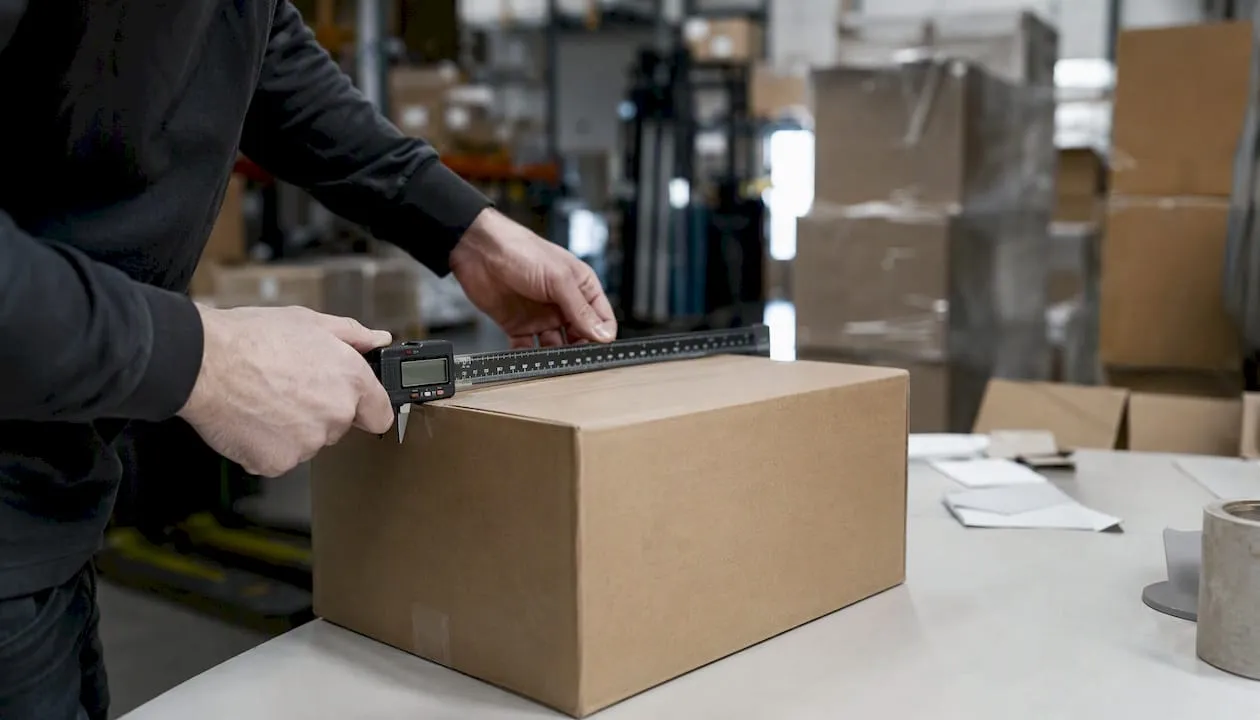
The cost of an international shipment depends on more than just weight. Carriers also calculate volumetric weight: for lightweight but large boxes, you pay based on size, not actual weight. Additionally, fuel surcharges, remote area fees for hard-to-reach addresses, seasonal storage during peak periods, and handling fees for extra processing all add up.
Within the EU, customs don’t apply, so those costs are eliminated. Outside the EU, the rules have changed. Until mid-2026, shipments up to €150 were exempt from import duties. That exemption was abolished as of July 1, 2026. For shipments up to €150, customs now charges a fixed fee of €3 per product category, plus VAT and any handling fees from the carrier.
Many guides still mention “24% import tax” as a fixed percentage, but this isn’t accurate for smaller shipments. Customs applies a fixed fee of €3 per category for packages up to €150, with VAT as a separate component. For larger shipments, standard value-based import duties apply. Anyone shipping abroad must consider that the recipient may face additional costs: clearance fees from the carrier or handling fees separate from official import duties. Comparison pages with sample rates per country and service level clearly show the difference between standard and express—often a factor of two or more.
Pro tip:
The value and product category you declare on customs documents help determine the import duties. Communicate this upfront to the recipient, especially for business shipments, so no one is surprised at the door. Practical Savings Tips: Packaging, Booking Tricks, and Services
Packaging is the easiest place to save—and the most often overlooked. Choose a box that’s just big enough: too much empty space increases volumetric weight, which you’ll always pay extra for. Use lightweight but sturdy filler material instead of thick layers of bubble wrap.
#savings-tips-packaging-booking-tricks-services

Comparing rates is worth it when booking. Use a rate calculator to compare multiple options side by side before choosing, and always opt for the standard service for non-urgent shipments. Do you regularly send multiple parcels to the same region? Bundle them where possible into a single shipment; this is often cheaper than individual bookings. For SMEs and e-commerce businesses, structural optimization of packaging and shipping profiles prevents unexpected costs and complaints.
What costs you money:
- A box that is too large with excessive padding.
- Booking express when it’s not necessary.
- Sending individual parcels when consolidation was possible.
What saves you money:
- Pre-labeling and completing the correct customs forms.
- Choosing lightweight, compact packaging. For e-commerce, this is a fixed rule of thumb: the more compact, the cheaper.
- Incorporating shipping costs into your pricing strategy so you don’t lose margin afterward.
Pro tip: Weigh your parcel only after it is fully packed and sealed. A miscalculation of a few hundred grams can push you into a more expensive weight class.
Check out our best-ways-to-reduce-shipping-costs for more insights on this topic.
Step-by-step: How to book affordably and error-free online
Completing a booking error-free prevents hassle and extra costs afterward.
- Measure and weigh your parcel accurately, including packaging.
- Select the destination and the correct service level (standard or express).
- Use a rate calculator or shipping platform to compare options.
- Complete customs documents fully and correctly, including value and product category.
- Pay and schedule your pickup or delivery option.
Double-check just before shipping:
- Is the delivery address correct, including postal code and country?
- Has a commercial invoice or proforma invoice been added for shipments outside the EU?
- Is the packaging secure, with no room for damage?
- Have you selected an insurance option that matches the value of the contents?
- Is tracking activated so you and the recipient can monitor the status?
When checking out, watch for hidden surcharges, currency fees for international payments, and cancellation terms before finalizing.
Why a shipping platform helps with international shipping
Comparing via a platform is typically the most effective way for individuals and SMEs to save, simply because you can view rates, delivery times, and terms side by side in one overview. Parcel International has been doing this since 2007 and provides access to shipping options for over 220 countries and territories, with a rate calculator and automatically generated customs documents as standard features.
A small business that regularly ships to multiple European countries saves money by consolidating shipments instead of making individual bookings with different carriers. Automating labels and customs forms not only saves time but also prevents errors that could otherwise lead to extra costs or delays.
If you look up rates per carrier yourself, you waste time that a comparison platform bridges in seconds, and you often miss the surcharge that makes the difference between a cheap and an expensive shipment.
Practical advice for Dutch users
Always look at the total price, not just the base rate, and be upfront with recipients about potential customs costs. Test one shipment to check rates and delivery times before scaling up.
Save instantly with Parcel International
Parcel International is the alternative to individual bookings with separate carriers: one overview, no mandatory account, and rates you can compare directly without waiting for calls or quotes.
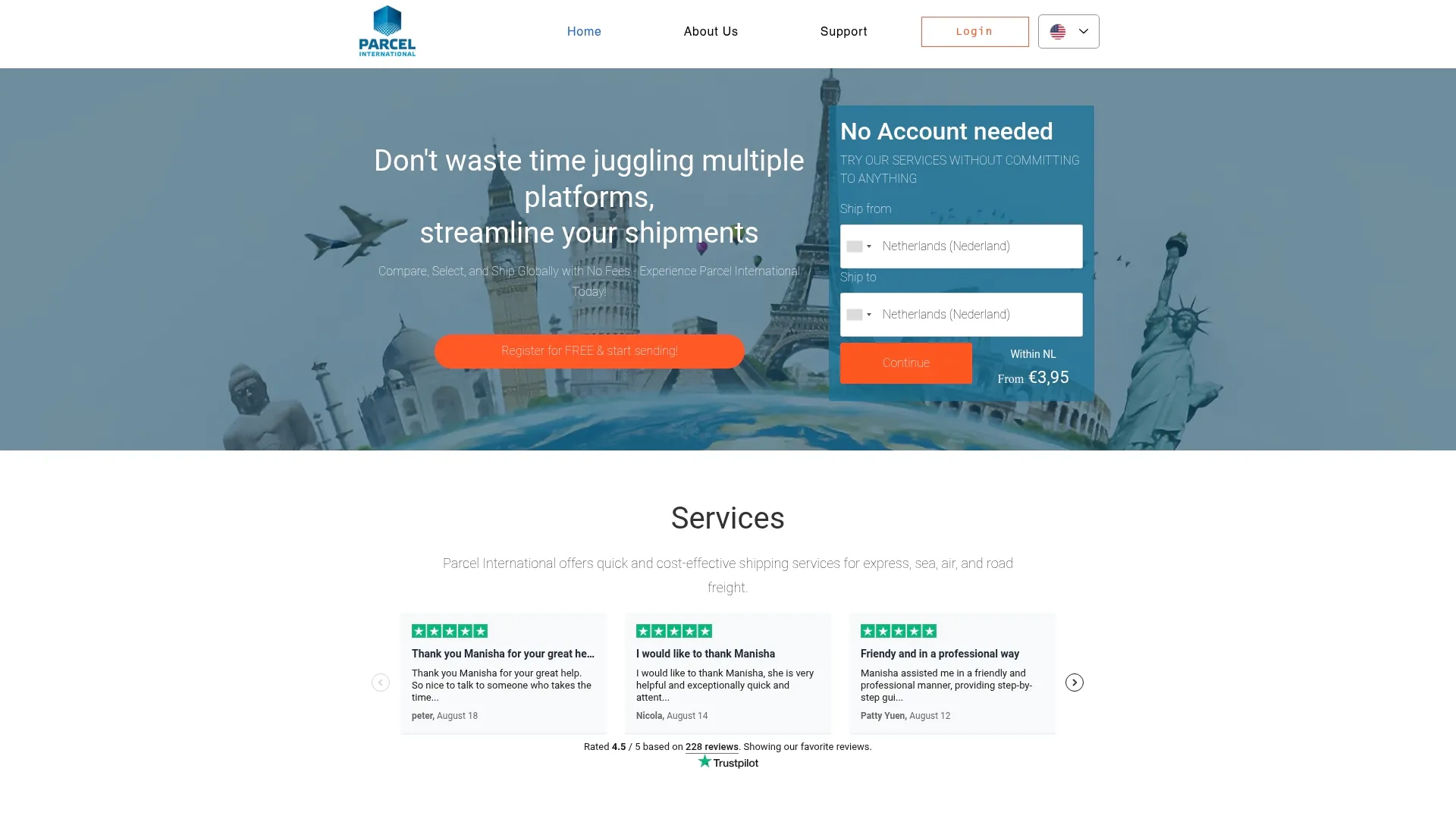
You receive automatically generated customs documents, so you don’t have to figure out forms yourself. Track & trace is available as standard, so you and your recipient can follow the status from start to finish. Customer support is ready if something goes wrong, and with experience since 2007 and coverage to over 220 countries, you know you’re not booking with an unknown party.
Want to see what your shipment costs right now? Compare rates and book your shipment to discover within minutes which option is the cheapest for your destination.
Sources
Consult Customs for binding import rules, Dutch Government for general regulations, and Parcel International for direct rate comparison.
Get a grip on your parcel shipping
Compare carriers, choose the best price and keep track of your international shipments. You can calculate and book without an account.
