
Shipping an order to Germany at a reasonable rate is usually manageable. However, once shipments to the US, UK, or the Middle East are added, costs often rise faster than expected. Affordable international shipping for SMEs isn’t about luck—it’s about an approach where price, delivery time, and reliability are consistently balanced.
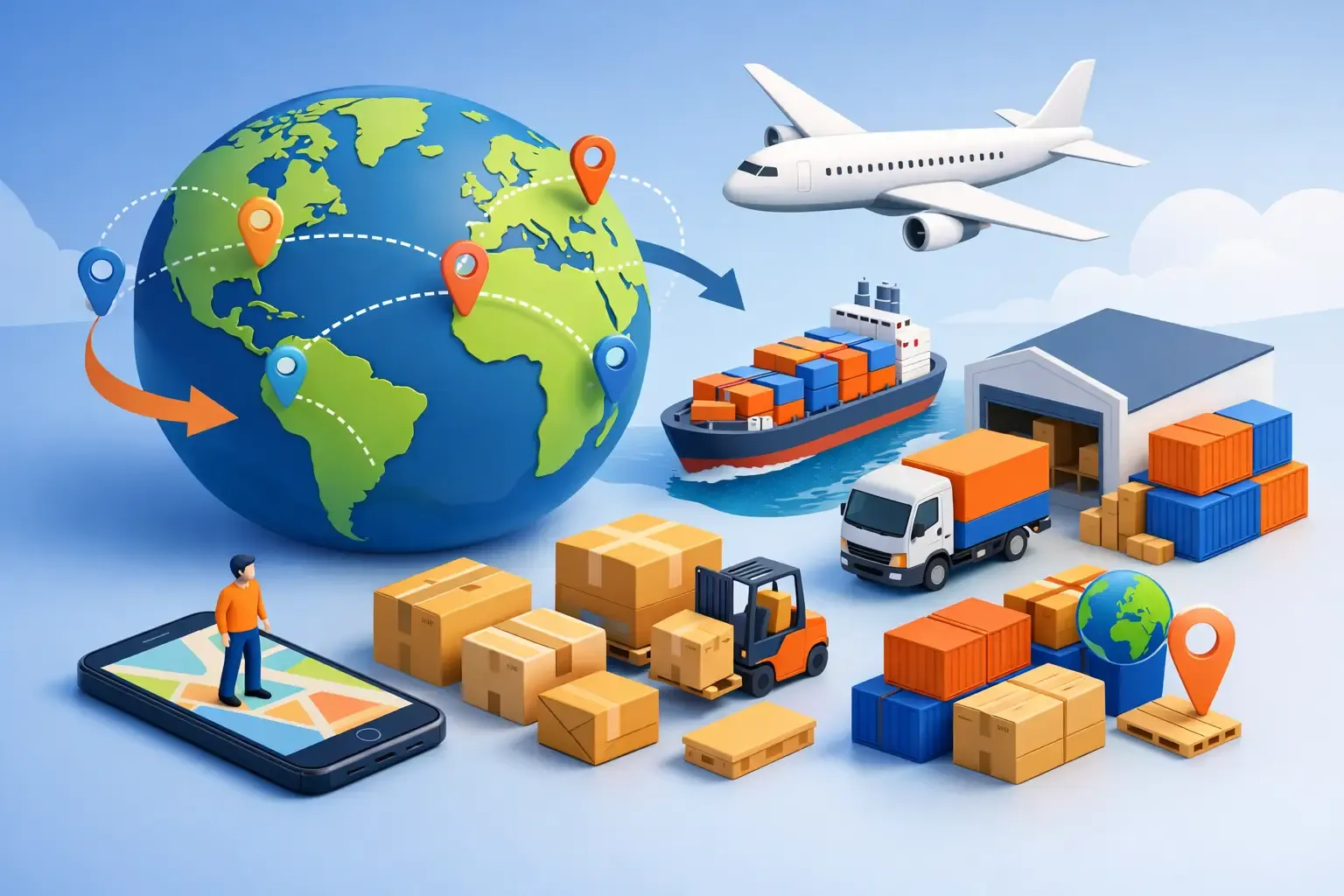
Why Affordable International Shipping for SMEs Is Often Challenging
For many SMEs, the challenge doesn’t start with shipping itself but with the overwhelming number of choices. One carrier may be cost-effective for lightweight parcels, while another is better suited for business documents, pallets, or express shipments. If you want to select the best option per destination, weight, and service level, you’ll quickly spend a lot of time navigating separate portals, manual comparisons, and unclear surcharges.
There’s more to it. A low base rate means little if fuel surcharges, remote area fees, or customs clearance costs are added. For small and medium-sized businesses, these costs add up fast—especially when international shipping isn’t just a side activity but a key part of revenue.
Where the Real Savings Lie
When searching for affordable international shipping for SMEs, the first thought is often the lowest price per parcel. That makes sense, but it’s not always the cheapest choice overall. The real savings usually come from better comparisons, less manual work, and avoiding mistakes.
An incorrectly entered weight, an inaccurate customs description, or choosing an unnecessarily fast service often costs more than a few euros’ difference in rates. Returns and delayed deliveries also come at a price—not just in shipping costs but in customer satisfaction and extra work for your team.
That’s why it pays to look beyond the rate and consider the total shipping cost per order. Think about transit time, tracking, customs handling, and the likelihood of exceptions along the way.
Affordable International Shipping for SMEs Starts with Comparison
For SMEs, comparison isn’t a luxury—it’s a practical necessity. Not every shipment has the same priority. An e-commerce order with a low value requires a different shipping choice than an urgent spare part for a business client.
By comparing multiple carriers and service types side by side, you’ll quickly see where the real differences lie. Sometimes, an express service is only slightly more expensive and prevents a customer inquiry or production downtime. In other cases, an economy service is more than sufficient and significantly cheaper. It depends on what you’re shipping, the destination, and your customer’s expectations.
This is where the value of a platform that brings together different carriers comes in. You don’t need to manage multiple contracts, systems, and rates yourself to still have the freedom of choice. This makes international shipping not only more affordable but also more transparent.
Key Factors That Determine Your International Shipping Costs
The price of an international shipment is typically determined by a combination of weight, volume, destination, and speed. Volumetric weight, in particular, surprises many business owners. A lightweight but large parcel can end up costing more than a compact, heavier one. Choosing smarter packaging can sometimes save money without changing the service.
The destination also plays a major role. Shipping within the EU is often simpler than to countries with more extensive customs formalities. In some regions, express services are competitively priced, while in others, economy or consolidation services are more cost-effective.
Additionally, the nature of the goods matters. Documents, samples, consumer items, and industrial parts don’t always require the same approach. For high-value or sensitive goods, a slightly more expensive but better-tracked service may ultimately be the safer—and smarter—choice.
Practical Ways to Ship More Affordably
The quickest win often lies in standardizing your process. If your team has set choices for packaging, descriptions, and services for common shipments, the chance of errors decreases. Fewer errors mean fewer corrections, less delay, and fewer unexpected costs.
Also, package items as compactly as possible without risking transport damage. Too much empty space increases the chance of a higher volumetric rate, while too little protection can lead to damage claims and returns. Affordable shipping doesn’t mean cutting corners in the wrong places.
Critically assess the need for express shipping. Many businesses default to the fastest option, even when the customer doesn’t expect it. If your delivery time communication is clear, you can often choose a more cost-effective service without compromising the customer experience.
It also helps to regularly analyze shipping data and destinations. If you frequently ship to the same countries, patterns emerge that you can leverage. You’ll quickly see which services consistently perform well and where you’re systematically overpaying.
When Cheap Isn’t the Best Choice
There’s a difference between competitively priced and choosing the cheapest option. For some shipments, the lowest price may mean a higher risk of longer transit times, limited tracking, or delays at the border. This isn’t necessarily a problem—as long as it fits the type of order.
For a non-urgent, low-value delivery, a cheaper economy service may work just fine. For a premium order, contract documents, or time-sensitive parts, the situation is different. In those cases, reliability often outweighs a small saving on the rate.
SMEs benefit from flexibility—not a one-size-fits-all solution but the ability to choose what makes sense per shipment. This keeps costs manageable without sacrificing service where it matters most.
Less Administrative Hassle, More Control
International shipping becomes expensive when it consumes a lot of internal time. Employees manually looking up rates, creating labels in different systems, or repeatedly entering customs data indirectly drive up costs. Those hours may not always appear on the transport invoice, but they do impact your margin.
A centralized workflow makes a difference. When you can compare rates, select a service, and book directly in one place, international shipping becomes more scalable. This is especially important for smaller teams. You don’t want to become a logistics specialist just to sell globally.
That’s also why many companies opt for a solution without fixed costs or minimum volumes. You maintain flexibility while gaining access to competitive rates and multiple shipping options. For growing businesses, this is often more practical than managing individual carrier agreements right away.
Affordable international shipping for SMEs without compromising reliability
Reliability isn’t a luxury for SMEs. A delayed shipment can directly impact customer reviews, cash flow, or repeat orders. Affordable international shipping for SMEs only works if you also maintain control over delivery and communication.
That’s why transparency is so important. You want to know upfront which service you’re choosing, its approximate cost, and what delivery time to expect. Track & trace and clear shipping documentation make a big difference—not just for your customer, but also for your own planning and support team.
A platform like Parcel International logically addresses this. You can compare carriers, select a suitable service, and ship globally without separate subscription fees or minimum order requirements. For SMEs looking for speed and clarity, this often makes the difference between complicated logistics and simply getting things done.
What you can focus on today
If you want to save immediately, don’t start by negotiating harder—start by choosing smarter. Review your most common shipments and check whether the current service truly matches the weight, destination, and desired delivery time. In many cases, there’s already room for improvement.
Also, review your packaging, product data, and customs descriptions. Small improvements in these basic processes often yield long-term benefits. And once you can easily compare multiple carriers, affordable international shipping for SMEs no longer requires extra effort—it becomes a standard part of efficient operations.
Businesses looking to grow internationally need a shipping process that remains clear, affordable, and reliable as volume increases. That’s where sustainable savings begin—not with the lowest price on a single shipment, but with a workflow that makes every subsequent shipment easier.
Get a grip on your parcel shipping
Compare carriers, choose the best price and keep track of your international shipments. You can calculate and book without an account.